

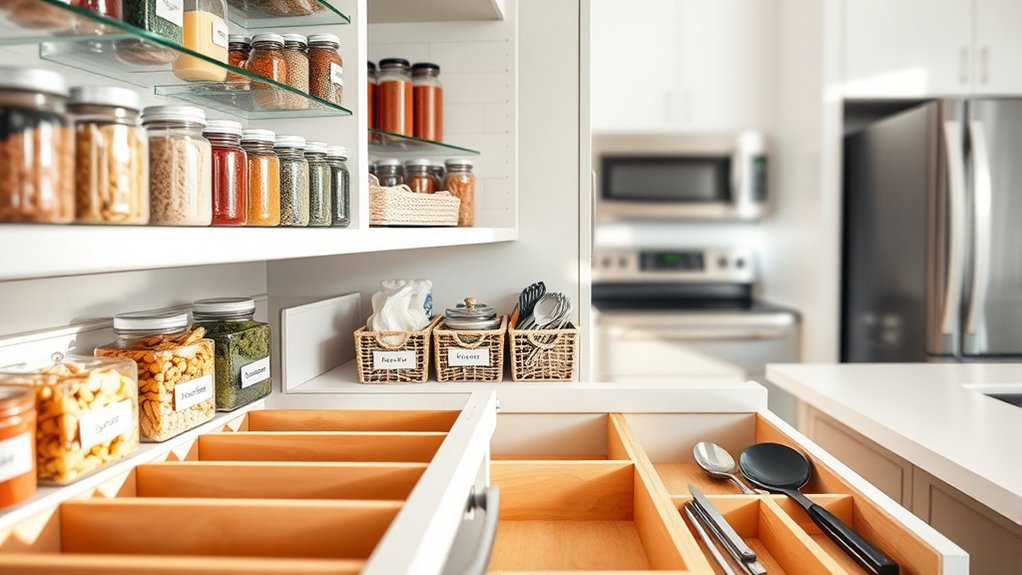
How Can You Organize Kitchen Cabinets and Drawers With 3 Simple Tips?
Cluttered cabinets and jam-packed drawers can make even simple meal prep feel frustrating. If you’re struggling to find what you need, you’re not alone—many people want a kitchen that’s easier to use and keep tidy.
To organize your kitchen cabinets and drawers, start by decluttering and categorizing items, grouping similar things together and tossing expired or unused products.
Next, choose space-saving containers and adjustable dividers to maximize storage and keep everything visible and accessible.
Finally, arrange your items by how often you use them, placing frequently used tools and ingredients within easy reach.
Keep going to unearth practical ways to streamline your kitchen and maintain an efficient setup.
Key Takeaways
- Clear out cabinets completely to sort, discard expired items, and group similar ones for better organization.
- Use color coding and clear labels to categorize and quickly identify items.
- Choose stackable, clear containers and adjustable dividers to maximize cabinet space and visibility.
- Arrange items by how often you use them, keeping essentials within easy reach.
- Match storage solutions to cabinet sizes and maintain labels for ongoing order and accessibility.
Declutter and Categorize Your Kitchen Cabinets
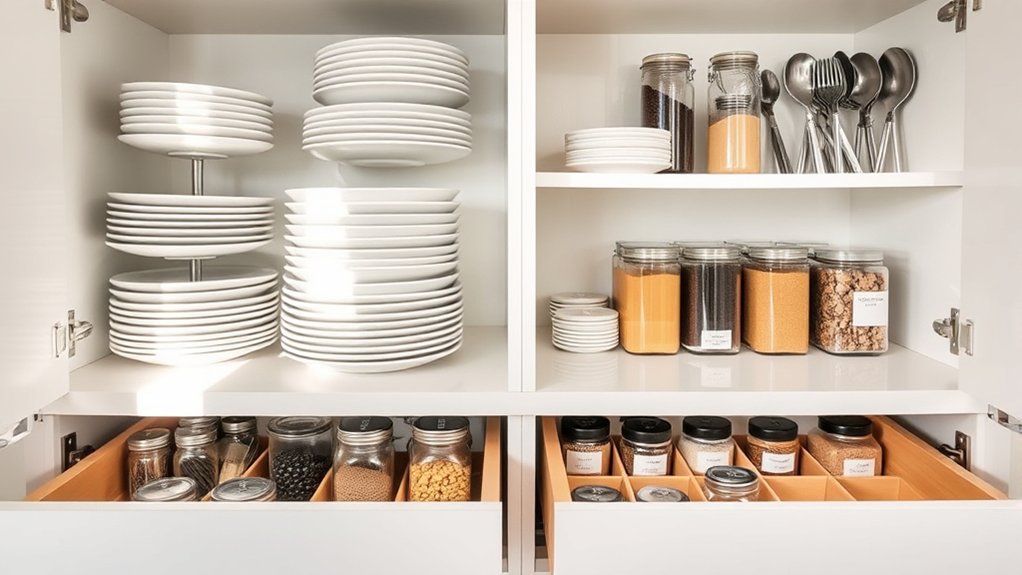
Before you begin organizing, clear out your kitchen cabinets completely to see what you have. This step helps you identify expired items, duplicates, and things you no longer use.
Once you’ve sorted through everything, start categorizing similar items together—like baking supplies, canned goods, and snacks. Using color coding can make this process even easier; assign a color to each category to quickly spot and maintain order.
Group similar items and use color coding to easily identify and keep your kitchen organized.
For example, you might use green labels for spices and blue for grains. Labeling each group clearly ensures you and anyone else in your household can find and return items efficiently.
This method not only streamlines your cooking routine but also keeps your cabinets tidy over time. By decluttering and categorizing with color coding and labeling, you lay a solid foundation for a well-organized kitchen that saves time and reduces stress.
Choose Containers and Dividers That Maximize Kitchen Space

When you’ve sorted and labeled your kitchen items, selecting the right containers and dividers becomes essential to maximize every inch of cabinet and drawer space. Choose stacking solutions that fit your cabinets’ dimensions to create vertical storage, doubling your capacity without clutter.
Clear containers help you quickly spot what you need, while dividers keep utensils and smaller items neatly separated, preventing messes.
Incorporate labeling strategies on your containers and dividers to maintain order and make retrieval effortless. Use waterproof labels or chalkboard tags for easy updates. This way, you avoid wasting time searching and keep everything visible and accessible.
Opt for adjustable dividers to customize compartments for various kitchen tools, ensuring no space goes unused. By combining smart stacking solutions with effective labeling strategies, you’ll transform your cabinets and drawers into organized, efficient storage areas that make cooking and cleaning much easier.
Arrange Kitchen Items by How Often You Use Them

Since you use some kitchen items more frequently than others, organizing them accordingly saves time and effort during meal prep. Start by identifying your cooking zones—areas dedicated to tasks like chopping, cooking, and baking. Place the items you use daily, such as knives, cutting boards, and frequently used spices, in the most accessible spots within these zones. Store less frequently used appliances and utensils in higher cabinets or deeper drawers.
By arranging kitchen items based on how often you use them, you streamline your workflow and reduce unnecessary movement. This setup keeps essential tools within easy reach, speeding up cooking and minimizing frustration. For example, keep pots and pans near the stove and prep tools close to the counter.
This method not only makes meal prep faster but also keeps your kitchen organized and functional. Prioritize accessibility, and your cooking zones will work more efficiently, making every meal prep session smoother.
Frequently Asked Questions
How Often Should I Clean My Kitchen Cabinets and Drawers?
You should clean your kitchen cabinets and drawers every one to two months to maintain hygiene and keep storage solutions effective. Sticking to regular cleaning schedules prevents buildup of grease and crumbs, making your space more pleasant and organized. If you cook daily or notice spills, consider wiping them down weekly.
Consistent cleaning helps your storage systems last longer and keeps everything neat, so you always find what you need without hassle.
What Are the Best Materials for Durable Kitchen Containers?
You’ll want containers made from materials like glass, stainless steel, and BPA-free plastic for the best material durability. Glass containers resist stains and odors, while stainless steel offers excellent strength and longevity.
BPA-free plastic is lightweight and sustainable, especially if you choose reusable options. These materials combine container sustainability with durability, ensuring your kitchen storage lasts and stays eco-friendly. Avoid flimsy plastics that wear out quickly.
How Can I Childproof Kitchen Cabinets Effectively?
You can childproof kitchen cabinets effectively by installing cabinet locks designed for child safety. These locks prevent little hands from accessing harmful items, keeping your kitchen safer.
Choose easy-to-use, durable locks that fit your cabinets without damage. Magnetic or adhesive locks work well if you want a no-drill option.
Regularly check the locks to make sure they’re secure, and teach your kids about safety too. This way, you’ll protect both your children and your kitchen.
Are There Eco-Friendly Options for Organizing Kitchen Storage?
You’d think the universe made eco-friendly containers just for you! Yes, there are plenty of sustainable storage options that’ll keep your kitchen organized and green. Look for bamboo or glass containers, which are durable and stylish without harming the planet.
Reusable silicone bags and recycled plastic bins also help reduce waste. By choosing these eco-friendly containers, you’ll not only declutter your space but also protect the environment one cabinet at a time.
How Do I Maintain Organized Cabinets Long-Term?
To maintain organized cabinets long-term, you’ll want to use pantry labels to clearly identify each item’s spot. This helps you and everyone else find things quickly and put them back properly.
Shelf dividers keep items separated and prevent clutter from mixing. Regularly reassess your setup, removing expired items and adjusting labels as needed.
Staying consistent with these habits makes keeping your kitchen tidy much easier over time.
Conclusion
By giving your kitchen cabinets a little breathing room and thoughtfully grouping your items, you’re paving the way for a smoother cooking journey. Picking the right containers and dividers gently nudges your space to work smarter, not harder.
Finally, placing your everyday essentials within easy reach is like giving your kitchen a friendly wink, making every meal prep feel effortless and joyful. With these simple steps, you can organize kitchen cabinets and drawers and turn your kitchen into your favorite organized haven.


One Comment