How to Accurately Measure New Kitchen Cabinets in 5 Steps
Ordering new kitchen cabinets only to discover they don’t fit can be frustrating, and you’re not alone—many people struggle to measure their space accurately.
This guide to how to accurately measure new kitchen cabinets in 5 steps will help you plan with confidence.
Start by gathering essential tools like a tape measure, level, notepad, and stud finder. Check walls and floors for uneven spots so you can plan for adjustments.
Measure cabinet height, width, and depth carefully, noting any variations. Double-check your measurements, and ask someone else to verify them too.
Use your measurements to create a detailed layout that fits your space. Keep reading for tips on avoiding common pitfalls and ensuring a smooth installation.
Key Takeaways
- Gather precise tools like a tape measure, level, and notepad to ensure accurate cabinet measurements.
- Check walls and floors for irregularities using a level to plan necessary adjustments.
- Measure cabinet height, width, and depth carefully, noting variations between upper and lower units.
- Double-check all measurements multiple times and verify against overall kitchen dimensions and appliance spaces.
- Create a detailed layout or blueprint incorporating measurements, cabinet styles, and placement for smooth installation.
Gather Tools for Accurate Cabinet Measurements
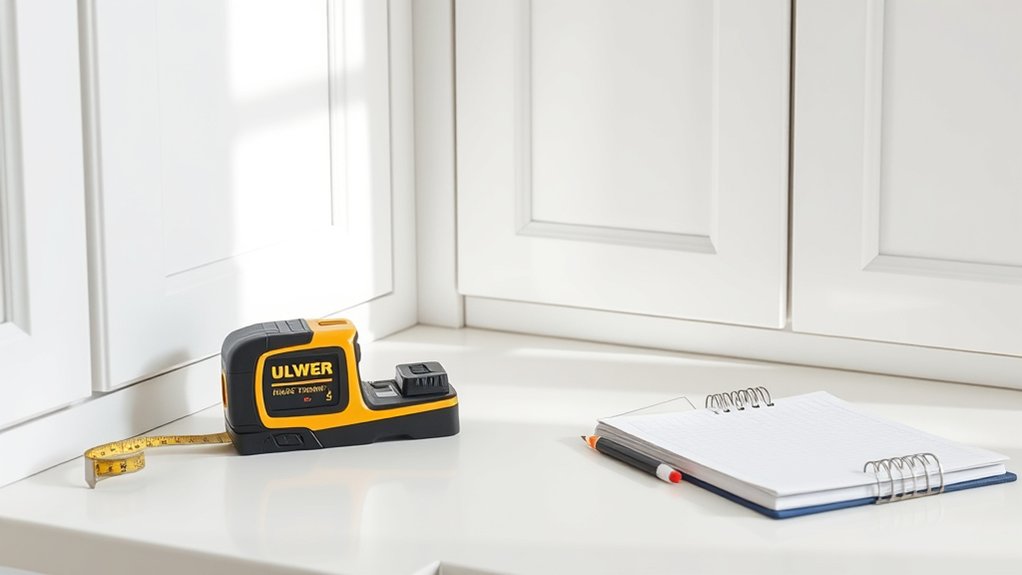
Before you begin measuring your kitchen cabinets, make sure you have the right tools on hand. Accurate measurements start with a reliable tape measure, a notepad, and a pencil to jot down dimensions as you go.
Start with the right tools: tape measure, notepad, and pencil for precise kitchen cabinet measurements.
A level can help verify your measurements account for any slight tilts, even though you’ll check uneven walls later. Knowing the cabinet material is essential since thicker or thinner materials affect the overall size, especially with solid wood versus laminate.
Different cabinet styles, such as shaker or raised panel, might have decorative edges or moldings that slightly alter measurements, so keep this in mind. You’ll also want a stud finder to avoid drilling into wiring when installing new cabinets.
Having these tools ready ensures you capture precise dimensions and plan effectively. With everything prepared, you’ll confidently measure your kitchen cabinets, setting a solid foundation for your renovation or replacement project.
Check for Uneven Walls and Floors Before Measuring Kitchen Cabinets
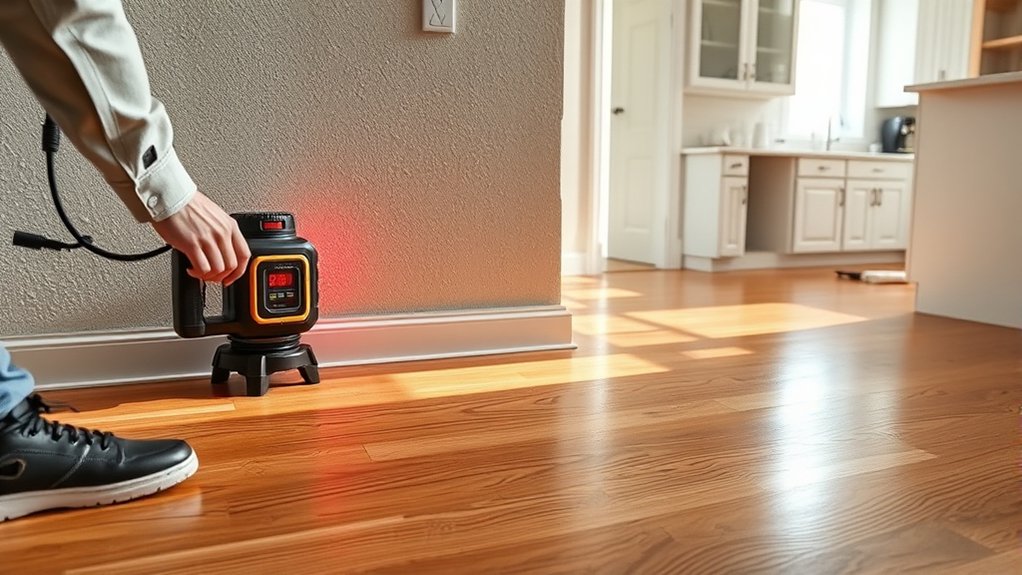
Once you’ve gathered your tools and noted cabinet styles and materials, it’s important to check for uneven walls and floors that can affect your measurements. Start by gauging wall alignment; use a level or a straightedge against the walls to spot any bulges or dips.
Uneven walls can cause cabinets to appear misaligned once installed, so noting these irregularities helps you plan adjustments or shimming.
Next, evaluate floor levelness. Place a level on the floor in multiple spots, especially where cabinets will sit. Floors that slope or have high spots can lead to gaps or crooked cabinets if not considered.
Knowing the floor’s condition allows you to compensate during installation.
Measure the Height, Width, and Depth of Kitchen Cabinets
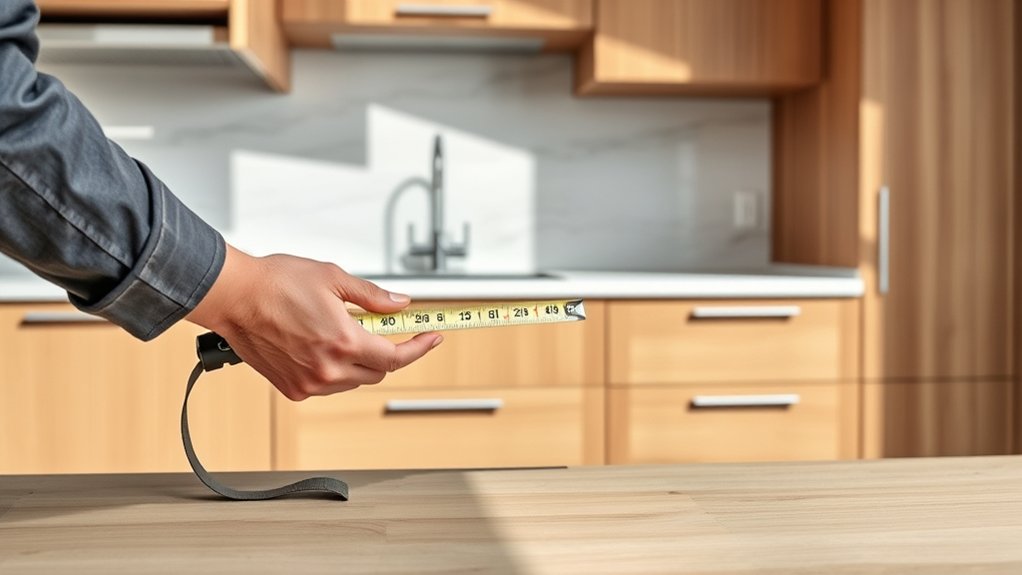
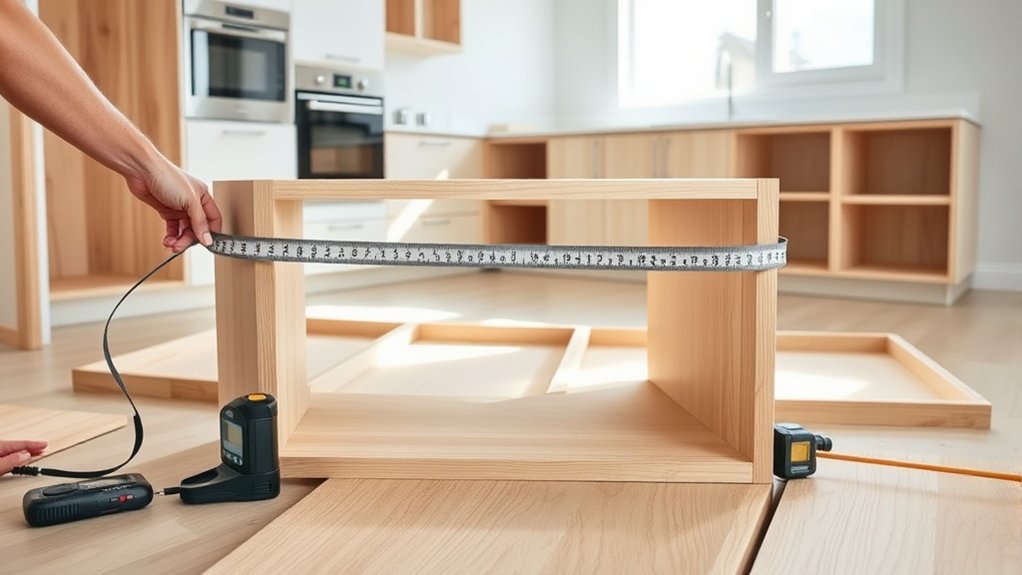
When you measure the height, width, and depth of your kitchen cabinets, accuracy is key to guaranteeing a proper fit. Start by using a tape measure to gauge the height from the floor to the top edge of each cabinet.
Then, measure the width across the front, making sure to record the narrowest point if walls or adjacent cabinets aren’t perfectly straight. For depth, measure from the front edge to the back wall.
Keep these measurements consistent for all cabinets, as they’ll affect cabinet finishing choices and the installation of custom accessories like pull-out shelves or organizers. Accurate dimensions assure your new cabinets fit seamlessly and your custom accessories function properly.
Don’t forget to note any variations in depth between upper and lower cabinets, since these often differ. By measuring carefully, you’ll avoid costly adjustments later and create a kitchen space that’s both functional and visually appealing.
Double-Check Your Kitchen Cabinet Measurements to Avoid Costly Mistakes
Although measuring your kitchen cabinets carefully is essential, double-checking those measurements guarantees you catch any errors before they become costly problems. Take the time to review each height, width, and depth measurement twice, or even thrice, to ensure accuracy.
Mistakes here can lead to ordering the wrong cabinet material selection or mismatched cabinet finishing options, both of which can be expensive and time-consuming to fix.
Use a reliable tape measure and write down your numbers clearly. Cross-verify your measurements by comparing them against your kitchen’s overall dimensions and the space available for appliances or countertops.
If possible, have someone else independently measure your cabinets to spot any discrepancies you might miss.
Use Your Measurements to Plan Kitchen Cabinet Layout
Before you start ordering cabinets, use your measurements to create a detailed layout of your kitchen. This layout will serve as the blueprint for your entire project, helping you visualize how each cabinet fits and ensuring efficient use of space.
As you plan, consider your cabinet material selection carefully—different materials affect durability, cost, and appearance. Also, examine various cabinet style options to match your kitchen’s aesthetic and functionality. Whether you prefer sleek modern designs or classic raised panels, your layout should accommodate the style’s dimensions and hardware needs.
Use graph paper or digital design tools to map walls, appliances, and plumbing, then position cabinets accordingly. This step prevents costly mistakes and streamlines installation.
Frequently Asked Questions
What Types of Wood Are Best for Kitchen Cabinets?
You’ll want to choose hardwoods like maple, cherry, or oak for kitchen cabinets because they’re durable and handle cabinet hardware well. Maple offers a smooth finish, while cherry brings rich color that deepens over time. Oak has a classic grain that suits many kitchen layouts.
These woods resist wear and match various styles, ensuring your cabinets stay sturdy and beautiful, no matter your kitchen’s design or how often you change hardware.
How Do I Choose the Right Cabinet Style for My Kitchen?
Don’t worry if picking a cabinet style feels overwhelming—you can simplify it by focusing on your kitchen layout first. Choose a style that complements the room’s flow and maximizes space.
Consider how cabinet hardware will improve both function and aesthetics. Sleek handles suit modern layouts, while ornate knobs fit traditional designs.
Can I Install Kitchen Cabinets Myself or Should I Hire a Professional?
You can definitely try DIY installation if you’re handy and have the right tools, but keep in mind it takes precision and patience.
If you want to avoid mistakes or save time, professional assistance can be a smart investment. Pros have experience handling tricky spots and ensuring your cabinets fit perfectly.
Ultimately, weigh your skills and schedule. DIY saves money, but professional help guarantees a smooth, stress-free installation.
What Is the Average Cost of Custom Kitchen Cabinets?
You want quality, style, and durability—all at a fair price. The average cost of custom kitchen cabinets ranges from $500 to $1,200 per linear foot. When doing a cost comparison, keep in mind that installation tips can save you money if you DIY, but professional help ensures precision. Balancing cost, craftsmanship, and installation will help you get cabinets that fit your kitchen perfectly without breaking the bank.
How Do I Maintain and Clean Kitchen Cabinets Properly?
To maintain and clean kitchen cabinets properly, you should regularly wipe them with a soft cloth and mild soap to avoid buildup. Use cabinet cleaning products designed for your cabinet’s finish to prevent damage. Avoid harsh chemicals and excessive water.
For maintenance tips, check hinges and handles periodically, tightening or lubricating them as needed. Keeping your cabinets dry and clean will extend their life and keep them looking great.
Conclusion
By gathering your tools, checking gaps, and taking accurate measurements, you can help ensure your new kitchen cabinets fit well. Double-checking dimensions can prevent design problems and costly corrections.
With a well-measured workspace, you’ll be ready to plan a cabinet layout that suits your kitchen. Take your time, follow the steps, and use accurate measurements to make your new kitchen cabinets a confident fit.