10 Essential Tips to Prevent Kitchen Fires
Kitchen fires can start in seconds, and it’s easy to worry about whether your kitchen is truly safe. You’re not alone—many people struggle to keep up with the small steps that help prevent accidents.
These 10 essential tips to prevent kitchen fires can help you cook with greater confidence.
To prevent kitchen fires, stay attentive while cooking and avoid leaving pots unattended. Use timers to keep track and never store flammable items near heat sources.
Clean grease and debris regularly from stovetops, appliances, and exhaust fans. Dress safely with fitted clothing and keep a Class K fire extinguisher handy, knowing how to use it.
Install smoke alarms nearby and test them regularly. Follow these tips, and you’ll be better prepared to keep your kitchen safe and secure.
Key Takeaways
- Always stay near cooking food and promptly address smoke or boil-overs to prevent fires.
- Keep flammable items like towels, paper, and oils away from heat sources and stove areas.
- Use visible timers to avoid overcooking and reduce the risk of unattended fires.
- Regularly clean stovetops, exhaust fans, and appliances to prevent grease buildup and flare-ups.
- Wear fitted clothing and use proper fire-handling techniques, including having a Class K extinguisher nearby.
Watch Cooking to Prevent Kitchen Fires

Because most kitchen fires start when food is left unattended, you should always stay close while cooking. Maintaining cooking safety means keeping an eye on your stove or oven at all times.
When you’re focused, you can immediately notice if something starts to smoke or boil over, preventing a small issue from turning into a dangerous fire. Kitchen awareness also involves keeping flammable items like towels and paper away from heat sources.
You shouldn’t leave pots or pans simmering unattended, even if you step away just for a moment. If you need to leave the kitchen, turn off the stove or remove the pan from heat first.
Paying close attention to what you’re cooking helps you react quickly to any hazards. Practicing these habits not only protects your home but also keeps you and your family safe.
Set Timers to Avoid Overcooking and Fires
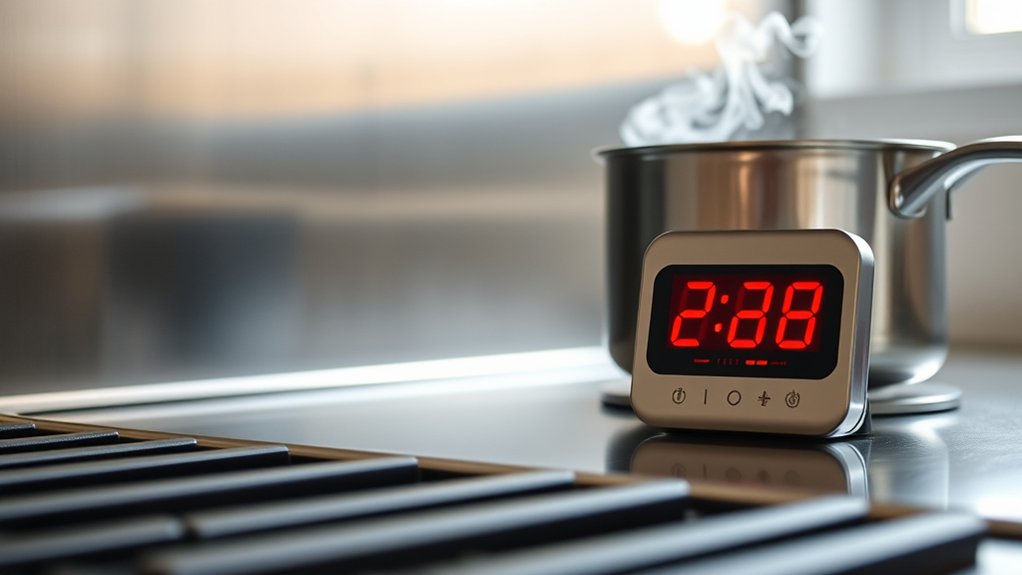
Set a timer to help prevent overcooking and reduce the risk of fires. Choose one that’s easy to read and use—whether it’s on your stove, phone, or a separate device. Keep it somewhere visible and within earshot so you don’t miss the alert.
Benefits of Using Timers
While cooking, you might get distracted or caught up in other tasks, but using timers helps you stay on track and prevents food from burning. Timers provide timing accuracy, ensuring dishes cook exactly as needed. Automated alerts notify you when your food is done, reducing the risk of overcooking or fires. By relying on timers, you can focus on other chores without constantly watching the stove or oven.
| Benefit | Description | Outcome |
|---|---|---|
| Timing Precision | Sets exact cooking durations | Prevents burning or undercooking |
| Automated Alerts | Signals when time is up | Frees you to multitask |
| Fire Prevention | Limits chances of unattended cooking | Improves kitchen safety |
Using timers is a simple yet effective step for safer, stress-free cooking.
Choosing the Right Timer
When you choose the right timer, you make it easier to keep track of cooking times and prevent kitchen fires. Opt for a smart timer that offers an automatic alert to notify you the moment your food is done.
These timers help you avoid overcooking and reduce the risk of leaving the stove unattended. A smart timer can connect to your smartphone, allowing you to monitor cooking progress even when you’re away from the kitchen.
Look for features like multiple timers for different dishes and loud, clear alerts to grab your attention quickly. By using a reliable smart timer with automatic alerts, you stay in control and create a safer cooking environment, minimizing the chances of accidental fires caused by forgotten or burnt food.
Timer Placement Tips
Because timers only work if you notice them, placing your timer where you can easily see and hear it is crucial to preventing kitchen fires. Use smart timer placement by positioning your timer at accessible timer locations like the countertop near your stove or on a magnetic strip within your line of sight.
Avoid putting it inside cabinets or behind appliances where alerts can be missed. If you use a smartphone or smart speaker, keep it within earshot but away from noisy appliances. This way, you’ll catch the alert immediately and prevent overcooking.
Consistently setting timers in visible, accessible spots helps you stay aware of cooking times, reducing the risk of food burning and fires. Prioritize smart timer placement to keep your kitchen safe and efficient.
Choose and Maintain the Right Cooking Equipment
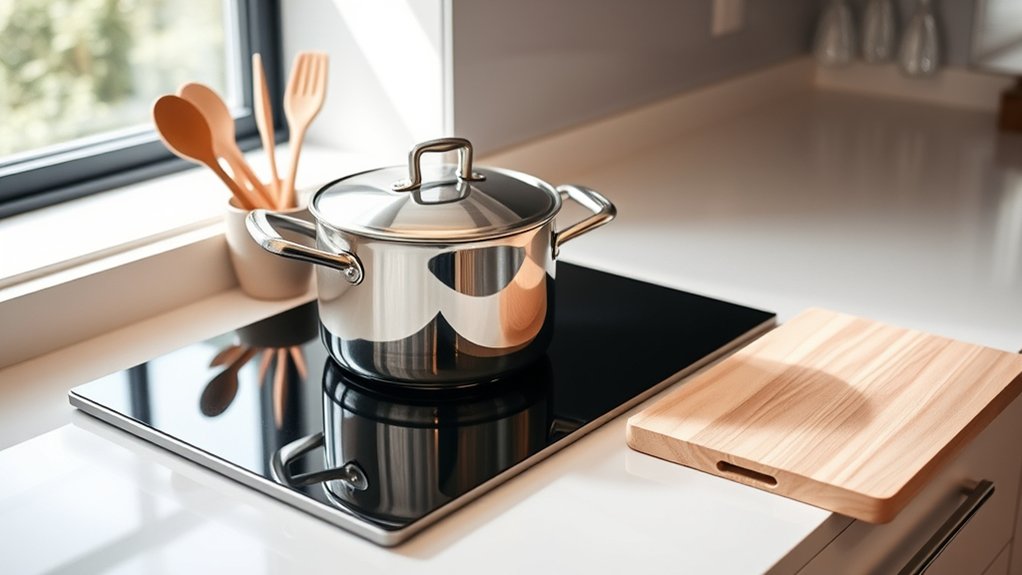
Selecting and maintaining the right cooking equipment plays a crucial role in preventing kitchen fires. When selecting cookware, opt for pots and pans with sturdy handles and flat bottoms to guarantee even heat distribution and stability on your stove.
Avoid damaged or warped items, as they can cause uneven cooking and increase fire risks. Regularly cleaning utensils and cookware removes grease buildup, which can ignite unexpectedly.
Pay attention to the condition of electrical appliances, ensuring cords are intact and plugs fit securely.
| Equipment Type | Maintenance Tip | Fire Prevention Benefit |
|---|---|---|
| Cookware | Use flat-bottomed pans | Prevents tipping and spills |
| Cooking Utensils | Clean regularly to remove grease | Reduces flammable residue |
| Electrical Appliances | Inspect cords & plugs | Avoids electrical fires |
| Oven & Stove | Keep burners clean | Prevents flare-ups |
Keep Flammable Items Away From Heat Sources
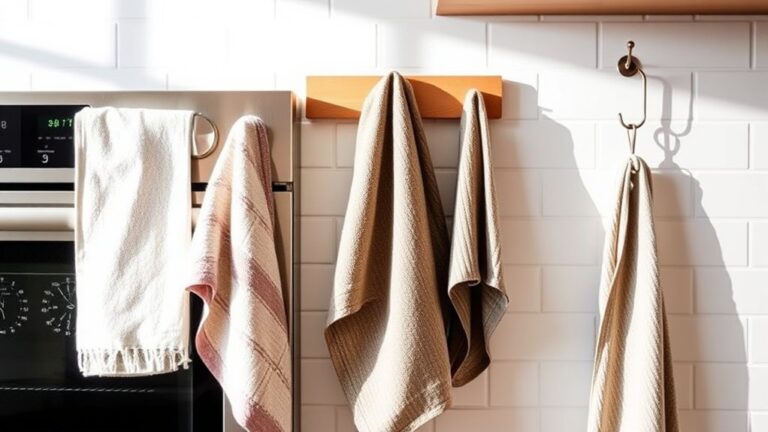
Keep flammable items like paper towels, dishcloths, and cooking oils away from your stove and other heat sources. Store them in cabinets or on shelves well away from open flames. Also, keep the area around your stove clear to help prevent accidental fires.
Identify Common Flammable Items
While cooking, it’s easy to overlook how many everyday items around your kitchen can catch fire if placed too close to heat sources. You need to identify common flammable items to keep your kitchen safe.
Flammable cleaning products, such as aerosol sprays and certain liquids, can ignite quickly if exposed to heat or sparks. Equally, combustible textiles like dish towels, oven mitts, and curtains are highly vulnerable.
These fabrics can catch fire from open flames or hot surfaces in seconds. Even paper products, like recipe books or paper towels, pose serious risks.
Safe Storage Practices
Keeping flammable items away from heat sources starts with proper storage. You should prioritize kitchen organization by designating specific spots for items like oils, paper towels, and cleaning supplies, ensuring they’re far from stoves, ovens, or other heat-producing appliances.
Effective pantry management plays a vital role—store flammable goods in cabinets or shelves that don’t get warm during cooking. Avoid stacking these items near your stove or above your oven, where heat can build up unnoticed.
You can also use airtight containers to reduce the risk of spills and keep flammable liquids secure. By maintaining this organized approach, you minimize the chances of accidental fires and create a safer cooking environment every time you step into your kitchen.
Maintain Clear Stove Area
How often do you check the area around your stove for potential fire hazards? Keeping this space clear is vital to preventing kitchen fires. Always remove flammable items like dish towels, paper towels, and plastic containers from near burners and heating elements.
Proper kitchen ventilation also plays a key role; it helps disperse heat and smoke, reducing fire risks. Make sure your range hood and exhaust fans are clean and functioning well.
Regular appliance maintenance is essential—check for gas leaks or faulty wiring that could ignite fires unexpectedly. By maintaining a clear stove area, ensuring good ventilation, and keeping appliances in top shape, you greatly lower the chances of a dangerous kitchen fire.
Taking these simple steps keeps your cooking space safer for everyone.
Clean Cooking Surfaces and Appliances Regularly
Because grease and food residue can build up quickly, you should clean your cooking surfaces and appliances regularly to reduce fire risks. Proper cooking surface maintenance prevents grease fires from starting and spreading.
Regular cleaning of cooking surfaces and appliances is essential to prevent grease fires and keep your kitchen safe.
Wipe down stovetops, oven doors, and counters after each use to remove food particles and oil. Pay special attention to burner grates and drip pans, where grease tends to accumulate.
Appliance cleaning is just as important. Regularly clean your oven, microwave, and toaster to avoid buildup that could ignite.
Don’t forget to check and clean exhaust fans and range hoods, which trap grease and can become fire hazards if neglected.
Avoid Wearing Loose Clothing While Cooking
Avoid wearing loose sleeves while cooking, since they can easily catch fire. Instead, choose fitted clothing made from safer materials, such as cotton or wool. Practical attire helps keep you protected and focused in the kitchen.
Risks Of Loose Sleeves
Why risk your safety by wearing loose sleeves while cooking? Loose sleeves can easily catch fire if they come into contact with open flames or hot surfaces. These clothing hazards not only increase the chance of burns but also make it harder to control spills or hot liquids, which can cause further accidents.
When your sleeves dangle near burners or hot pans, they become a serious fire hazard. You want to stay focused on cooking, not on preventing your clothing from igniting.
To keep yourself safe, always opt for fitted sleeves that won’t dangle or brush against heat sources. Remember, avoiding loose sleeves is a simple yet vital step to prevent kitchen fires and protect yourself from injury. Don’t underestimate these clothing hazards in your kitchen safety routine.
Safer Clothing Materials
When cooking, choosing safer clothing materials plays a crucial role in reducing fire risks. You should avoid loose clothing that can easily catch flames or brush against hot surfaces.
Instead, opt for fire resistant fabrics that provide an extra layer of protection. Flame retardant clothing is specifically designed to resist ignition and slow down burning if exposed to heat or fire, making it a smart choice in the kitchen.
While natural fibers like cotton are less likely to melt than synthetics, selecting garments treated with flame retardant chemicals improves your safety. By being mindful of what you wear and choosing safer materials, you greatly lower the chance of accidents and protect yourself from potential burns while cooking.
Practical Cooking Attire
Choosing safer clothing materials is just one part of staying safe in the kitchen. You also need to focus on practical cooking attire to reduce fire risks. Avoid wearing loose clothing that can easily catch flames or snag on cooking accessories. Instead, follow these simple tips:
- Wear fitted clothes with short or tight sleeves to keep fabric away from burners.
- Choose flame-resistant fabrics like cotton rather than synthetic materials.
- Use apron styles that fit snugly around your waist and cover your torso fully.
- Secure long hair and remove dangling jewelry to prevent accidents.
Store Flammable Liquids and Chemicals Safely
Although your kitchen is a busy place, you must keep flammable liquids and chemicals stored safely to prevent fires. Proper chemical storage is essential—always keep flammable liquids like cooking sprays, alcohol, and cleaning agents in tightly sealed containers away from heat sources.
Store these items in a cool, well-ventilated area, preferably a locked cabinet or a designated storage space separate from your cooking zone. Avoid placing flammable liquids near the stove, oven, or any appliance that generates heat.
Make sure you read labels and follow manufacturer instructions for safe handling and storage. Keeping chemicals organized and away from children or pets also minimizes risks.
Handle Grease Fires Safely and Effectively
If a grease fire breaks out, you need to act quickly and calmly to prevent it from spreading. Practicing grease fire safety means knowing exactly what to do. First, follow these fire prevention techniques:
- Turn off the heat source immediately to stop fueling the fire.
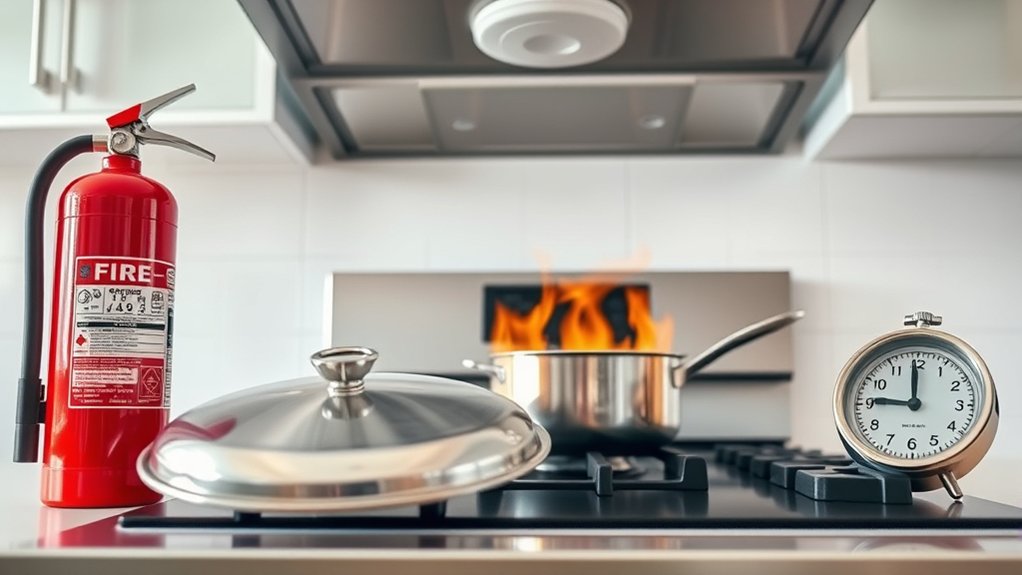
- Cover the flames with a metal lid or a baking sheet to cut off oxygen.
- Use a fire extinguisher rated for grease fires (Class K) if the fire is manageable.
- Never pour water or try to move the pan, as this can cause the fire to spread rapidly.
Install and Maintain Kitchen Smoke Alarms
Since kitchen fires can start without warning, installing and maintaining smoke alarms is vital for your safety. Place smoke alarms near your kitchen but not directly inside to avoid frequent false alarms from cooking.
Test your alarms monthly and replace batteries at least once a year to guarantee they work when needed. Consider integrating smoke alarms into your smart home system for real-time alerts on your phone, even when you’re away.
Many smart models also detect carbon monoxide, providing extra protection against this invisible, odorless danger. Replace smoke alarms every 10 years to maintain reliability.
Keep a Fire Extinguisher Ready and Know How to Use It
Alongside functioning smoke alarms, having a fire extinguisher within reach can stop a kitchen fire before it spreads. You need to pick the right extinguisher—Class K types are best for kitchen fires involving grease and oils.
Having a Class K fire extinguisher nearby can quickly stop kitchen fires involving grease and oils before they spread.
Regular fire extinguisher maintenance guarantees it works when you need it most, so check pressure gauges and expiration dates monthly. Don’t just keep it stored; learn proper use through fire safety training to act swiftly and confidently.
Follow these steps to stay prepared:
- Mount the extinguisher in an easily accessible spot near the kitchen entrance.
- Inspect it monthly for damage, pressure, and expiration.
- Take a fire safety training course to understand when and how to use it.
- Practice the PASS technique: Pull pin, Aim nozzle, Squeeze handle, Sweep base of fire.
Frequently Asked Questions
Can Certain Cooking Oils Increase the Risk of Kitchen Fires?
Yes, certain cooking oils can increase the risk of kitchen fires because of cooking oil hazards related to their smoke points. When you heat oil beyond its smoke point, it starts to break down, release toxic fumes, and can ignite.
Oils with low smoke points, like unrefined olive oil or butter, are more prone to catching fire. You should use oils with higher smoke points, like avocado or peanut oil, to reduce fire risks.
How Does Humidity Affect Kitchen Fire Safety?
Think of humidity levels as the kitchen’s invisible breath: too dry, and sparks ignite more easily; too moist, and steam can mask smoke signals. Maintaining balanced humidity can help reduce static electricity and slow grease ignition. When humidity’s just right, it acts like a natural fire guard, giving you more time to react and keep your kitchen safe from unexpected flames.
Are Induction Cooktops Safer in Preventing Kitchen Fires?
Yes, induction cooktops are safer in preventing kitchen fires because they use electromagnetic fields to heat pots directly, reducing cooktop hazards like open flames or hot coils. You’ll benefit from induction safety since the surface stays cooler, lowering the risk of burns or accidental fires.
However, you still need to stay cautious and avoid leaving flammable items nearby. Induction cooktops definitely help minimize fire risks compared to traditional stoves.
What Role Do Kitchen Design and Ventilation Play in Fire Prevention?
Oh sure, just cram your kitchen layout into a tiny corner and skip ventilation systems—what could possibly go wrong?
In reality, a smart kitchen layout gives you clear sightlines and easy access to extinguishers, cutting fire risks. Proper ventilation systems whisk away flammable fumes and heat, stopping fires before they start.
You’ll want a design that breathes safety, not one that’s a recipe for disaster.
How Often Should Kitchen Fire Safety Drills Be Practiced at Home?
You should practice kitchen fire safety drills at home at least twice a year. This helps you stay prepared and guarantees everyone knows the emergency escape plan.
While doing drills, check your fire extinguisher maintenance to confirm it’s in working order. Regular practice keeps you confident in handling emergencies, reduces panic, and strengthens your response, making your kitchen safer for you and your family.
Don’t wait. Start scheduling drills today!
Conclusion
Preventing kitchen fires is like tending a delicate garden—you need constant care and attention. By watching your cooking closely, setting timers, and keeping flammable items away, you’re watering the seeds of safety. Regular cleaning, proper equipment, and knowing how to handle grease fires act as your protective fence.
With smoke alarms and a ready fire extinguisher, you’re prepared to stop any blaze from growing. Stay vigilant, and follow these 10 essential tips to prevent kitchen fires and keep your kitchen a safe, welcoming space.