
How to Dispose of Old Kitchen Knives Safely
Wondering how to dispose of old kitchen knives without putting anyone at risk? You’re not alone—many people struggle to figure out what to do with blades they no longer use. This guide covers safe disposal, recycling, donation, and repurposing options.
You should never toss old kitchen knives in the trash because sharp edges can injure sanitation workers and harm the environment. Instead, clean and dry your knives, securely wrap the blades in cardboard or bubble wrap, and tape them to prevent cuts.
Then, drop them off at metal recycling centers, hazardous waste facilities, or donate if still usable. Proper handling and storage keep everyone safe. Keep exploring to find safe donation options and creative ways to repurpose your knives.
Key Takeaways
- Wrap knives securely in cardboard, bubble wrap, or cloth, and tape edges to prevent injuries during handling and disposal.
- Label containers holding knives as “sharp objects” and store them safely to protect sanitation workers and handlers.
- Donate clean, sharpened knives in good condition to culinary schools or charities following their donation policies.
- Recycle old knives at metal recycling centers or hazardous waste facilities after securing blade edges with tape.
- Consider creative reuse like garden markers or art projects, ensuring safe handling and packaging for any repurposing.
Why You Should Never Toss Old Kitchen Knives in the Trash
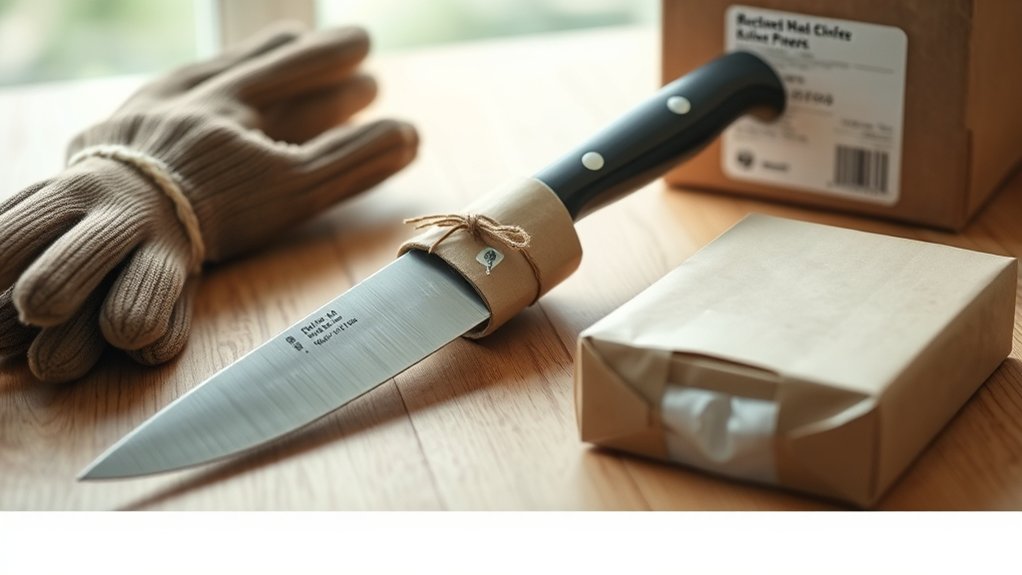
Why should you avoid tossing old kitchen knives in the trash? When you throw them away carelessly, you risk injuring sanitation workers or anyone who handles the garbage. Old knives, even if dull, have sharp edges that can cause serious cuts.
Plus, those worn blades still have value. Instead of discarding them, consider knife sharpening to restore their cutting performance. Properly sharpened knives improve your cutting techniques, making food prep safer and more efficient.
You might think a dull knife is useless, but with the right sharpening tools, you can extend its life significantly. Tossing knives also harms the environment, as metal waste often ends up in landfills rather than being recycled.
How to Prepare Kitchen Knives for Safe Disposal
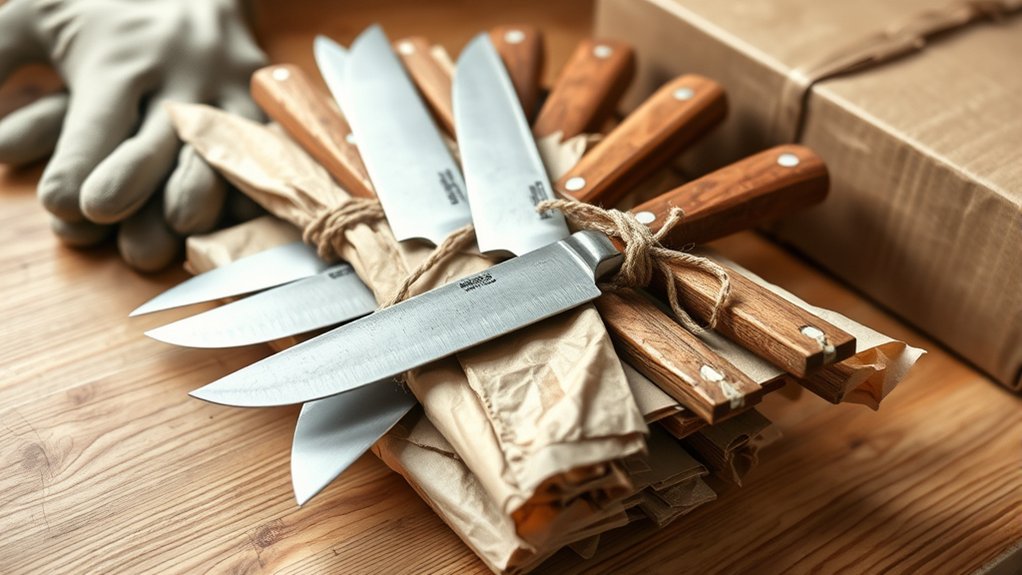
Before you dispose of your old kitchen knives, you need to take a few important steps to guarantee they won’t pose a risk to anyone handling the trash. First, assess the condition of your knives. If they’re dull or damaged, it’s often because you skipped regular knife maintenance or blade sharpening. While you won’t be keeping these knives, understanding their state helps you prepare them properly for disposal.
Next, make sure the knives are clean and dry. This prevents any contamination and odors. Remove any attachments like blade guards or sheaths to recycle or reuse separately. If your knives still have some life left but you’re replacing them, consider donating after proper maintenance and blade sharpening.
How to Wrap Kitchen Knives Safely Before Disposal
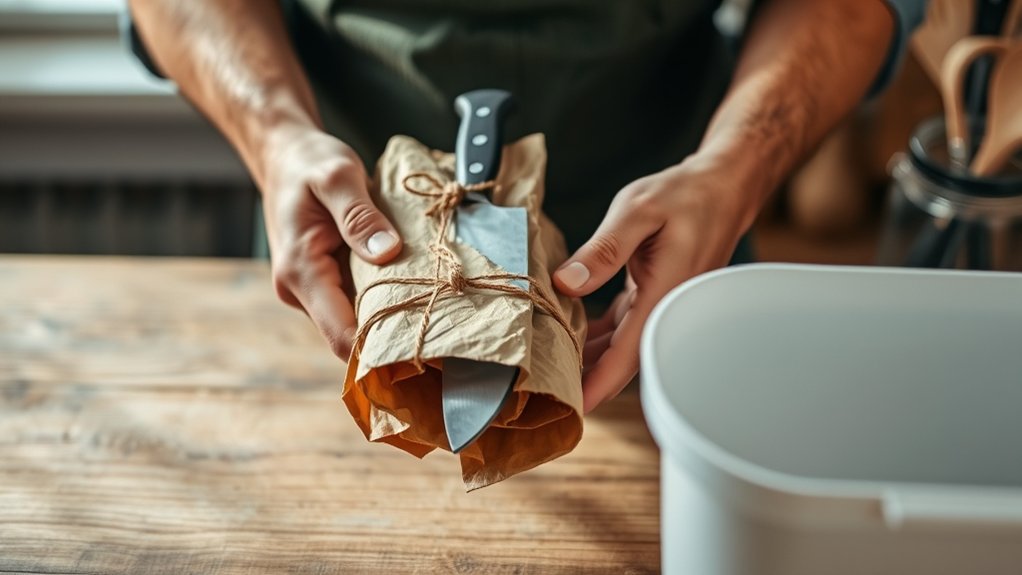
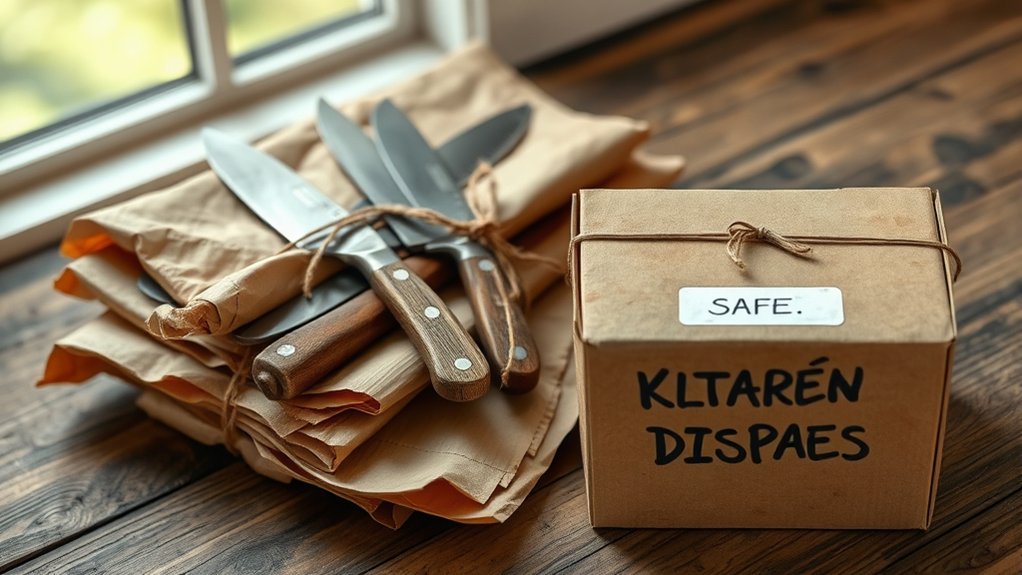
Before you toss old kitchen knives, wrap each one securely in cardboard or several layers of bubble wrap. Then tape the wrapping in place so the blade edges can’t slip out. This simple step helps protect you and sanitation workers from accidental cuts.
Use Protective Materials
When you wrap kitchen knives for disposal, you’ll want to use sturdy, protective materials that prevent the blades from cutting through and causing injury. Always wear safety gloves and other protective gear to shield your hands while handling sharp knives.
Materials like bubble wrap, cardboard, or thick cloth work well to cover the blade securely. This extra layer reduces the risk of accidents for both you and waste handlers.
| Protective Material | Emotional Impact |
|---|---|
| Thick cardboard | Peace of mind |
| Bubble wrap | Confidence |
| Old cloth | Safety assurance |
| Newspaper | Careful handling |
| Foam sheets | Protection feeling |
Choosing the right covering guarantees safety and shows respect for those who handle your disposed knives.
Securely Tape Blade Edges
Although wrapping your kitchen knives with protective materials reduces risk, securely taping the blade edges is vital to prevent accidental cuts during disposal. Start by choosing a strong, adhesive tape like duct tape or electrical tape.
Carefully wrap the tape around the entire sharp edge, covering every inch to avoid exposure. This step not only ensures safety but also supports blade maintenance by protecting the edge from unnecessary damage.
Proper taping helps preserve the sharpness of the blade, which is essential if you plan to recycle or donate the knives instead of discarding them. Remember, securely taping the edges complements other safety measures and reflects responsible blade maintenance, making disposal safer for you and sanitation workers handling the waste.
Where to Recycle Kitchen Knives Near You
If you want to recycle your old kitchen knives safely, you’ll need to find a local facility that accepts metal items. Proper recycling helps prevent injuries and promotes kitchen safety by keeping sharp objects out of regular trash. Here are four places to check for recycling your knives:
- Metal Recycling Centers – Many accept knives as scrap metal. Call ahead to confirm.
- Household Hazardous Waste Facilities – Some locations handle sharp kitchen tools.
- Knife Sharpening Shops – They might offer recycling or trade-in programs.
- Community Recycling Events – Temporary events often accept metal kitchenware.
Before recycling, securely tape blade edges to avoid accidents. Contacting these places ensures your knives are handled responsibly while supporting environmental efforts. By recycling properly, you maintain kitchen safety and contribute to sustainable waste management.
How to Use Hazardous Waste Programs for Kitchen Knife Disposal
Check your city or county’s waste management website to find a nearby hazardous waste program that accepts sharp objects. Before you drop off your old kitchen knives, wrap them securely in heavy-duty material to help prevent injuries.
Finding Local Disposal Sites
When it comes to disposing of old kitchen knives safely, finding local disposal sites plays a vital role in preventing accidents and environmental harm. You can easily locate places that accept knives through these steps:
- Check your city’s recycling programs—many include metal items like knives.
- Visit community drop offs that handle sharp objects or hazardous household waste.
- Contact your local waste management facility to ask about knife disposal policies.
- Look for special collection events focused on hazardous materials or metal recycling.
Using these resources helps you dispose of knives safely and responsibly, keeping your community and environment protected. Don’t overlook local options—they’re designed to make safe disposal straightforward and effective.
Preparing Knives For Drop-Off
Although kitchen knives might seem simple to discard, preparing them properly for hazardous waste programs guarantees safety for everyone involved. Before dropping off your knives, consider whether knife sharpening or blade maintenance could extend their life.
If the blades are beyond repair, secure each knife by wrapping the blade with heavy-duty tape or placing it in a blade guard to prevent injuries. Avoid using flimsy materials that might tear during handling.
Label the package clearly as “sharp objects” to alert waste handlers. Finally, place the wrapped knives in a sturdy container to keep them from shifting.
Following these steps ensures your old kitchen knives won’t pose a risk during disposal and helps maintain safety throughout the hazardous waste program’s process.
Finding Professional Kitchen Knife Disposal Services
Since kitchen knives can pose safety risks if discarded improperly, finding professional disposal services guarantees they’re handled securely and responsibly. These experts ensure your old blades don’t become hazards, supporting overall culinary safety in your community.
Here’s how you can find reliable knife disposal services:
- Check local waste management websites for specialized kitchen knife drop-off points.
- Contact culinary schools or professional kitchens—they often offer knife sharpening and disposal programs.
- Look for companies specializing in metal recycling; they safely process knives without damaging the environment.
- Use online directories to find certified hazardous waste handlers who accept sharp tools.
When and Where to Donate Old Kitchen Knives
If you’re not ready to part with your old kitchen knives permanently, donating them can be a great alternative to disposal. Many organizations accept knives for knife sharpening and reuse, helping promote kitchen safety by guaranteeing blades are properly maintained.
You’ll want to donate when knives are dull but intact, so they can be safely refurbished.
Here’s where and when to donate:
| Organization Type | Best Time to Donate | Donation Tips |
|---|---|---|
| Local Culinary Schools | Start of semester | Guarantee knives are clean |
| Community Centers | During kitchen safety events | Include any knife sharpening info |
| Charitable Kitchens | Before large cooking drives | Package blades securely |
| Thrift Stores | Year-round | Label knives clearly |
What to Do With Kitchen Knives That Still Have Value
If your kitchen knives are still in good shape, consider donating them to a culinary school, where students can put them to good use. You could also sell them through an online marketplace to reach buyers looking for quality tools. Either way, you’ll pass them on safely and responsibly.
Donate To Culinary Schools
A great way to give your old kitchen knives a second life is by donating them to culinary schools. These institutions often welcome gently used knives to help students learn proper knife safety and handling. Before donating, make sure your knives meet disposal regulations to avoid any legal or safety issues.
Here’s how to proceed:
- Inspect knives for sharpness and damage—only donate safe, usable knives.
- Clean and sanitize each knife thoroughly.
- Contact local culinary schools to confirm their donation policies.
- Package knives securely to prevent injury during transport.
Sell Through Online Marketplaces
Donating old kitchen knives to culinary schools is a thoughtful option, but you might want to contemplate selling knives that still hold value. Online marketplaces allow you to reach buyers looking for quality knives, especially if you’ve recently invested in knife sharpening to restore their edge.
Before listing, clean your knives thoroughly and highlight any professional sharpening or maintenance you’ve done to improve appeal. Clearly mention the knife’s condition and any safety features, as kitchen safety is a top concern for buyers. Use detailed photos to showcase the blade and handle.
Creative Ways to Repurpose Old Kitchen Knives
When you’re ready to part with old kitchen knives, consider giving them a new lease on life instead of simply discarding them. You can explore creative crafting to transform these blades into unique, functional items while also practicing knife sharpening to restore some pieces for reuse.
Here are four creative ways to repurpose old kitchen knives:
- Garden Markers – Sharpen the blade and paint the handle, then label your plants for a rustic touch.
- Wall Hooks – Bend the blades carefully to create sturdy hooks for hanging coats or keys.
- Art Sculptures – Use knife pieces in mixed-media projects to add an edgy, metallic element.
- Letter Openers – Sharpen smaller knives to make stylish, practical letter openers.
How to Store and Handle Kitchen Knives Before Disposal
Since kitchen knives can be sharp and dangerous even when old, you should store and handle them carefully before disposal to prevent accidents. First, always keep the blades covered or sheathed to avoid accidental cuts. If you don’t have a sheath, wrap the knife securely in thick cloth or cardboard.
Avoid tossing knives loosely into bags or boxes. When handling knives, hold them by the handle and never the blade. If you’re considering knife sharpening or blade maintenance before disposal, only do so if you plan to donate or repurpose the knife; otherwise, skip this step to prevent unnecessary risks.
Store knives in a dedicated container or a sturdy box clearly labeled “sharp objects” to alert anyone handling the disposal. This way, you minimize injury risks during transport or disposal. Taking these precautions guarantees safety for you and others involved in the disposal process.
Frequently Asked Questions
Can Kitchen Knives Be Safely Disposed of in Compost Bins?
No, you shouldn’t put kitchen knives in compost bins because they pose serious safety risks. Instead, check if local recycling programs accept metal blades. If they do, follow their safety precautions, like wrapping knives securely to prevent injury during handling. Proper disposal protects sanitation workers and prevents accidents. So, avoid composting knives and opt for recycling or hazardous waste facilities that can handle sharp objects safely.
Are There Specific Knife Brands With Special Disposal Guidelines?
Imagine a sharp, gleaming blade carefully wrapped and ready for a new chapter. Yes, some brands do have brand specific disposal guidelines to guarantee safety and environmental care. You should check if your knife’s manufacturer offers knife collection programs or take-back options. These programs often provide secure ways to recycle or responsibly dispose of knives, protecting both you and the environment from harm while honoring the tool’s craftsmanship.
How Long Does It Take for Kitchen Knives to Degrade in Landfills?
Kitchen knives, usually made of stainless steel, have a slow biodegradation timeline in landfills. You can expect their landfill decomposition rates to stretch over several decades, often 50 years or more. Since metal doesn’t break down quickly, knives can linger and pose environmental risks.
If you want to reduce this impact, consider recycling or repurposing them instead of tossing them in the trash where they’ll take ages to degrade.
Can Ceramic Kitchen Knives Be Recycled Differently From Metal Ones?
Oh sure, just toss your ceramic knife in the metal recycling bin—because that’s exactly how recycling works, right? Actually, ceramic recycling is a bit trickier since ceramics don’t melt like metals. You’ll need to check with specialized facilities for ceramic disposal.
Metal disposal methods, on the other hand, are straightforward: scrap yards happily take your old blades. So, treat ceramics and metals differently to keep recycling efficient, not chaotic.
What Are the Environmental Impacts of Improper Knife Disposal?
When you dispose of knives improperly, sharp blades can harm sanitation workers and wildlife. They might end up in landfills, where metal takes years to break down, contributing to pollution.
Ignoring proper recycling practices wastes valuable materials and increases environmental strain. By recycling knives correctly, you help reduce metal waste, conserve resources, and prevent injuries.
Conclusion
Now that you know how to safely retire your trusty kitchen knives, you can part with them thoughtfully. Wrap and recycle them properly, or give them a second life through donation or repurposing.
Handling old kitchen knives with care protects others and honors the role they played in your kitchen adventures. It’s the perfect way to bid farewell without cutting corners.