
How to Clean a Kitchen Sink in 3 Easy Steps
A grimy kitchen sink can make the whole kitchen feel less clean, even when you’ve just tidied up. You’re not alone—many people struggle to keep their sink fresh and sparkling. If you’re looking for how to clean a kitchen sink in 3 easy steps, these simple tips can help.
To clean your kitchen sink in three easy steps, first gather supplies like a soft sponge, baking soda, vinegar, and rubber gloves. Next, scrub the sink using a baking soda paste on stains, gently scrubbing in circular motions.
Finally, rinse thoroughly with warm water, pour a baking soda and vinegar mix to neutralize odors, and finish by rubbing a lemon wedge over the drain for freshness. Keep going to uncover tips for polishing and maintaining your sink’s shine.
Key Takeaways
- Gather cleaning supplies: soft sponge, baking soda, vinegar, gentle dish soap, rubber gloves, and microfiber cloths before starting.
- Sprinkle baking soda on the sink surface and scrub gently with a soft sponge or brush in circular motions to remove stains.
- Rinse the sink thoroughly with warm water to wash away debris and cleaning agents.
- Pour vinegar over baking soda in the sink to fizz and deodorize; let sit 5 minutes before rinsing again.
- Wipe the sink dry and polish with a microfiber cloth and olive oil or surface polish for shine.
Gather Essential Kitchen Sink Cleaning Supplies
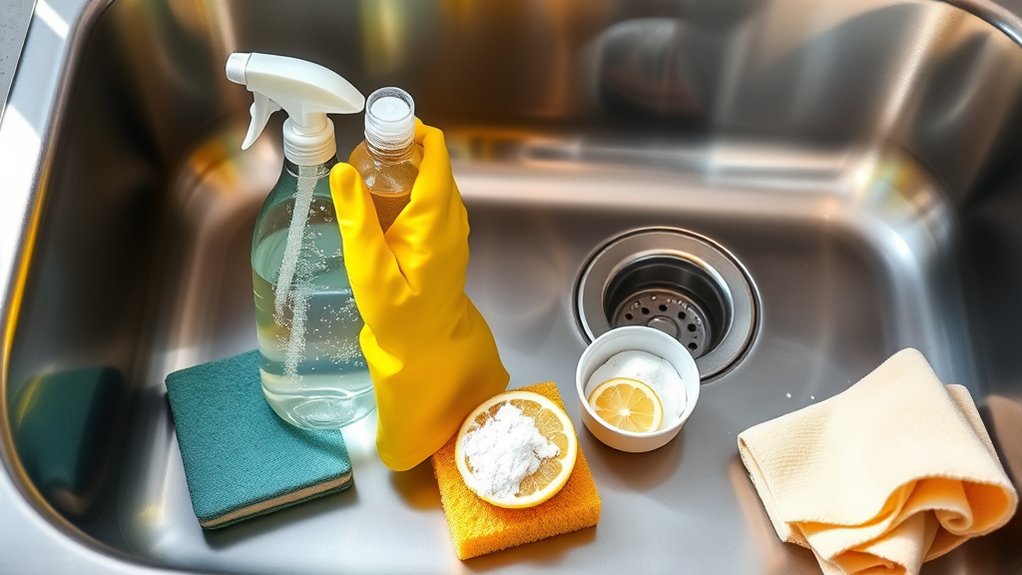
Before you start cleaning, gather all the essential supplies to make the process smooth and efficient. You’ll want to collect the right cleaning tools, such as a soft sponge, a scrub brush, and microfiber cloths to avoid scratching the sink’s surface. Don’t forget rubber gloves to protect your hands from harsh chemicals. Next, make sure you have effective cleaning agents like baking soda, vinegar, or a gentle dish soap. These are perfect for tackling everyday grime without damaging your sink.
In addition to cleaning tools, consider your sink accessories. Items like a sink strainer and a soap dispenser can be removed and cleaned separately to ensure no hidden buildup remains. Having everything on hand before you begin helps you work without interruptions. Once you’re set up, you’ll find the whole process quicker and more satisfying, and your kitchen sink will soon look fresh and spotless.
Clean and Scrub Your Kitchen Sink to Remove Stains
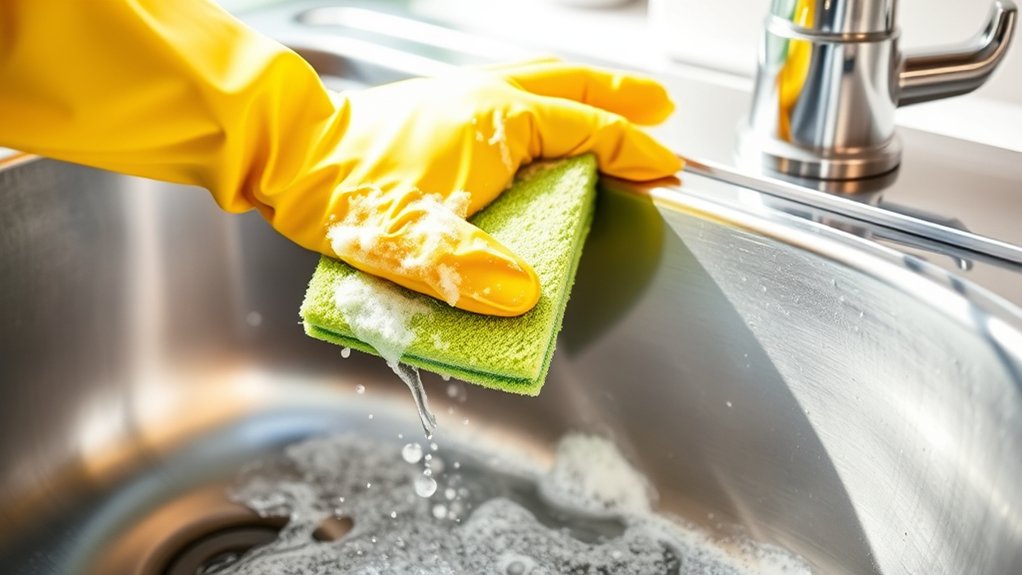
With all your cleaning supplies ready, you can focus on tackling the stains and grime that have built up in your kitchen sink. Start by applying a gentle cleaner or a paste made from baking soda and water directly onto the stained areas.
Use a soft sponge or a non-abrasive scrub brush to scrub in circular motions, ensuring you reach every corner and edge. This method is effective for stain removal without damaging the sink’s surface.
For tougher stains, let the paste sit for a few minutes before scrubbing again. Once the stains lift, wipe away any residue with a damp cloth.
To finish, polish the surface using a microfiber cloth with a small amount of olive oil or a specialized surface polishing product. This step not only improves shine but also helps protect your sink from future stains.
Taking these steps will leave your kitchen sink looking clean and refreshed.
Rinse and Deodorize Your Kitchen Sink for Freshness
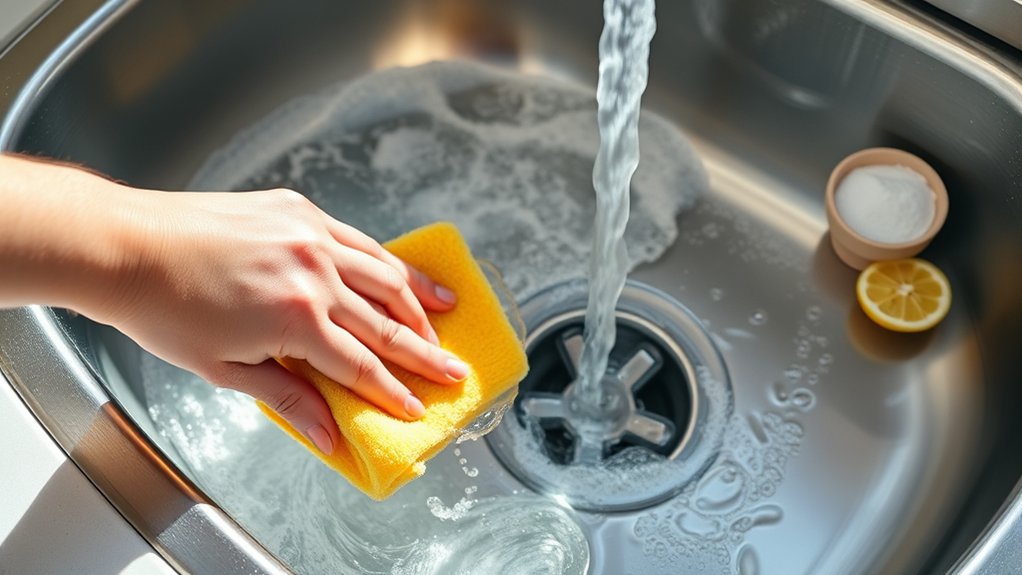
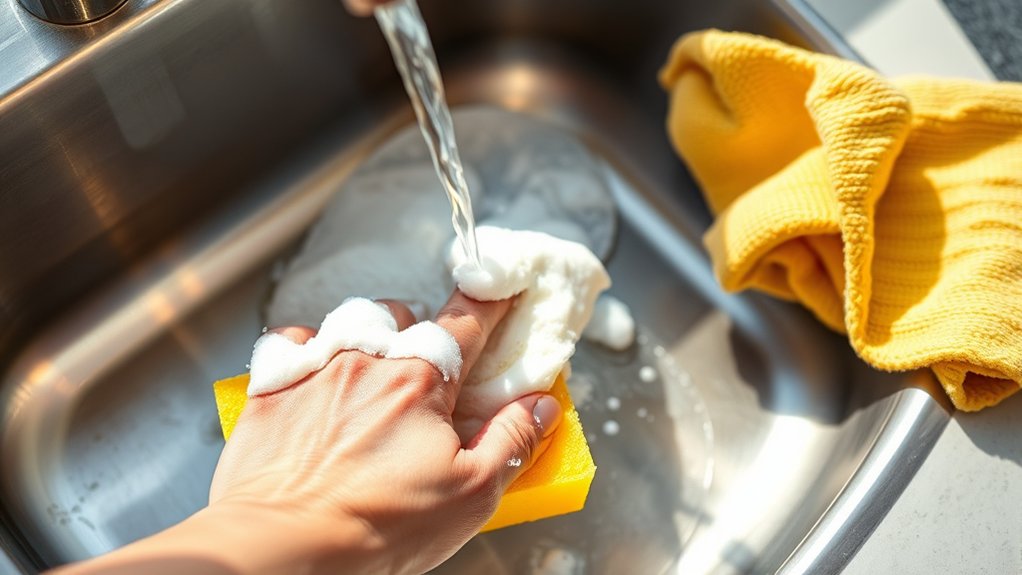
After scrubbing away stains, rinse your kitchen sink thoroughly with warm water to remove any remaining cleaner or debris. This step ensures your efforts in sink stain removal aren’t wasted by leftover residue. Next, focus on deodorizing techniques to keep your sink fresh and inviting.
Follow these simple steps:
- Pour a mixture of baking soda and water around the sink basin to neutralize odors.
- Add white vinegar slowly; it will fizz and help break down grime and lingering smells.
- Let the solution sit for 5 minutes, then rinse with warm water to flush everything away.
- For extra freshness, rub a lemon wedge over the drain and faucet areas, then rinse again.
Frequently Asked Questions
Can I Use Bleach to Clean My Kitchen Sink?
Yes, you can use bleach to clean your kitchen sink, but you should be cautious. Avoid mixing bleach with baking soda or other cleaners, as it can create harmful fumes.
For safer cleaning, try scrubbing with baking soda and using abrasive scrubbers to tackle stains and grime. After using bleach, rinse thoroughly to protect your sink’s surface and your health. Always ventilate the area well while cleaning.
How Often Should I Deep Clean My Kitchen Sink?
You should deep clean your kitchen sink at least once a week to keep it fresh and hygienic. Using the right cleaning tools, like scrub brushes and non-abrasive sponges, helps remove grime effectively. Don’t forget drain maintenance, too—regularly clear debris and use a safe cleaner to prevent clogs and odors. Staying consistent with these steps guarantees your sink stays spotless and your kitchen stays healthy.
What Natural Cleaners Work Best for Stainless Steel Sinks?
You might expect harsh chemicals to shine your stainless steel sink, but eco friendly options like baking soda actually work best. You can sprinkle baking soda over the wet sink, then scrub gently to lift stains without scratching. Its mild abrasiveness contrasts with chemical cleaners’ harshness, making it safe and effective.
Pair it with a splash of vinegar for extra sparkle. This natural combo keeps your sink clean and green effortlessly.
How Do I Prevent Sink Scratches During Cleaning?
To prevent sink scratches during sink scrubbing, always use a soft sponge or cloth instead of abrasive scrubbers. Avoid steel wool or harsh brushes that can damage the surface.
Stick to gentle, non-abrasive cleaners and rinse thoroughly after scrubbing. You can also place a sink mat or rubber grid at the bottom to protect against scratches from dishes or utensils.
These simple steps guarantee effective scratch prevention while keeping your sink spotless.
Is It Safe to Use Vinegar on All Sink Types?
Using vinegar on your sink is like using a sharp knife—it’s safe if you know the right way. Vinegar safety depends on sink material compatibility. It works great on stainless steel and porcelain sinks but can damage natural stone like granite or marble by etching the surface.
Conclusion
Now that you’ve cleaned your kitchen sink, it should shine like new and feel fresh every time you use it. Keeping up with these simple steps makes maintaining your sink as easy as pie.
Just gather your supplies, scrub away stains, and rinse well to keep odors at bay. With a little regular care, your kitchen sink will stay spotless and inviting, making your kitchen a more pleasant place to cook and clean.