7 Essential Tips to Choose Kitchen Cabinets
Choosing kitchen cabinets can feel overwhelming when you’re trying to balance storage, style, durability, and budget. You’re not alone—many people struggle to find options that look great and work for everyday life. These 7 essential tips to choose kitchen cabinets can help you narrow down your choices.
When choosing kitchen cabinets, start by evaluating your storage needs and style to guarantee they fit your space and taste. Set a realistic budget that covers materials, installation, and hardware without overspending.
Pick durable materials and finishes that match your kitchen’s look and maintenance ease. Investigate door types and handy features, then decide if you’ll install them yourself or hire a pro.
Keep quality and functionality a priority, and you’ll be ready to make your best selection. There’s plenty more to contemplate for a perfect fit.
Key Takeaways
- Assess your storage needs and kitchen style to select cabinets that balance functionality and aesthetic appeal.
- Plan a realistic budget including materials, installation, and hardware costs to avoid surprises.
- Choose durable materials and finishes that match your lifestyle and maintenance preferences.
- Select door styles and features that enhance usability and fit your kitchen’s design theme.
- Decide between professional or DIY installation based on skill level, budget, and desired quality.
Determine Your Kitchen Cabinet Storage Needs
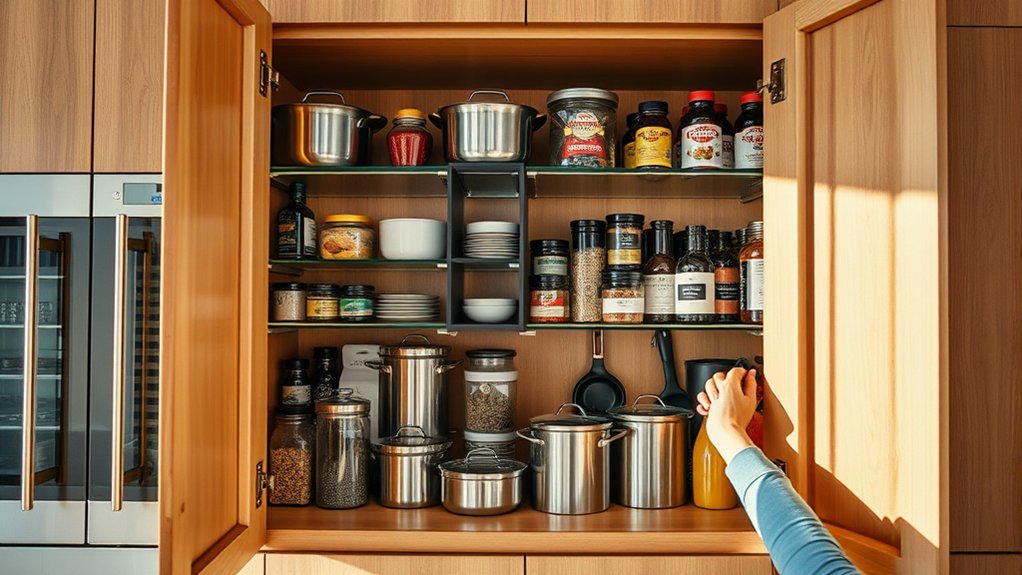
How much storage do you really need in your kitchen cabinets? Start by evaluating your cooking habits and the types of items you store.
Begin by assessing your cooking style and the kitchen items you use most often.
If you have many small appliances or a large collection of cookware, you’ll need more space. Consider mixing open shelving with custom cabinetry to maximize both function and style.
Open shelving lets you access frequently used items quickly and adds an airy feel to your kitchen, but it’s best for items you don’t mind displaying.
Custom cabinetry allows you to tailor storage solutions to your specific needs. Think pull-out trays, deep drawers, and adjustable shelves.
Take measurements and inventory your current kitchenware to avoid over- or underestimating. By understanding your storage requirements, you guarantee your new cabinets will keep your kitchen organized and efficient without overcrowding or wasted space.
This balance sets the foundation for a kitchen that truly works for you.
Set a Realistic Budget for Kitchen Cabinets

When do you know if your kitchen cabinet budget is realistic? Start with thorough budget planning. Assess how much you can comfortably spend without compromising other priorities. Research cabinet prices early to get a clear idea of typical costs.
Don’t forget to include installation fees and any additional hardware expenses. Next, compare costs among different suppliers and cabinet styles to spot the best value for your money. This helps you avoid overspending on features you don’t need.
Keep your budget flexible enough to accommodate unexpected costs but firm enough to prevent unnecessary upgrades. Setting a realistic budget saves you stress and ensures you get quality cabinets without breaking the bank.
Choose the Right Kitchen Cabinet Materials and Finishes
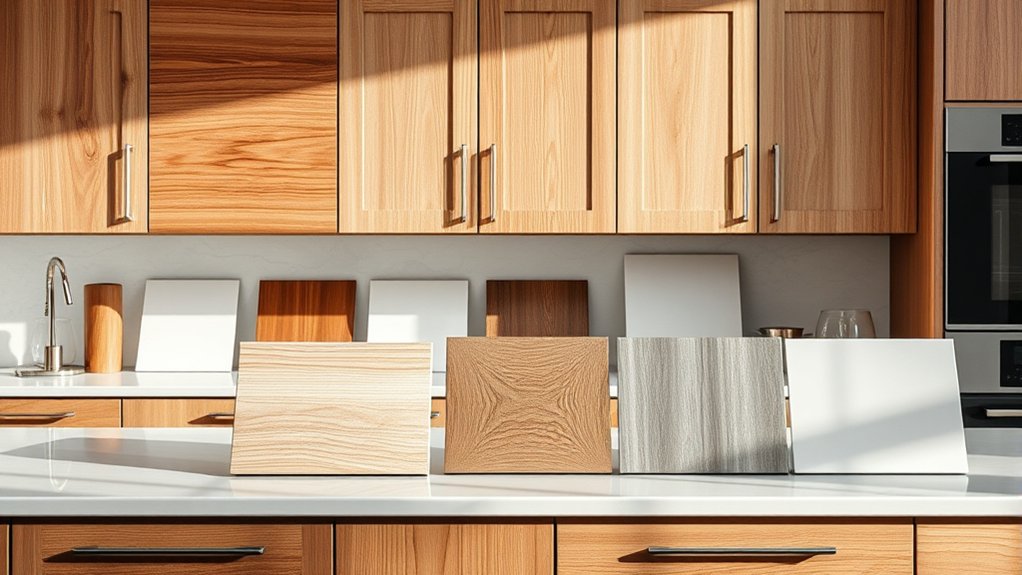
Since kitchen cabinets are a long-term investment, you’ll want to choose materials and finishes that balance durability, style, and maintenance. Solid wood offers timeless appeal and strength but requires regular cabinet maintenance to prevent warping or scratches.
If you prefer a budget-friendly option, consider plywood or MDF with laminate finishes, which resist moisture and are easier to clean. Don’t overlook eco friendly finishes—they reduce harmful chemicals and improve indoor air quality while still providing a polished look.
Finishes like water-based paints or natural oils protect your cabinets without compromising the environment. When selecting finishes, think about how much wear your cabinets will endure daily.
Glossy finishes are easier to wipe down but may show fingerprints, while matte finishes hide imperfections better but might need more care. By carefully choosing materials and eco friendly finishes, you’ll enjoy cabinets that not only look great but also stand up to everyday use with minimal upkeep.
Pick Kitchen Cabinet Styles That Match Your Design
Although choosing the right cabinet materials is essential, picking styles that complement your kitchen’s overall design truly brings the space together. You want your cabinets to blend seamlessly with your color palettes and improve lighting integration for a cohesive, inviting feel.
Whether your kitchen is modern, rustic, or traditional, matching styles will uplift the entire room.
Here’s a quick guide to help you decide:
| Style | Color Palettes |
|---|---|
| Modern | Neutral tones, bold accents |
| Rustic | Earthy hues, natural wood tones |
| Traditional | Warm colors, classic whites |
Also, consider how your cabinets work with lighting integration. Glass-front cabinets or under-cabinet lighting can highlight your style and brighten the space.
Choose styles that naturally accommodate these elements for both function and flair. Doing this ensures your kitchen cabinets improve your design, not clash with it.
Get to Know Cabinet Door Types and Features
Get to know the most common cabinet door styles to find the look that feels right for your kitchen. As you explore your options, consider how different materials balance durability and appearance. You’ll also want to look for practical features that make everyday use easier.
Common Door Styles
What makes a cabinet door style stand out? It’s a mix of cabinet door aesthetics and the door hinge mechanisms that influence both looks and function.
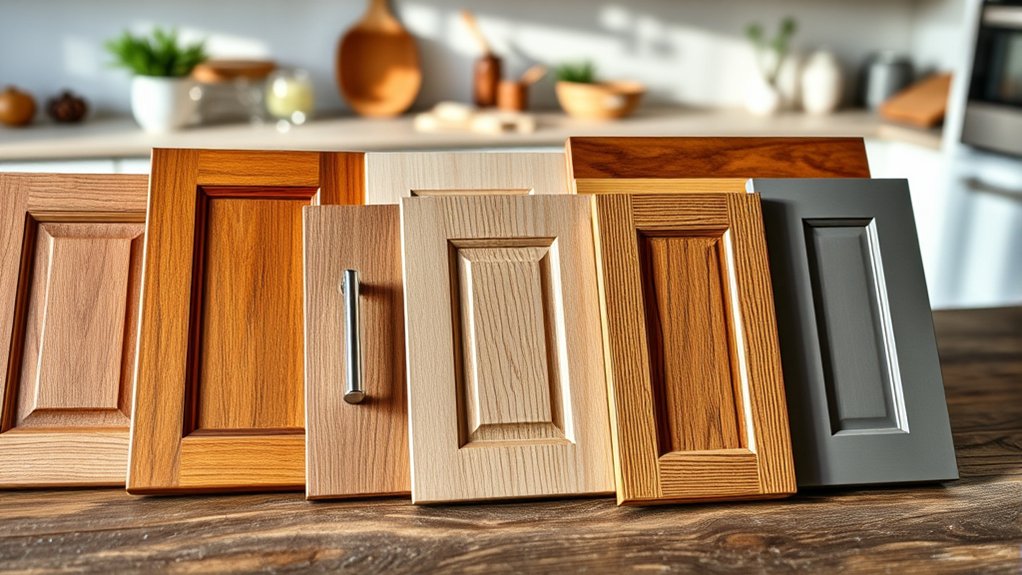
When choosing common door styles, you’ll notice options like Shaker, which offers clean lines and simplicity, or raised-panel doors that bring a traditional, elegant feel. Flat-panel doors give you a modern, sleek vibe, while glass-front doors add openness and display space.
Don’t overlook how door hinge mechanisms impact ease of use and durability. Soft-close hinges prevent slamming, while concealed hinges keep the look seamless.
Understanding these styles helps you match your kitchen’s personality and guarantees your cabinets work smoothly every day. With the right door style, your kitchen becomes both stylish and practical.
Material Options Overview
Choosing the right door style sets the tone for your kitchen, but the material you select shapes how your cabinets perform and last. You want to balance durability, maintenance considerations, and style while exploring eco friendly options. Here’s a quick overview to help you decide:
- Solid Wood: Classic and sturdy, but needs regular sealing to prevent damage.
- MDF (Medium Density Fiberboard): Budget-friendly and smooth, great for painted finishes, but less moisture-resistant.
- Plywood: Strong and moisture-resistant, a smart choice for lasting cabinets.
- Thermofoil: Easy to clean and low maintenance, but can peel over time.
- Bamboo: An eco friendly option that’s durable and gives a unique look.
Knowing these materials helps you pick cabinets that suit your lifestyle and kitchen environment.
Functional Features Explained
Although selecting the perfect cabinet material is essential, understanding the functional features and door types will truly improve your kitchen’s usability and style. You’ll want to investigate options like soft-close hinges, pull-out shelves, and lazy Susans for innovative storage that maximizes every inch.
Choosing between shaker, flat-panel, or glass-front doors affects both aesthetics and accessibility. For tight spaces, consider sliding or bi-fold doors to optimize space utilization without sacrificing function.
Features like built-in dividers and adjustable racks help you organize efficiently, making your daily routine smoother. By focusing on these practical elements, you guarantee your kitchen cabinets don’t just look great but also work smartly, adapting to your lifestyle and storage needs with ease.
Choose Kitchen Cabinet Hardware and Accessories
Selecting the right hardware and accessories can transform your kitchen cabinets from ordinary to stunning. You’ll find that decorative hardware options not only add personality but also improve functionality. Choosing knobs, pulls, and handles that match your kitchen’s style can elevate the entire space. Don’t forget about cabinet accessory organization to keep your kitchen efficient and clutter-free.
Consider these essentials when selecting hardware and accessories:
- Match finishes with your kitchen’s style and color palette
- Opt for durable materials that withstand daily use
- Choose ergonomic designs for comfortable handling
- Incorporate organizational accessories like pull-out trays and dividers
- Mix and match decorative hardware options for a personalized touch
Decide Between Professional and DIY Cabinet Installation
When it comes to installing your kitchen cabinets, you’ll need to weigh the benefits of hiring a professional against tackling the job yourself. Professional installation ensures precise alignment, secure mounting, and a polished finish, saving you time and potential frustration.
If you’re not confident in your skills or lack the right tools, opting for professional installation can prevent costly mistakes and delays.
On the other hand, DIY assembly might appeal if you want to save money and enjoy hands-on involvement in your kitchen remodel. If you have basic carpentry skills and patience, assembling and installing cabinets yourself can be rewarding.
However, be prepared to invest extra time and effort, as improper installation can affect cabinet durability and function.
Consider your budget, skill level, and timeline carefully. Whether you choose professional installation or DIY assembly, prioritizing quality and accuracy will help you enjoy your new kitchen cabinets for years to come.
Frequently Asked Questions
How Do I Maintain and Clean Kitchen Cabinets Effectively?
You should clean your kitchen cabinets regularly using a soft cloth and mild soap to protect cabinet finishes from damage. Avoid harsh chemicals that can strip the finish.
Don’t forget to wipe down cabinet hardware, like handles and knobs, to keep them shiny and functional. For stubborn grime, use a gentle brush.
Dry everything thoroughly to prevent moisture buildup, and polish wooden cabinets occasionally to maintain their luster and durability.
What Are the Latest Trends in Kitchen Cabinet Lighting?
Did you know 68% of homeowners prefer LED accents in their kitchen lighting? You’ll love how LED accents create a sleek, modern vibe while saving energy.
Smart lighting is another hot trend—you can control brightness and color with your phone or voice assistant, making your kitchen more functional and stylish. Integrating smart lighting with LED accents lets you customize your space effortlessly, enhancing both ambiance and convenience every day.
Can Kitchen Cabinets Affect Home Resale Value?
Yes, kitchen cabinets can definitely affect your home’s resale value. When you choose the right cabinet styles, you create a fresh, appealing look that attracts buyers.
Updating cabinet hardware can also make a big difference without a full remodel. People notice quality and style in the kitchen, so investing in modern, durable cabinets will boost your home’s appeal and resale price.
Don’t overlook these details—they matter more than you think.
How Long Do Kitchen Cabinets Typically Last?
Imagine Sarah, whose oak kitchen cabinets lasted over 25 years without major repairs. You can expect kitchen cabinets to last anywhere from 15 to 30 years, depending on cabinet durability and material longevity.
Solid wood cabinets typically offer the longest lifespan, while particleboard may wear out sooner. To maximize how long your cabinets last, choose high-quality materials and maintain them well, ensuring your kitchen stays functional and attractive for decades.
Are There Eco-Friendly Options for Kitchen Cabinets?
Yes, you can definitely find eco-friendly options for kitchen cabinets. Choosing cabinets made from sustainable materials like bamboo or reclaimed wood reduces environmental impact. You’ll also want to look for eco-friendly finishes that avoid harmful chemicals and VOCs, ensuring a healthier home. By selecting these options, you not only support sustainability but also create a safer, greener kitchen space. It’s a smart choice for both you and the planet.
Conclusion
Choosing the perfect kitchen cabinets might seem like a tall order, but with these tips, you’ll hit the nail on the head. By understanding your storage needs, setting a budget, and picking the right materials and styles, you’ll create a kitchen that’s both functional and beautiful.
Don’t forget to factor in hardware and installation options to complete the look. With a little planning, choosing kitchen cabinets for your dream kitchen can come together without a hitch.