How to Measure Kitchen Cabinet Doors in 7 Easy Steps
Measuring kitchen cabinet doors can feel tricky, especially when a small mistake leads to a poor fit or misaligned hinges. You’re not alone—many people struggle to get accurate measurements. These simple steps can help you measure kitchen cabinet doors with confidence.
Start by grabbing reliable tools like a tape measure, pencil, and level to guarantee accuracy. Measure the door’s height and width carefully, keeping the tape straight and excluding the frame. Check the thickness and note any edge details or overlay size. Don’t forget to record hinge placement for perfect alignment.
Write down every measurement clearly and double-check each one before ordering or cutting. Following these steps will help you get a flawless fit and stylish finish, with more tips available ahead.
Key Takeaways
- Use a reliable tape measure to measure each cabinet door’s height and width accurately, holding the tape straight and edge-to-edge.
- Measure the door thickness and note edge profiles using a caliper or ruler to ensure hinge compatibility and proper fit.
- Record hinge placement and spacing precisely to facilitate accurate hinge installation and alignment.
- Double-check and re-measure all dimensions for consistency and accuracy before ordering or cutting.
- Document all measurements clearly, including allowances for hardware, to avoid mistakes and ensure a professional finish.
Pick the Right Tools to Measure Your Cabinet Doors

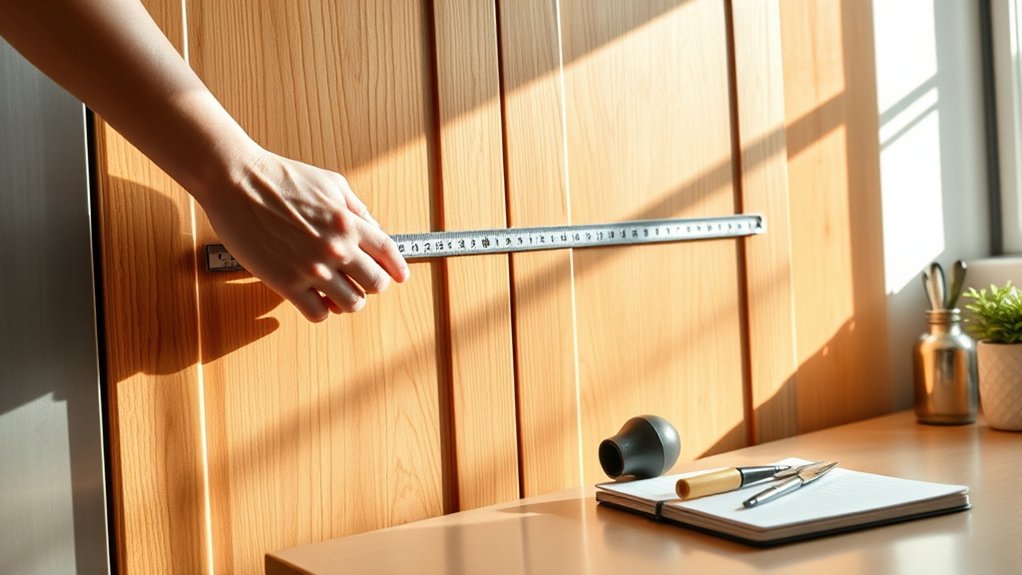
Before you begin measuring, make sure you have the right tools on hand. You’ll need a reliable tape measure or a metal ruler for precise measurements. A pencil and notepad will help you jot down dimensions as you go.
If you plan to refresh your cabinet paint, having a screwdriver handy is crucial for removing door hinges carefully without damaging the doors. This step ensures you get accurate measurements without any interference from hardware.
Also, consider using a level to check if your cabinet doors are perfectly straight, which affects the accuracy of your measurements. Using the right tools saves time and prevents mistakes when ordering replacements or repainting.
Measure the Height of Your Kitchen Cabinet Doors

Since accurate measurements are essential, start by measuring the height of your kitchen cabinet doors from the bottom edge to the top edge. Use a tape measure and hold it straight to avoid any errors.
Keep in mind the cabinet material, as certain materials like solid wood may expand or contract slightly with temperature and humidity changes, so measuring precisely is key. Also, consider your door hinge types—overlay, inset, or full overlay—as these affect how the door sits and may influence whether you measure the outer edges or just the visible part.
For most hinge types, measure the entire door height without including the cabinet frame. Take your time to ensure the tape measure is flush against the surface, and record your measurement carefully.
Double-check by measuring a second time to confirm accuracy. This step guarantees the foundation for fitting new doors or replacements perfectly.
Measure the Width of Your Kitchen Cabinet Doors
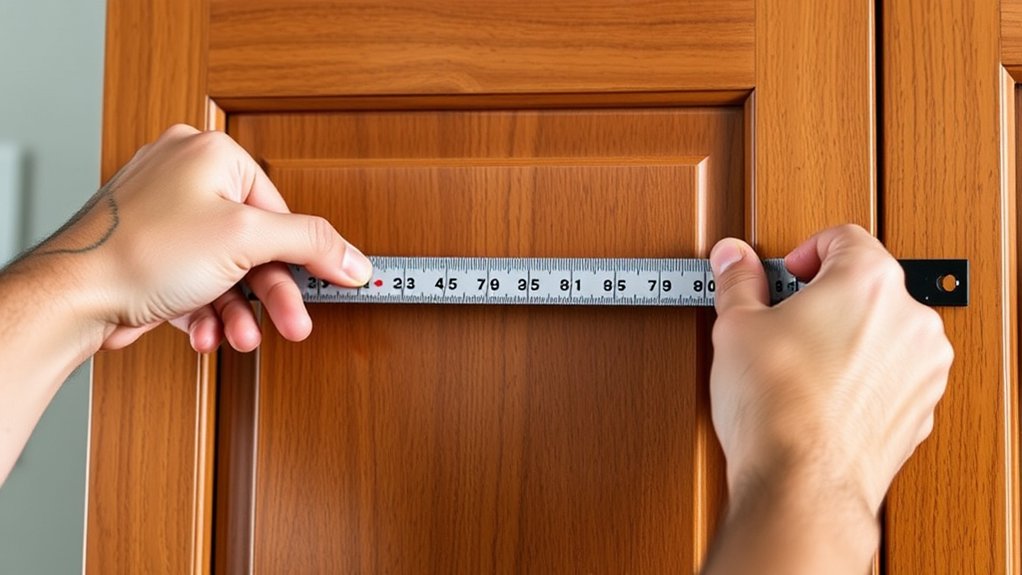
Grab your measuring tape and measure the cabinet door frame from edge to edge. Take your time to get an accurate measurement, then write it down so you don’t forget it.
Use a Measuring Tape
When you measure the width of your kitchen cabinet doors, use a measuring tape to get the most accurate results. A flexible measuring tape is one of the best measurement tools for this task because it easily adapts to the door’s edges and provides precise readings.
Avoid common measuring mistakes like guessing or using rigid tools that don’t contour well. Start by placing the tape measure firmly at one edge of the door, then extend it straight across to the opposite edge without slack or bends.
Read the measurement carefully and record it immediately to prevent errors. Using a measuring tape guarantees you capture the exact width, making your cabinet door measurements reliable for ordering or modifications.
Always double-check your measurements to avoid costly mistakes.
Measure Door Frame Width
After using your measuring tape to get an accurate reading, focus on measuring the door frame width itself. Place the tape at one edge of the door frame and stretch it across to the opposite edge.
This width measurement helps you select doors that fit perfectly, complementing your kitchen’s paint color and hardware style. Precise width ensures your new doors align well with existing elements.
| Cabinet Type | Frame Width (inches) | Recommended Hardware Style |
|---|---|---|
| Base | 15 – 24 | Brushed Nickel Handles |
| Wall | 12 – 18 | Matte Black Knobs |
| Pantry | 18 – 30 | Antique Brass Pulls |
| Specialty | Custom | Mixed Metal Finishes |
Record Measurements Accurately
Although measuring the door frame width gives you a solid starting point, you’ll want to record the exact width of each kitchen cabinet door to guarantee a perfect fit. Use a tape measure to get precise measurements from edge to edge, noting each door individually.
This attention to detail helps avoid mistakes during cabinet maintenance or replacement. Be mindful of any decorative finishes that might slightly affect the door’s dimensions, especially if they add thickness or shape variations.
Write down every measurement clearly to prevent confusion later. Accurate recording ensures your new doors align perfectly with the existing frames and maintain the kitchen’s aesthetic appeal.
Taking this extra care will save you time, effort, and potential frustration in your cabinet project.
Measure the Thickness and Edge Details of Cabinet Doors
Next, measure the thickness of each cabinet door to ensure a proper fit. While you’re at it, check the edge profiles, too, since they affect both the look and compatibility of the doors. Use a caliper or ruler to record these measurements before moving on.
Measuring Door Thickness
When measuring your kitchen cabinet doors, you’ll want to start by checking their thickness and edge details carefully. Door thickness affects how your doors fit with different door hinge types and guarantees smooth operation.
Different cabinet material options, such as solid wood or MDF, often come in standard thicknesses, but it’s essential to measure yours precisely. Use a caliper or ruler to get an accurate reading.
Keep these tips in mind:
- Measure at multiple points for consistency
- Record the thickness in millimeters or inches
- Note any variations due to edge treatments
- Check thickness near hinges for proper fit
- Consider door thickness when ordering replacements
Accurate thickness measurements help you select compatible hinges and maintain your cabinet’s look and function.
Identifying Edge Profiles
Since the edge profile affects both the style and fit of your cabinet doors, you’ll want to identify it carefully before ordering replacements or hardware. Look closely at the edges for decorative details or unique styles. Use a caliper or ruler to measure the thickness, and note whether the edges are rounded, beveled, or square.
Here’s a quick guide to common edge profiles:
| Edge Style | Description |
|---|---|
| Beveled | Angled cut, adds dimension |
| Rounded | Smooth, curved edges |
| Square | Straight, sharp edges |
Identifying these details helps ensure your new doors match your kitchen’s look and fit without gaps or misalignment.
Measure Cabinet Door Overlay and Hinge Placement for Fit
How do you guarantee your new cabinet doors fit perfectly? Start by measuring the cabinet door overlay and hinge placement precisely. Overlay measurement techniques help you determine how much the door covers the cabinet frame, which impacts the door’s size and fit. Next, focus on the cabinet hinge spacing, as incorrect spacing can cause alignment issues.
Ensure perfect cabinet door fit by precisely measuring overlay and hinge placement to avoid alignment problems.
Follow these key steps:
- Measure the visible frame around the door to find overlay size
- Check existing door overlay for reference
- Measure hinge placement from the top and bottom edges
- Note the distance between hinge holes for accurate spacing
- Use a ruler or tape measure for precise readings
Record Your Cabinet Door Measurements Clearly and Accurately
Although measuring cabinet doors takes careful attention, recording those measurements clearly guarantees a smooth installation process. Jot down each door’s height, width, and thickness precisely, using a consistent unit like inches or centimeters.
Label every measurement with its corresponding cabinet to avoid confusion later. Also include details about hardware styles, such as knob or handle placements, since these affect drilling spots and alignment.
Don’t forget to document your chosen color options, especially if you’re matching new doors to existing cabinets or planning a custom order. A dedicated notebook or digital file helps you organize this information and access it easily.
Clear, accurate records prevent mistakes and save time during ordering or installation. By staying methodical and thorough now, you’ll help ensure your kitchen cabinet doors fit perfectly and look just the way you envisioned.
Double-Check All Measurements Before Ordering or Cutting
Before you place your order or start cutting, make sure to double-check every measurement you’ve recorded. This step is essential to confirm your kitchen cabinet doors fit perfectly, maintaining both design aesthetics and material durability. Even a small error can lead to costly mistakes or compromise the overall look and function.
Double-check all measurements before ordering to ensure perfect fit, design integrity, and long-lasting kitchen cabinet doors.
Here’s what to focus on when reviewing your measurements:
- Verify height, width, and thickness of each door precisely
- Cross-check measurements against your design plan
- Confirm consistency between matching door pairs
- Re-measure any irregular or custom-shaped doors
- Guarantee allowances for hinges and hardware are included
Taking these precautions helps you avoid returns or wasted materials and guarantees your cabinets will look professional and last long. Double-checking might feel tedious, but it’s key to achieving a polished result where form meets function seamlessly.
Frequently Asked Questions
What Type of Wood Is Best for Kitchen Cabinet Doors?
You’ll find that maple is one of the best woods for kitchen cabinet doors because it has a smooth wood grain and excellent moisture resistance. Oak is another great choice, offering a pronounced wood grain and durability.
If you want something more exotic, cherry wood provides a rich color and decent moisture resistance. Just make sure to seal the wood properly to protect against humidity and spills, keeping your cabinets looking great for years.
How Do I Remove Old Cabinet Doors Safely?
To remove old cabinet doors safely, start by taking safety precautions like wearing gloves and safety glasses. Then, open the door and use a screwdriver to carefully unscrew the hinges.
Hold the door firmly as you remove the screws to prevent it from falling. If the hinges are stuck, gently wiggle them to avoid damage.
Once the hinge removal is complete, you can safely take off the door without hurting yourself or the cabinet.
Can I Paint or Refinish My Cabinet Doors Myself?
Yes, you can definitely tackle DIY painting and refinishing your cabinet doors yourself. Start by removing the doors and sanding them down to create a smooth surface.
Use proper finishing techniques like applying primer, followed by a couple of paint coats, and finishing with a clear sealant for durability. Taking your time and prepping well guarantees your cabinets look professional and last longer.
It’s a rewarding project you can handle with some patience and the right tools.
What Are Common Cabinet Door Styles and Finishes?
Wondering which cabinet door style suits your kitchen best? You’ll find popular styles like Shaker, raised panel, and flat panel, each offering a unique look. Don’t forget hardware options and decorative accents—they can transform plain doors into standout features. Whether you prefer sleek contemporary finishes or classic wood tones, your choices impact the room’s vibe. So, mix and match styles, finishes, and hardware to create a kitchen that truly reflects your taste.
How Long Does It Take to Install New Cabinet Doors?
Installing new cabinet doors usually takes a few hours, depending on how many doors you have. You’ll want to remove the old doors carefully, then attach the cabinet door hinges to the new doors. After that, you can mount the doors onto the cabinets and add cabinet door hardware like handles or knobs. If you’re organized and have the right tools, you’ll finish quicker than you expect!
Conclusion
Now that you know how to pick the right tools, measure height and width, check thickness and edges, and note overlays and hinges, you’re ready to record and double-check every detail. Measuring kitchen cabinet doors isn’t complicated when you follow these steps carefully, stay organized, and trust your process.
So, measure confidently, measure accurately, and measure twice before ordering or cutting. Follow these steps for measuring kitchen cabinet doors, and your perfect doors are just a few steps away!