5 Easy Steps to Clean Grease Off Kitchen Cabinets
Grease can make kitchen cabinets look dull and feel sticky, and it’s not always clear which cleaner is safe to use. You’re not alone—many people struggle to remove buildup without damaging their cabinets. These easy steps to clean grease off kitchen cabinets can help you find the right approach.
Start by clearing your cabinets and wiping away dust to avoid mixing it with grease. Choose cleaners based on your cabinet material: mild soap for wood, a vinegar solution for laminate, or baking soda paste for painted surfaces.
Use warm soapy water and soft cloths to gently remove grease, avoiding harsh chemicals. For stubborn spots, apply a baking soda paste or degreaser carefully.
Keep up regular cleaning and drying to maintain shine and prevent buildup. Learn how to keep your cabinets looking fresh longer.
Key Takeaways
- Clear cabinets and wipe away dust before cleaning to avoid mixing debris with grease.
- Use a mild dish soap and warm water solution for gentle, effective grease removal.
- Apply a baking soda paste on stubborn grease spots and let it sit for 10 minutes.
- Wipe cabinets with white vinegar using a microfiber cloth to cut through grease residue.
- Dry cabinets thoroughly after cleaning to prevent moisture damage and maintain finish.
Get Your Cabinets Ready for Cleaning
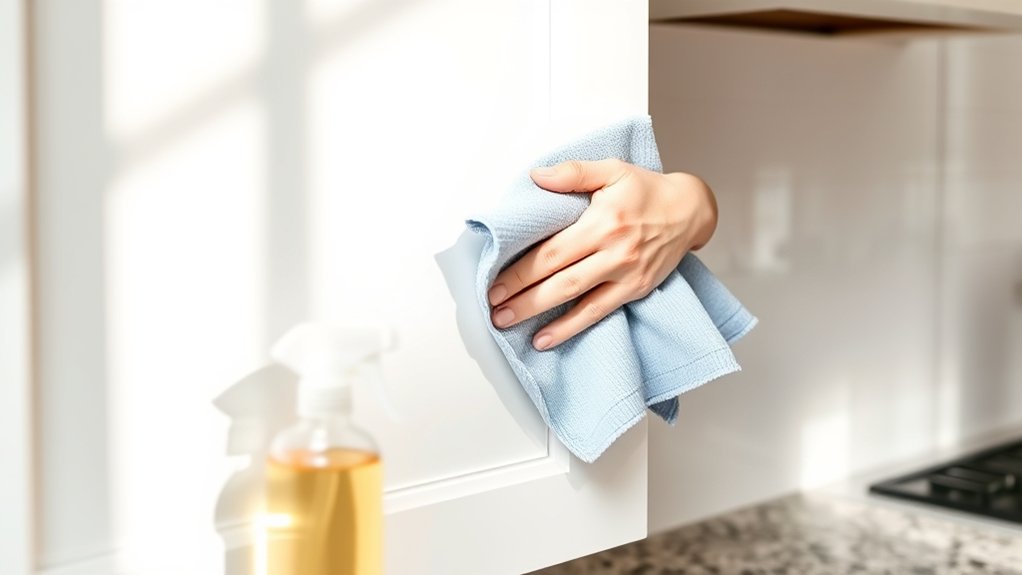
Before you begin cleaning, clear everything off your cabinets and wipe away any dust or loose debris. This step is essential because dust and particles can mix with grease, making the cleaning process harder.
Clear your cabinets and remove dust first to prevent grease and particles from complicating cleaning.
Next, identify your cabinet material—whether it’s wood, laminate, or metal—as this affects how you should approach cleaning without damaging the surface. Knowing your cabinet material helps you choose the right cleaning method later.
Consider your cleaning frequency, too. If you clean your cabinets regularly, grease buildup will be minimal, making the job easier each time. However, if you’ve delayed cleaning, you might face stubborn residue, requiring more effort.
Establishing a consistent cleaning schedule prevents heavy grease accumulation and keeps your cabinets looking fresh. Taking these preparatory steps ensures your cabinets are ready for effective grease removal without harm.
Now that your cabinets are prepped, you’re set to tackle the grease efficiently.
What Are the Best Cleaners for Greasy Kitchen Cabinets?
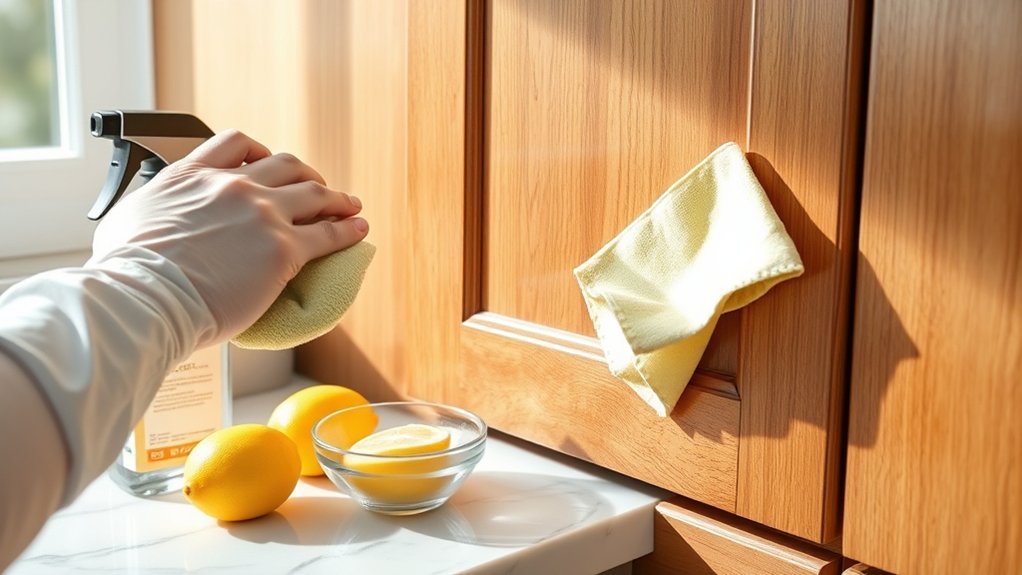
Since grease can be stubborn and vary in thickness, choosing the right cleaner is essential to restore your kitchen cabinets effectively. You’ll want to *think about* your cabinet material and cleaning frequency to avoid damage and maintain cleanliness.
For example, wood cabinets need gentle cleaners, while laminate can handle stronger solutions.
Here’s a quick guide to help you pick the best cleaner:
| Cabinet Material | Recommended Cleaner | Cleaning Frequency |
|---|---|---|
| Wood | Mild dish soap + water | Weekly or biweekly |
| Laminate | Vinegar + water solution | Weekly or as needed |
| Painted | Baking soda paste | Monthly or when greasy |
How to Remove Grease From Cabinets Safely
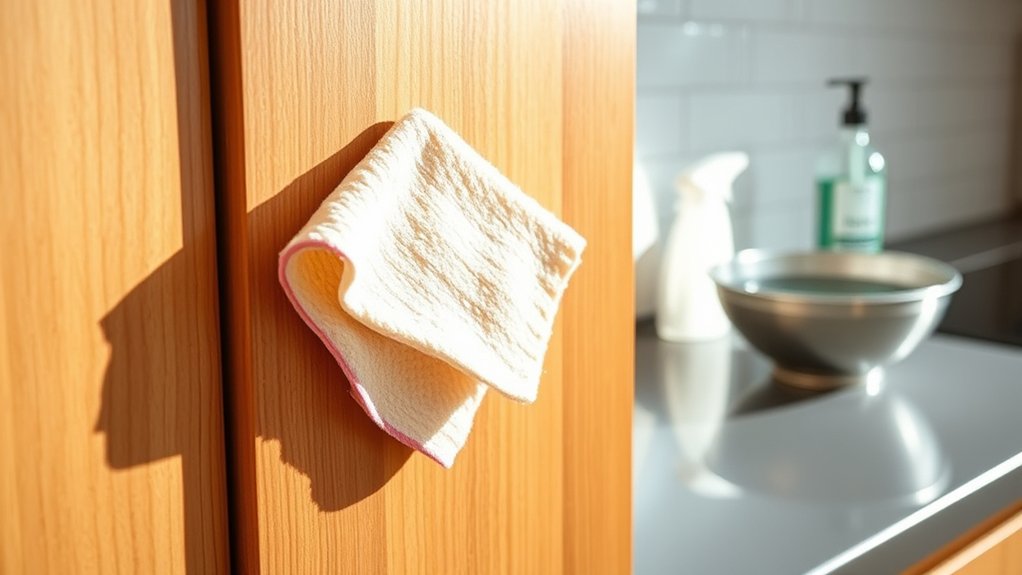
Although grease can seem tough to tackle, you can safely remove it from your cabinets by using the right techniques and cleaners. Start by mixing a few drops of dish soap with warm water; this gentle solution breaks down oil stains without damaging your cabinet’s finish.
Avoid harsh chemicals that emit strong kitchen fumes, as they can irritate your eyes and respiratory system. Instead, work in a well-ventilated area and wear gloves to protect your skin.
Use a soft cloth or sponge to wipe the greasy surfaces, rinsing frequently to avoid spreading the oil stains further. For regular maintenance, clean your cabinets weekly to prevent buildup caused by cooking fumes.
This way, you’ll keep your kitchen fresh and grease-free without risking damage or health issues. Following these safe steps guarantees your cabinets stay spotless while protecting your home environment.
How to Tackle Stubborn Grease Spots
When grease spots refuse to budge with basic cleaning, you’ll need a stronger approach to restore your cabinets’ shine. Tackling stubborn stains caused by heavy grease buildup requires a few extra steps and the right tools.
Start by mixing a paste of baking soda and water; it acts as a gentle abrasive that won’t damage your cabinet finish. Apply it directly to the tough spots and let it sit for 10 minutes before scrubbing gently with a soft cloth.
If that doesn’t work, try these methods:
- Use a degreaser spray designed for kitchen surfaces, following the instructions carefully.
- Apply white vinegar with a microfiber cloth to cut through grease buildup naturally.
- Employ a magic eraser lightly on the affected areas, but test it first to avoid finish damage.
These techniques help you conquer even the most persistent grease stains, leaving your cabinets looking fresh and clean.
Keep Your Cabinets Looking Great After Cleaning
After removing tough grease spots, you’ll want to maintain your cabinets’ fresh appearance for as long as possible. To do this, regularly wipe your cabinets with a soft cloth and mild cleaner to protect the cabinet finishing. Avoid harsh chemicals that can damage the surface or dull the shine. Don’t forget to clean decorative hardware as well; it adds charm and can accumulate grease quickly.
Here’s a quick guide to keep your kitchen cabinets looking great:
| Task | Frequency | Tip |
|---|---|---|
| Wipe cabinet surfaces | Weekly | Use mild soap and water |
| Clean decorative hardware | Bi-weekly | Use a soft brush for crevices |
| Inspect cabinet finishing | Monthly | Touch up scratches promptly |
| Avoid excess moisture | Always | Dry surfaces after cleaning |
| Use cabinet liners | As needed | Prevent stains inside cabinets |
Following these steps helps preserve your cabinets’ beauty and prolongs the life of their finishing and decorative hardware.
Frequently Asked Questions
Can Grease Buildup Damage the Cabinet Material Over Time?
Yes, grease buildup can damage your cabinet material over time. When you neglect cabinet maintenance, the accumulated grease can break down finishes and weaken the material’s durability.
This not only makes your cabinets look dull but can also cause warping, cracking, or peeling, especially on wood or laminate surfaces. Regular cleaning helps preserve the material’s strength and appearance, ensuring your kitchen cabinets stay durable and functional for years to come.
How Often Should I Deep Clean My Kitchen Cabinets?
You probably want to deep clean your kitchen cabinets only when they start glowing with grease, right? Actually, to keep your cabinet finishes looking fresh and lasting longer, aim for a deep clean every three to six months.
The cleaning frequency depends on your cooking habits and kitchen environment. If you cook often or use lots of oil, you might need to clean more frequently. Regular care prevents buildup and preserves your cabinets’ beauty.
Are There Eco-Friendly Cleaners Effective for Grease Removal?
Yes, you can use eco friendly solutions that work great for grease removal. Natural degreasers like vinegar, baking soda, and lemon juice are powerful and safe for your cabinets.
Mix vinegar with water for a simple spray, or make a paste with baking soda to scrub stubborn spots. These natural degreasers cut through grease without harsh chemicals, so you’ll keep your kitchen clean and eco-conscious at the same time.
Can Grease Stains Cause Odors in Kitchen Cabinets?
Yes, grease stains can cause odors in your kitchen cabinets. When grease builds up, it traps cooking odors, making your kitchen smell unpleasant over time. Plus, if the grease stays damp, it can encourage mold growth, which adds musty smells and health risks.
To keep your cabinets fresh, clean off grease regularly and guarantee good ventilation. This prevents odors and stops mold from taking hold, keeping your kitchen inviting and safe.
Is It Safe to Use Steam Cleaners on Kitchen Cabinets?
Yes, steam cleaning can be safe for your kitchen cabinets if you use it carefully. You’ll want to test a small, hidden area first to check for any damage.
Steam cleaning is great for cutting grease without harsh chemicals, but excessive moisture might harm wood finishes or cause warping. Always control the steam intensity and wipe cabinets dry afterward to maintain cabinet safety and keep them looking their best.
Conclusion
Now that you know how to clean grease off your kitchen cabinets in just five easy steps, why wait to enjoy a fresh, spotless space? With the right cleaners and techniques, you’ll tackle grease quickly and safely—even those stubborn spots.
Keeping your cabinets looking great is simpler than you think. So, are you ready to bring that shine back and make your kitchen feel like new again? You’ve got this!