How to Measure Kitchen Cabinets in 5 Easy Steps
Measuring kitchen cabinets can feel tricky, especially when an inch or two can affect the fit of your new cabinets or appliances. You’re not alone—many people struggle to get accurate measurements.
This guide to how to measure kitchen cabinets breaks the process into five easy steps.
To measure your kitchen cabinets in five easy steps, first gather tools like a tape measure and clear your workspace for accuracy.
Next, measure widths and heights individually, including any molding.
Then, measure cabinet depths and interior sizes to understand storage space.
Check appliance dimensions and gaps between cabinets to guarantee a proper fit.
Finally, double-check all measurements to prevent installation issues.
Following these steps sets you up for a smooth process, and there’s more to learn for perfect results.
Key Takeaways
- Measure the width of each cabinet from edge to edge, keeping the tape measure straight and level.
- Record the height from the base to the top edge, including molding or trim if retaining.
- Measure the depth from the front edge to the back wall and the interior dimensions inside each cabinet.
- Note appliance dimensions and measure gaps between cabinets and walls for proper fit and alignment.
- Double-check all measurements, organize them clearly, and verify accuracy before installation.
Gather Tools and Prep Your Workspace
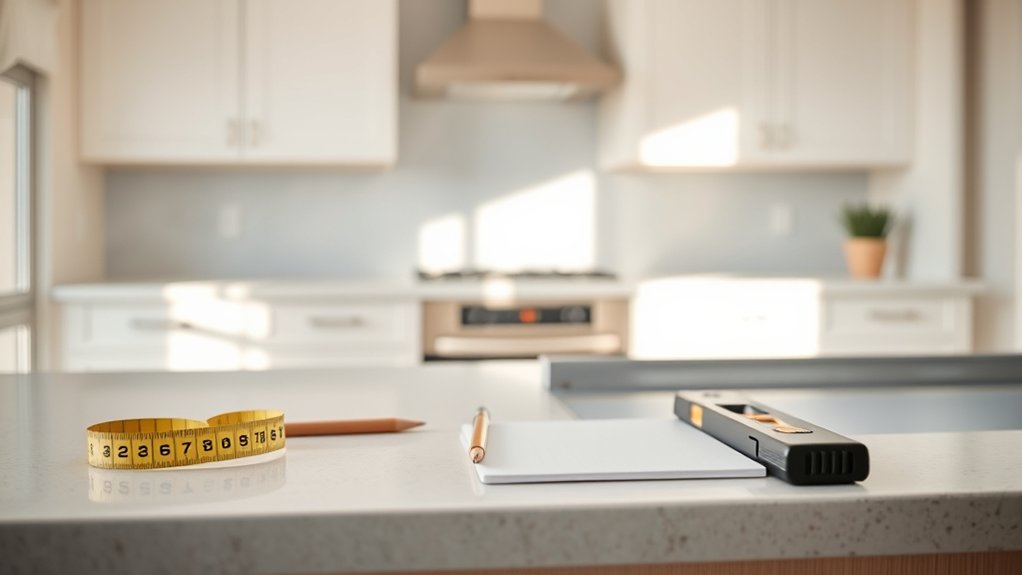
Before you begin measuring your kitchen cabinets, gather all the necessary tools and clear your workspace. You’ll need a tape measure, a pencil, a notepad, and possibly a step stool to reach higher cabinets. Clearing the area around your cabinets guarantees you won’t miss any details or accidentally damage decorative hardware.
Removing items from countertops and cabinet surfaces gives you room to move freely and focus on accurate measurements.
As you prepare, take note of the cabinet styles in your kitchen. Different styles like shaker, flat-panel, or raised-panel might have unique features, so observing these will help you understand how to measure around decorative hardware such as knobs, pulls, or hinges.
Taking a moment to inspect these details before measuring will save you time and hassle later. With your tools ready and workspace cleared, you’re set to measure your kitchen cabinets effectively and efficiently.
Measure Cabinet Widths and Heights Accurately
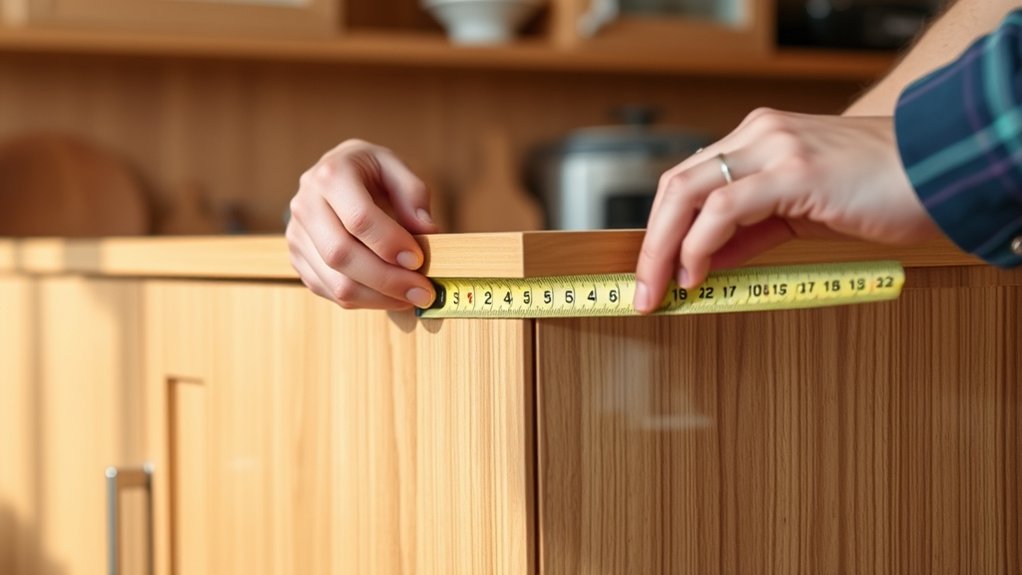
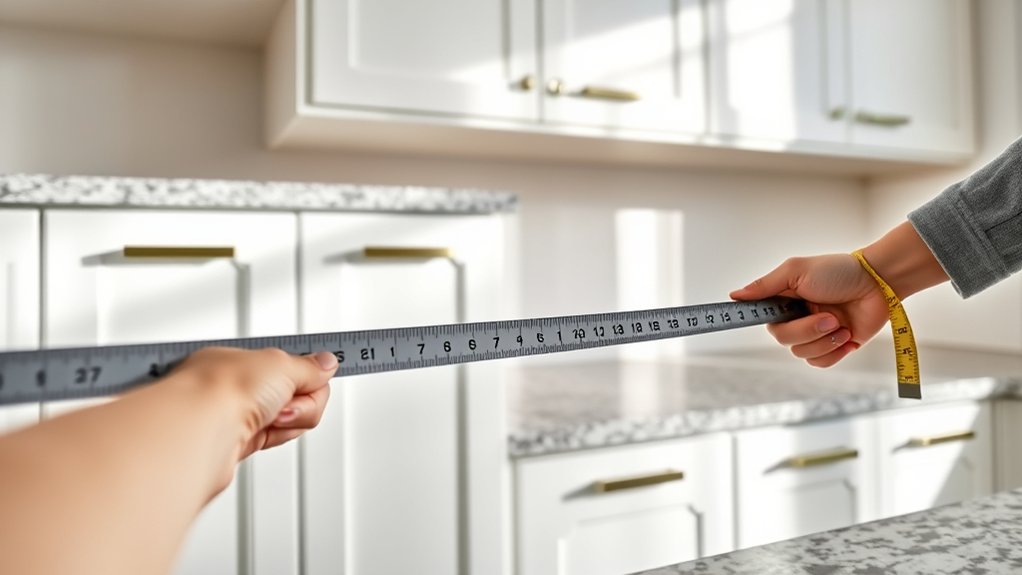
With your tools in hand and workspace cleared, you can focus on measuring the widths and heights of your kitchen cabinets accurately. Start by using a tape measure to record the cabinet widths from edge to edge, confirming the tape is straight and level.
Measure each cabinet individually, as variations in cabinet material like solid wood or laminate can affect dimensions slightly. For height, measure from the base to the top edge, paying attention to the cabinet style, whether it’s a tall pantry or a standard wall cabinet, as this impacts height requirements.
Take note of any molding or trim that might add extra height, and include those in your measurements if you plan to keep them. Write down each measurement carefully to avoid confusion later.
Measure Cabinet Depths and Interior Sizes
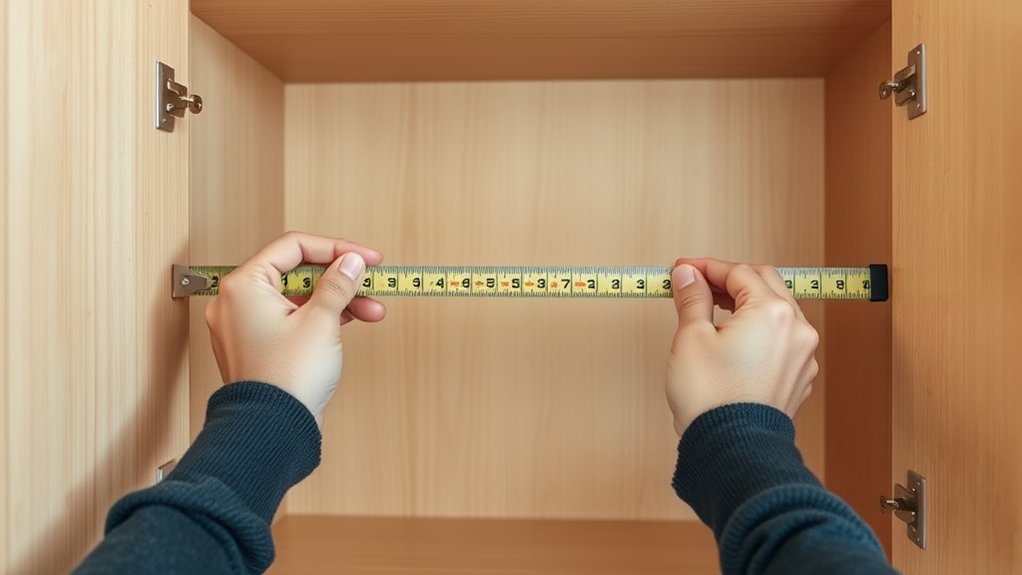
Although measuring widths and heights is essential, you shouldn’t overlook the cabinet depths and interior sizes, as they determine how much storage space you actually have. Start by measuring from the front edge of the cabinet to the back wall to find the depth.
Remember, cabinet styles vary—some have deeper bases or shallower uppers—so measure each cabinet individually. Don’t forget to measure inside the cabinet, from side to side and front to back, to understand the true usable space.
Cabinet depths differ—measure each one inside and out to capture the actual usable storage space.
Material options also affect interior dimensions; thicker wood or metal framing can reduce storage space, so factor that in. Measure the thickness of the cabinet walls to get accurate interior sizes.
Knowing these details helps you plan for what you’ll store, whether it’s large pots or pantry items. Precise depth and interior size measurements ensure you make the most of your kitchen’s storage potential without surprises later.
Check Appliance Spaces and Gaps Between Cabinets
When measuring your kitchen, you’ll want to double-check the spaces designated for appliances and the gaps between cabinets to make certain everything fits perfectly. Start by noting the exact dimensions of each appliance and its intended placement. Pay close attention to width, height, and depth to avoid any surprises during installation. Accurate appliance placement ensures your kitchen functions smoothly and looks balanced.
Next, conduct a thorough gap assessment between cabinets. Measure the spaces where cabinets meet or where they meet walls to make sure gaps aren’t too wide or uneven. Small inconsistencies can cause installation problems or an unprofessional look.
Use a level or straightedge to verify alignment, helping you identify any uneven gaps that might need adjustment. By focusing on appliance placement and gap assessment now, you’ll save time and avoid costly corrections later in your kitchen remodel or installation process.
Double-Check All Measurements for Accuracy
Before moving forward, make sure you double-check every measurement you’ve taken. Accurate dimensions are essential, especially when factoring in cabinet material considerations and design style options. A small error can lead to costly adjustments or mismatched cabinets. Use a reliable tape measure and record each measurement twice to confirm precision.
Here’s a simple way to organize your double-check process:
| Measurement Area | Confirmed Dimension |
|---|---|
| Cabinet Height | |
| Cabinet Width | |
| Space Between Cabinets |
Double-checking helps guarantee that your kitchen cabinets fit perfectly, complement your chosen design style, and accommodate any unique material thickness. Taking this extra step saves time and frustration later, making your cabinet installation smooth and successful. Don’t rush—accuracy here sets the foundation for a beautiful kitchen.
Frequently Asked Questions
What Type of Wood Is Best for Kitchen Cabinets?
You’ll find that maple is one of the best woods for kitchen cabinets because its fine wood grain gives a smooth, clean look. Oak is another great choice if you want a more pronounced grain pattern.
Both woods offer versatile stain options, letting you customize your cabinets’ color to match your kitchen’s style. Choosing the right wood with the right stain will guarantee your cabinets look beautiful and last for years.
How Do I Choose the Right Cabinet Style for My Kitchen?
Choosing the right cabinet style is like picking an outfit for your kitchen’s personality. Think about cabinet color options that match your vibe—bold colors for energy, neutrals for calm. Don’t forget cabinet hardware styles; sleek handles create a modern look, while vintage knobs add charm. Like a well-dressed person, your cabinets should reflect your taste and lifestyle, making your kitchen feel inviting and distinctly yours.
Can I Install Kitchen Cabinets Myself or Should I Hire a Professional?
You can install kitchen cabinets yourself if you’re comfortable with basic tools and follow DIY tips carefully. Make sure to level cabinets, secure them properly, and double-check measurements.
However, if you’re unsure about plumbing or electrical work or want a perfect finish, seeking professional assistance is wise. Pros save time and avoid costly mistakes.
Ultimately, weigh your skills and budget before deciding whether to DIY or hire a pro.
What Is the Average Cost of Replacing Kitchen Cabinets?
Replacing kitchen cabinets usually costs between $4,000 and $12,000, depending on your choices. Think of it as painting on a canvas—your budget planning sets the background, and material comparison adds the colors.
Solid wood cabinets will cost more than laminate, but they last longer. By comparing materials and factoring in installation fees, you can make smart decisions that fit your budget and bring your kitchen vision to life without surprises.
How Do I Maintain and Clean Kitchen Cabinets Properly?
To maintain and clean kitchen cabinets properly, you should wipe them down regularly using a soft cloth and mild cleaner. Don’t forget to clean cabinet hardware, like handles and knobs, to prevent grime buildup. Establishing cleaning schedules, such as weekly dusting and monthly deep cleaning, helps keep cabinets looking fresh. Avoid harsh chemicals or excessive water, which can damage finishes. This routine will protect your cabinets and extend their lifespan effectively.
Conclusion
Measuring your kitchen cabinets is like laying the foundation of a beautiful home—every inch matters. By gathering your tools, taking careful measurements, and double-checking your work, you’re setting yourself up for success.
Think of each step as a brushstroke in your kitchen’s masterpiece. With precision and patience, you’ll transform chaos into harmony, ensuring your cabinets fit perfectly and your kitchen feels just right. You’ve got this! Properly measuring kitchen cabinets is the first step to a successful project.