How to Remove Grease From Kitchen Cabinets in 5 Easy Steps
Grease can make kitchen cabinets look grimy no matter how often you clean—and finding a cleaner that cuts through the buildup without damaging the finish can be tricky. You’re not alone; many people struggle with stubborn cabinet grease. These products can help you get your cabinets looking fresh again.
To remove grease from your kitchen cabinets, start by choosing a gentle cleaner like vinegar or baking soda that suits your cabinet material.
Next, clear and prep the area, removing doors if needed and dusting surfaces.
Then, apply the cleaner evenly and let it sit for 5–10 minutes to break down grease.
Use a soft cloth to scrub gently, avoiding harsh scrubbing.
Finally, wipe down with a damp cloth and dry thoroughly to keep cabinets shiny and damage-free.
Keep going to uncover more tips for a spotless kitchen.
Key Takeaways
- Select natural or commercial grease removers safe for your cabinet material and finish.
- Remove cabinet doors/drawers and clear dust and hardware grime before cleaning.
- Apply the cleaning solution evenly, avoiding oversaturation, and let it sit 5–10 minutes.
- Gently scrub grease with a soft sponge or microfiber cloth using circular motions.
- Rinse thoroughly with a damp cloth and dry completely to prevent moisture damage.
Choose the Best Ingredients for Grease Removal
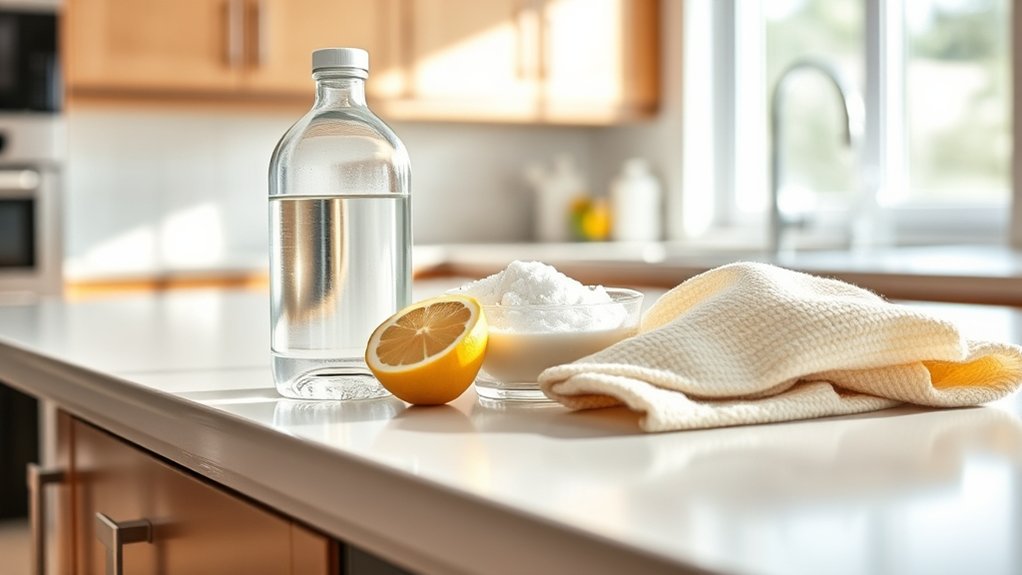
Although many cleaning products claim to tackle grease, choosing the right ingredients makes the job easier and more effective. When you’re deciding between natural remedies and commercial cleaners, consider what suits your cabinet material and personal preferences.
Natural remedies like vinegar, baking soda, and lemon juice are excellent for cutting through grease without harsh chemicals. They’re safe, affordable, and environmentally friendly, making them a popular choice if you want a gentle yet effective solution.
On the other hand, commercial cleaners often contain powerful degreasers designed to break down stubborn buildup quickly. If you’re dealing with heavy grease or want a fast result, these might be more suitable. Just remember to check the label to ensure the product is safe for your cabinet finish.
Prepare Your Cabinets for Cleaning
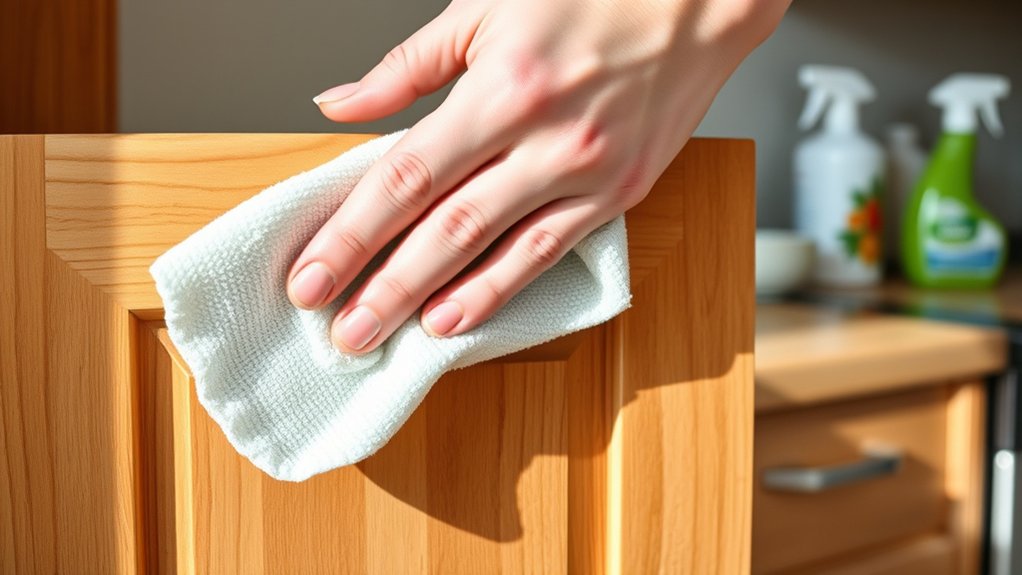
Before you start scrubbing, clear your cabinets of any items and wipe down loose dust and dirt. This step guarantees you’re working on a clean surface and prevents dirt from spreading during cleaning. Next, consider your cabinet material—wood, laminate, or metal—since each requires a slightly different approach to avoid damage.
Follow these steps to prepare your cabinets for cleaning:
- Remove all cabinet doors or drawers if possible; this allows better access and thorough cleaning.
- Use a soft cloth or vacuum brush attachment to remove dust from corners and crevices.
- Inspect hardware such as knobs and hinges for signs of wear or grime buildup; this is a good time for hardware maintenance.
- Protect surrounding areas by placing towels or drop cloths beneath cabinets to catch drips or spills.
Proper preparation based on your cabinet material and hardware condition sets the stage for effective grease removal.
Apply the Cleaning Solution and Wait

Once you’ve prepped your cabinets, apply a grease-cutting cleaning solution suited for your cabinet material. Use a soft cloth or spray bottle to evenly coat the greasy areas without oversaturating the surface. This targeted application is vital for effective stain removal, as it allows the cleaner to break down grease buildup gently and thoroughly.
After applying the solution, let it sit for 5 to 10 minutes. This waiting period gives the cleaner time to penetrate the grease and loosen it, making it easier to remove later. Be mindful not to let the solution dry completely, as this could reduce its effectiveness and potentially harm your cabinets’ finish.
Throughout this process, surface protection is essential. Choose a cleaning solution that’s safe for your cabinet type, whether wood, laminate, or painted surfaces, to avoid damage. Proper application and waiting ensure you tackle grease stains efficiently while preserving your cabinets’ appearance and integrity.
Scrub Gently to Remove Grease
After letting the cleaning solution work its magic, you’ll want to start scrubbing gently to lift the grease from your cabinets. Using the right cleaning tools and following safety precautions guarantees you don’t damage the surface or irritate your skin.
Let the solution sit, then gently scrub with care to protect your cabinets and skin.
Here’s how to scrub effectively:
- Choose a soft sponge or microfiber cloth to avoid scratching the cabinet finish.
- Wear gloves to protect your hands from harsh chemicals and grease.
- Apply gentle, circular motions to break down the grease without forcing it.
- Focus on stubborn spots by lightly scrubbing, but avoid excessive pressure.
Be patient. Gentle scrubbing works best and prevents damage. Avoid abrasive scrubbers or harsh chemicals that could discolor or weaken your cabinets. Taking these safety precautions and using proper cleaning tools will make your cabinets shine without wear and tear.
Rinse and Dry for a Grease-Free Shine
How do you guarantee your cabinets stay spotless and free of residue? After scrubbing away grease, it’s essential to rinse off any leftover cleaning solution to prevent buildup that dulls your cabinet texture. Use a clean, damp cloth and gently wipe each surface, paying close attention to grooves or detailed areas where residue can hide. This step ensures your cabinets don’t attract more dirt and remain shiny.
Next, dry your cabinets thoroughly with a soft, dry towel. Moisture left behind can damage finishes or encourage mold growth, especially if you have wood cabinets. Adjust your cleaning frequency based on how often you cook and the amount of grease in your kitchen. Regular rinsing and drying after cleaning maintain that fresh, grease-free shine and preserve the cabinet texture, keeping your kitchen looking its best longer.
Frequently Asked Questions
How Often Should I Clean Grease off My Kitchen Cabinets?
You should clean grease off your kitchen cabinets at least once a month, but the cleaning frequency depends on your cabinet material. For wood cabinets, frequent cleaning prevents damage from harsh chemicals, so stick to gentle cleaners weekly or biweekly.
Laminate or metal cabinets can handle more frequent wiping, especially if you cook often. Adjust your routine based on how greasy your kitchen gets to keep your cabinets looking fresh and lasting longer.
Can Grease Buildup Damage the Cabinet Finish Over Time?
Think of grease buildup like a slow creeping vine that weakens wood’s strength. Yes, grease can damage your cabinet finish over time, undermining cabinet durability and finish preservation. When left unchecked, it seeps into surfaces, causing discoloration and wear.
You’ve got to act fast to keep your cabinets looking fresh and strong. Regular cleaning stops that vine from choking your cabinets’ beauty and lasting quality.
Are There Any Natural Alternatives to Chemical Grease Removers?
Yes, you can use homemade cleaning solutions with natural ingredients to tackle grease. Mix equal parts vinegar and water, add a few drops of lemon juice, and you’ve got an effective, non-toxic cleaner.
Baking soda also works great. Make a paste with water and scrub gently. These natural options are safer for your cabinets and the environment, and they’re easy to whip up with stuff you already have at home.
What Precautions Should I Take When Using Commercial Degreasers?
When using commercial degreasers, safety tips are your best friend to avoid turning a simple task into a hazardous adventure. Always wear gloves and guarantee proper ventilation to keep fumes at bay. Read labels carefully to understand chemical precautions—never mix products, as this can create dangerous reactions. Keep degreasers away from children and pets, and store them securely. By following these steps, you’ll protect yourself while tackling grease effectively.
How Do I Prevent Grease From Accumulating Again on Cabinets?
To prevent grease from accumulating again on your cabinets, focus on regular cabinet maintenance and improving kitchen ventilation. Wipe cabinets down frequently with a mild cleaner to stop buildup.
Make sure your kitchen ventilation is working well—use your range hood or open windows while cooking to reduce airborne grease particles. Keeping your kitchen well-ventilated and maintaining cabinets consistently will help you avoid stubborn grease layers in the future.
Conclusion
Now that you know how to remove grease from kitchen cabinets in just five easy steps, you’re all set to restore their shine. Remember, “a stitch in time saves nine”—tackling grease buildup early prevents tougher cleaning later.
By choosing the right ingredients, prepping properly, and scrubbing gently, you’ll keep your cabinets looking fresh and spotless. With a little care, your kitchen will stay inviting and grease-free for good.