How to Get Rid of Kitchen Ants Fast
Kitchen ants can turn a clean, comfortable space into a frustrating problem in no time—and you’re not alone; many people struggle to keep them out. If you’re looking for how to get rid of kitchen ants fast, the right products and a few simple steps can help you tackle the trails and keep ants from coming back.
You can get rid of kitchen ants fast by wiping up crumbs immediately and storing food airtight to block their scent trails. Seal entry points like gaps around doors and windows to stop them from coming in. Use natural repellents like vinegar or peppermint oil to disrupt their trails, and place ant baits near their paths for quick elimination.
Avoid spraying insecticides on trails. Keep your kitchen dry and clean, and if ants persist, there’s more effective control you’ll want to try.
Key Takeaways
- Immediately clean crumbs and spills, and store food in airtight containers to remove ant attractants.
- Use vinegar or diluted essential oils to wipe surfaces and disrupt ant pheromone trails effectively.
- Seal entry points like cracks and gaps around windows, doors, and pipes to block ant access.
- Place ant baits near trails and entry points, avoiding direct insecticide sprays on ant lines.
- Call a professional if infestations persist or colonies grow large despite DIY efforts.
Identify Kitchen Ant Types Quickly
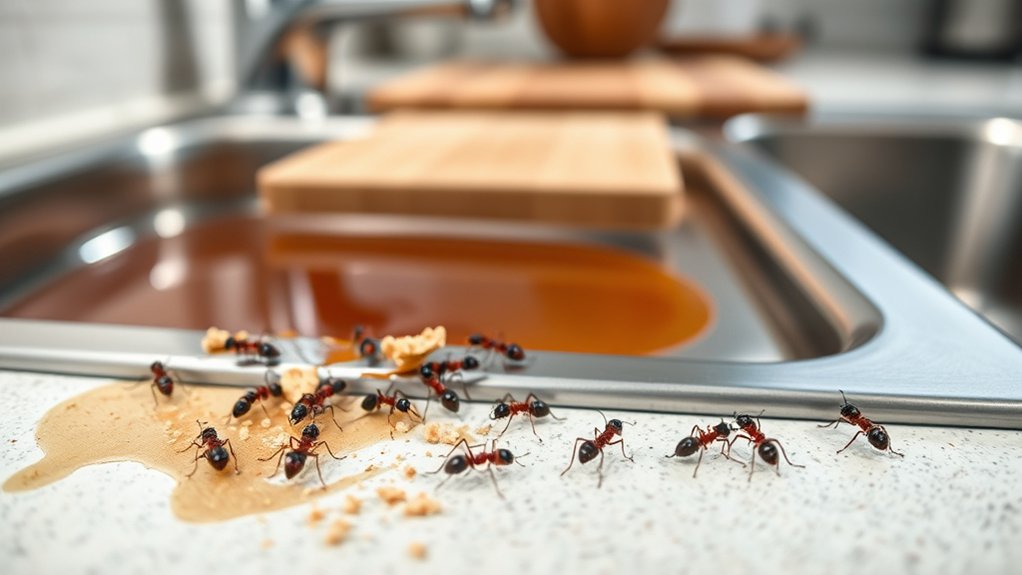
How can you tell which type of ants are invading your kitchen? Start by observing their ant behavior closely. Different species have unique habits—some move in long, organized lines, while others scatter randomly. Pay attention to their size, color, and how they interact with each other. For example, carpenter ants are larger and often forage alone, while sugar ants tend to swarm in groups.
Understanding the colony structure helps too. Some ants have multiple queens, leading to larger, more persistent colonies, while others have a single queen with a smaller group. This affects how quickly they spread and how difficult they are to eliminate. By noting these details, you can identify whether you’re dealing with pavement ants, odorous house ants, or another species. This knowledge lets you target your approach more effectively and stop the infestation before it grows.
Why Do Ants Invade Your Kitchen?
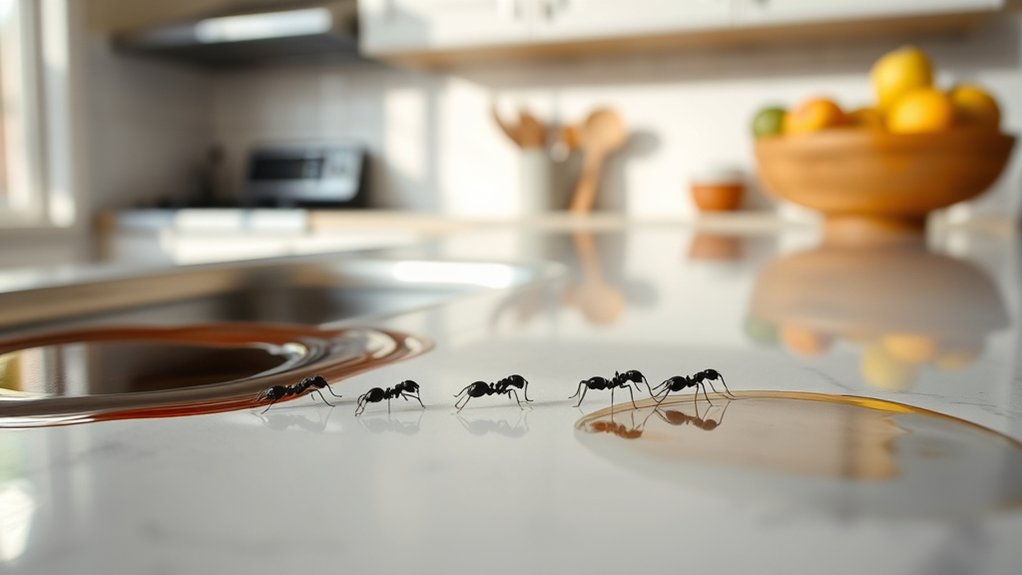
Because your kitchen provides easy access to food and water, ants are naturally drawn to it. Their ant behavior is all about survival: they scout for reliable food sources to feed their colony.
Once an ant finds a tasty crumb or spill, it leaves a pheromone trail for others to follow, quickly turning your kitchen into a bustling highway of tiny invaders. Understanding the pest lifecycle helps explain why this happens: worker ants continuously gather food to support the queen and larvae, ensuring the colony thrives.
When conditions outside become harsh or food is scarce, ants invade kitchens as a convenient alternative. They’re persistent and organized, so even a small food source can attract many ants.
Quick Cleanup Tips to Remove Kitchen Ant Food Sources
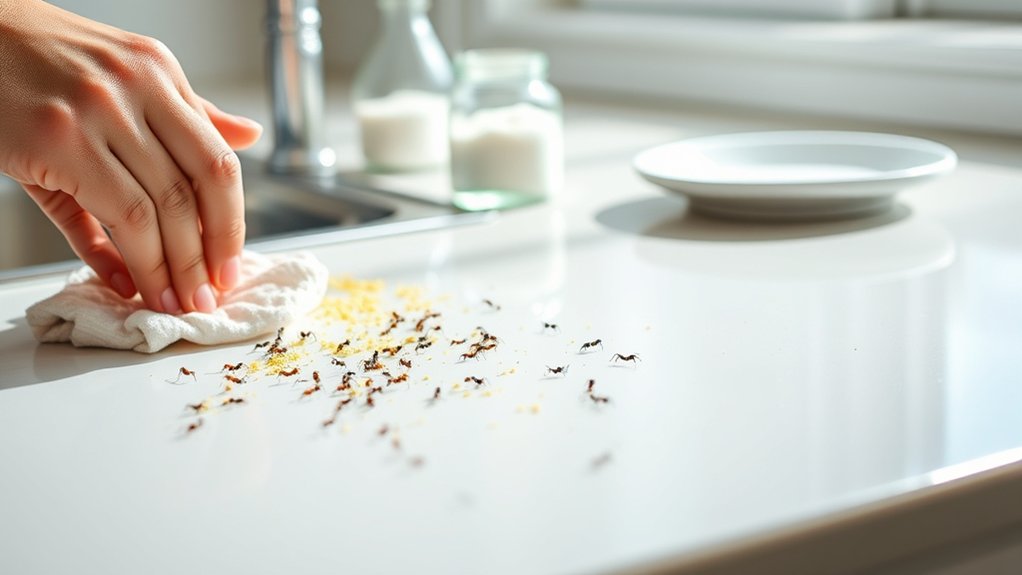
Wipe up food crumbs as soon as you finish cooking or eating. Store food in airtight containers to keep ants out. These simple steps cut off their food supply and help keep your kitchen pest-free.
Eliminate Food Crumbs
Since ants are constantly on the lookout for food, even tiny crumbs can attract them quickly. You should clean up immediately after cooking, wiping counters and sweeping floors to remove any stray bits.
Adopting efficient cooking techniques that minimize mess helps reduce crumbs from spreading. For example, using lids on pots or cooking on lower heat can prevent splatters.
Don’t forget appliance maintenance. Regularly clean your toaster, microwave, and stove to eliminate hidden food particles where ants may hide. Check under and behind appliances too, as crumbs often accumulate there unnoticed.
Secure Food Storage
Although keeping your kitchen clean is essential, securing your food properly is just as important to keep ants away. Ant behavior is driven by their ability to detect food sources quickly, so you need to eliminate easy access.
Always store food in airtight containers or sealed food packaging to block their scent trails. Avoid leaving snacks or pet food exposed, as even tiny crumbs can attract ants.
Regularly inspect pantry items for damaged packaging that could invite ants inside. Wipe spills immediately and don’t forget to check behind appliances where forgotten food might accumulate.
Natural Remedies to Get Rid of Kitchen Ants Fast
You can get rid of kitchen ants quickly with a few natural remedies. Wipe down surfaces with a vinegar solution to remove their scent trails, or try peppermint oil as a deterrent. Baking soda traps are another option, but keep them away from children and pets. These remedies are easy to try, though results may vary.
Essential Oils That Work
When ants invade your kitchen, essential oils can provide a quick and natural solution that’s both effective and safe. Different ant species react uniquely to specific scents, so understanding pest behavior helps you choose the right oil. Essential oils disrupt ants’ scent trails, preventing them from steering and finding food.
| Essential Oil | Why It Works |
|---|---|
| Peppermint | Repels ants by overwhelming scent receptors |
| Tea Tree | Interferes with pheromone trails |
| Lemon | Alters ant trails and deters entry |
| Eucalyptus | Masks chemical signals ants use |
Use a spray bottle diluted with water to apply oils around entry points. This targets ant species’ pest behavior naturally, keeping your kitchen ant-free without harsh chemicals.
Vinegar Cleaning Solutions
Since ants rely heavily on scent trails to navigate, vinegar cleaning solutions disrupt their paths and keep them from invading your kitchen. When you clean surfaces with a mixture of equal parts water and white vinegar, you erase the chemical trails ants leave behind, confusing their ant behavior and making it harder for them to find food or return to their ant habitat.
Focus on wiping down countertops, floors, and entry points where ants commonly appear. Vinegar’s strong smell also acts as a natural repellent, discouraging ants from settling in your kitchen.
Regularly applying this solution prevents ants from reestablishing their scent paths, effectively cutting off their communication and navigation system. Using vinegar is a simple, non-toxic way to target ant behavior and protect your kitchen environment.
Baking Soda Remedies
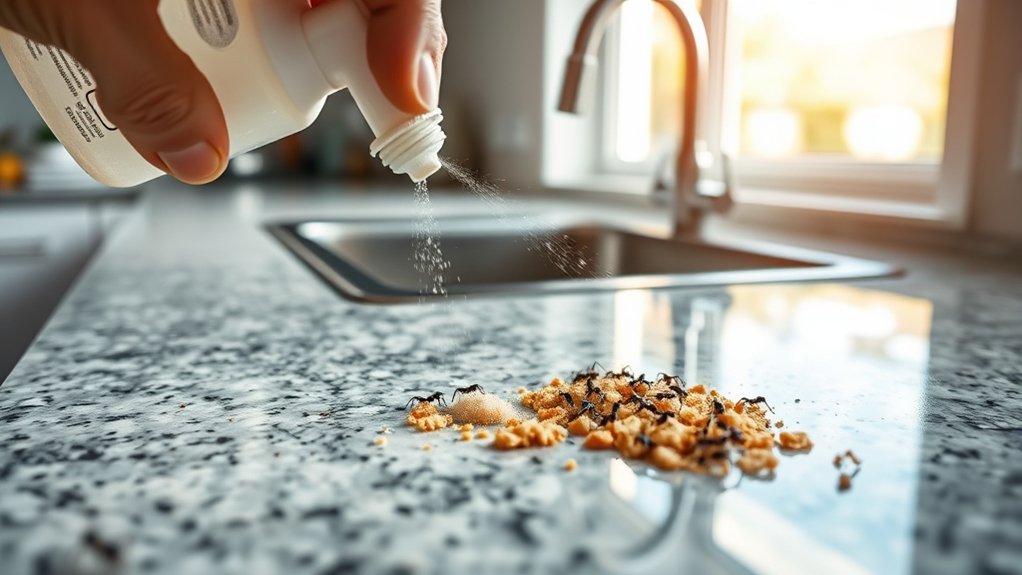
Two common kitchen ingredients—baking soda and sugar—can work together to eliminate ants quickly and naturally. Ant behavior shows they’re attracted to sugary foods, so mixing sugar with baking soda lures them in.
Once ingested, baking soda disrupts their digestive system, effectively getting rid of them. To use this remedy, follow these steps:
- Mix equal parts baking soda and sugar in a small bowl.
- Sprinkle the mixture near ant trails, entry points, and around your kitchen.
- Maintain good kitchen hygiene by cleaning crumbs and spills regularly.
- Repeat the process every few days until ants disappear.
This approach targets ants directly while encouraging you to keep your kitchen clean, preventing future infestations.
How to Use Ant Baits Safely and Effectively
Although ant baits might seem straightforward, using them safely and effectively requires some key steps to guarantee you eliminate the ants without risking your family’s health or contaminating your kitchen. First, focus on proper ant bait placement. Place the baits near ant trails or entry points but away from food prep areas and out of reach of children and pets. This guarantees ants find the bait while minimizing exposure to your household. Avoid placing baits in damp or greasy spots, as these can reduce bait effectiveness.
Once the ants are eliminated, practice safe bait disposal. Seal used bait stations in a plastic bag before tossing them in the trash to prevent accidental contact or spreading any remaining poison. Wash your hands thoroughly after handling baits to avoid contamination. Following these steps will help you tackle your ant problem efficiently while keeping your kitchen safe and clean.
Seal Entry Points to Keep Kitchen Ants Out
Start by looking for the places ants may be getting into your kitchen, such as gaps around windows, doors, pipes, and baseboards. Once you’ve found them, seal the openings with caulk or weatherstripping. Check these areas regularly, too, so you can close up any new gaps before ants find their way inside.
Identify Common Entry Areas
Where do ants usually sneak into your kitchen? Identifying their common entry areas helps you stop them fast. Start by checking spots where your kitchen decor meets the walls—tiny cracks or gaps can be perfect ant highways. Pay close attention to appliance maintenance too; ants often crawl through gaps behind your fridge or dishwasher. Look out for:
- Cracks around baseboards and cabinets
- Gaps near window sills and door frames
- Spaces behind or under large appliances
- Unsealed holes where pipes or wires enter walls
Use Effective Sealants
Since ants can squeeze through the tiniest gaps, sealing every possible entry point is essential to keeping them out of your kitchen. Focus on cracks around windows, doors, pipes, and baseboards where ants can enter.
Use effective sealants like silicone caulk or weatherstripping to block these openings. This prevents ants from accessing your kitchen and disrupting their ant habitat.
Understanding colony behavior helps you target these areas since ants follow established trails between their habitat and food sources. By sealing entry points, you interrupt these trails, cutting off the colony’s access to food and water inside your home.
Taking this step not only keeps ants out but also discourages them from establishing a new colony inside your kitchen walls or cabinets.
Maintain Regular Inspections
Regular inspections play a crucial role in keeping kitchen ants at bay by ensuring that sealed entry points remain intact. You’ll want to check areas around your kitchen decor and appliances where cracks or gaps might appear over time. Focus on:
- Door and window frames for any peeling seals
- Baseboards and corners where walls meet floors
- Gaps around appliances, especially after appliance maintenance
- Cracks near plumbing and electrical outlets
Prevent Kitchen Ants by Controlling Moisture and Crumbs
Although ants are tiny, they’re highly attracted to moisture and food crumbs in your kitchen. To prevent an infestation, focus on eliminating these key attractants. Ant colony behavior shows that worker ants often scout for water and food sources to sustain their colony.
By controlling moisture—fix leaks, dry sinks, and avoid leaving wet sponges around—you make your kitchen less inviting. Likewise, clean up crumbs and spills immediately, wipe countertops, and sweep floors regularly to remove accessible food.
Understanding ant species identification can help you tailor prevention efforts since some ants prefer sugary residues while others seek protein or grease. Identifying the species allows you to target their specific food preferences, making your moisture and crumb control more effective.
Keep food stored in sealed containers and avoid leaving pet food out. By managing moisture and crumbs diligently, you disrupt ant colony behavior, cutting off their essential resources and stopping infestations before they start.
Mistakes That Make Kitchen Ants Worse
When you unintentionally leave food out or ignore small ant trails, you invite the problem to grow worse. Ant behavior revolves around efficient foraging and communication within their colony structure. Making certain mistakes can actually encourage ants to multiply faster and spread throughout your kitchen. Avoid these pitfalls:
- Spraying ant trails with insecticide – This disrupts their scent paths, causing the colony to scatter and create more trails.
- Leaving crumbs and spills unattended – It provides a constant food source, supporting colony growth.
- Failing to seal entry points – Ants exploit tiny cracks to expand their territory.
- Using sugary baits improperly – If not consumed fully, it can feed the colony instead of eliminating it.
Understanding ant behavior helps you break their communication and disrupt their colony structure effectively. Stay vigilant, and don’t let small oversights turn into a full-blown infestation.
When to Call a Professional for Kitchen Ant Control
If you’ve tried common DIY methods without success, it might be time to call a professional for kitchen ant control. Ant behavior can be tricky. These pests communicate and adapt quickly, making it hard to eliminate them on your own.
When you notice large colonies, repeated infestations, or ants returning despite your efforts, a professional can identify the species and target their nests effectively.
Experts also offer tailored pest prevention strategies that go beyond surface treatments. They address hidden entry points and food sources you might have missed. They use specialized tools and treatments that aren’t available to the public, ensuring thorough eradication.
Calling a professional early can save you time and prevent the problem from worsening, especially if persistent ant activity disrupts your kitchen’s hygiene. Don’t hesitate to seek expert help if DIY options falter. Proper intervention ensures long-lasting kitchen ant control.
How to Keep Kitchen Ants Away for Good
To keep kitchen ants away for good, you need to create an environment that’s unattractive and inaccessible to them. Since ants rely on their ant habitat and colony behavior to thrive, disrupting these factors is key.
Creating an environment ants avoid by disrupting their habitat and colony behavior is essential for lasting control.
Here’s how you can do it:
- Seal entry points: Block cracks and gaps where ants enter, cutting off access to your kitchen.
- Clean thoroughly: Remove crumbs, spills, and food residues to eliminate food sources that attract ants.
- Store food properly: Use airtight containers for pantry items to deny ants access to nourishment and disrupt their colony behavior.
- Manage moisture: Fix leaks and keep surfaces dry, as ants seek water to sustain their habitat.
Frequently Asked Questions
Can Kitchen Ants Harm My Health or Contaminate Food?
Yes, kitchen ants can harm your health by contaminating food as they travel through unsanitary ant nesting sites. You need to seal ant entry points to prevent them from invading your kitchen and spreading bacteria.
These tiny invaders often come from hidden nesting sites like cracks, walls, or behind appliances. By identifying and blocking these entry points, you reduce the risk of contamination and protect your food from potential health hazards caused by ants.
Do Certain Kitchen Materials Attract Ants More Than Others?
You might think ants throw wild parties on every kitchen surface, but yes, certain materials do attract ants more than others. Sticky residues on countertops and sugary spills on wooden surfaces act as powerful ant attractants.
They prefer porous materials like wood because it traps crumbs and moisture, making it a buffet. In contrast, smooth materials like stainless steel or glass are less inviting since they don’t hold onto food or scent trails as easily.
How Long Does It Take for Ant Baits to Eliminate an Infestation?
Ant bait effectiveness usually shows within 3 to 7 days, but completely eliminating an infestation can take up to 2 weeks. You’ll notice fewer ants quickly because they carry the poison back to the colony, targeting the queen and larvae.
Be patient and keep the bait stations in place during this infestation timeline to guarantee the entire colony is wiped out, preventing ants from coming back.
Are There Specific Times of Day When Ants Are Most Active in Kitchens?
Ant activity peaks when you least expect it: at dawn, at dusk, and especially during the night. You’ll notice their nocturnal behavior as they scurry around your kitchen, searching for food and water under the cover of darkness. Since ants avoid bright light, they prefer to forage when your kitchen is quiet and less busy. Knowing this helps you target their trails and set your traps effectively, catching them when they’re most active.
Can Pets Help or Worsen a Kitchen Ant Problem?
Pets can both help and worsen a kitchen ant problem. Their movement might disrupt ant trails, potentially reducing ant activity temporarily. However, ants are attracted to pet food and crumbs, which can worsen the infestation.
You’ll need to balance pet safety by avoiding toxic ant baits and keeping pet areas clean. Understanding ant behavior helps you prevent them from targeting your pet’s food, minimizing the risk of attracting more ants into your kitchen.
Conclusion
You don’t have to wage a never-ending war against kitchen ants! By quickly identifying the type, cleaning up crumbs, and using natural remedies or baits safely, you’ll see results fast. Remember, controlling moisture and avoiding common mistakes keep those tiny invaders at bay.
If ants persist, calling a professional can save the day. Follow these steps to get rid of kitchen ants fast, and your kitchen will feel like a fortress against even the sneakiest critters!