How to Fit a Kitchen in 7 Simple Steps
Planning a kitchen can feel overwhelming, especially when you’re trying to balance style, storage, and budget. You’re not alone—many people struggle to make every detail work together.
This guide to how to fit a kitchen in 7 simple steps will help you create a space that’s practical and inviting.
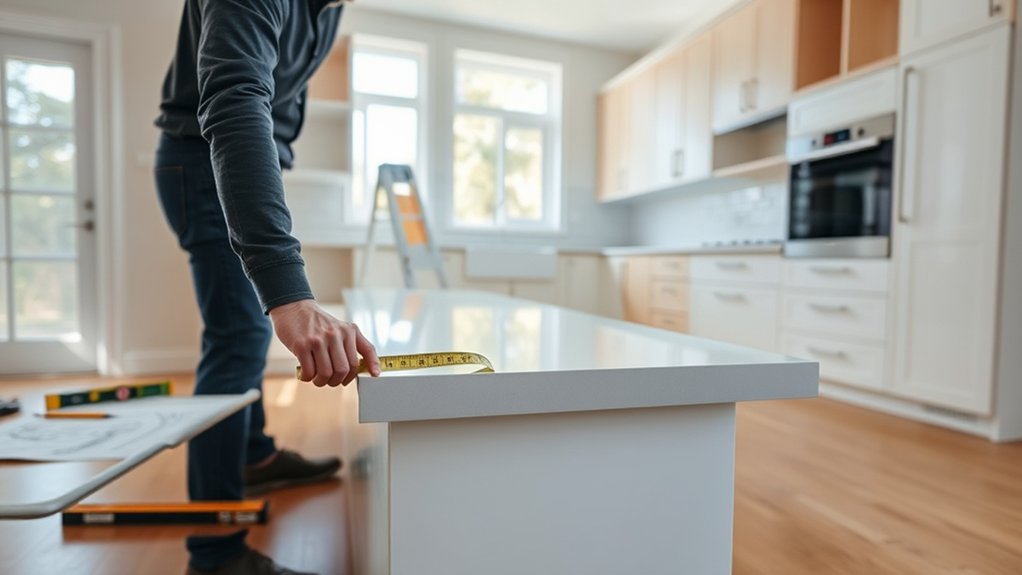
To fit your kitchen in 7 simple steps, start by measuring your space precisely, including walls and features.
Plan a layout that links prep, cooking, and cleaning zones for smooth workflow.
Choose cabinets and storage to match your style and needs, then pick appliances that fit and function efficiently.
Select durable worktops, install proper lighting and ventilation, and add personal touches to complete the look.
Follow these steps closely, and you’ll create a kitchen that’s both practical and inviting.
Key Takeaways
- Measure kitchen dimensions precisely, including doors and windows, to ensure proper fitting of cabinets and appliances.
- Plan the kitchen layout to optimize workflow between preparation, cooking, and cleaning zones.
- Choose cabinets and storage solutions that maximize space and improve organization with features like pull-out shelves and corner carousels.
- Select energy-efficient appliances sized to fit your kitchen and arrange them for practical, efficient use.
- Install layered lighting and proper ventilation, adding personal touches to create a functional and inviting kitchen.
Measure Your Kitchen Space Accurately
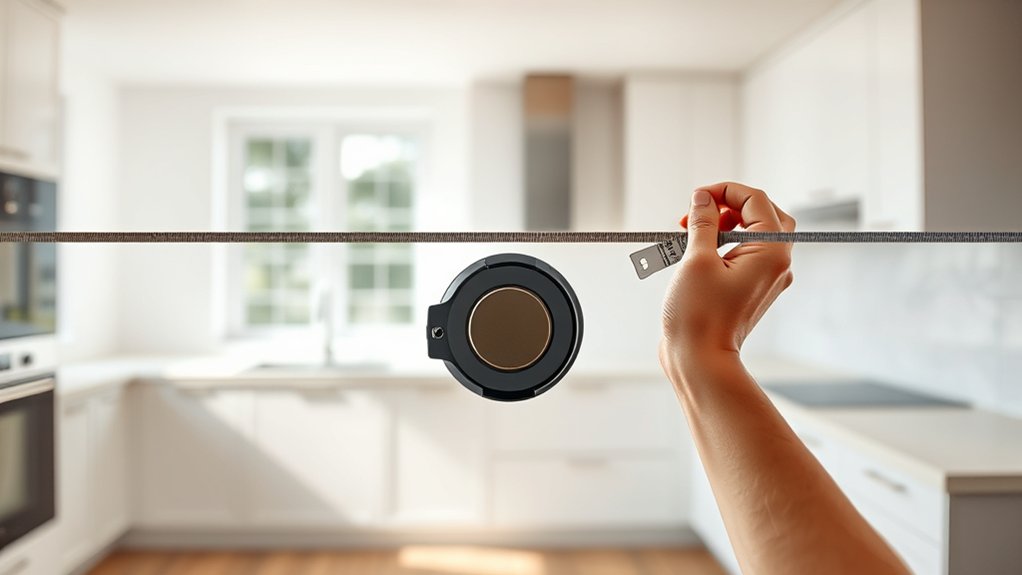
Before you begin designing or buying anything, you need to measure your kitchen space accurately. Grab a tape measure and note the length, width, and height of your kitchen, including doorways, windows, and any architectural features.
Precise measurements help you choose the right color schemes and material options that will fit seamlessly without overcrowding. Knowing your space’s exact dimensions allows you to plan for cabinets, countertops, and appliances that complement your style and function.
For example, darker color schemes might make a small kitchen feel cramped, while lighter tones open it up. Likewise, certain material options like bulky stone countertops need space to shine without overwhelming the room.
Accurate measurements ensure you avoid costly mistakes and mismatched elements. Take your time with this step. It sets the foundation for the entire kitchen design process and guarantees everything fits perfectly from the start.
You’ll appreciate the effort when your kitchen looks and feels just right.
Plan Your Kitchen Layout for Efficient Workflow
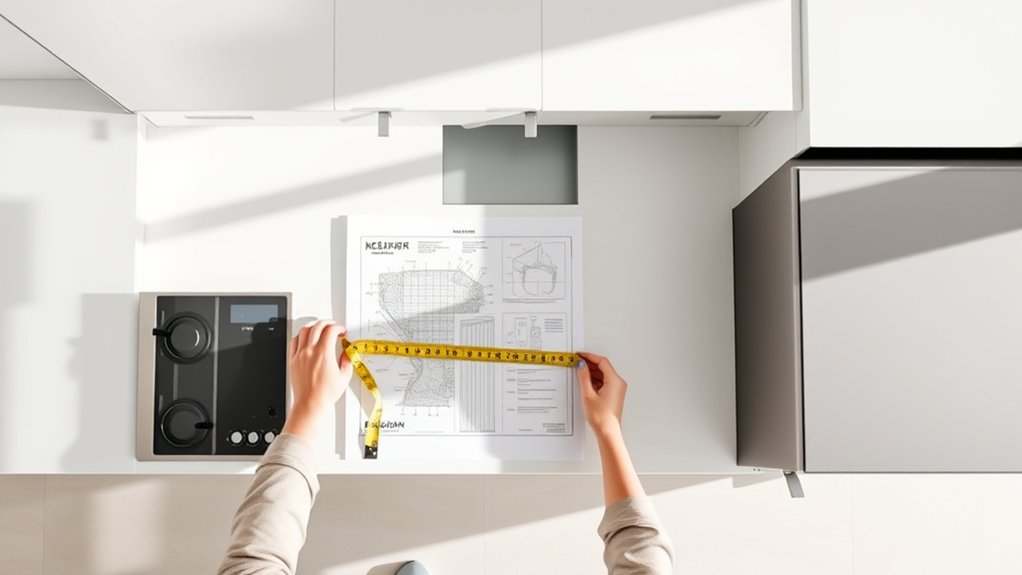
Since your kitchen space is measured accurately, you can now plan a layout that maximizes efficiency and flow. Focus on creating a workflow that connects key zones: preparation, cooking, and cleaning. This reduces unnecessary movement and saves time.
While planning, consider color schemes that brighten the space and create a welcoming atmosphere. Light tones often improve the feeling of openness, while darker shades add sophistication. Don’t forget flooring options, as durable, easy-to-clean materials contribute to both functionality and style.
Here’s a simple layout guide:
| Zone | Purpose | Suggested Flooring |
|---|---|---|
| Preparation | Chopping, mixing | Vinyl or laminate |
| Cooking | Stove, oven | Ceramic tile or stone |
| Cleaning | Sink, dishwasher | Waterproof vinyl or tile |
Choose the Right Cabinets and Storage Solutions
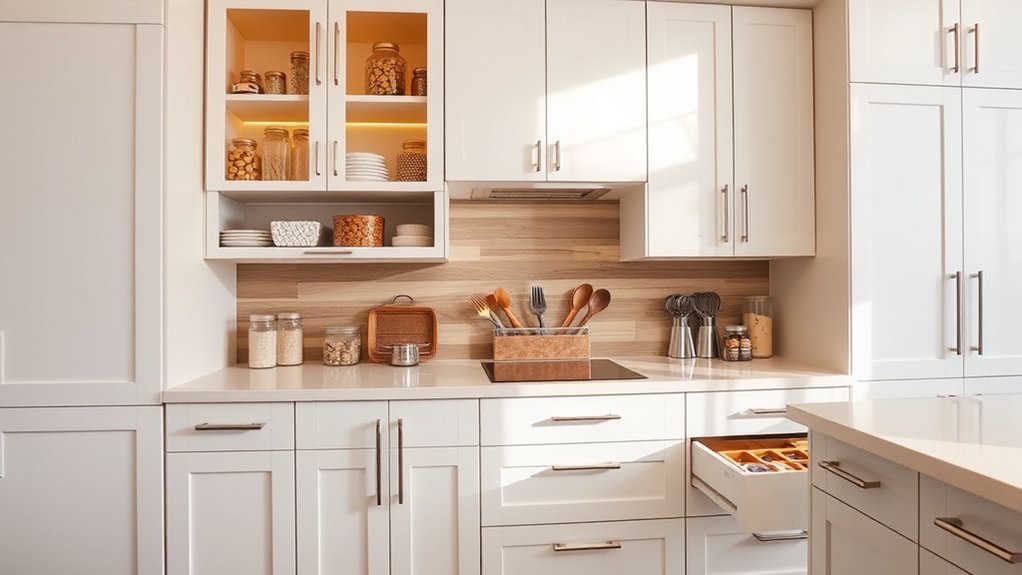
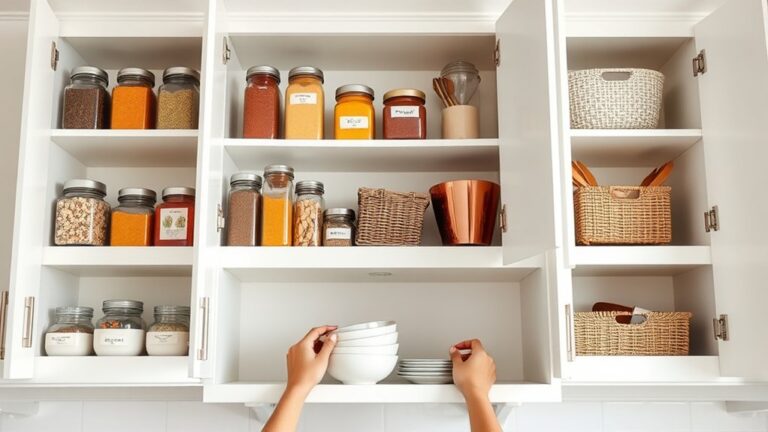
With a well-planned layout and carefully chosen flooring, it’s time to focus on cabinets and storage solutions that fit your kitchen’s workflow. Choosing the right cabinet styles not only improve your kitchen’s look but also maximizes space.
Consider how you use your kitchen daily and select storage innovations that make your tasks easier.
To help you decide, keep these points in mind:
- Opt for cabinet styles that complement your kitchen’s design and offer easy access.
- Use pull-out shelves and deep drawers for better organization.
- Incorporate corner cabinets with rotating carousels to utilize awkward spaces.
- Add vertical dividers for baking sheets and cutting boards.
- Investigate hidden compartments and built-in spice racks for clutter-free counters.
Select Appliances That Fit Your Kitchen and Needs
As you plan your kitchen, choosing appliances that fit both your space and lifestyle guarantees efficiency and ease. Start by measuring available spaces carefully to verify your fridge, oven, and dishwasher fit comfortably without overcrowding.
Consider your cooking habits. If you cook often, prioritize reliable, energy-efficient models that save on utility bills and reduce environmental impact. Look for appliances with good energy ratings to boost efficiency and lower running costs.
Don’t forget about appliance maintenance. Select models known for durability and easy upkeep. Features like self-cleaning ovens or fingerprint-resistant finishes can save you time and effort.
Also, think about the layout. Placing appliances strategically will improve workflow and minimize movement during meal prep. By balancing size, function, and energy efficiency, you’ll create a kitchen tailored to your needs that’s both practical and cost-effective.
This thoughtful approach ensures your appliances serve you well for years to come.
Pick Durable, Stylish Worktops That Last
Choosing the right worktops can transform your kitchen’s look and functionality. When picking worktops, focus on material durability to guarantee they withstand daily use without losing charm. You want surfaces that resist scratches, heat, and stains while offering style options that match your kitchen’s vibe.
Whether you prefer sleek quartz, classic granite, or warm wood, the right choice balances toughness and design. Here are five tips to help you pick durable, stylish worktops:
- Opt for materials like quartz or granite for superior durability.
- Consider wood or laminate for affordable style options with decent resilience.
- Match colors and textures to your cabinets and flooring for a cohesive look.
- Prioritize easy maintenance to keep worktops looking fresh.
- Check for warranty and guarantees to secure your investment.
With these points in mind, you’ll choose worktops that last and improve your kitchen’s appeal.
Install Proper Kitchen Lighting and Ventilation
Durable, stylish worktops set a strong foundation, but proper lighting and ventilation bring your kitchen to life. You’ll want to install ambient lighting that evenly illuminates the entire space, making it inviting and functional.
Use a combination of recessed lights and under-cabinet fixtures to eliminate shadows on your work surfaces. This setup helps you cook safely and improves the kitchen’s overall mood.
Next, focus on exhaust ventilation to keep your kitchen fresh and odor-free. A powerful extractor hood above your stove will remove smoke, steam, and cooking smells efficiently.
Make sure it vents outside, not just recirculate air, to improve indoor air quality. Proper ventilation also prevents moisture buildup, reducing the risk of mold and damage to cabinets and walls.
Add Fixtures and Personal Touches to Complete Your Kitchen
Once you’ve installed the essentials, you’ll want to add fixtures and personal touches that reflect your style and make the kitchen truly yours. Start by choosing decorative accents that complement your color scheme and bring warmth to the space.
Personal accessories like unique dish towels, vibrant rugs, or stylish utensil holders add charm and functionality. Don’t forget practical fixtures such as towel racks or pot racks that improve convenience.
Incorporate artwork or plants to bring life and character. These details turn a basic kitchen into a welcoming hub.
Consider adding:
- Statement lighting fixtures for ambiance
- Colorful backsplashes for visual interest
- Personalized storage solutions to stay organized
- Decorative accents like bowls, vases, or clocks
- Personal accessories that reflect your hobbies or culture
Frequently Asked Questions
How Do I Budget for a Kitchen Renovation?
You start budgeting for a kitchen renovation by doing budget planning—list everything you want and need. Then, get cost estimation from suppliers and contractors to understand prices.
Factor in unexpected expenses by adding a 10-20% buffer. Prioritize your must-haves versus nice-to-haves to stay within your limits.
Regularly update your budget as you get more details, so you don’t overspend and can enjoy your new kitchen stress-free.
What Are the Best Materials for Easy Kitchen Cleaning?
You want materials so easy to clean they practically sparkle themselves! Go for quartz countertops—they resist stains and need just a quick wipe. Stainless steel appliances? A dream for cleaning and super durable.
For cabinets, consider laminate or painted wood; they handle spills without drama. These choices save you tons of scrubbing and keep your kitchen looking fresh. Remember, smart material durability pairs perfectly with cleaning tips to make life simpler!
How Long Does a Typical Kitchen Fitting Take?
A typical kitchen fitting usually takes about one to two weeks. You’ll spend the first few days on cabinet installation, making sure everything lines up perfectly. After that, the appliance hookup happens, connecting your oven, fridge, and dishwasher. If you’ve got plumbing or electrical work involved, it might take a bit longer. Staying organized and having all materials ready can speed things up, so you’re cooking in no time!
Can I Fit a Kitchen Myself or Hire Professionals?
You can definitely fit a kitchen yourself, but beware of DIY challenges that might turn your project into a modern-day Odyssey. While tackling it solo could save money and give you pride, professionals offer benefits like expertise, time efficiency, and fewer mistakes. If you want a smooth, stress-free experience, hiring pros is often worth the investment. But if you enjoy hands-on work and learning along the way, DIY can be rewarding too.
What Permits Are Needed for a Kitchen Remodel?
You’ll likely need permits for plumbing, electrical, and structural changes during your kitchen remodel. Check local building codes to know exactly what’s required.
If you’re working with a contractor, they usually handle permits, but confirm this during contractor selection. Obtaining the right permits ensures your remodel meets safety standards and avoids costly fines.
Always pull permits before starting work, so your project stays legal and stress-free.
Conclusion
When you measure, plan, and choose carefully, you’ll find your kitchen fits perfectly—not just in space but in your life. It’s funny how picking the right appliances and lighting can transform a room into a hub of creativity and comfort.
As you add those final personal touches, you’ll realize that learning how to fit a kitchen isn’t just about fitting cabinets; it’s about fitting moments, memories, and meals into a space that’s truly yours.