How Do I Unclog My Kitchen Sink in 3 Easy Steps?
A clogged kitchen sink can turn cooking and cleanup into a frustrating chore. If water is draining slowly or not at all, you’re not alone—many people struggle with this common problem. Here are three easy steps to unclog your kitchen sink.
To unclog your kitchen sink in three easy steps, start by removing any visible debris or food scraps around the drain and inside the disposal. Next, plunge the sink vigorously, then pour baking soda followed by boiling water to break down buildup and odors.
Finally, clean the P-trap by removing and clearing out trapped gunk or grease. These simple actions usually restore good flow, but if your sink still drains slowly, there are more detailed fixes you can try.
Key Takeaways
- Remove visible debris from the drain and garbage disposal to clear obvious blockages.
- Use a plunger with enough water to vigorously loosen stuck debris for about 15-20 seconds.
- Pour half a cup of baking soda into the drain, then flush with boiling water to clear residue.
- Inspect and clean the P-trap by removing and clearing out any trapped gunk or buildup.
- Reassemble pipes securely and run water to verify smooth drainage and check for leaks.
Remove Visible Blockages From Your Kitchen Sink
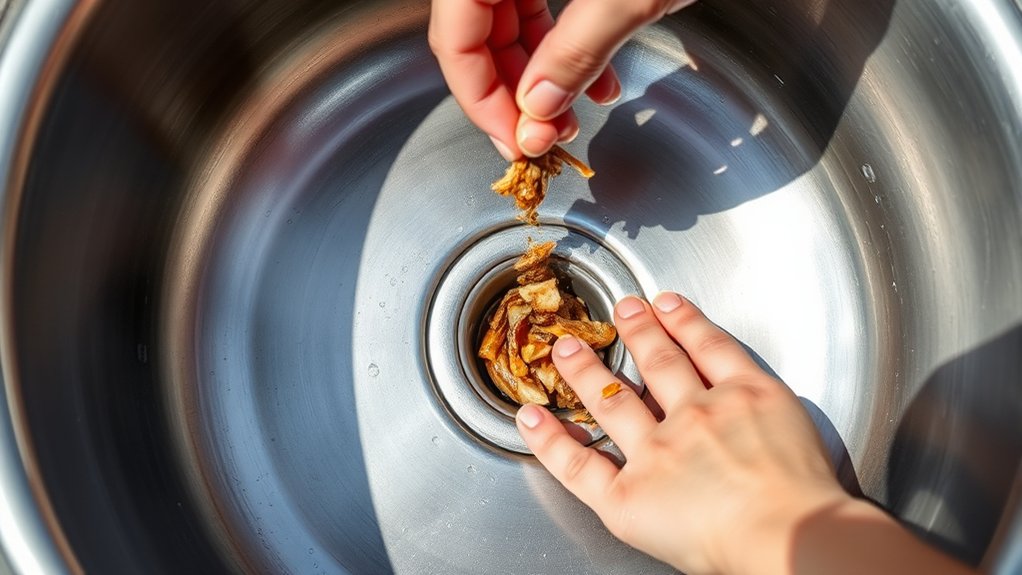
Before diving into more complex methods, check your kitchen sink for any visible blockages. Start by removing any food scraps or debris that may be stuck around the drain or in the garbage disposal. These blockages can cause water to drain slowly and create an unpleasant sink odor.
Make sure the garbage disposal is turned off before you reach in to avoid injury. Use a flashlight to look inside the drain and carefully pull out any trapped items with tongs or gloves. If you see buildup around the disposal blades, clean it gently to prevent odors and improve performance.
Clearing these visible blockages often solves minor clogs and stops odors from lingering. Taking a moment to inspect and remove debris here saves you time and effort before trying other unclogging techniques. Keeping this area clean also helps prevent future blockages and keeps your kitchen sink running smoothly.
Plunge and Use Baking Soda to Clear the Kitchen Sink
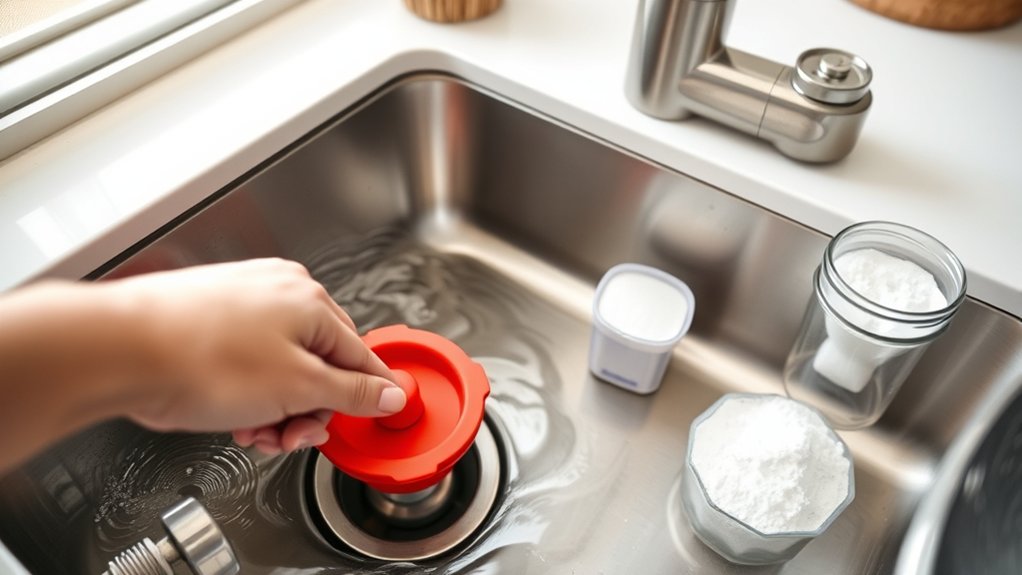
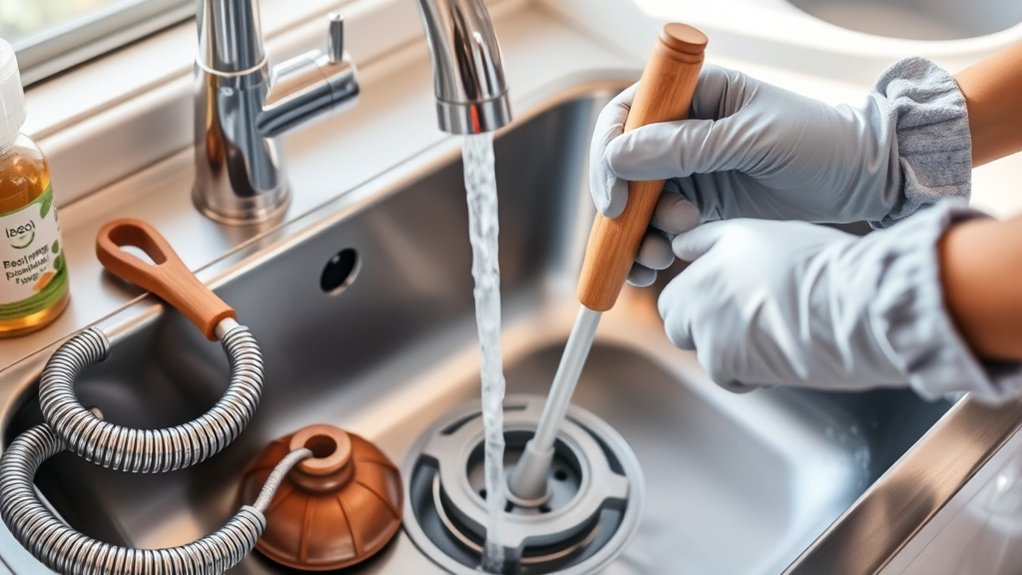
If your kitchen sink is still clogged after removing visible debris, plunging combined with baking soda can be an effective next step. This method uses simple plunger techniques paired with the natural baking soda benefits to break down clogs and refresh your drain.
Here’s how to do it:
- Use a plunger properly – Make sure there’s enough water in the sink to cover the plunger’s cup. Position it firmly over the drain and plunge vigorously for 15-20 seconds to loosen debris.
- Add baking soda – Pour half a cup of baking soda directly into the drain. It helps neutralize odors and works as a gentle abrasive to clear grime.
- Follow with hot water – Pour a kettle of boiling water down the drain to flush the baking soda and any loosened material away.
This combo of plunger techniques and baking soda benefits makes unclogging your kitchen sink straightforward and chemical-free.
Clean the Kitchen Sink P-Trap to Fix Drainage
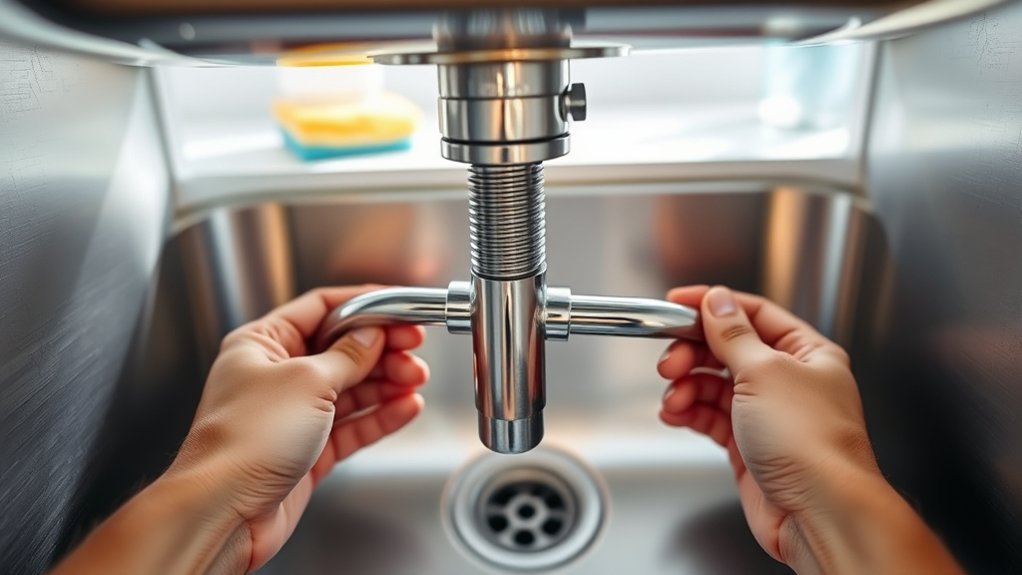
Although plunging and baking soda often clear minor clogs, stubborn blockages usually hide in the P-trap beneath your kitchen sink. Start by placing a bucket underneath to catch water.
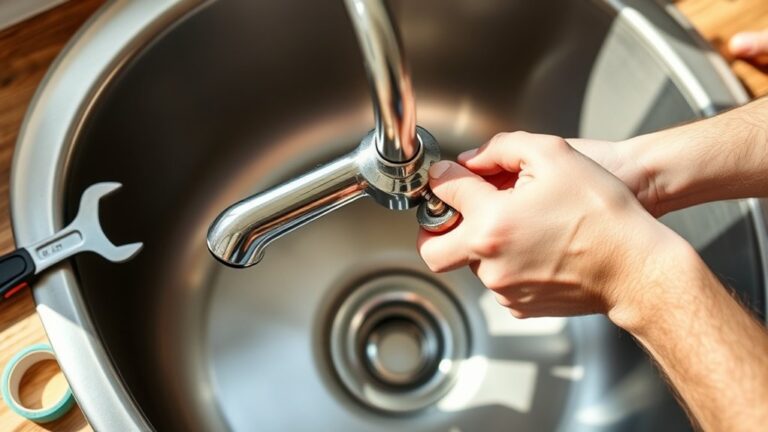
Then, perform a careful P trap inspection to spot any buildup or debris causing the blockage. Use a wrench or your hands to loosen the slip nuts connecting the P-trap to the pipes. This pipe disassembly allows you to remove the curved section completely.
Once detached, check inside the P-trap for gunk, food particles, or grease. Clean it thoroughly with a brush or rag.
After clearing the clog, reassemble the pipes, ensuring all connections are tight to prevent leaks. Finally, run water to test if the drainage flows smoothly.
Cleaning the P-trap is a straightforward step that often solves drainage issues when other methods fail. By doing this, you’ll keep your sink flowing freely and avoid costly plumber visits.
Frequently Asked Questions
Can Chemical Drain Cleaners Damage My Pipes?
Yes, chemical drain cleaners can damage your pipes. You should know that these products pose chemical risks because their harsh ingredients can cause pipe corrosion, especially if used frequently or in old plumbing. Over time, this corrosion weakens your pipes, leading to leaks or bursts. Instead, try safer alternatives like a plunger or a drain snake before resorting to chemicals, which might save your pipes and avoid costly repairs.
How Often Should I Clean My Kitchen Sink Drain?
Think of your kitchen sink like a vintage radio—it needs regular tuning to keep it humming smoothly. You should clean your kitchen sink drain at least once a month to prevent buildup and pesky drain odors. Regular sink maintenance helps avoid clogs and keeps your pipes fresh. Don’t wait for a problem; a little effort now saves you from costly repairs later and keeps your kitchen smelling clean and inviting.
What Causes Recurring Sink Clogs Despite Cleaning?
Recurring sink clogs happen because food particles often get trapped in your garbage disposal or pipes, even after cleaning. You might not be clearing all the debris, especially greasy or fibrous bits that stick around. Over time, this buildup causes blockages.
To prevent this, avoid putting large or tough scraps down the disposal, run plenty of water when using it, and clean the disposal regularly to keep food particles from accumulating.
Are There Eco-Friendly Alternatives to Unclog Drains?
You can dance around harsh chemicals by choosing eco-friendly alternatives like biodegradable solutions and natural remedies. These gentle warriors break down clogs without harming your pipes or the planet.
Try mixing baking soda and vinegar—a fizzy duo that clears drains naturally. Adding hot water helps wash away debris.
With these earth-loving choices, you’ll keep your sink flowing smoothly while protecting the environment, proving that green cleaning truly makes a difference.
When Should I Call a Professional Plumber?
You should call a professional plumber when emergency situations arise, like severe leaks, flooding, or persistent clogs that don’t respond to DIY repair attempts. If your sink backs up repeatedly, or you notice foul odors and slow drainage despite trying simple fixes, it’s time to get expert help. Don’t wait too long—addressing problems early guarantees costly damage and ensures your plumbing system stays in good shape.
Conclusion
Unclogging your kitchen sink is like untangling a knot. Once you tackle the visible blockages, the rest falls into place. By plunging and using baking soda, you clear the path for water to flow freely again.
Finally, cleaning the P-trap removes any hidden debris that could slow things down. With these simple steps, your kitchen sink will run smoothly, making kitchen chores feel less like a battle and more like a breeze.