10 Tips to Organize Your Kitchen Cabinets Efficiently
Cluttered cabinets can make cooking feel more stressful than it needs to be. If you’re always searching for ingredients or struggling to find room for your cookware, you’re not alone. These 10 tips to organize your kitchen cabinets efficiently can help you make the most of your space.
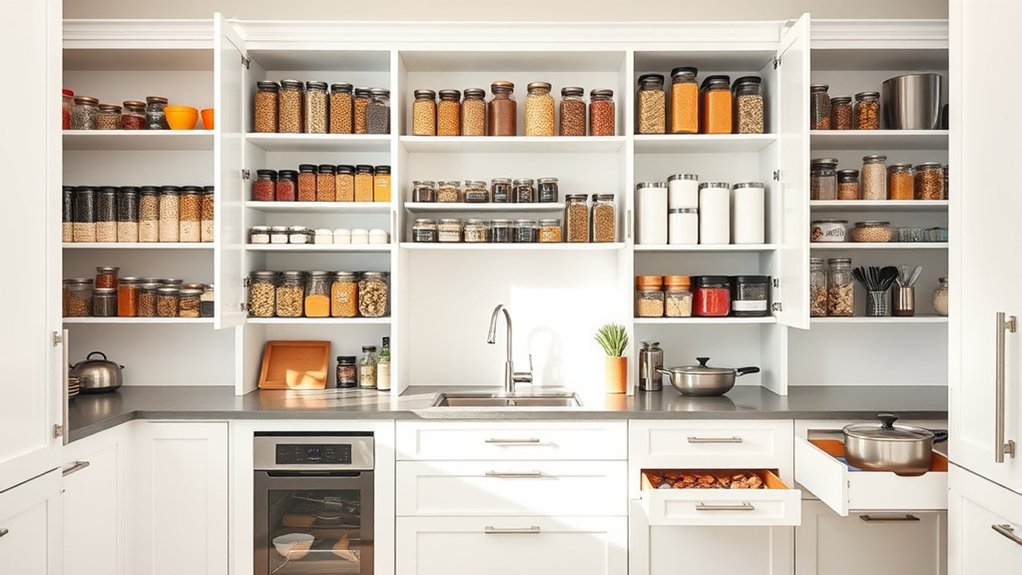
Start by clearing out your cabinets, tossing expired or unused items to create space. Store frequently used items at eye level for easy access. Group things by function and create zones for prep, cooking, and baking.
Use adjustable shelves, clear containers, and labels to keep everything visible and neat. Take advantage of cabinet doors with racks or magnetic holders, and use dividers for small items.
Regularly reassess your setup to keep it efficient. Delve into these tips further to fully transform your kitchen organization.
Key Takeaways
- Empty and clean cabinets regularly to remove expired items and maintain freshness.
- Store frequently used items at eye level for easy access and efficient workflow.
- Group related items in designated zones like baking or prep areas for streamlined cooking.
- Use adjustable shelves, pull-out drawers, and clear labeled containers to maximize space.
- Reassess and reorganize storage periodically to adapt to changing needs and reduce clutter.
Start By Clearing Out and Categorizing Kitchen Cabinet Items
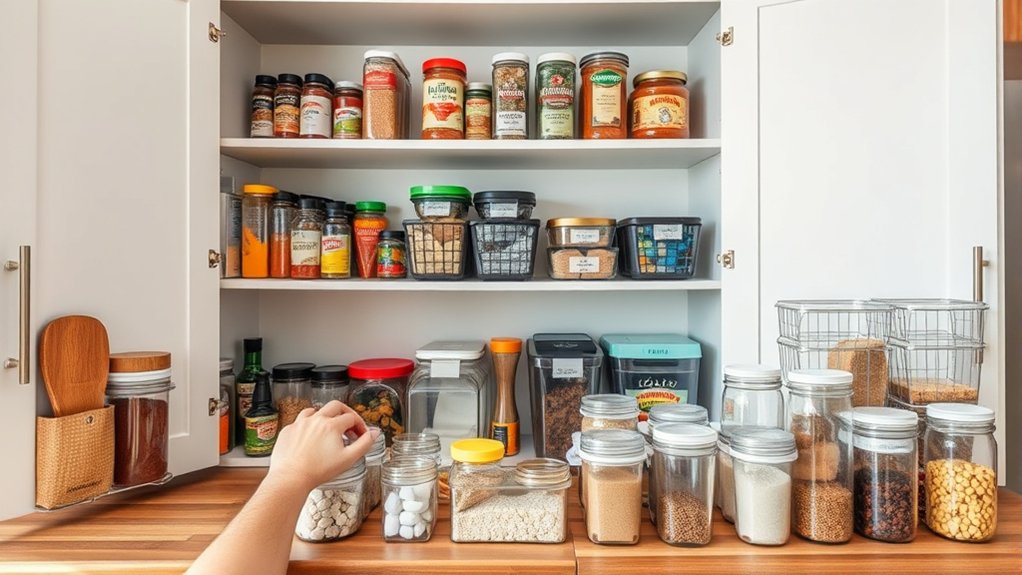
Before you plunge into organizing, clear out everything from your kitchen cabinets. This step is essential for effective kitchen cleaning and sets the stage for a fresh start. Emptying your cabinets lets you spot expired items, broken containers, or rarely used gadgets.
Clearing out your kitchen cabinets first is key to spotting clutter and starting fresh with effective cleaning.
As you take out your appliances, it’s a great time to perform some basic appliance maintenance: wipe down surfaces, clean filters, and check cords for wear.
Once everything’s out, categorize items by type: baking supplies, canned goods, cookware, and small appliances. Sorting this way helps you see what you have and decide what to keep or donate. You’ll also create space to store items logically.
Don’t forget to clean the empty cabinets thoroughly. Wipe shelves, corners, and doors to remove dust and crumbs. This deep cleaning prevents pests and keeps your kitchen fresh.
Taking these steps makes organizing smoother and ensures your kitchen stays functional and tidy.
Store Frequently Used Kitchen Cabinet Items at Eye Level
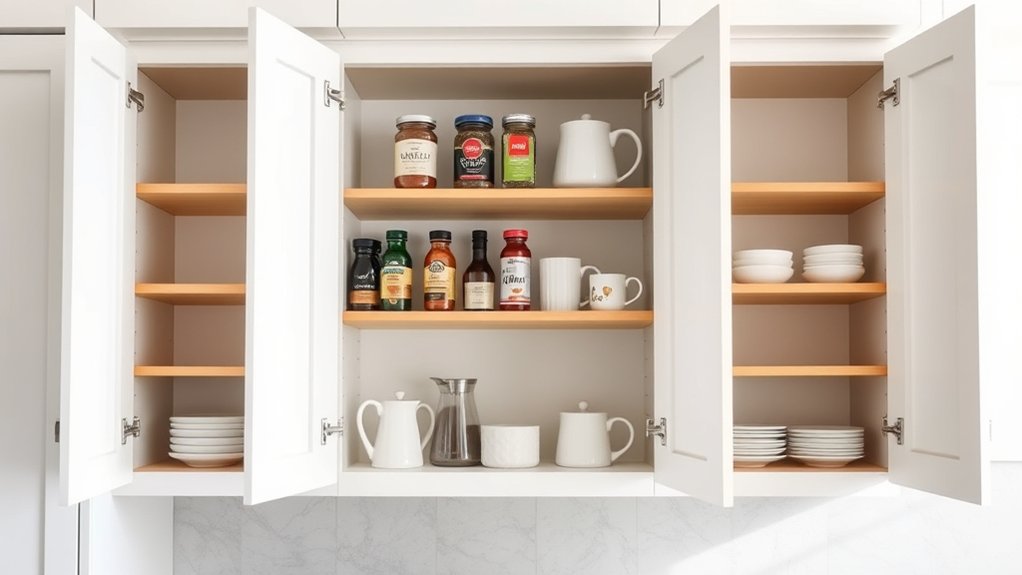
Since you reach for certain items more often, storing frequently used kitchen cabinet items at eye level saves time and effort. Keep everyday essentials like plates, cups, and cooking oils within easy sight and reach to streamline your cooking process.
Use color coordination to group items visually; for example, stack similarly colored bowls or jars together to make your space not only functional but also pleasing to the eye. This helps you quickly spot what you need without rifling through cluttered shelves.
When arranging small appliances in your cabinets, place those you use daily, like your blender or toaster, at eye level. This appliance arrangement prevents unnecessary bending or stretching and keeps your kitchen workflow smooth.
Reserve higher or lower shelves for items you rarely use. By organizing with eye-level access in mind, you save time and reduce frustration, making your kitchen a more enjoyable and efficient space.
Group Items by Function and Use for Easy Access
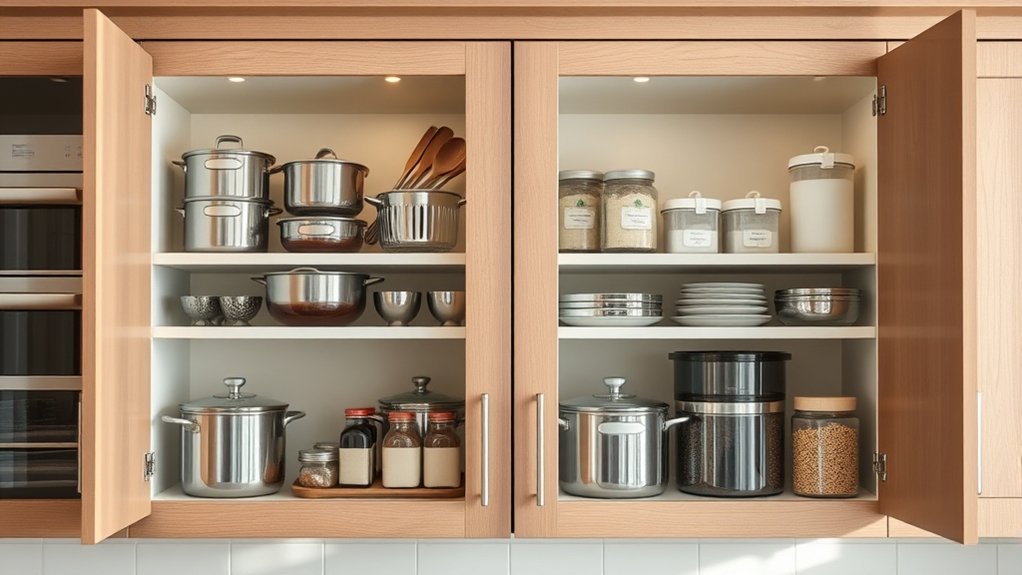
Placing frequently used items at eye level sets a solid foundation for an organized kitchen, but grouping items by function and use takes efficiency a step further. When you organize your cabinets this way, you’ll find what you need without digging through clutter. For example, keep baking supplies like measuring cups, mixing bowls, and spatulas together near your mixer or oven. Appliance placement matters, too. Store small appliances close to where you use them most, such as keeping the blender next to your smoothie ingredients. This reduces unnecessary movement and saves time.
Don’t forget to add decorative accents like labeled jars or matching containers to make your groups visually appealing and easy to identify. Grouping by function helps you maintain order and speeds up your cooking process. When everything has its place based on how and when you use it, your kitchen becomes a streamlined, hassle-free space.
Create Kitchen Zones for Prep, Cooking, and Baking
When you create distinct kitchen zones for prep, cooking, and baking, you streamline your workflow and cut down on clutter. Kitchen zoning helps you assign specific areas for tasks, making it easier to find tools and ingredients exactly when you need them.
For example, keep cutting boards, knives, and mixing bowls near your prep zone. Store pots, pans, and cooking utensils close to the stove for quick access during cooking. In the baking zone, organize measuring cups, mixing spoons, and baking sheets together.
This setup improves your workspace flow, reducing unnecessary movement and saving time. By tailoring each zone to its purpose, you’ll keep your cabinets neat and efficient. Plus, kitchen zoning lets you focus on one task at a time without distractions, making meal prep more enjoyable.
Use Adjustable Shelves to Maximize Kitchen Cabinet Space
Although kitchen cabinets come in standard sizes, you can improve their storage potential considerably by installing adjustable shelves. Adjustable shelving lets you tailor your cabinet space to fit items of varying heights, giving you better space optimization and reducing wasted room.
Here’s how you can make the most of adjustable shelves:
- Customize Shelf Heights: Shift shelves to accommodate tall bottles or short spice jars without leftover gaps.
- Create Zones: Group similar items by adjusting shelves for easy access and neat organization.
- Maximize Vertical Space: Add extra shelves in deep cabinets to stack plates, bowls, or pantry goods efficiently.
Using adjustable shelving transforms your cabinets into flexible storage units that adapt as your needs change. This simple upgrade improves space optimization, helping you keep everything visible and within reach while making the most of every inch inside your kitchen cabinets.
Install Pull-Out Drawers for Better Cabinet Accessibility
If you want to access items stored deep inside your cabinets without hassle, installing pull-out drawers is a smart solution. Pull-out drawers glide smoothly, allowing you to reach every corner of your cabinet with ease. This upgrade considerably improves cabinet accessibility by eliminating the need to bend or stretch awkwardly. You’ll no longer have to dig through clutter or move multiple items to find what you need.
Pull-out drawers also help keep your kitchen organized by providing designated spaces for pots, pans, and small appliances. They make it easier to separate and categorize items, so your cabinets stay neat. Plus, the installation process is straightforward, and many options are available to fit your existing cabinet sizes. By adding pull-out drawers, you’ll enjoy a more functional kitchen where everything is within easy reach, saving you time and frustration during meal prep and cleanup.
Use Clear Containers and Labels to Keep Items Visible
Since kitchen cabinets often become cluttered and items get lost in the back, using clear containers and labels helps you keep everything visible and easy to find. Clear containers offer airtight storage, preserving your ingredients while allowing you to quickly spot what you need. Labels add another layer of visual organization, so you don’t have to guess or open every container.
Here’s how you can make the most of this approach:
- Choose airtight, clear containers for staples like flour, sugar, and pasta to keep freshness intact and avoid spills.
- Label each container clearly with the item name and expiration date to streamline meal prep and grocery shopping.
- Group similar items together in labeled containers to maintain an orderly cabinet and improve your kitchen’s visual organization.
Use Cabinet Doors to Add Extra Kitchen Cabinet Storage
Make the most of your kitchen cabinets by using the inside of the doors for extra storage. You could add hanging organizers or magnetic holders to keep small items close at hand. That way, you’ll free up shelf space and help keep your kitchen clutter-free.
Maximize Door Space
How often do you overlook the potential of your cabinet doors? They’re perfect for extra storage if you know how to use them. Here’s how you can maximize that door space:
- Attach slim racks or hooks on the inside of the doors to hold spices, lids, or utensils, freeing up shelf space.
- Use overhead racks inside deep cabinets to store less frequently used items, making items easier to access without cluttering your shelves.
- Install a small Lazy Susan on the door’s inner surface for condiments or small jars. It spins and keeps everything visible and within reach.
Install Hanging Organizers
Wondering how to squeeze even more storage out of your kitchen cabinets? Installing hanging organizers is a smart way to maximize space without cluttering your counters. Use hanging storage like wall mounted racks on the inside of cabinet doors to hold spices, lids, or cleaning supplies.
These racks free up shelf space and keep frequently used items within easy reach. You can easily install adhesive or screw-mounted options depending on your cabinet material.
Wall mounted racks come in various sizes and styles, so pick ones that fit your needs and kitchen style. By adding hanging organizers, you transform unused door space into practical storage, making your kitchen more efficient and organized without major renovations.
Utilize Magnetic Holders
Building on the idea of maximizing cabinet door space, magnetic holders offer a sleek and practical solution to keep your kitchen essentials organized. You can turn unused cabinet doors into valuable storage spots without cluttering your counters.
Here are three ways to use magnetic holders effectively:
- Magnetic spice racks: Attach small magnetic spice containers to your cabinet doors for easy access and a tidy look.
- Magnetic tool holders: Mount magnetic strips to hold knives, scissors, and other metal tools securely.
- Utensil storage: Use magnetic hooks or holders for frequently used utensils, keeping them within reach but out of drawers.
Use Dividers to Keep Small Kitchen Items Organized
Choose adjustable, bamboo, or acrylic dividers to suit your kitchen’s style and needs. Place them vertically or horizontally to organize utensils, lids, or spices, making everything easy to reach. Adjust the layout as needed to keep small items tidy and easy to find.
Types of Dividers
Several types of dividers can transform your kitchen cabinets by keeping small items neatly separated and easy to find. Choosing the right dividers helps you maximize space and maintain order.
- Utensil Trays: These are perfect for sorting forks, knives, spoons, and other small tools. They keep everything in place so you won’t waste time searching.
- Spice Rack Dividers: Ideal for organizing spice jars, these dividers prevent bottles from tipping over and make it easier to spot your favorite seasonings.
- Adjustable Shelf Dividers: These flexible dividers let you customize cabinet space for items like cutting boards, lids, or baking sheets, keeping them upright and accessible.
Using these dividers guarantees your small kitchen essentials stay organized and easy to grab whenever you’re cooking.
Placement Tips
Where should you place dividers to keep your small kitchen items organized? Start by grouping items based on your cooking techniques. For example, place spice jars and measuring spoons together in a divider near your stove for easy access while cooking.
Use dividers in drawers to separate utensils, ensuring you can quickly grab what you need without rummaging. In cabinets, position dividers to hold cutting boards, baking sheets, and lids upright, making retrieval simple and efficient.
This setup not only streamlines your cooking process but also simplifies kitchen cleaning by reducing clutter. By thoughtfully placing dividers where you use items most, you create an organized, functional space that supports your cooking workflow and keeps your kitchen tidy with minimal effort.
Declutter and Reassess Your Kitchen Cabinet Setup Regularly
Although it’s tempting to set your kitchen cabinets and forget them, regularly decluttering and reassessing their setup keeps your space functional and efficient. Over time, unused items pile up, making it harder to find essentials and leading to cluttered, unsafe conditions. Keeping your cabinets organized also supports kitchen safety and appliance maintenance by ensuring everything is stored properly.
Regularly decluttering kitchen cabinets prevents clutter, enhances safety, and keeps your space functional and efficient.
Here’s how to stay on top of it:
- Schedule monthly checks: Remove expired food, broken items, or duplicates to maintain a clutter-free space.
- Evaluate appliance storage: Make sure appliances are stored where they won’t get damaged and are easy to access for regular maintenance.
- Rearrange for efficiency: Adjust shelves and containers based on your current cooking habits to streamline your workflow and reduce accidents.
Frequently Asked Questions
How Do I Choose the Right Materials for Kitchen Cabinet Shelves?
When choosing materials for kitchen cabinet shelves, focus on shelf durability first. You’ll want sturdy options like plywood or solid wood, which handle weight well and resist warping.
MDF is budget-friendly but less durable, so avoid it for heavy items. Also, consider moisture resistance—materials with a laminate finish or sealed edges last longer.
Picking the right materials guarantees your shelves stay strong and keep your kitchen organized effortlessly.
What Are the Best Lighting Options Inside Kitchen Cabinets?
The best lighting options inside kitchen cabinets are under cabinet lighting and LED strip options. You’ll love how under cabinet lighting brightens your workspace and showcases your items clearly.
LED strip options are energy-efficient, easy to install, and provide even illumination inside your cabinets. They’re perfect for highlighting shelves or making it easier to find things.
You can choose warm or cool tones to match your kitchen’s vibe and save energy at the same time.
How Can I Prevent Moisture Damage in Kitchen Cabinets?
Imagine your kitchen cabinets like a cozy house. Without proper ventilation, moisture sneaks in like an uninvited guest and causes damage. To prevent moisture damage, focus on moisture control by installing vented cabinet doors or small vents inside. You can also use moisture absorbers or silica gel packs to keep humidity low.
Regularly check for leaks under sinks and make sure there’s proper airflow. This way, you’ll keep your cabinets dry and durable for years.
What Tools Are Essential for Installing Kitchen Cabinet Hardware?
You’ll need a drill with various bits to handle cabinet mounting efficiently, guaranteeing your hardware compatibility is spot on. A screwdriver set helps you tighten screws without damaging your cabinets.
A measuring tape and level are essential to align hardware perfectly. Don’t forget a pencil to mark drilling points accurately.
These tools will make installing cabinet hardware easier, faster, and guarantee everything fits and functions well in your kitchen.
How Do I Fix Squeaky or Loose Kitchen Cabinet Doors?
If your cabinet doors squeak louder than a banshee at midnight, it’s time for cabinet hinge maintenance. First, tighten any loose screws to secure the hinges. Then, apply a little lubricant to stop the noise.
Use door alignment techniques by adjusting the hinges to ensure the doors sit flush and close smoothly. This simple routine keeps your cabinets quiet and perfectly aligned, saving you from future creaks and wobbles.
Conclusion
Just like a well-conducted orchestra, your kitchen cabinets can create harmony when everything’s in its place. By clearing out clutter, grouping items, and using smart storage solutions, you’ll turn chaos into calm.
Remember, organizing your kitchen isn’t a one-time gig. It’s an ongoing performance. Keep tuning your space regularly, and soon you’ll find cooking and prep feel as effortless as a practiced symphony.
With these tips to organize your kitchen cabinets efficiently, your kitchen will thank you, and so will your peace of mind.