

5 Easy Steps to Clean Kitchen Sink Drain Smell
A smelly kitchen sink drain can make your whole kitchen feel unpleasant, even when everything else is clean. You’re not alone—many people struggle with lingering drain odors. These five easy steps to clean a kitchen sink drain smell can help freshen things up.
First, clear visible food debris and grease around the drain. Next, pour half a cup of baking soda followed by a cup of vinegar to fizz away odors.
Then, rinse with hot water to flush out buildup. Don’t forget to deep clean your drain trap and pipes occasionally.
Finally, maintain a regular cleaning routine to keep smells at bay. Keep going to find simple ways to prevent persistent odors.
Key Takeaways
- Remove visible food debris and scrub around the drain to eliminate trapped particles and buildup.
- Pour half a cup of baking soda followed by one cup of vinegar into the drain to neutralize odors.
- Cover the drain to trap fizzing from the baking soda and vinegar mixture, then let it sit for 10–15 minutes.
- Rinse the drain thoroughly with boiling water to flush away loosened grime and odors.
- Maintain freshness by regularly flushing the drain with hot water and repeating the baking soda-vinegar treatment.
Quick Fixes to Freshen Your Kitchen Sink Drain
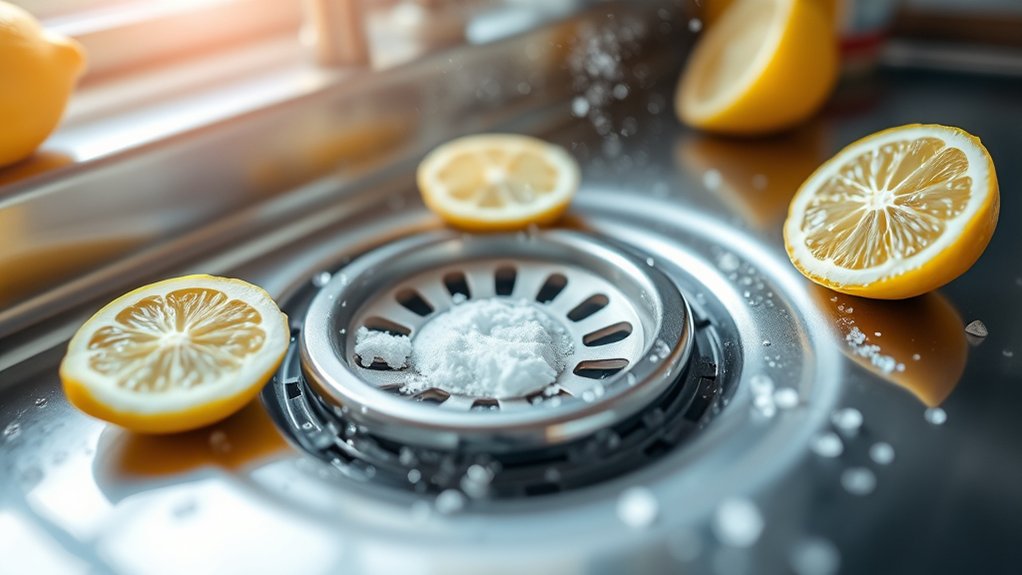
Although a persistent odor can be frustrating, you can quickly freshen your kitchen sink drain with a few simple tricks. Start by placing a clean drain cover over the sink drain to block any lingering smells. This barrier helps contain odors and keeps debris from falling in, which can worsen the smell.
Next, try using an air freshener near your sink area to mask any remaining odors. Choose a subtle scent that won’t overwhelm your kitchen but will keep the space smelling pleasant.
You can also pour a mixture of baking soda and vinegar down the drain, then cover it with the drain cover to trap the fizzing action. Let it sit for a few minutes, then rinse with hot water. These quick fixes won’t solve deep clogs but will give your kitchen a fresher feel while you tackle more thorough cleaning steps.
Clear Out Food Debris and Grease Buildup

While quick fixes can mask odors temporarily, tackling the root cause requires removing the food debris and grease that build up in your kitchen sink drain. Start by clearing out any visible food residue around the drain opening. Use a small brush or an old toothbrush to scrub away stuck-on bits.
Next, remove the drain stopper if possible and check for trapped food particles inside. Grease buildup often clings to the inner walls of the drain pipe, creating a stubborn source of bad smells.
To address this, pour hot, soapy water slowly down the drain to help dissolve and flush away greasy deposits. You might also want to use a drain brush or flexible cleaning tool to reach deeper and dislodge hardened grease buildup.
Regularly clearing out food residue and grease buildup prevents odors from developing and keeps your kitchen sink smelling fresh and clean.
Use Baking Soda and Vinegar to Neutralize Odors
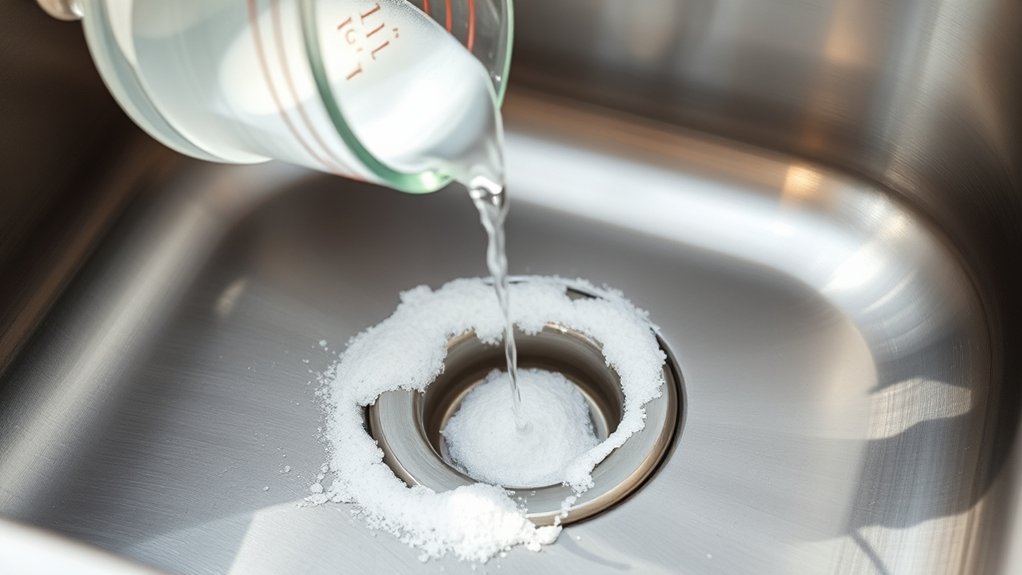
If you want to eliminate lingering kitchen sink odors naturally, baking soda and vinegar offer a powerful solution. These natural remedies work together as effective DIY solutions to neutralize smells without harsh chemicals.
Here’s how you can use them:
- Sprinkle Baking Soda: Pour about half a cup of baking soda directly into the drain. It helps absorb odors and loosens grime.
- Add Vinegar: Slowly pour one cup of white vinegar down the drain. The fizzing reaction breaks down buildup and kills odor-causing bacteria.
- Flush with Hot Water: After 10-15 minutes, flush the drain with boiling water to wash away debris and residual odors.
This simple, eco-friendly method refreshes your sink drain and keeps it smelling clean. By using baking soda and vinegar, you’re choosing a safe, effective approach that fits perfectly with natural remedies and DIY solutions for your kitchen.
Deep Clean Your Drain Trap and Pipes
After neutralizing odors with baking soda and vinegar, you’ll want to tackle the drain trap and pipes where grime and buildup often hide. Begin with a thorough drain trap inspection by placing a bucket underneath and loosening the slip nuts to remove the trap.
Clean out any gunk with a brush or old toothbrush, paying close attention to stubborn residues. Rinse the trap with hot water before reinstalling it securely.
Use a brush or toothbrush to remove stubborn gunk, then rinse the trap thoroughly with hot water before reinstalling.
Next, focus on the pipes leading away from the trap. Use a flexible brush or plumber’s snake to clear any debris lodged inside.
This step not only removes odor-causing buildup but also helps with pipe corrosion prevention by ensuring smooth water flow and reducing moisture retention. Avoid harsh chemicals that can degrade your pipes over time.
Once clean, flush the drain with hot water to wash away loosened grime. This deep clean approach will markedly reduce odors and keep your drain functioning properly.
Prevent Kitchen Sink Drain Smells With Regular Maintenance
Regular maintenance plays a crucial role in preventing kitchen sink drain smells before they start. By staying proactive, you can keep your drain fresh and odor-free with minimal effort. Here are three simple steps to help you maintain a clean-smelling kitchen sink:
- Improve Air Circulation: Keep the area under your sink well-ventilated. Open cabinet doors occasionally or install small vents to reduce moisture buildup, which causes odors.
- Use Odor Absorbers: Place natural odor absorbers like baking soda or activated charcoal under the sink. These absorb moisture and neutralize bad smells before they become noticeable.
- Routine Cleaning: Flush your drain weekly with hot water and a mixture of vinegar and baking soda. This breaks down residue and prevents clogs that trap odors.
Frequently Asked Questions
Can Harsh Chemicals Damage My Kitchen Sink Drain?
Yes, harsh chemicals can damage your kitchen sink drain by causing chemical corrosion, which eats away at pipes over time. When you use strong cleaners frequently, you risk weakening metal or plastic parts, leading to leaks or clogs.
Plus, these chemicals often have a serious environmental impact, contaminating water and harming wildlife. Instead, try gentler, eco-friendly alternatives to keep your drain clean without causing damage or pollution.
How Often Should I Replace My Kitchen Sink Drain Parts?
You should replace your kitchen sink drain parts every 5 to 10 years, depending on drain pipe materials and wear. Metal pipes like galvanized steel corrode faster than PVC, so check them regularly.
Also, practice sink strainer maintenance by cleaning it often to prevent clogs and odors. If you notice leaks, rust, or persistent smells despite cleaning, it’s time to swap out those parts to keep your drain functioning smoothly.
Are Natural Enzymes Effective for Eliminating Drain Odors?
Yes, natural enzymes are highly effective for eliminating drain odors. Studies show enzyme effectiveness in breaking down organic matter can reduce drain smells by up to 90%.
When you use natural cleaning products with enzymes, they target grease, food particles, and bacteria that cause odors without harsh chemicals. This makes natural enzyme cleaners a safe, eco-friendly choice for keeping your kitchen sink drain fresh and odor-free regularly.
Can a Garbage Disposal Cause Drain Smells?
Yes, a garbage disposal can cause drain odors if food particles get trapped inside. When leftovers linger, they start to decompose, creating unpleasant smells that waft up your sink.
To prevent this, you should regularly run the disposal with cold water and grind citrus peels or ice cubes to clean the blades. Keeping the garbage disposal fresh helps eliminate drain odors and keeps your kitchen smelling pleasant.
Is It Safe to Use Bleach to Clean Kitchen Sink Drains?
Yes, you can use bleach to clean kitchen sink drains, but you’ve got to be careful. Studies show that 60% of household drain clogs come from improper maintenance, so using the right cleaning tools and techniques matters.
Bleach disinfects and removes odors effectively, but avoid mixing it with other cleaners to prevent harmful fumes. For regular drain maintenance, combine bleach with mechanical cleaning tools for the safest, most effective results.
Conclusion
By following these simple steps, you’ll sweep away stubborn kitchen sink drain odors like a fresh breeze clearing morning fog. Clearing debris and using baking soda with vinegar can help freshen your space.
Deep cleaning your pipes gives your sink a fresh start. With regular care, you can keep unpleasant smells at bay and enjoy a fresher kitchen. These steps make it easier to clean kitchen sink drain smell and keep your kitchen welcoming.