How to Get Rid of Cockroaches in Your Kitchen Fast
Cockroaches in the kitchen can make it hard to feel comfortable in your own home. You’re not alone—many people struggle to get rid of them quickly. This roundup will help you explore practical options for tackling the problem.
To get rid of cockroaches in your kitchen fast, start by cleaning all crumbs and spills, decluttering cabinets, and sealing cracks around pipes and doors.
Set sticky traps and use DIY baits like boric acid mixed with sugar near their hiding spots.
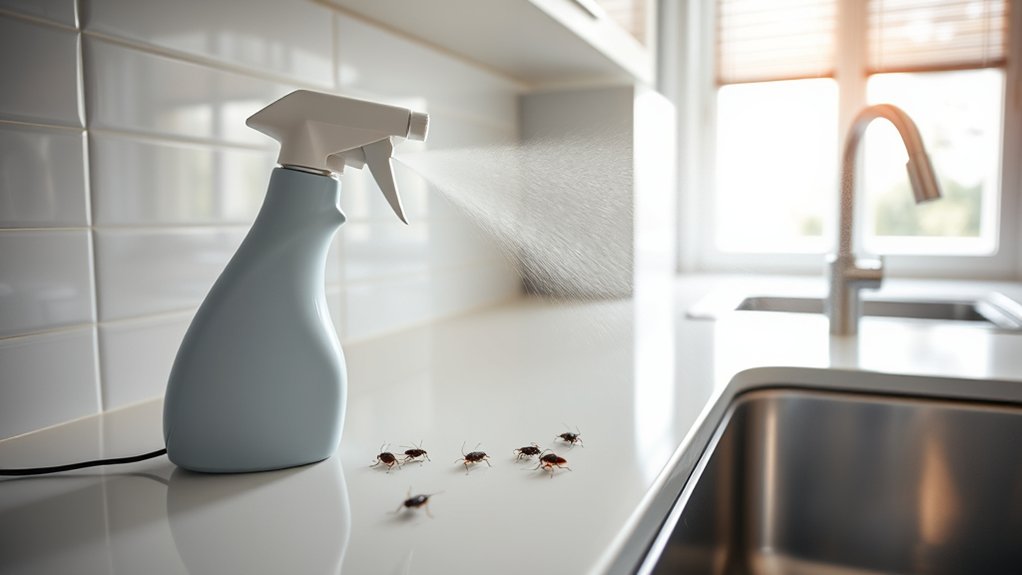
Try natural repellents like peppermint oil or safe chemical sprays for quick control.
Keep monitoring activity to make sure they’re gone.
Keep following for tips on preventing future infestations and when to think about professional help.
Key Takeaways
- Clean countertops and floors daily, removing crumbs, spills, and food residue to eliminate cockroach attractants.
- Seal cracks, gaps, and entry points around pipes, windows, and doors to block cockroach access.
- Place boric acid or sugar-based baits and sticky traps near walls, appliances, and entry areas to kill and monitor roaches.
- Use essential oil sprays like peppermint or eucalyptus to repel cockroaches safely and disrupt their scent trails.
- Store food in airtight containers and declutter cabinets to reduce hiding spots and prevent infestations from spreading.
How to Spot Different Cockroach Types in Your Kitchen
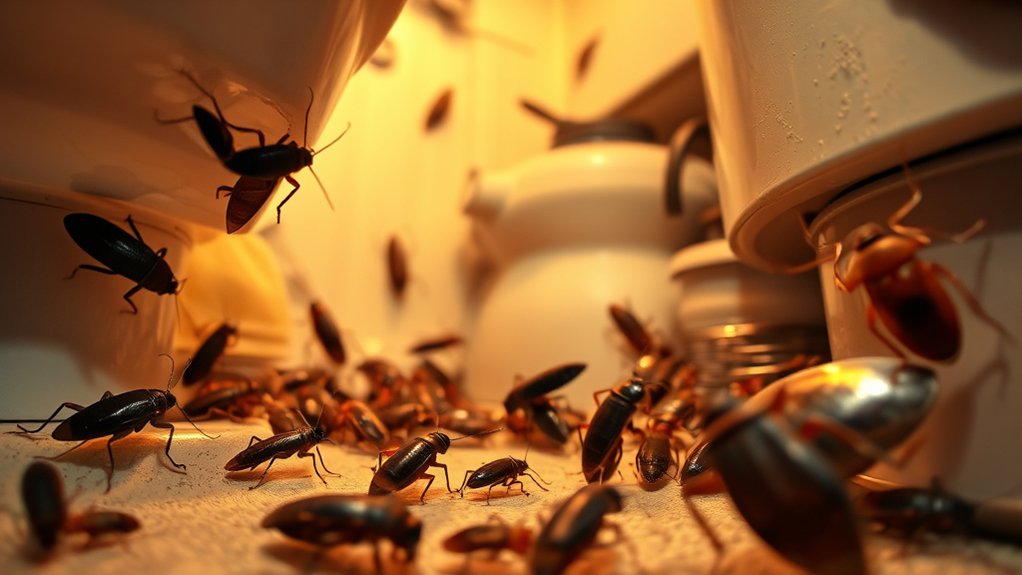
Identifying the type of cockroach in your kitchen is key to tackling the infestation effectively. Start with cockroach identification by observing their size, color, and markings. German cockroaches, common in kitchens, are small, light brown, and have two dark stripes on their backs. American cockroaches are larger, reddish-brown, and prefer warm, moist areas. Oriental cockroaches are darker and slower, often found in cooler spots.
Next, use pest behavior analysis to understand their habits. German cockroaches breed rapidly and hide in cracks, while American cockroaches are strong flyers and often enter through drains. Recognizing these behaviors helps you target their hiding spots and movement patterns.
Quick Steps to Clean and Declutter Your Kitchen to Stop Cockroaches
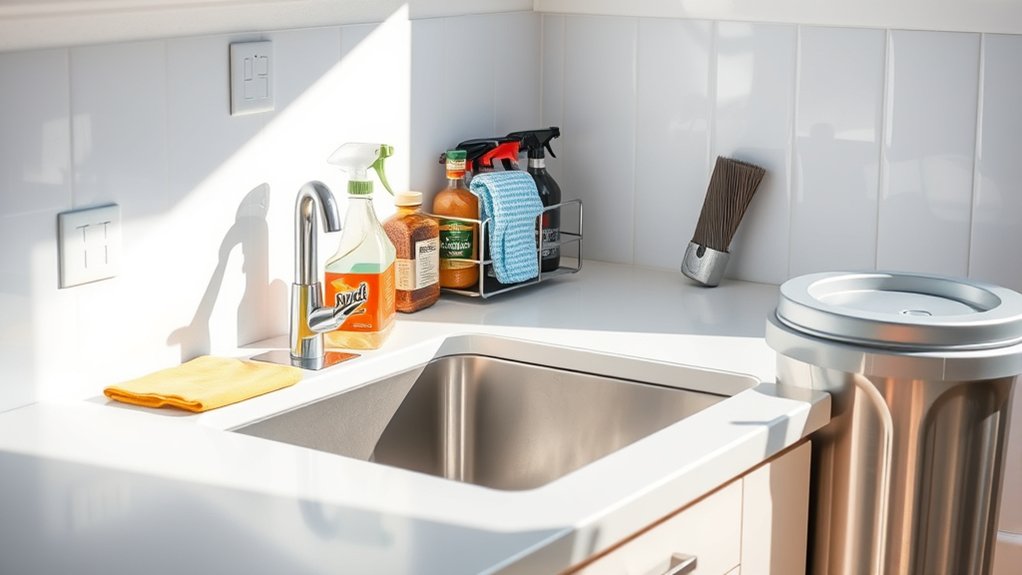
Before cockroaches can take over your kitchen, you need to act fast by cleaning and decluttering thoroughly. Start by clearing countertops, sweeping floors, and wiping down surfaces to remove crumbs and spills. Proper kitchen organization helps limit hiding spots and food access for roaches. Use pest proofing techniques like sealing cracks and storing food in airtight containers to block entry points.
Here’s a quick checklist to guide your cleaning and decluttering:
| Task | Purpose | Tips |
|---|---|---|
| Clear countertops | Remove food residue | Wipe daily with disinfectant |
| Declutter cabinets | Eliminate hiding spots | Only store essentials |
| Sweep & mop floors | Remove crumbs and moisture | Focus on corners & under appliances |
| Seal cracks & gaps | Prevent entry | Use silicone caulk |
| Store food airtight | Cut off food supply | Use glass or plastic containers |
Following these steps improves kitchen organization and applies pest proofing techniques, making your kitchen less inviting to cockroaches.
The Best DIY Cockroach Baits and Traps That Work Fast
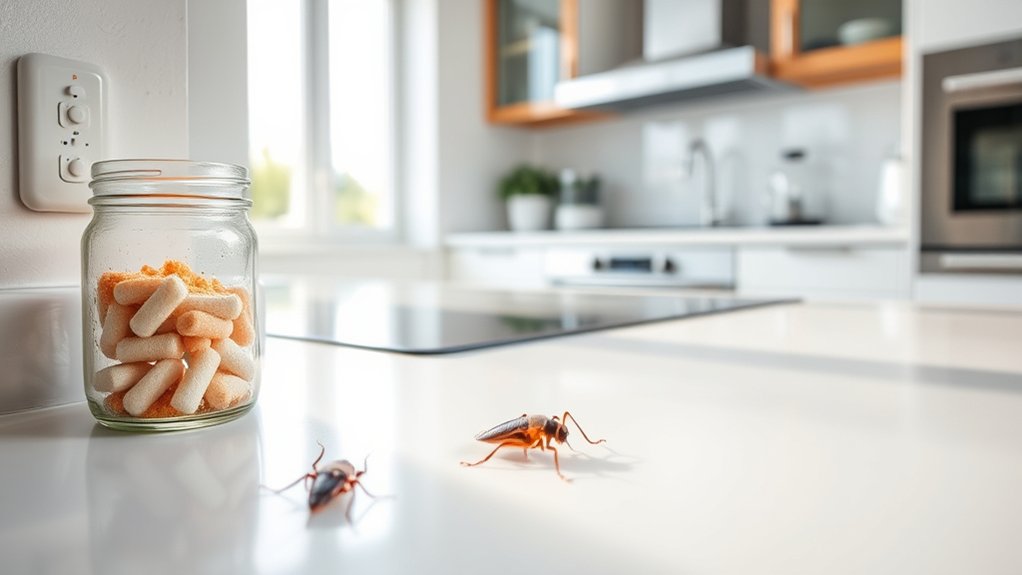
Once your kitchen is spotless and sealed against entry, the next step is to attract and eliminate any roaches that remain. Understanding cockroach behavior helps you set up effective DIY baits and traps. Cockroaches, common pests in kitchens, are nocturnal and drawn to food sources.
Using bait stations with boric acid mixed with sugar or peanut butter exploits their attraction to sweet and greasy foods. When they consume the bait, it disrupts their digestive system, killing them over time.
Boric acid combined with sweet or greasy bait targets cockroaches, disrupting digestion and eliminating them gradually.
For traps, sticky traps placed along walls, under appliances, and near entry points catch roaches as they follow familiar paths. You can also make simple traps using glass jars lined with petroleum jelly inside the rim and bait at the bottom; roaches climb in but can’t escape.
Regularly check and replace traps to maintain effectiveness. These DIY methods work fast by targeting cockroach behavior directly, reducing infestations without harsh chemicals.
Natural Remedies That Safely Repel Cockroaches
You can repel cockroaches naturally with essential oils like peppermint or eucalyptus. Mix a few drops with water and spray areas where roaches tend to hide. You can also make homemade traps to attract and capture them without using harsh chemicals.
Essential Oils That Work
Although cockroaches are tough pests, you can repel them effectively using certain essential oils. These natural remedies work as safe, non-toxic cockroach repellents that disrupt their scent trails and make your kitchen less inviting.
To use essential oils, mix a few drops with water in a spray bottle and apply around entry points, cracks, and common hiding spots.
Here are three essential oils known for their cockroach repellent properties:
- Peppermint oil: Its strong scent overwhelms cockroaches’ senses.
- Tea tree oil: Acts as a natural insecticide and repellent.
- Eucalyptus oil: Disrupts cockroach communication and deters them.
Incorporate these essential oils into your cleaning routine to keep cockroaches away naturally and safely.
Homemade Cockroach Traps
When dealing with cockroaches, homemade traps offer a simple and safe way to catch and reduce their numbers without harsh chemicals. You can use a jar coated inside with petroleum jelly and bait it with sweet food. Cockroaches climb in for the bait but can’t escape due to the slippery surface.
Understanding cockroach behavior is essential—they’re nocturnal and prefer dark, moist areas, so placing traps where they hide boosts effectiveness. Don’t fall for pest control myths like using only sprays or expecting instant results; traps work steadily over time.
How to Use Chemical Sprays Safely and Effectively
When using chemical sprays, choose products labeled for kitchen use, but remember that no product can guarantee complete safety. Apply the spray carefully to cracks and hiding spots, keeping it away from food and utensils. Make sure the area is well ventilated, and follow the label’s safety instructions to help protect yourself and your family.
Choosing Appropriate Chemical Sprays
Since cockroaches can hide in hard-to-reach places, choosing the right chemical spray is essential for effective control. You want a product that balances chemical safety with strong spray effectiveness to protect your family and pets while eliminating pests. Look for sprays labeled for indoor use and specifically designed to target cockroaches.
When selecting a spray, consider these points:
- Active Ingredients: Opt for proven compounds like pyrethroids or boric acid for long-lasting results.
- Low Toxicity: Choose sprays with minimal health risks to ensure chemical safety in your kitchen.
- Residual Action: Pick sprays that continue working after application to catch hidden roaches.
Proper Application Techniques
How exactly should you apply chemical sprays to guarantee both safety and effectiveness? First, focus on pest identification to target areas where cockroaches hide and breed, like cracks, crevices, and behind appliances. Understanding cockroach biology helps—you’ll know they prefer warm, dark places and tend to travel along walls and edges.
Apply sprays directly to these hotspots, avoiding open areas to maximize impact. Use a steady, controlled spray to avoid over-application, which wastes product and raises risks. Always treat entry points and nest sites, since disrupting their lifecycle is key.
Don’t spray food or utensils; instead, remove them beforehand. By targeting sprays precisely based on cockroach biology and pest identification, you’ll increase the treatment’s effectiveness while reducing unnecessary exposure.
Safety Precautions and Ventilation
After applying chemical sprays carefully to target cockroach hiding spots, you need to focus on safety measures to protect yourself and your household. Always wear protective gear like gloves and masks to avoid skin contact and inhalation of harmful chemicals.
Confirm your kitchen’s ventilation systems are running well. Open windows and doors to allow fresh air to circulate and disperse fumes quickly. Avoid staying in the treated area longer than necessary. Here are key safety steps:
- Use chemical sprays in well-ventilated spaces to minimize inhaling toxins.
- Keep children and pets away from treated areas until sprays dry completely.
- Store chemicals securely in original containers to prevent accidental exposure.
Taking these precautions helps you use sprays safely and effectively while keeping your kitchen safe.
How to Seal Entry Points to Keep Cockroaches Out of Your Kitchen
Even the smallest cracks and gaps can serve as entry points for cockroaches, so you need to carefully inspect your kitchen to find and seal them. Focus on areas around pipes, baseboards, windows, and doors where sealing cracks can stop these pests from sneaking in. Use caulk, weatherstripping, or foam sealant to close off these openings effectively.
Here’s a quick guide for sealing entry points:
| Location | Recommended Sealant |
|---|---|
| Around pipes | Foam sealant |
| Baseboards | Caulk |
| Window frames | Weatherstripping |
| Door thresholds | Door sweeps |
| Wall cracks or holes | Spackle or caulk |
What Draws Cockroaches Into Your Kitchen?
Sealing entry points can keep many cockroaches out, but understanding what attracts them to your kitchen in the first place helps you tackle the problem more effectively.
Cockroaches are drawn to your kitchen mainly because it provides easy access to food sources, moisture, and safe hiding spots. If you don’t address these factors, they’ll keep coming back no matter how many barriers you put up.
Here are key attractions you should watch out for:
- Food sources: Crumbs, spills, uncovered leftovers, and pet food provide a constant buffet.
- Moisture: Leaky pipes, standing water, and damp areas create the perfect environment for cockroaches to thrive.
- Hiding spots: Clutter, cracks, and dark spaces give them safe places to hide and breed.
How to Monitor Cockroach Activity After Treatment
After treatment, keep an eye on cockroach activity to see how well it’s working. Sticky traps can show you where roaches are still active, helping you focus on problem areas and adjust your approach if needed.
Tracking Cockroach Movement
How can you tell if your cockroach treatment is working? Tracking cockroach movement is key. By observing their movement patterns, you can gauge how effectively the treatment disrupts their activity.
Use simple tracking techniques like checking common hiding spots and noting when and where you see cockroach signs.
Focus on these tracking techniques:
- Monitor entry points like cracks and crevices for fresh activity.
- Observe movement patterns during night hours when cockroaches are most active.
- Look for changes in droppings or shed skins that indicate continued presence.
Using Monitoring Tools
Tracking cockroach movement gives you a clear picture of their activity, but using monitoring tools can take your efforts a step further. These tools, like glue traps and electronic sensors, help you pinpoint exactly where cockroaches are hiding after treatment.
Place monitoring tools in common cockroach hotspots such as under sinks, behind appliances, and along baseboards. Check them regularly to assess if cockroach activity is decreasing or if further action is needed.
Monitoring tools provide ongoing pest detection, allowing you to react quickly before the infestation worsens. By consistently using these devices, you stay one step ahead, ensuring your kitchen remains cockroach-free.
Don’t rely solely on initial treatments; monitoring tools are essential for long-term control and prevention.
Preventing Future Infestations With Smart Kitchen Habits
Although eliminating cockroaches is essential, preventing them from returning requires consistent smart kitchen habits. You can stop infestations before they start by focusing on kitchen organization and using pest proof containers. Keeping your kitchen tidy cuts off cockroaches’ access to food and hiding spots.
Here are three key habits to prevent future infestations:
- Store all food in airtight, pest proof containers to deny cockroaches easy meals.
- Clean up crumbs and spills immediately, especially on countertops and floors, to eliminate attractants.
- Regularly declutter cabinets and drawers to reduce hiding places and improve airflow.
When to Call a Professional Exterminator for Help
Maintaining smart kitchen habits can considerably reduce cockroach problems, but sometimes these measures aren’t enough to fully eliminate an infestation. If you notice cockroaches multiplying rapidly or hiding in hard-to-reach places, it’s time to call a professional exterminator. Cockroach biology makes them resilient and quick breeders, so what seems like a small issue can escalate fast.
Don’t fall for common misconceptions that store-bought sprays alone will solve the problem. Professionals use targeted treatments and understand cockroach behavior to tackle infestations effectively. If you’ve tried DIY methods without success, or if you see roaches during the day, a sign of a heavy infestation, getting expert help is wise.
They’ll identify entry points, eliminate nests, and recommend prevention strategies tailored to your kitchen. Calling a professional guarantees a thorough approach, saving you time and preventing recurring infestations.
Frequently Asked Questions
Can Cockroaches Transmit Diseases to Humans?
Yes, cockroaches can transmit diseases to humans by carrying bacteria and pathogens on their bodies. If you want to protect yourself, you need to focus on pest control and maintain strict hygiene practices.
Keeping your kitchen clean, sealing food properly, and eliminating water sources will reduce their attraction. Acting quickly and consistently with these steps helps prevent the spread of illnesses and keeps your home safe from these unwanted pests.
How Quickly Do Cockroaches Reproduce in a Kitchen?
Cockroaches reproduce quickly in your kitchen, with a reproduction cycle that can complete in about a month. A female can lay multiple egg cases, each containing 15-50 eggs, leading to rapid population growth.
Considering the cockroach lifespan ranges from a few months to over a year, they can multiply fast if conditions are right. You’ll need to act swiftly to break their reproduction cycle and control their numbers effectively.
Are Certain Kitchen Appliances More Prone to Cockroach Infestations?
Yes, certain kitchen appliances are more prone to cockroach infestations, especially those that generate warmth and hold food residues, like microwaves, toasters, and refrigerators.
You should prioritize excellent kitchen sanitation by regularly cleaning these appliances and sealing food properly. Investing in pest-resistant appliances with sealed compartments and smooth surfaces can also help reduce hiding spots and make it harder for cockroaches to thrive in your kitchen.
Do Cockroaches Prefer Warm or Cold Environments?
Cockroaches prefer warm environments because their temperature preferences favor warmth for faster metabolism and reproduction. You’ll find them thriving in cozy, humid spots like near appliances or pipes. They avoid cold areas since low temperatures slow them down.
Understanding their habitat preferences helps you target these warm zones effectively. So, focus on reducing warmth and moisture in your kitchen to discourage them from settling in those inviting spaces.
Can Pets Help Detect or Deter Cockroaches?
When it comes to cockroaches, your pets can be your secret weapon. Thanks to pet intuition and superior scent detection, dogs and cats often sense these pests before you do. They might paw at corners or act restless, giving you a heads-up that something’s amiss. It’s like having an extra set of eyes and noses on the job. So, trust your pet’s instincts—they’re often the canary in the coal mine for unwanted critters.
Conclusion
By now, you’ve gathered clever ways to gently encourage those unwelcome kitchen guests to find a new home. With a bit of tidying, some smart traps, and natural nudges, you can get rid of cockroaches in your kitchen fast.
Keep an eye out to make sure they don’t sneak back in. Sometimes, bringing in a professional is the smoothest way to restore your kitchen’s peaceful vibe. Your fresh, inviting kitchen awaits!