How to Build Kitchen Cabinets With 5 Free Plans and Steps
Finding kitchen cabinets that fit your space and budget can be frustrating—and you’re not alone. Building your own is a flexible way to get the look and storage you want without overspending. These five free kitchen cabinet plans can help you get started.
To build kitchen cabinets with free plans, gather wood, screws, and basic tools like saws and drills. Choose a style, from classic and warm to sleek and modern, then cut your panels precisely.
Assemble sturdy cabinet boxes, customize their sizes and storage to fit your space, and sand and finish them with paint or stain. Add hardware and lighting for a polished look.
Keep reading for simple ways to perfect each step and create cabinets that match your kitchen’s personality.
Key Takeaways
- Gather quality materials, including plywood or hardwood, screws, wood glue, and essential tools like saws and drills for cabinet building.
- Choose a cabinet style, classic or modern, based on your kitchen’s design and maintenance preferences.
- Follow precise cutting and assembly steps using durable joints like dovetails or biscuits to build sturdy cabinet boxes.
- Customize cabinet dimensions and storage features to fit your kitchen layout and personal style needs.
- Finish cabinets by sanding, priming, painting or staining, attaching hardware, and securely installing them level on wall studs.
Gather Your Materials and Tools for Kitchen Cabinets
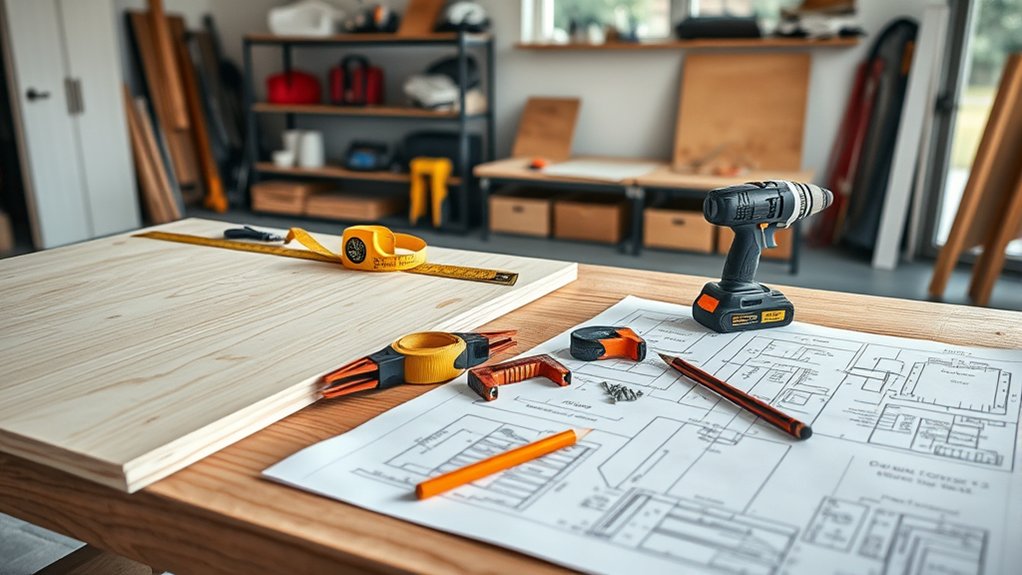
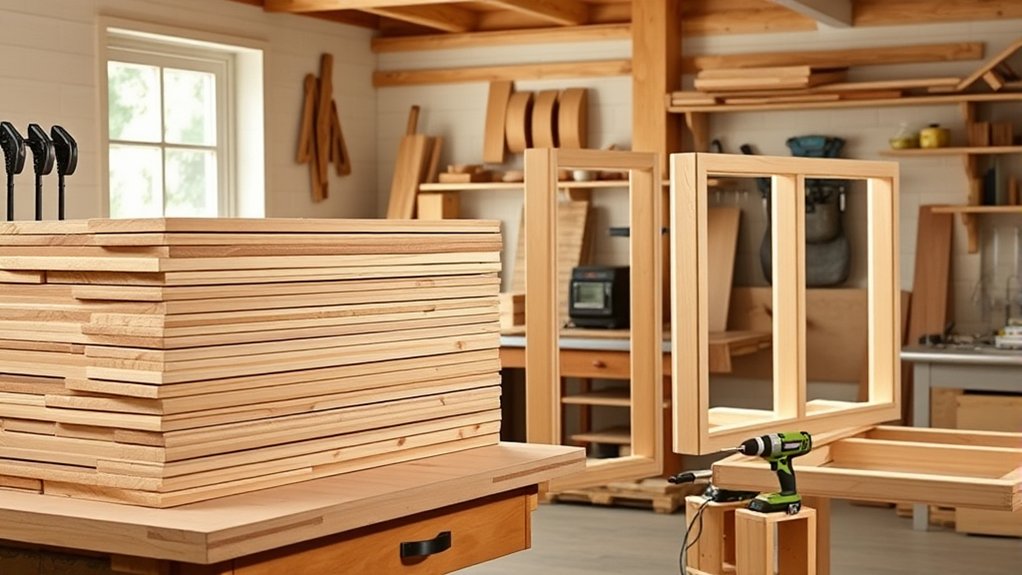
Before you begin building your kitchen cabinets, gather all the necessary materials and tools to guarantee a smooth workflow. Start with careful material selection; opt for durable plywood or hardwood that suits your budget and kitchen environment.
Don’t forget quality screws, wood glue, and hinges to ensure sturdy construction. Next, prepare a tool checklist to avoid interruptions. Essential tools include a circular saw or table saw for precise cuts, a drill with bits, clamps, a tape measure, and a carpenter’s square.
Sandpaper or an electric sander will help you finish surfaces smoothly. Having a level and safety gear like goggles and gloves is crucial too.
Pick Your Style: Classic or Modern Kitchen Cabinets
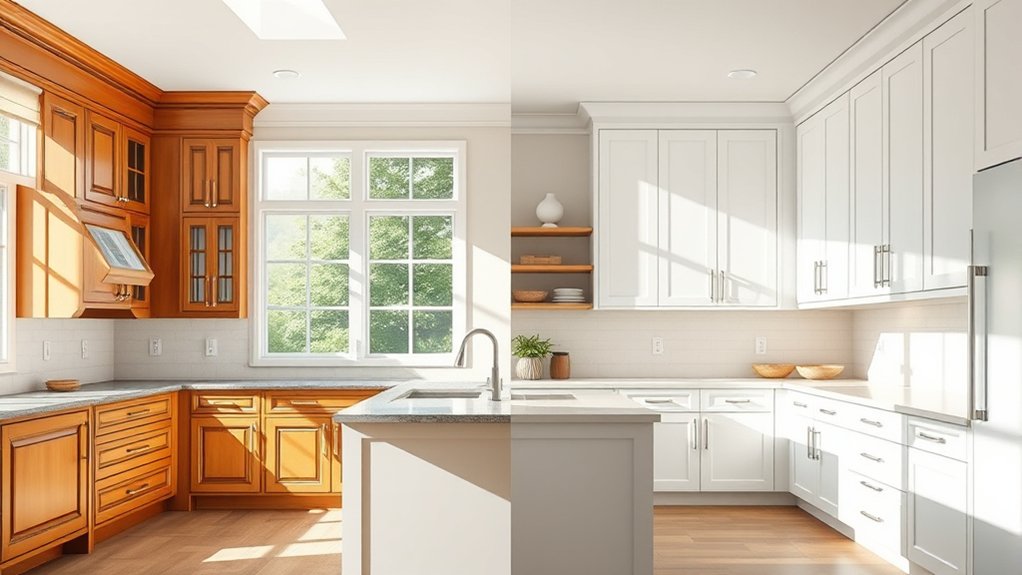
When choosing kitchen cabinets, your style sets the tone for the entire space, so deciding between classic and modern designs is essential. Classic cabinets offer timeless appeal with warm color schemes and ornate cabinet hardware, perfect if you want a cozy, inviting kitchen. Modern cabinets, on the other hand, feature sleek lines, minimalist hardware, and often bold or neutral color schemes, creating a clean, contemporary look.
Here’s a quick guide to help you pick your style:
| Feature | Classic Cabinets |
|---|---|
| Color Schemes | Warm tones, creams, and wood finishes |
| Cabinet Hardware | Decorative knobs and handles |
| Design Details | Raised panels, molding |
| Overall Look | Cozy, traditional |
| Maintenance | Requires regular polishing |
| Feature | Modern Cabinets |
| Color Schemes | Bold hues, neutrals, monochrome |
| Cabinet Hardware | Minimalist, integrated handles |
| Design Details | Flat panels, clean edges |
| Overall Look | Sleek, minimalist |
| Maintenance | Easy to clean, low upkeep |
Choosing the right style guarantees your cabinets complement your kitchen’s personality.
Build Classic Kitchen Cabinets Step-by-Step
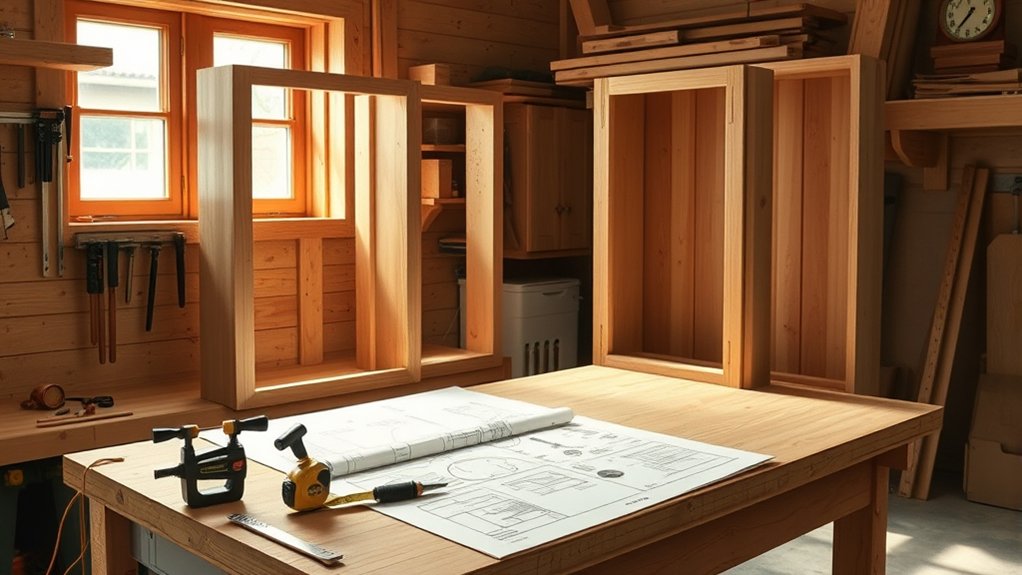
Choosing the classic style means you’ll focus on warm tones, decorative hardware, and detailed craftsmanship. To build classic kitchen cabinets, start by preparing your materials and tools, always prioritizing woodworking safety. Follow these steps:
- Cut your panels and frames from quality hardwood, ensuring precise measurements.
- Assemble the cabinet boxes with strong joints, like dovetails or biscuits, for durability.
- Sand all surfaces smoothly to highlight the wood’s natural warmth.
- Attach cabinet hardware that complements the classic look, such as brass knobs or cup pulls.
- Finish with a stain or paint that improvesthe wood grain and protects the surface.
Customize Your Kitchen Cabinets for Size, Style, and Storage
Although standard cabinet sizes work for many kitchens, customizing your cabinets lets you optimize every inch of space and match your personal style perfectly. Start by measuring your kitchen carefully to create cabinets that fit snugly.
Choose cabinet hardware that complements your design—sleek handles for a modern look or vintage knobs for a rustic feel. Incorporate cabinet lighting to brighten your workspace and highlight your cabinetry’s details.
Consider storage needs: deep drawers for pots, pull-out shelves for spices, or vertical dividers for baking sheets.
| Customization Aspect | Suggestions |
|---|---|
| Size | Adjust height, depth, and width |
| Style | Select door types and finishes |
| Storage | Add pull-outs, dividers, shelves |
| Hardware & Lighting | Match handles and install LEDs |
Finish and Install Your Kitchen Cabinets Like a Pro
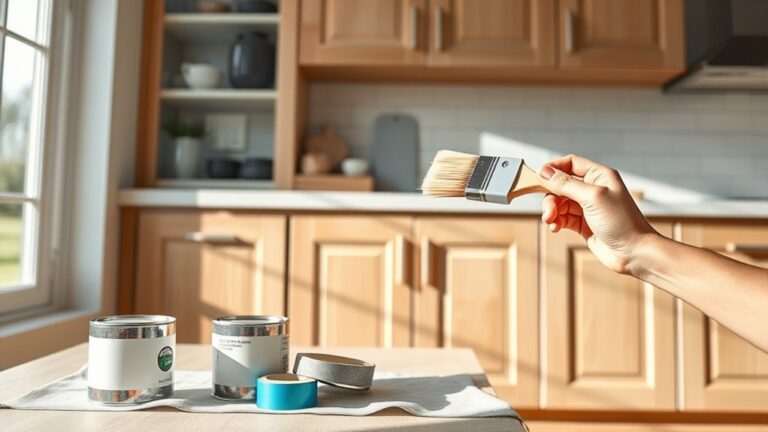
Before you install your kitchen cabinets, you’ll want to give them a professional finish that improves their durability and appearance. Start by sanding all surfaces smooth, then apply a primer to seal the wood. Choose a high-quality paint or stain that matches your kitchen’s style.
Once the finish is dry, you can focus on installing cabinet hardware like handles and knobs, which add both function and flair. Don’t forget to plan for interior lighting to brighten up your cabinet space and showcase your organization.
To finish and install like a pro:
- Sand cabinets thoroughly before finishing
- Apply primer and your chosen paint or stain evenly
- Attach cabinet hardware securely for smooth operation
- Install interior lighting for enhanced visibility and ambiance
- Mount cabinets level and anchor firmly to wall studs
Following these steps ensures your kitchen cabinets look great and function perfectly.
Frequently Asked Questions
How Do I Estimate the Cost of Building Kitchen Cabinets?
To estimate the cost of building kitchen cabinets, start with budget planning by listing all materials you’ll need, like wood, hardware, and finishes. Then, research prices through material sourcing at local suppliers or online stores.
Don’t forget to factor in tools or potential rentals. Add a buffer for unexpected expenses. By tracking these costs carefully, you’ll get a clear picture of your total investment before you begin building.
What Are the Best Types of Wood for Durability?
For the best durability, you should focus on wood types like maple, oak, and cherry. These hardwoods resist dents and scratches well, making them ideal for cabinets.
Durability factors include wood density, grain strength, and resistance to moisture. Maple offers a smooth finish, oak gives a strong grain pattern, and cherry ages beautifully over time.
Choosing the right wood types guarantees your kitchen cabinets stay sturdy and look great for years.
Can I Build Kitchen Cabinets Without Power Tools?
Yes, you can build kitchen cabinets without power tools by relying on manual tools like hand saws, chisels, and clamps. Just be prepared for a slower process and more physical effort.
Always follow safety precautions, such as wearing gloves and eye protection, to avoid injuries. Precision becomes even more important without power tools, so take your time measuring and cutting carefully to guarantee your cabinets fit perfectly and look professional.
How Long Does It Typically Take to Complete the Project?
It typically takes about 40-60 hours to complete your kitchen cabinet project. Most of that time goes into cabinet finishing and hardware installation, which require patience for a professional look.
If you focus on precise sanding and multiple coats of finish, you’ll add quality but also time. Planning your workflow and setting realistic daily goals helps you stay on track, making the entire process smoother and more enjoyable.
Are There Eco-Friendly Materials for Cabinet Construction?
Yes, you can definitely use sustainable options like bamboo, reclaimed wood, or FSC-certified plywood for your cabinets. These materials reduce environmental impact while still offering durability.
Don’t forget to choose eco-friendly finishes such as low-VOC paints or natural oils to keep your kitchen safe and green. By selecting these eco-friendly materials and finishes, you’ll create beautiful cabinets that are kind to the planet and your home’s air quality.
Conclusion
Now that you’ve gathered your tools and chosen your style, building your kitchen cabinets is like painting your own masterpiece. Each cut and joint adds character to your space.
Customizing and finishing your cabinets lets your personality shine through every shelf and door. With these steps, you’re not just building cabinets; you’re crafting the heart of your home.
So grab your tools and get ready to transform your kitchen with these kitchen cabinet plans!