
Can You Paint Kitchen Cabinets?
Painting kitchen cabinets can refresh your kitchen without the cost of a full renovation, but getting a smooth, durable finish can feel tricky. If you’re wondering, “Can you paint kitchen cabinets?” you’re not alone—many people struggle with choosing the right paint and preparing cabinets properly.
Yes, you can paint kitchen cabinets yourself if you prepare properly and use the right tools and paint. Start by removing doors and hardware, clean and sand surfaces, then apply primer before painting with durable, semi-gloss paint.
Take your time to avoid common mistakes like skipping prep or rushing drying times. With patience, you’ll get a smooth, lasting finish. If you want tips on paint types, drying, and maintenance, keep exploring for more helpful advice.
Key Takeaways
- Yes, you can paint kitchen cabinets yourself with proper preparation, tools, and patience.
- Remove cabinet doors and hardware, clean thoroughly, and sand surfaces before painting.
- Use primer and durable semi-gloss or satin paint for a smooth, long-lasting finish.
- Allow sufficient drying time between coats, typically 24 hours, to avoid drips and uneven texture.
- Hiring a professional is recommended for complex projects, color matching, or if lacking experience or time.
Can You Paint Kitchen Cabinets Yourself?
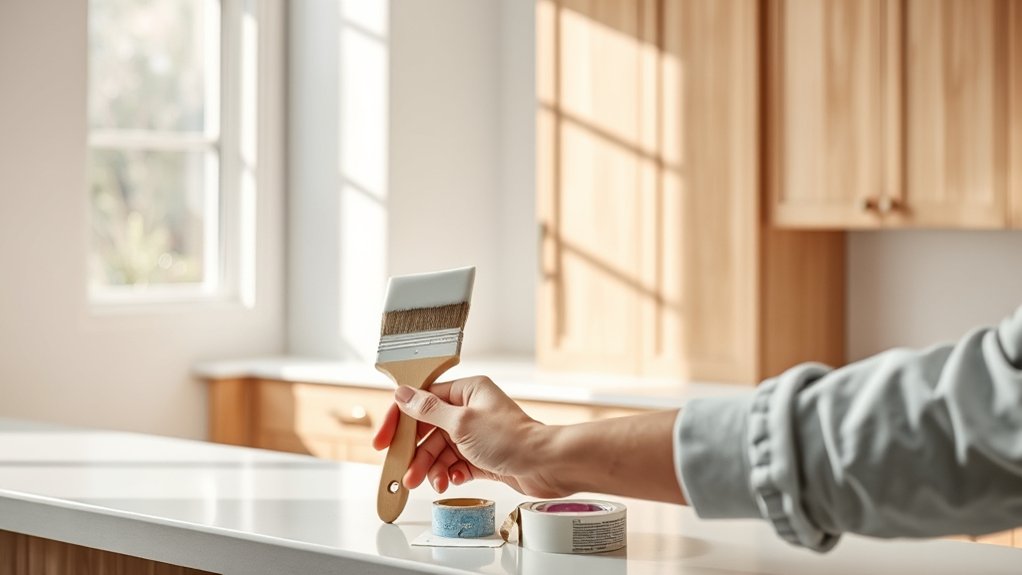
Yes, you can paint kitchen cabinets yourself with the right preparation and tools. Start by removing cabinet doors and hardware to make the process smoother and prevent paint from sticking to handles or knobs.
You can paint kitchen cabinets yourself by prepping properly and removing doors and hardware first.
Clean the surfaces thoroughly, sand them lightly, and apply a primer before painting. When choosing paint, think about color coordination with your kitchen walls, countertops, and flooring to create a cohesive look. Selecting a durable, semi-gloss or satin finish will help resist stains and wear.
Once painted, allow the cabinets to dry completely before reinstalling cabinet hardware. You might also consider updating the hardware to complement the new color and refresh your kitchen’s style.
Taking your time with each step ensures professional-looking results. While it takes patience and attention to detail, painting your kitchen cabinets yourself is a rewarding way to transform your space without the cost of hiring a pro.
When to Hire a Professional for Painting Kitchen Cabinets
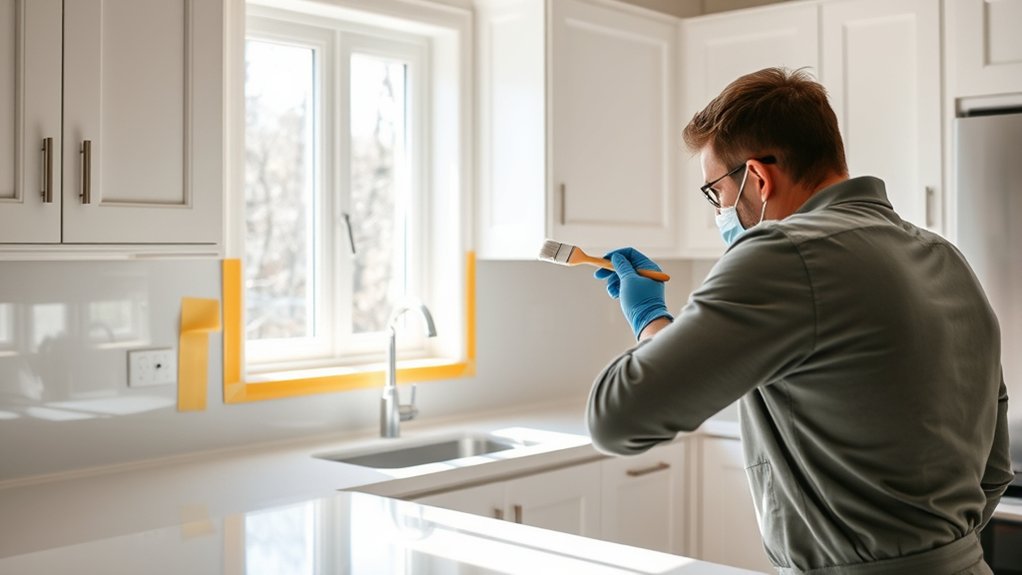
If you don’t have the time, tools, or experience to paint kitchen cabinets properly, hiring a professional can save you from costly mistakes and frustration. Professionals know how to prep surfaces, apply paint evenly, and achieve a smooth finish that lasts.
If your cabinets require intricate color coordination to match existing decor or appliances, a pro can ensure the shades complement your kitchen perfectly. Furthermore, if your cabinets need furniture restoration due to wear, dents, or water damage, experts can handle repairs and refinishing with skill.
Attempting these tasks without expertise can lead to uneven paint, peeling, or mismatched colors, turning your project into a headache. So, if you want a flawless look and to protect your investment, call in a professional. They’ll deliver durable results and help you avoid common DIY pitfalls, making your kitchen transformation hassle-free.
Tools and Materials Needed to Paint Kitchen Cabinets

Before you start painting your kitchen cabinets, gather the right tools and materials to guarantee a smooth process and professional results. You’ll need quality sandpaper or a sanding block to prep surfaces, along with a degreaser to clean your cabinets thoroughly.
A good primer is essential for adhesion, especially if your cabinet styles include glossy finishes. Choose brushes and foam rollers designed for smooth, even coats without streaks.
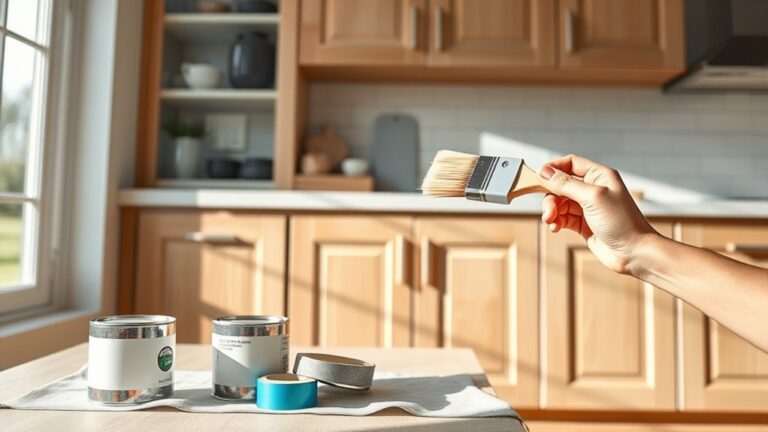
Drop cloths and painter’s tape will protect your workspace and create clean edges. Don’t forget a screwdriver to remove cabinet doors and hardware.
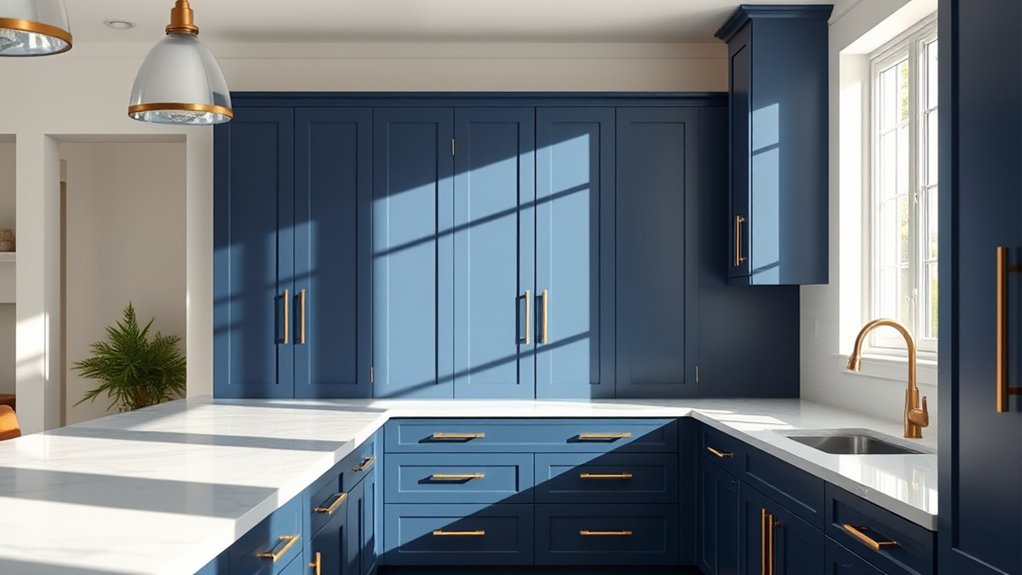
As you select your paint, consider current color trends—soft neutrals and bold blues are popular choices that can refresh your kitchen’s vibe.
Having everything ready keeps you organized and helps you focus on transforming your cabinets efficiently. With the proper tools and materials at hand, you’ll be set to give your kitchen a stylish update that reflects both your taste and the latest cabinet styles.
Best Paint Types for Kitchen Cabinets
What kind of paint works best for kitchen cabinets? You’ll want a paint that offers excellent paint durability to withstand daily use and frequent cleaning. Acrylic latex paint is a popular choice because it resists chipping and is easy to clean. For an even tougher finish, consider oil-based paint, which provides a smooth, hard surface but takes longer to dry and has a stronger odor. Satin or semi-gloss finishes are ideal since they balance durability with a subtle shine, making your cabinets easier to wipe down.
When selecting a color, think about color coordination with the rest of your kitchen. Choose shades that complement countertops, walls, and hardware to create a cohesive look. By focusing on both paint durability and color coordination, you *guarantee* your cabinets look great and last longer, giving your kitchen a fresh, updated vibe.
Preparing Kitchen Cabinets for Painting (Including Removing Doors)
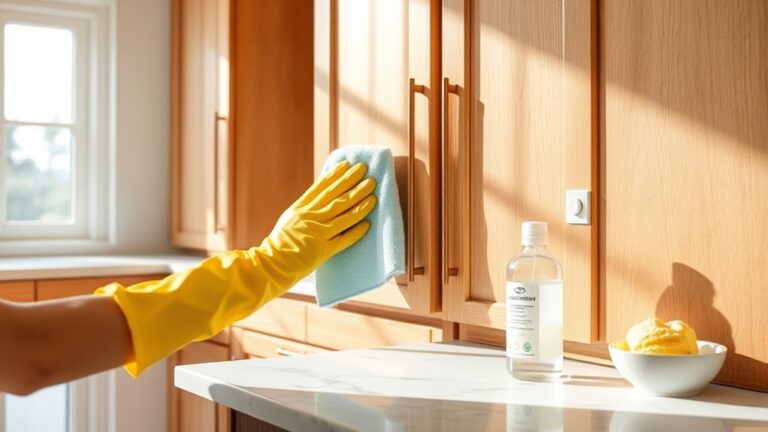
Choosing the right paint sets the foundation, but proper preparation guarantees a smooth, long-lasting finish on your kitchen cabinets. Start by removing all cabinet hardware—hinges, knobs, and handles—to avoid paint smudges and guarantee even coverage.
Next, carefully take off the cabinet doors and drawers. Label each piece so you can easily reassemble them later. Clean every surface thoroughly to remove grease and dust, which can affect paint adhesion.
Before painting, lightly sand the cabinets to create a rough surface for better paint grip. This step is vital regardless of your chosen paint color. Once prepped, wipe down surfaces to remove sanding dust.
| Step | Purpose |
|---|---|
| Remove cabinet hardware | Prevent paint smudges |
| Take off doors/drawers | Easier and neater painting |
| Sand surfaces | Improve paint adhesion |
Preparing properly saves time and improve your cabinets’ final look.
How to Apply Paint on Kitchen Cabinets for a Smooth Finish
To get a smooth finish on your kitchen cabinets, start by cleaning and prepping the surfaces to remove dust and grease. Then choose a durable paint made for cabinets. Apply it in thin, even coats, and lightly sand between coats for the best results.
Surface Preparation Techniques
Before you start painting, you’ll need to prepare your kitchen cabinets thoroughly to guarantee the paint adheres well and the finish stays smooth. Begin by removing all cabinet doors, drawers, and hardware.
Clean every surface to eliminate grease and dirt. Next, use surface sanding to lightly roughen the cabinet surfaces, focusing on worn or glossy areas. This step helps the paint grip better and prevents peeling.
After sanding, wipe down the cabinets with a damp cloth to remove dust. Then, apply a quality primer designed for your cabinet material. Primer application is essential: it seals the surface and creates an even base for the paint.
Let the primer dry completely before moving on. Proper surface preparation ensures your painted cabinets look professional and last longer.
Choosing The Right Paint
How do you pick the best paint for your kitchen cabinets to guarantee a smooth, durable finish? Start by considering the type of paint—acrylic latex or oil-based. Acrylic latex dries faster and cleans up easily, while oil-based offers a harder finish but requires more drying time.
Next, think about color coordination. Choose a shade that complements your kitchen’s overall palette, balancing style and functionality. Don’t forget budget planning; higher-quality paints may cost more but often provide better coverage and durability, saving money long-term.
Also, opt for a satin or semi-gloss finish to resist stains and moisture, ensuring your cabinets look fresh longer. Selecting the right paint sets the foundation for a flawless, lasting kitchen makeover.
Effective Application Methods
Although choosing the right paint is essential, applying it correctly guarantees your kitchen cabinets achieve a smooth, professional finish. Start by sanding the surfaces to remove old paint and create a smooth base.
Use a high-quality brush for edges and corners, and a foam roller for flat panels to avoid brush marks. Apply thin, even coats, allowing proper drying time between each layer.
This method ensures flawless paint finishing and prevents drips or uneven spots. Don’t forget to consider color coordination when selecting your paint, as it greatly impacts your kitchen’s overall look.
Finish with a protective clear coat to improve durability. By following these steps, you’ll achieve beautifully painted cabinets that raise your kitchen’s style and longevity.
How Long Does Painted Kitchen Cabinet Drying Take?
How long should you wait before using freshly painted kitchen cabinets? It depends on the paint, humidity, and temperature. Knowing how these factors affect drying can help you create the right conditions for a smooth, durable finish.
Drying Time Factors
Because drying time varies based on several factors, you should plan accordingly when painting kitchen cabinets. The paint texture plays a big role; thicker, textured paints usually take longer to dry than smooth, thin coats.
Also, color combinations can affect drying time—darker or heavily pigmented colors often require extra drying time to fully cure. Environmental factors like humidity, temperature, and airflow impact drying as well, so guarantee good ventilation and moderate conditions.
Applying multiple coats adds to the total drying time, especially if you don’t allow enough time between layers. Keep these factors in mind to avoid smudging or uneven finishes.
Proper patience during drying ensures your cabinets look polished and professional once the job’s done.
Paint Type Impact
How long your kitchen cabinet paint takes to dry depends largely on the type of paint you choose. Latex paints usually dry to the touch within an hour, but they need about 6 hours before you can handle the cabinets safely.
Oil-based paints take longer—often 6 to 8 hours to dry to touch and up to 24 hours before you can use the cabinets. When selecting paint, consider more than drying time; color options vary widely between latex and oil-based paints, giving you flexibility in your kitchen’s style.
Also, keep paint durability in mind. Oil-based paints generally offer tougher finishes, while modern latex paints have improved considerably. Choosing the right paint balances drying time, color options, and long-lasting durability for your cabinets.
Optimal Curing Conditions
Although drying time depends on the paint type, achieving ideal curing conditions plays a crucial role in how long your kitchen cabinet paint takes to fully dry and harden. You need to maintain a proper curing temperature—typically between 65-75°F—and ensure humidity control, ideally below 50%. Too much moisture or cold slows curing, risking a tacky finish.
Here’s a quick guide to help you set the right environment:
| Factor | Ideal Range | Effect on Drying |
|---|---|---|
| Curing Temperature | 65°F – 75°F | Speeds up drying, avoids cracking |
| Humidity Level | Below 50% | Prevents tackiness and bubbles |
| Ventilation | Moderate airflow | Removes fumes, aids curing |
| Drying Time | 24-48 hours | Full hardness develops gradually |
Stick to these conditions to enjoy smooth, durable cabinets.
Protecting Your Painted Kitchen Cabinets From Damage
To keep your painted kitchen cabinets looking fresh and vibrant, you’ll need to take some proactive steps to protect them from everyday wear and tear. Start by carefully choosing cabinet hardware that complements your color coordination, as durable knobs and handles can reduce direct contact with the painted surface, minimizing scratches.
Regularly clean your cabinets with a soft cloth and mild soap to prevent grime buildup, which can dull the paint. Avoid harsh chemicals or abrasive scrubbers that might damage the finish. Use protective pads or liners inside cabinets to shield the painted interiors from spills or scratches.
When cooking, try to keep steam and grease off the cabinets by using exhaust fans or wiping surfaces promptly. Finally, touch up any chips or scratches as soon as you notice them, maintaining your cabinets’ flawless look. By following these simple habits, you’ll extend the life of your beautifully painted kitchen cabinets while keeping them stylish and functional.
Common Cabinet Painting Mistakes to Avoid
When you decide to paint your kitchen cabinets, skipping proper prep work or rushing through the process can lead to disappointing results.
One common mistake is neglecting to clean and sand your cabinets thoroughly; paint won’t adhere well to greasy or rough surfaces. Also, don’t ignore primer—it’s essential for a smooth, durable finish.
Another pitfall is choosing the wrong paint finish. Matte finishes may look trendy but can be harder to clean, while glossy finishes offer durability but highlight imperfections.
Speaking of trends, jumping on every color trend without considering your kitchen’s lighting and style can backfire. Stick to timeless shades or subtle updates that complement your space.
Finally, applying too thick a coat or not allowing enough drying time causes drips, uneven texture, or peeling. By avoiding these mistakes, you’ll ensure your painted cabinets look fresh and last longer.
Final Tips for a Successful Kitchen Cabinet Paint Job
For the best results, choose high-quality paint made for cabinets and use the right brushes or rollers. Take your time, too—let each coat dry completely before applying the next. These simple steps will help your kitchen cabinets look smooth and last longer.
Choose Quality Paint
How do you guarantee your kitchen cabinets look flawless and stand up to daily wear? Start by choosing quality paint designed for cabinetry. Opt for durable paints that resist chipping and moisture, ensuring long-lasting beauty.
When selecting paint, consider various color options to match your kitchen’s style and mood perfectly. Don’t overlook paint finishes—semi-gloss or satin finishes work best on cabinets because they’re easier to clean and highlight your handiwork without being too shiny.
Matte finishes may hide imperfections, but they’re less durable in high-traffic areas. Investing in premium paint not only boost color vibrancy but also provides a smooth, professional look.
Use Proper Tools
Although choosing the right paint is essential, using proper tools guarantees your kitchen cabinets get a smooth, even finish. Start with high-quality brushes designed for cabinet painting; angled brushes help reach corners and edges without streaks.
A foam roller is perfect for flat surfaces, providing an even coat without brush marks. Don’t forget a good painter’s tape to protect hardware and walls, ensuring crisp lines that complement your color matching efforts.
When selecting your paint, consider different paint finishes. Semi-gloss or satin work best on cabinets for durability and easy cleaning. Using the right tools not only improves the look but also saves you time and frustration, letting your beautifully color-matched kitchen cabinets shine with a flawless finish every time.
Allow Adequate Drying
Using the right tools sets the stage for a smooth paint application, but letting your cabinets dry properly guarantees that hard work doesn’t go to waste.
After applying each coat, give your cabinets ample time to dry—usually 24 hours—to assure the paint finish cures evenly. Rushing this step can cause smudges or uneven texture, ruining your chosen color options.
Make certain your workspace has good ventilation and maintain a moderate temperature to speed drying without compromising quality. If you’re applying multiple coats, wait until the previous layer feels completely dry to touch.
Patience during drying not only preserves the integrity of your paint finish but also improves durability, giving your kitchen cabinets a professional, long-lasting look you’ll love.
Frequently Asked Questions
Can Painting Kitchen Cabinets Increase My Home’s Resale Value?
Yes, painting your kitchen cabinets can increase your home’s resale value, especially if you choose paint color trends that appeal to buyers. Updating cabinets boosts cabinet durability by protecting surfaces and making them look fresh, which buyers appreciate.
When you pick modern, neutral shades, you create a clean, inviting space that stands out. Just make sure to prep and paint carefully to maximize both durability and visual appeal.
Are There Eco-Friendly Paint Options for Kitchen Cabinets?
Yes, you can definitely find eco-friendly paints for your kitchen cabinets. These options use low or zero VOCs, reducing harmful emissions and improving indoor air quality.
Sustainable finishes made from natural ingredients like clay, milk, or plant oils are great choices that won’t harm the environment.
When you pick eco-friendly paints, you’re not only protecting your health but also contributing to a greener, more sustainable home renovation.
How Do Painted Cabinets Hold up in Humid Climates?
Moisture resistance and paint durability dramatically determine how painted cabinets perform in humid climates. You’ll want to select high-quality, moisture-resistant paint designed to withstand steamy conditions.
Proper prep, like thorough sanding and priming, seals surfaces, boosting paint’s staying power. When you maintain ventilation and wipe down cabinets regularly, you’ll preserve their pristine look.
With the right products and care, your painted cabinets can confidently combat humidity without cracking or peeling.
Can I Change Cabinet Colors Multiple Times Without Damage?
Yes, you can change cabinet colors multiple times without damaging them if you handle the process carefully. To maintain cabinet durability, use gentle paint removal techniques like sanding or chemical strippers designed for wood surfaces. Avoid harsh methods that can weaken the material.
Properly prepping and sealing between coats also helps protect the cabinets. With the right approach, you’ll keep your cabinets looking great through several color updates.
What Are the Cost Differences Between Painting and Replacing Cabinets?
Painting your cabinets usually costs about $1,200 to $3,000, while replacing them can run $5,000 to $15,000 or more. You’ll save money by painting, but remember, proper paint preparation is key to guarantee cabinet durability. Without it, your fresh look might chip or peel quickly. If you want a budget-friendly makeover and can handle prep work, painting’s a smart choice compared to the higher cost and hassle of full replacement.
Conclusion
You can totally transform your kitchen cabinets with a fresh coat of paint, turning tired wood into a bright, inviting space. Imagine running your fingers over smooth, colorful surfaces that glow under your kitchen lights.
With the right prep and paint, you’ll protect your cabinets from chips and stains, keeping them looking fresh for years. Avoid common mistakes, and you’ll enjoy a beautifully refreshed kitchen you did yourself. So, can you paint kitchen cabinets? Absolutely!