How to Unclog a Double Kitchen Sink in 3 Easy Steps
A clogged double kitchen sink can bring meal prep and cleanup to a frustrating halt. If you’re struggling with standing water or a stubborn drain, you’re not alone.
This guide to how to unclog a double kitchen sink walks you through simple steps to get the water flowing again.
To unclog your double kitchen sink, start by clearing debris from both basins, removing dishes and any food scraps for a clear workspace.
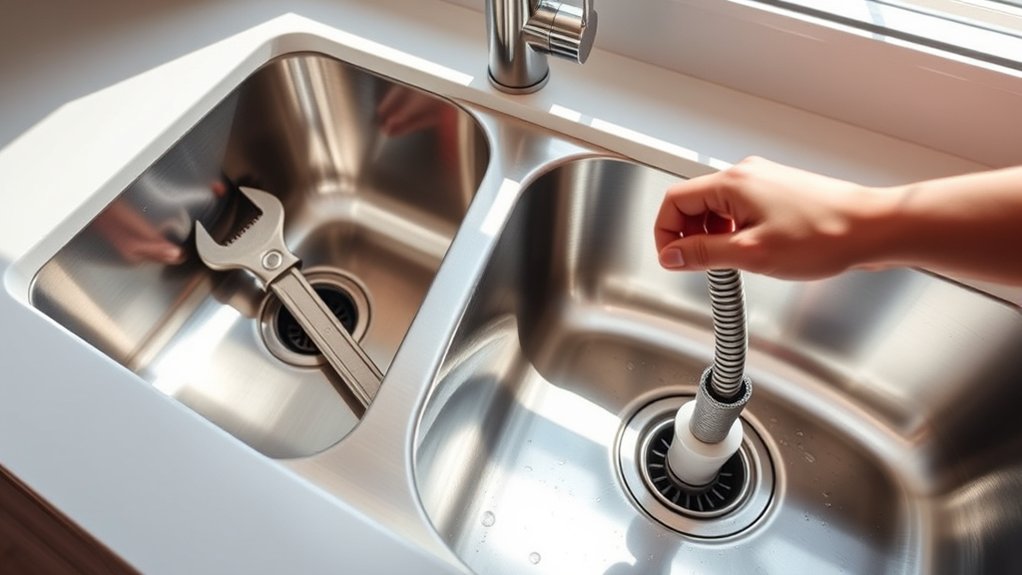
Next, use a plunger on one drain while sealing the other to build pressure and dislodge blockages.
Finally, check and clean the drain trap by loosening it, removing buildup, and rinsing thoroughly before reattaching.
Following these simple steps can get your sink flowing again.
There are even more helpful tips to help keep it clog-free.
Key Takeaways
- Clear both sink basins by removing dishes, standing water, and debris for better access to drains.
- Use a plunger on one drain while sealing the other basin’s drain to create pressure and dislodge clogs.
- Inspect and remove the drain trap by loosening slip nuts, then clean out trapped debris and rinse thoroughly.
- Reattach the drain trap securely and run hot water to ensure proper drainage and verify clog removal.
- Repeat plunging or cleaning steps if clog persists, and consider regular maintenance to prevent future blockages.
Clear Debris From Your Double Kitchen Sink Basins
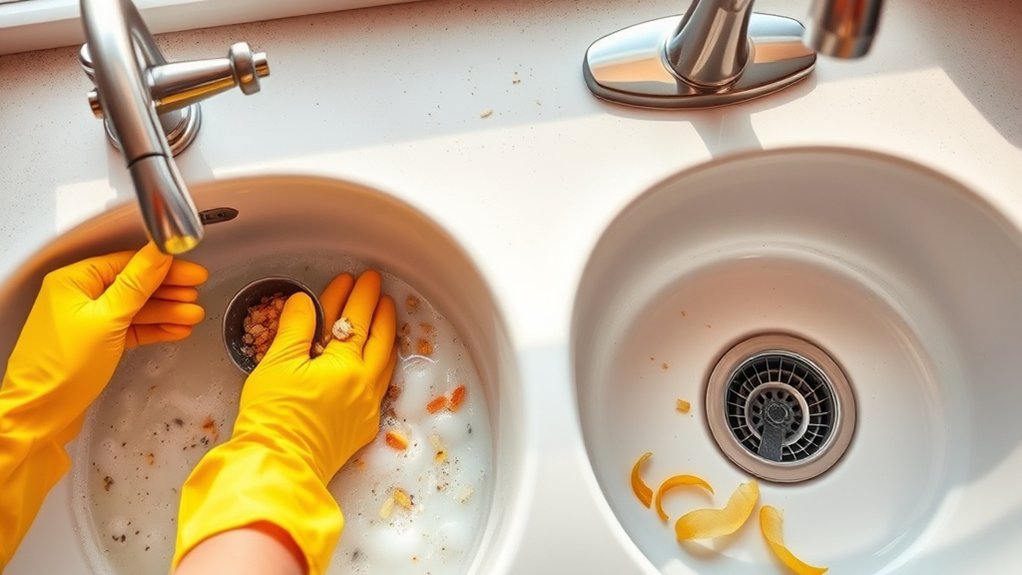
Before you tackle any deeper plumbing issues, start by clearing debris from your double kitchen sink basins. First, remove any dishes and standing water to give yourself a clear workspace.
Check both basins carefully, especially around the kitchen faucet and the drain openings. If your sink has a garbage disposal, make sure it’s turned off before you begin.
Inspect both basins thoroughly, focusing on the faucet and drains; always turn off the garbage disposal first.
Use gloves to pull out food scraps, grease buildup, and other debris that might be blocking the drain in either basin. Pay close attention to the areas where the basins connect, as debris can accumulate there and cause slow drainage.
After clearing visible debris, rinse both basins with hot water to flush out smaller particles. This step helps prevent more serious clogs and assures the kitchen faucet drains smoothly.
Taking these simple actions first can save you time and prevent unnecessary repairs down the line.
Plunge the Sink Drain to Dislodge Blockages
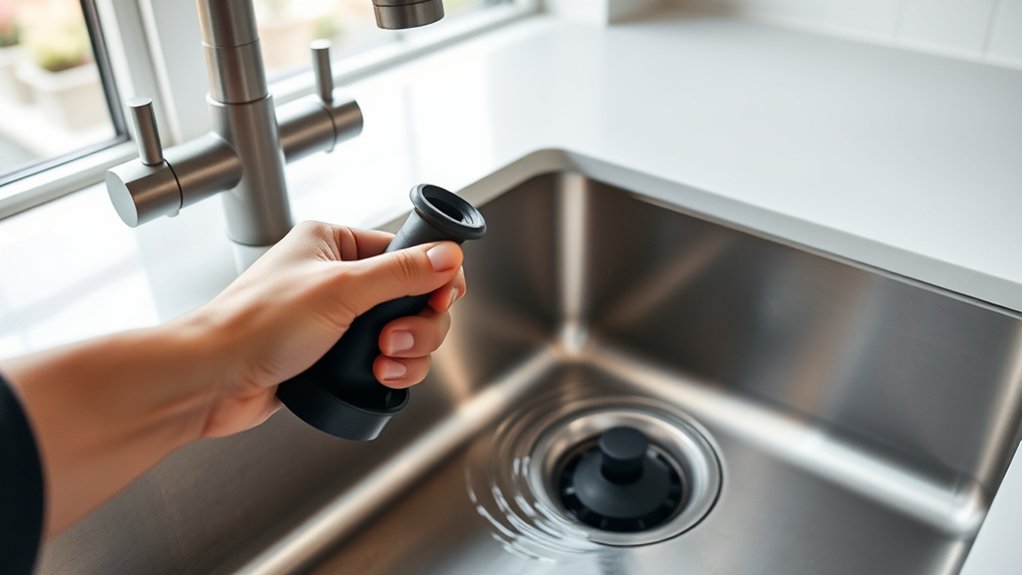
Once you’ve cleared visible debris, plunging the sink drain can effectively dislodge deeper blockages that cause slow or stopped drainage. Start by filling the sink basin with enough water to cover the plunger’s cup, ensuring a tight seal.
Position the plunger over the drain and push down firmly, then pull up sharply without breaking the seal. This action uses hydraulic pressure to force water through the pipes, which helps break up stubborn clogs.
Repeating this motion several times builds up alternating hydraulic and air pressure within the drain, loosening debris stuck farther down. Make sure to cover the other basin’s drain hole with a wet cloth or stopper to prevent air pressure from escaping, maximizing the plunging effect.
After plunging, run hot water to flush any loosened material through the pipes. If the water still drains slowly, you may need to try plunging again or move on to other unclogging methods.
Check and Clean the Drain Trap
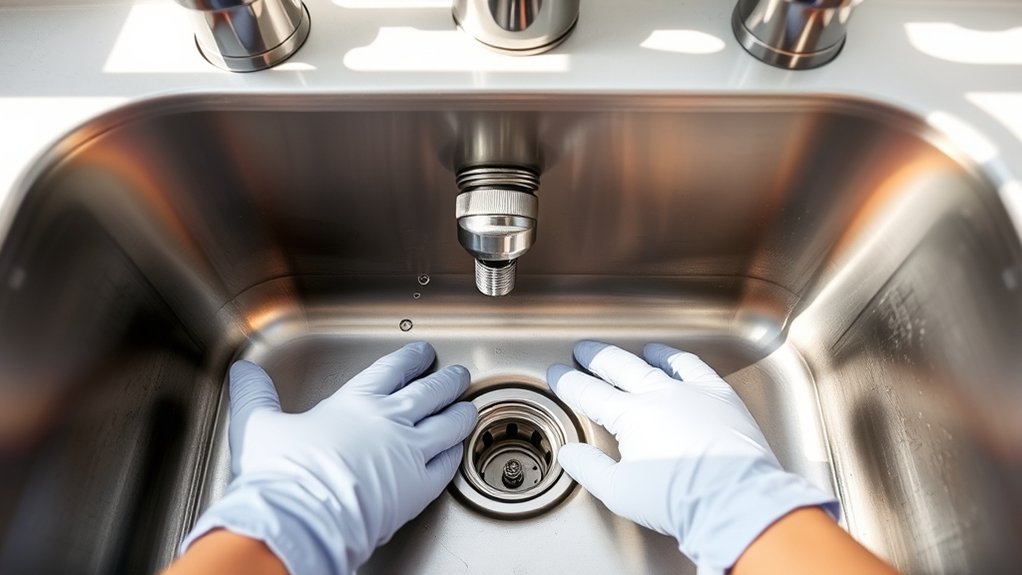
Since debris often accumulates in the drain trap, checking and cleaning it can quickly resolve many sink clogs. Start by placing a bucket under the trap to catch any water or debris.
Debris builds up in drain traps, so placing a bucket underneath helps catch spills during quick clog fixes.
Then, use a wrench to loosen the slip nuts connecting the trap to the pipes. Carefully remove the trap and inspect it for buildup like grease, food particles, or other blockages.
Thorough trap maintenance involves rinsing the trap thoroughly with hot water and, if needed, using a brush to scrub away stubborn residue. Once clean, reattach the trap securely and run water to ensure proper drainage.
Regular drain cleaning and trap maintenance prevent future clogs and keep your double kitchen sink functioning smoothly. Don’t hesitate to repeat this process if the clog persists or schedule periodic checks to avoid major blockages down the line.
This simple step often saves time and the expense of calling a plumber.
Frequently Asked Questions
Can Chemical Drain Cleaners Damage My Double Kitchen Sink?
Yes, chemical drain cleaners can damage your double kitchen sink if you’re not careful. They pose chemical risks because harsh ingredients might corrode pipes or harm sink materials like stainless steel or certain plastics.
You need to check material compatibility before using them. If your sink or plumbing isn’t resistant to strong chemicals, you could end up with leaks or permanent damage.
It’s safer to try mechanical methods first or use gentle alternatives.
How Do I Prevent Frequent Clogs in a Double Sink?
Think of your double sink like a Victorian steam engine—keeping it running smoothly means Preventing buildup is key. You’ve got to practice Proper disposal by avoiding grease, coffee grounds, and large food scraps down the drain.
Use a strainer regularly and flush with hot water to keep things flowing. Don’t forget occasional vinegar and baking soda rinses to break down residues. This way, you’ll prevent clogs and maintain your sink’s efficiency effortlessly.
Should I Call a Plumber if Both Drains Are Clogged?
Yes, you should call a plumber if both drains are clogged, especially if routine maintenance hasn’t helped. When clogs affect both sides, it could signal a bigger issue in your plumbing system that needs professional attention.
Don’t wait too long, since what starts as an inconvenience can quickly turn into emergency repairs. A plumber can diagnose the problem accurately and prevent further damage, saving you time and money in the long run.
Can Food Waste Disposals Cause Double Sink Clogs?
Imagine your sink is like a busy highway—when food debris piles up, it causes a traffic jam. Yes, food waste disposals can cause double sink clogs if they aren’t properly maintained.
Without regular disposal maintenance, bits of food can get stuck, slowing flow and eventually blocking both drains. To avoid this, run cold water during use and grind small amounts at a time, keeping your kitchen’s “traffic” moving smoothly.
How Often Should I Clean My Sink’s Plumbing System?
You should stick to a regular cleaning schedule for your sink’s plumbing system, ideally every three to six months. Consistent pipe maintenance helps prevent buildup and clogs, keeping water flowing smoothly.
If you notice slow drainage or odors, clean it sooner. Regularly flushing pipes with hot water and using safe, natural cleaners can extend your plumbing’s life and save you from costly repairs down the line. Don’t wait until a clog forms!
Conclusion
So, now that you’ve bravely battled the double kitchen sink, you’re basically a plumbing hero. Clear those basins, plunge like a pro, and don’t forget the drain trap, where sneaky gunk likes to gather.
Follow these steps to unclog a double kitchen sink, and your sink will thank you with fewer leaks and a lot less drama. Who knew unclogging could be so thrilling?