How to Sharpen a Kitchen Knife in 3 Easy Steps
A dull kitchen knife can make even simple prep work frustrating—and sometimes unsafe. If you’re looking for the best kitchen knife sharpeners, you’re not alone; many home cooks struggle to keep their blades sharp. Learning how to sharpen a kitchen knife can help you get a cleaner edge and make everyday cooking easier.
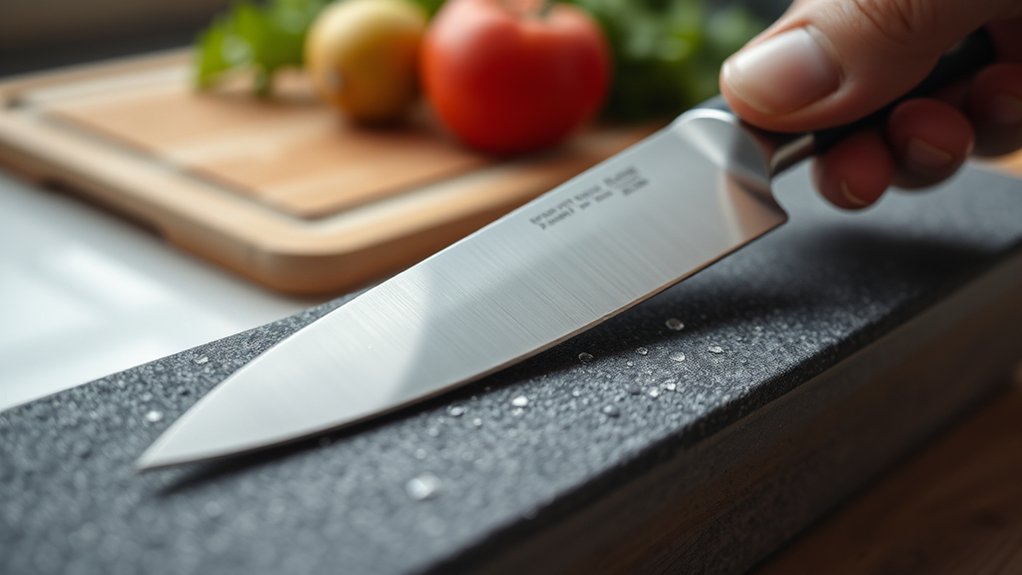
To sharpen your kitchen knife in three easy steps, first gather a sharpening stone and a honing rod.
Second, hold the knife at a 15-20° angle and slide the blade evenly across the stone, sharpening both sides equally.
Third, refine the edge using the honing rod with smooth, controlled strokes on each side.
Keep your knife sharp longer by honing regularly and storing it properly. With a few more tips, you’ll quickly master professional sharpening.
Key Takeaways
- Prepare your sharpening stone and maintain a consistent 15-20° blade angle throughout the process.
- Use gentle, even strokes from the base to the tip on both sides of the blade equally.
- Repeat sharpening strokes until the blade reaches the desired sharpness.
- Hone the blade with a honing rod at the same angle to realign the edge fibers.
- Regularly hone and properly store knives to maintain sharpness between full sharpenings.
Sharpen Your Kitchen Knife in 3 Simple Steps
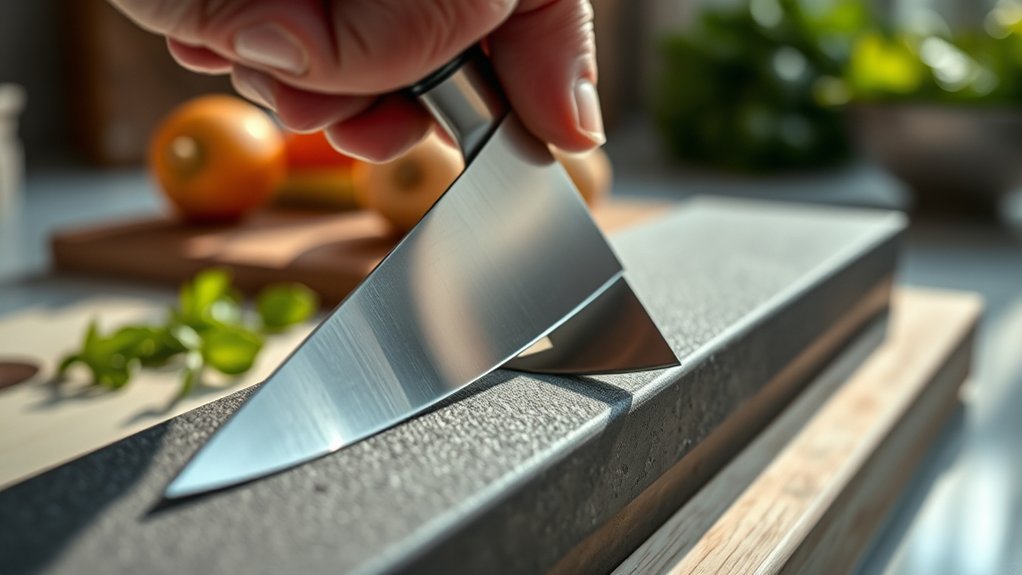
Before you begin, make sure you have a sharpening stone or tool ready, as this will make the process smoother.
First, position your knife at the correct blade angle, typically around 15 to 20 degrees, depending on the knife type. Maintaining this angle consistently is essential for effective sharpening.
Position your knife at a consistent 15 to 20-degree angle for optimal sharpening results.
Next, use gentle, even strokes to draw the blade across the stone, moving from the base to the tip. Remember to sharpen both sides equally to keep the edge balanced.
Finally, apply honing techniques to refine the blade’s edge after sharpening. Honing realigns tiny metal fibers that bend during use, enhancing sharpness without removing material.
Use a honing rod and sweep the blade at the same blade angle, alternating sides with controlled strokes.
Gather Essential Tools for Kitchen Knife Sharpening
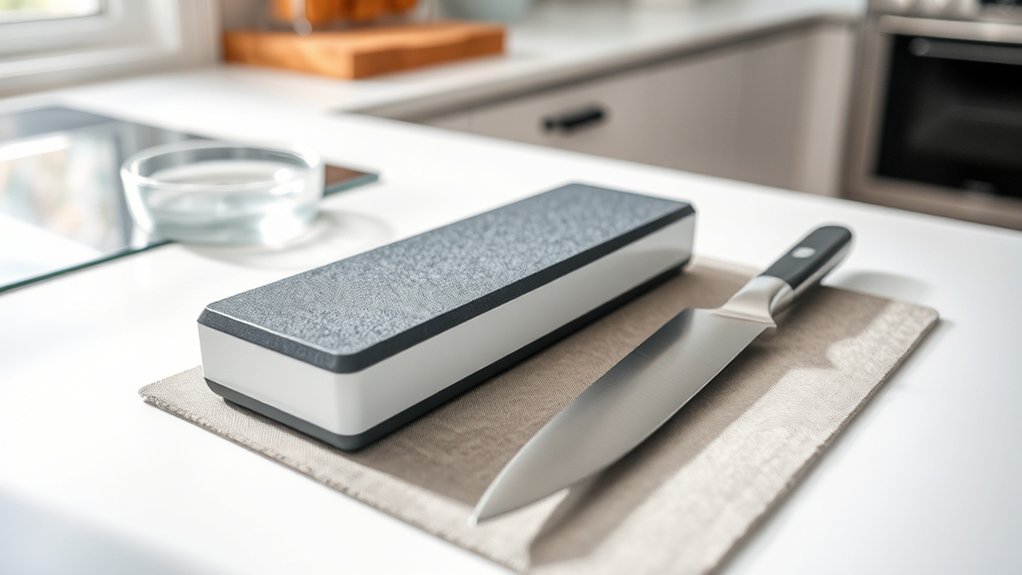
Since proper sharpening depends on the tools you use, gathering the right equipment is essential for achieving a sharp, durable edge on your kitchen knife. Start with a quality sharpening stone or whetstone, which comes in various grit levels—coarse for repairing dull blades and fine for honing edges.
You’ll also want a honing rod to realign your knife’s edge between sharpenings, playing a vital role in knife maintenance. A sturdy, non-slip surface or sharpening guide can help keep the blade steady and at the correct angle, making your sharpening techniques more effective and safer.
Furthermore, have a clean cloth or towel handy to wipe off metal filings and moisture during the process. Avoid using improper tools like metal files or electric sharpeners unless you’re experienced, as they can damage your knife.
Keep Your Kitchen Knife Sharp Between Sharpenings
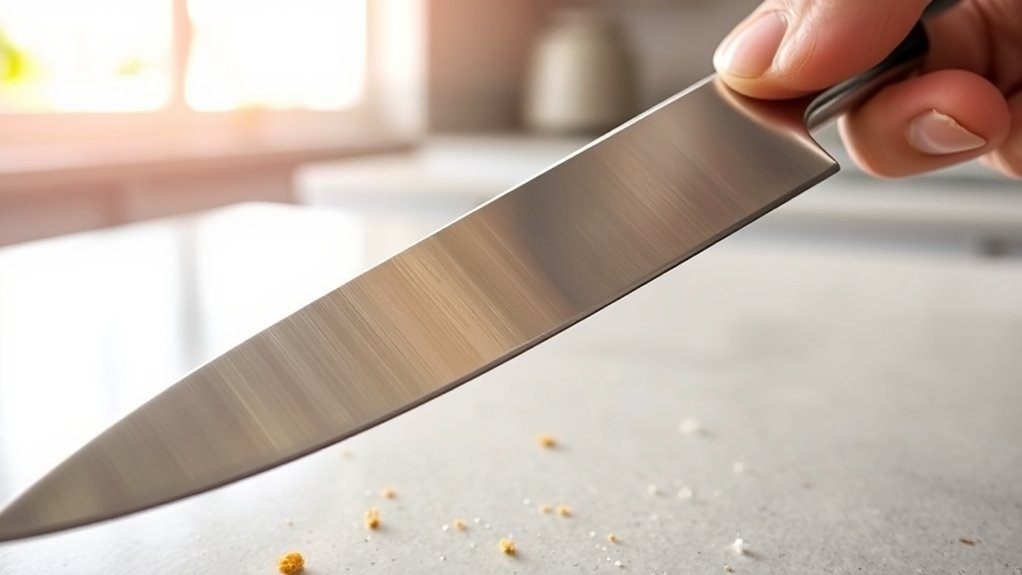
Although regular sharpening restores your knife’s edge, keeping it sharp between sessions saves time and maintains performance. You can do this by practicing regular honing, which realigns the blade’s edge without removing metal. Use a honing steel before or after each use to maintain a sharp, precise cut. It’s quick and helps extend the time between full sharpenings.
Proper storage also plays a vital role in preserving your knife’s sharpness. Avoid tossing your knives loose in drawers where they can bump against other utensils, dulling the blade. Instead, store them in a knife block, magnetic strip, or protective sheath. This prevents damage and keeps the edge intact.
Frequently Asked Questions
How Often Should I Replace My Kitchen Knife Instead of Sharpening It?
You should consider knife replacement timing when your knife’s blade shows significant damage like chips, bends, or rust that sharpening can’t fix. Knife longevity depends on proper care and use; with regular maintenance, a good kitchen knife can last years.
If you find yourself sharpening more often without improved performance, it’s time to replace it. Trust your knife’s feel and cutting efficiency to decide when replacement beats sharpening.
Can I Use a Sharpening Method on Serrated Knives?
Yes, you can sharpen serrated knives, but it requires specific serrated blade maintenance. You’ll need a sharpening tool compatible with the blade’s unique teeth, usually a tapered or rod-shaped sharpener designed for serrations. Using a standard flat sharpener won’t work well and could damage the edge.
Focus on each serration individually, maintaining the original angle, so your knife stays effective and lasts longer without needing replacement.
What Are the Best Kitchen Knives for Beginners to Sharpen?
The best kitchen knives for beginners to sharpen are typically those with straight edges, like chef’s knives and paring knives. They’re easier to maintain and work well with common sharpening tools like whetstones or honing rods. When you focus on knife maintenance, starting with these simple blades helps you develop skills without frustration. Avoid serrated knives at first—they require special techniques and tools.
Is It Safe to Sharpen Knives With Electric Sharpeners at Home?
When it comes to electric sharpener concerns, you shouldn’t throw caution to the wind. Yes, it’s generally safe to use electric sharpeners at home if you follow the instructions carefully. These devices can make home sharpening safety easier by controlling the angle and pressure. Just make sure your knife is suitable for electric sharpening, and avoid over-sharpening to keep your blades in top shape without risking damage or injury.
How Do I Store Knives to Prevent Them From Dulling Quickly?
To prevent dulling, you should focus on proper knife storage. Avoid tossing knives loosely in drawers where they bump into other utensils. Instead, use a magnetic strip, knife block, or blade guard to keep edges protected.
Proper knife storage minimizes contact with hard surfaces, which helps with dulling prevention. Keeping your knives dry and clean before storing them also guarantees they stay sharp longer and last through many uses.
Conclusion
Now that you know the three simple steps to sharpen a kitchen knife, you might think you’re ready to tackle any chopping task. But here’s the twist: one simple tip can keep your knife sharper for longer without extra effort.
Curious? Stick around to find out how a small change in your routine can transform your kitchen skills and make every cut smoother. You won’t want to miss this tip for how to sharpen a kitchen knife!