How to Hang Kitchen Cabinets in 5 Easy Steps
Hanging kitchen cabinets can feel intimidating, especially when you’re trying to get them level and securely attached without damaging your walls. You’re not alone—many people struggle with measuring, finding studs, and lifting cabinets into place.
This guide to how to hang kitchen cabinets breaks the process into five easy steps.
First, measure and mark your wall for cabinet placement, ensuring lines are level and accurate.
Next, use a stud finder to locate and mark the wall studs behind your drywall for secure hanging.
Then, assemble your cabinets, attaching hinges and hardware while checking alignment.
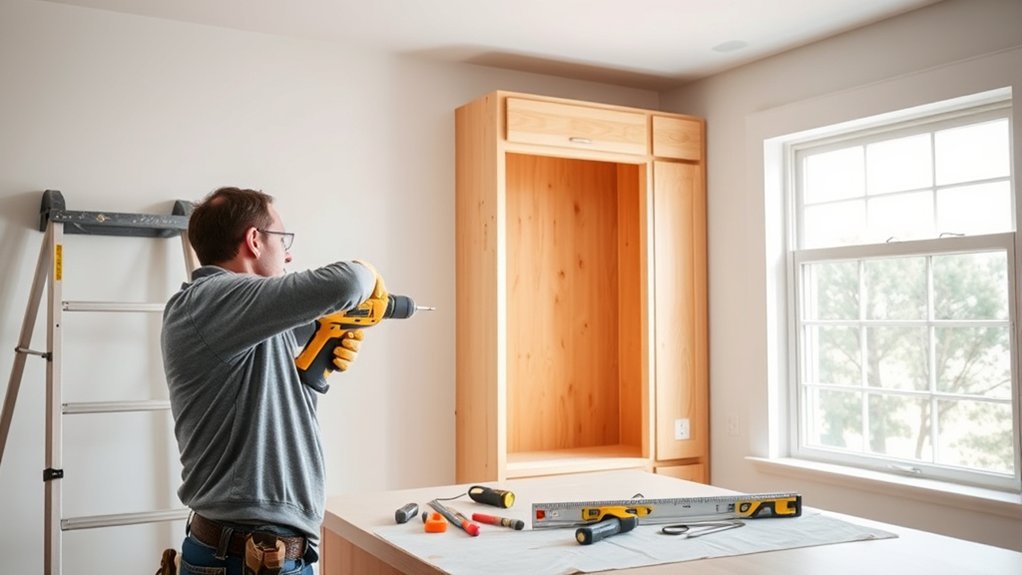
Carefully lift and attach the cabinets to the wall, securing them to the studs.
Finally, level the cabinets, add shims if needed, and tighten screws for stability.
Follow these steps to set your cabinets up perfectly and uncover tips to make the process smoother.
Key Takeaways
- Measure and mark the cabinet placement on the wall using a level for accurate horizontal and vertical guides.
- Locate and mark wall studs with a stud finder to ensure secure cabinet mounting.
- Assemble cabinets, attach hardware, and test door functionality before hanging.
- Lift cabinets, align with wall marks, and secure to studs using screws and temporary clamps.
- Level cabinets using shims if needed and fasten adjacent cabinets together for stability.
Measure and Mark Your Wall to Hang Kitchen Cabinets
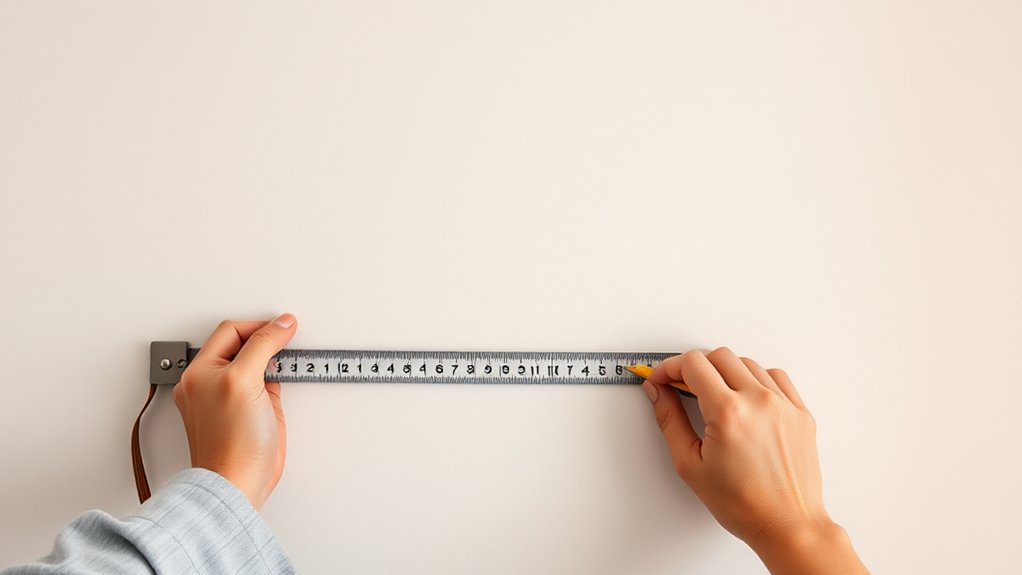
Before you begin hanging your kitchen cabinets, you’ll need to measure and mark your wall carefully to make sure everything lines up perfectly. Start by determining the height and width where your cabinets will go, using a level to draw straight, horizontal lines. These lines will guide your cabinet placement and ensure a smooth hardware installation later.
Carefully measure and mark your wall for perfect cabinet alignment and smooth hardware installation.
Accurate measurements are crucial, especially if you’ve already applied cabinet paint, as any mistakes might damage the finish when adjustments are needed.
Mark the wall clearly at key points: the top and bottom edges of the cabinets and where the sides meet. Double-check your measurements to avoid costly errors. This prep work sets the foundation for a sturdy, professional-looking installation.
Taking the time now to measure and mark precisely means your cabinets will hang straight, your hardware will fit perfectly, and your kitchen will look polished and functional.
Find and Mark Wall Studs for Secure Cabinet Hanging
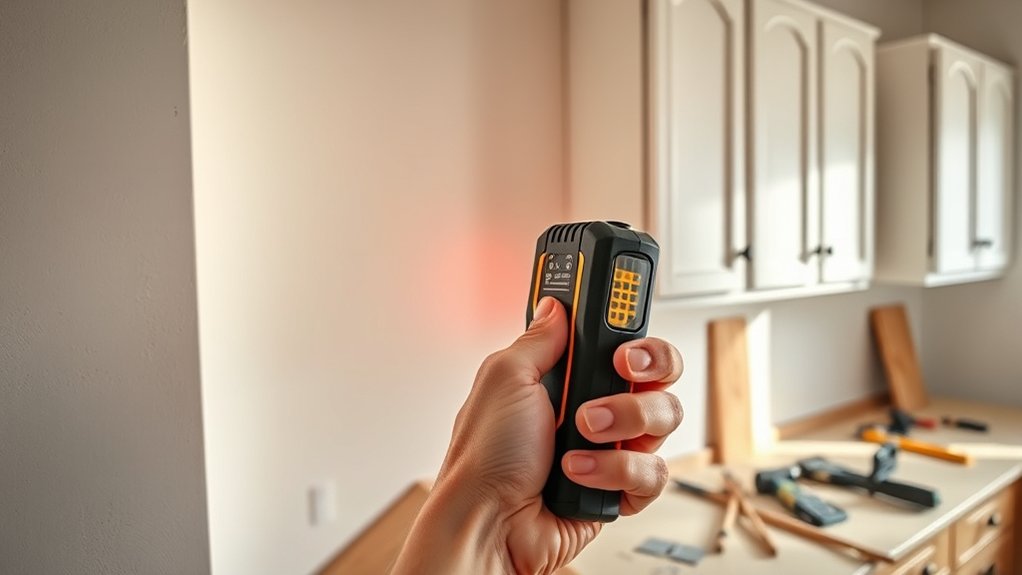
Since kitchen cabinets are heavy and need strong support, you’ll want to find and mark the wall studs before hanging them. Start by using a stud finder to locate the studs behind your kitchen wall. Slowly move the stud finder horizontally across the wall to identify the edges and center of each stud.
Once you find a stud, mark its center lightly with a pencil, creating clear wall markings that will guide your cabinet placement.
Make sure to mark all studs along the area where you’ll hang the cabinets, usually spaced 16 or 24 inches apart. These wall markings guarantee you’re securing the cabinets to solid wood framing, which is vital for stability and safety.
Double-check your marks by measuring the distance between studs to confirm accuracy. Taking the time to find and mark studs properly sets a strong foundation for hanging your cabinets securely and prevents damage or accidents later.
Assemble Cabinets and Get Them Ready to Hang
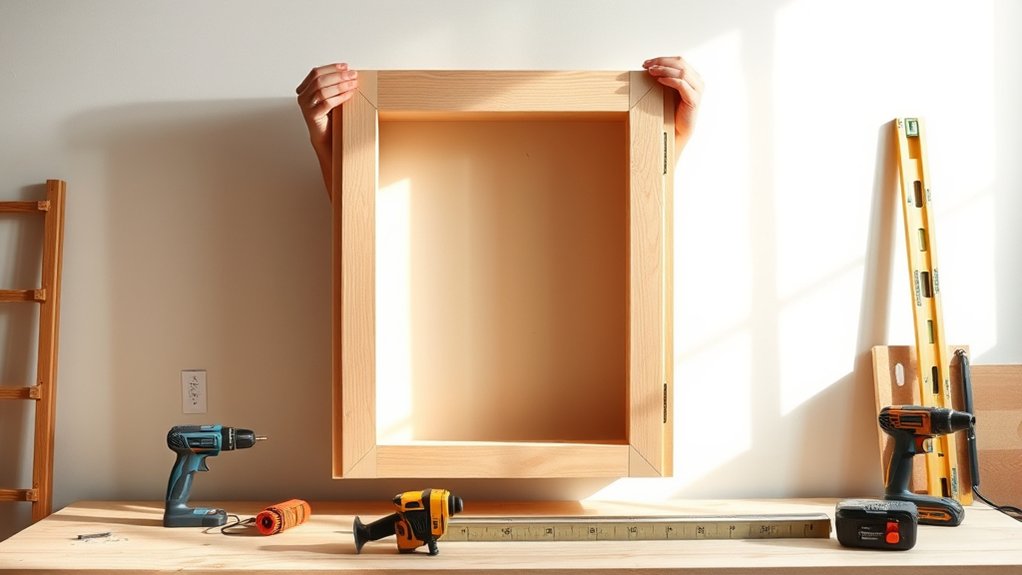
With your wall studs clearly marked, you can focus on assembling the cabinets and preparing them for hanging. Start by carefully assembling each cabinet according to the manufacturer’s instructions. Pay close attention to the cabinet finishes to avoid scratches or dents during assembly.
Next, perform preliminary hardware installation—attach hinges, handles, and any internal shelving hardware now to save time later. Double-check that all doors open smoothly and align properly.
Here’s a quick checklist to help you prepare:
| Step | Action | Tip |
|---|---|---|
| Cabinet Assembly | Secure panels and frames | Handle cabinet finishes gently |
| Hardware Installation | Attach hinges and handles | Test door alignment early |
| Final Inspection | Check for blemishes/damage | Touch up cabinet finishes if needed |
Proper assembly and hardware installation ensure your cabinets are sturdy and ready, making the hanging process smoother and more efficient.
Lift and Attach Cabinets to Hang Them Securely
Once you’re confident the cabinets are fully assembled and the hardware is secure, carefully lift each unit and align it with the marked studs on your wall. Make sure the back panel rests flush against the wall.
Temporarily secure the cabinet with clamps or have a helper support it while you drive screws through the mounting rail into the studs. This ensures a sturdy attachment.
After securing the cabinet, check the door alignment. Open and close each door to spot uneven gaps or misalignment. Use the hinge adjustment screws to fine-tune each door’s position for smooth operation and a clean, professional look. Proper adjustment prevents doors from sagging or rubbing against the frame.
Level and Secure Cabinets for a Perfect Fit
Although securing the cabinets to the wall is essential, leveling them guarantees a flawless fit and prevents future issues. Start by using a reliable level to check each cabinet type—whether base or wall-mounted—ensuring they sit perfectly horizontal. Uneven cabinets can cause doors to misalign or countertops to be crooked. Use shims behind the cabinets if the wall isn’t perfectly flat or straight.
With your hanging tools such as a drill, screwdriver, and clamps, hold the cabinet firmly in place. Double-check the level before driving screws into studs for a secure attachment. Work one cabinet at a time, then connect adjacent cabinets using screws through their face frames to create a seamless, stable setup.
Take your time adjusting and securing each unit; this attention to detail prevents gaps and guarantees your kitchen cabinets look professional and function properly for years to come.
Frequently Asked Questions
What Tools Are Essential for Hanging Kitchen Cabinets?
You’ll need a drill, stud finder, level, measuring tape, and screwdrivers to hang kitchen cabinets properly. Don’t forget cabinet hardware like screws and brackets to secure everything firmly.
A pencil helps mark spots, while clamps hold cabinets during installation. If you’re working with delicate cabinet finishes, use protective pads to avoid scratches.
Having these tools prepared guarantees you can hang your cabinets smoothly and preserve their appearance throughout the process.
How Do I Choose the Right Type of Cabinets for My Kitchen?
Choosing the right cabinets is like picking the perfect shoes for a marathon—you need comfort and style that lasts. Start by considering cabinet material; solid wood offers durability, while MDF suits budget-friendly builds.
Then, examine style options: traditional, modern, or shaker, matching your kitchen’s vibe. Think about your daily routine and storage needs. This way, your cabinets won’t just look good—they’ll perform well for years to come.
What Safety Precautions Should I Take When Installing Cabinets?
You should always wear safety gear like gloves, goggles, and a dust mask to protect yourself from debris and sharp edges. Make sure your work area is well-lit and clear of obstacles.
When using power tools, double-check that they’re in good condition and follow the manufacturer’s instructions closely. Keep a firm grip, and never rush.
Taking these precautions will keep you safe and help you install cabinets efficiently.
Can I Hang Cabinets on Drywall Without Studs?
You can’t safely hang cabinets on drywall without studs because drywall strength alone won’t support the cabinet weight. Imagine trying to hold a heavy painting with just tape on thin paper—it won’t hold.
You need to anchor cabinets into studs where the wall’s framing can bear the load. If you must use drywall, specialized anchors exist but they’re risky for heavy cabinets.
Always prioritize studs to avoid accidents and damage.
How Do I Maintain and Clean My Kitchen Cabinets After Installation?
To maintain and clean your kitchen cabinets effectively, use a soft cloth with mild soap and warm water for cabinet cleaning. Avoid harsh chemicals that can damage finishes. Wipe spills immediately to prevent stains or warping.
For maintenance tips, regularly check hinges and handles, tightening screws if needed. Apply a wood conditioner or polish every few months to keep them looking fresh and protect the surface from wear and tear.
Conclusion
Congrats, you’re now basically a kitchen-cabinet-hanging pro. Who knew measuring studs and hoisting heavy boxes could feel so empowering? Just remember, those perfectly level cabinets didn’t hang themselves (unless you have magic powers).
If you can survive the grunt work and occasional curse words, your kitchen will look amazing, and you’ll have bragging rights for life. So go ahead, admire your handiwork, and maybe even hang a “DIY Legend” sign while you’re at it. You’ve learned how to hang kitchen cabinets, and that’s something to be proud of!