
How to Get Rid of Gnats in Your Kitchen Fast
Gnats buzzing around your kitchen can be frustrating, especially when they gather near your fruit, sink, or trash. You’re not alone—many people struggle to get rid of gnats in the kitchen fast. These practical solutions can help you tackle the problem and keep your space fresher.
To get rid of gnats in your kitchen fast, start by spotting early signs like small swarms near fruit or drains. Remove any overripe produce and keep food sealed. Fix leaks and dry damp areas to stop moisture, which attracts gnats.
Clean countertops, drains, and trash cans thoroughly to eliminate breeding spots. Use homemade traps like apple cider vinegar with dish soap to catch them quickly. Keep up with these steps, and you’ll find even more effective ways to clear your kitchen.
Key Takeaways
- Identify and remove breeding sites by checking for moist soil, rotting fruit, and drain buildup where gnats thrive.
- Store fruits and vegetables in sealed containers or the fridge to eliminate food sources attracting gnats.
- Clean kitchen surfaces, drains, and trash bins regularly to remove organic debris and moisture that support gnat larvae.
- Use apple cider vinegar traps with dish soap or natural repellents like peppermint oil to catch and deter gnats.
- Fix leaks and dry damp areas promptly to disrupt the gnat life cycle and prevent infestation growth.
Identify Common Kitchen Gnats
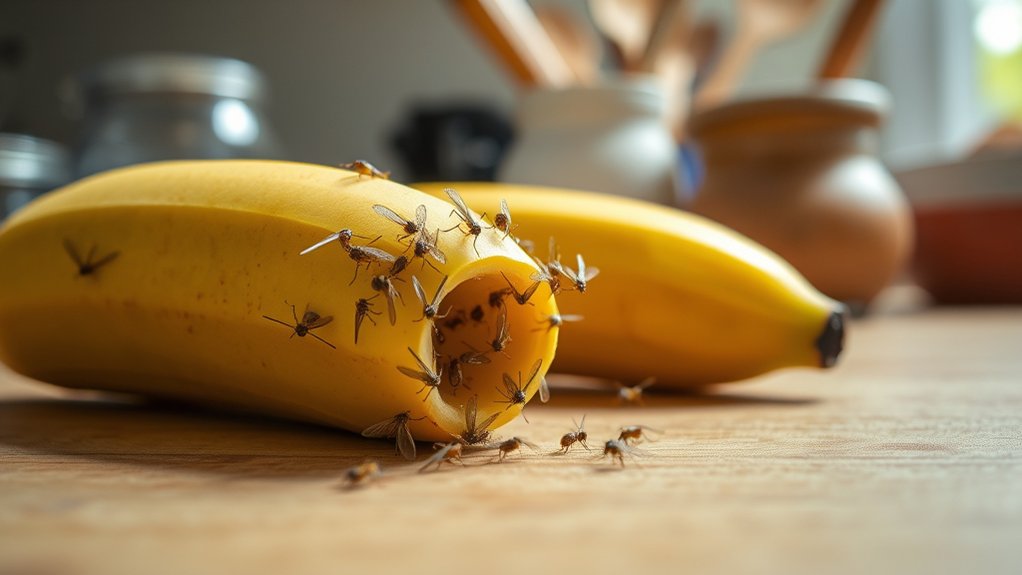
Before you can effectively get rid of gnats in your kitchen, you need to identify the type you’re dealing with. Knowing the common gnat species helps you target your efforts better. The most frequent culprits in kitchens are fungus gnats, fruit flies, and drain flies.
Each has a unique gnat life cycle that impacts how quickly they multiply. For example, fruit flies lay eggs near ripe or rotting fruit, with larvae hatching in just a few days. Fungus gnats thrive in moist soil around houseplants, while drain flies breed in organic buildup inside drains.
Recognizing these species lets you focus on removing their breeding sites. You’ll also know when to act based on their life cycle stages, preventing a larger infestation. By pinpointing the gnat type, you’ll save time and avoid ineffective treatments, making your kitchen a less inviting space for these pests.
Spot Early Signs of a Gnat Infestation
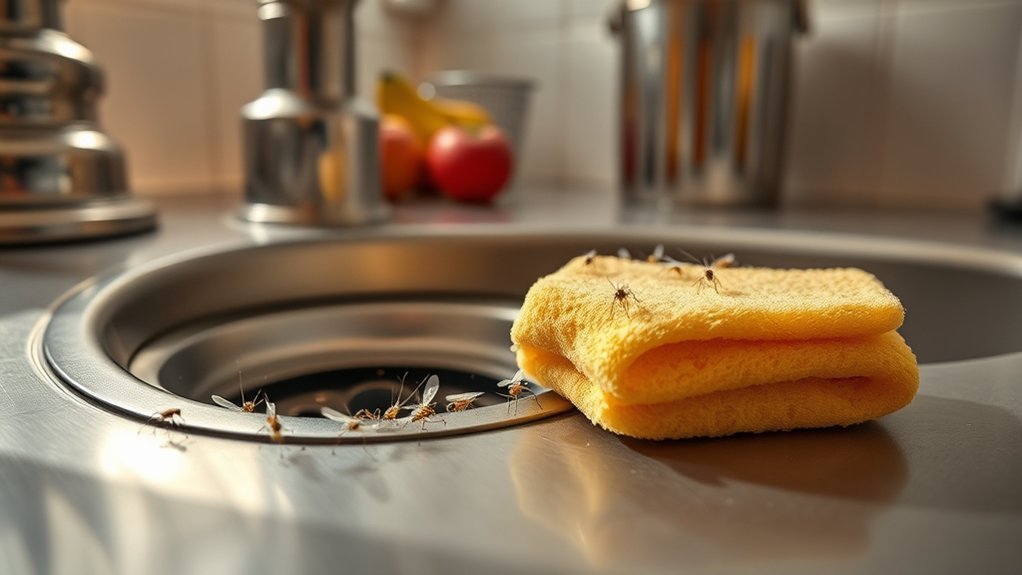
While gnats may seem harmless at first, spotting early signs of an infestation can save you from a bigger problem down the line. Pay close attention to typical gnat behavior: small swarms hovering around your kitchen, especially near sinks, drains, or overripe fruit.
You might notice a sudden increase in tiny flying insects, often concentrated in damp, organic areas. Another infestation sign is seeing gnats resting on window sills or light fixtures, drawn to moisture and light.
Also, check for larvae in any decaying plant matter or buildup inside drains. These early clues mean gnats are breeding nearby, and acting quickly is essential.
Remove Food and Moisture That Attract Gnats
Since gnats thrive on food scraps and moisture, you need to eliminate these attractants to stop them from invading your kitchen. Fruit flies, a common type of gnat, are especially drawn to ripe or rotting fruit, sugary residues, and exposed food. To cut off their food source, store fruits and vegetables in sealed containers or the refrigerator. Don’t leave dirty dishes or food crumbs out, as these invite gnats to linger.
Moisture control is key to preventing gnat infestations. Fix any leaking pipes or faucets and avoid letting water sit in sinks or on countertops. Dry out damp areas, including sponges and dishcloths, since gnats use moist environments to breed. By removing both food and excess moisture, you make your kitchen much less appealing to fruit flies and other gnats, breaking their life cycle and keeping your space pest-free.
Clean Your Kitchen to Eliminate Breeding Grounds
To eliminate gnats effectively, you need to clean your kitchen thoroughly and remove any potential breeding grounds. Gnats thrive in moist, organic matter, so focus on wiping down countertops, cleaning under appliances, and emptying trash regularly.
Pay attention to areas where spills or crumbs collect, as these spots align with gnat biology, providing ideal conditions for larvae to develop.
Don’t forget to inspect your kitchen décor too. Items like decorative fruit bowls or plants can harbor dampness or decaying material, unintentionally inviting gnats.
Make sure to wash or replace any décor that might retain moisture or organic debris.
Make Homemade Gnat Traps to Catch Gnats Fast
If you want to catch gnats quickly, homemade traps offer an easy and effective solution. You can create simple DIY traps using items you likely have at home.
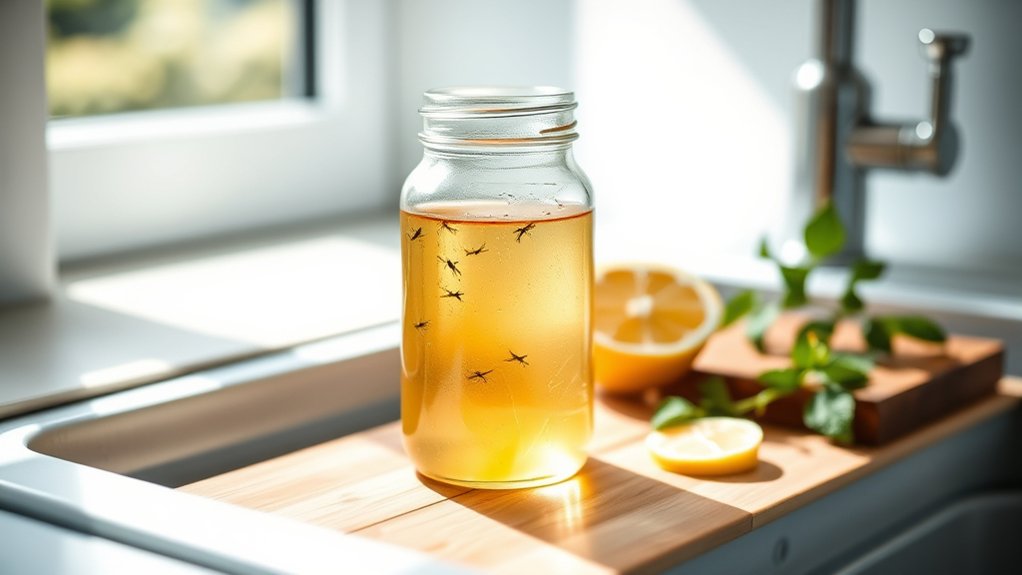
For example, fill a small bowl with apple cider vinegar and add a few drops of dish soap. The vinegar attracts the gnats, while the soap breaks the surface tension, causing them to drown. Cover the bowl loosely with plastic wrap and poke small holes to let gnats in but keep them trapped.
Fill a bowl with apple cider vinegar and dish soap, cover with plastic wrap, and poke holes to trap gnats.
Another homemade solution involves a jar with ripe fruit inside. Roll a piece of paper into a funnel and place it in the jar’s opening, narrow end down. Gnats enter through the funnel but can’t escape.
These DIY traps are quick to set up and safe for your kitchen environment. Regularly replace the bait to maintain effectiveness and watch your gnat problem shrink fast.
Use Natural Remedies to Kill Gnats Quickly
Although gnats can be stubborn pests, you can quickly eliminate them using natural remedies that are safe and effective. Essential oils and plant deterrents offer a great way to keep gnats at bay without harsh chemicals. Here’s how you can use these natural solutions to kill gnats fast:
- Place a few drops of essential oils like eucalyptus, peppermint, or tea tree oil in a spray bottle filled with water and spritz around your kitchen.
- Set small pots of plant deterrents such as basil, lavender, or mint near fruit bowls and trash cans.
- Create a mixture of apple cider vinegar and a few drops of essential oil in a shallow dish to attract and drown gnats.
- Wipe down surfaces with a cloth soaked in diluted essential oils to disrupt gnats’ breeding areas.
Apply Safe Insecticides If Natural Methods Fail
When natural remedies don’t fully solve your gnat problem, applying safe insecticides can provide the extra control you need. Choose chemical alternatives labeled for indoor use and specifically formulated for gnats to guarantee effectiveness and minimize risks.
Prioritize insecticide safety by reading all instructions carefully, wearing gloves, and ventilating your kitchen well during and after application. Avoid overusing these products, as excessive chemicals can harm your health and the environment.
Spot-treat areas where gnats breed, such as drains or near plants, rather than spraying broadly. This targeted approach reduces exposure to unnecessary chemicals.
Remember, safe insecticides are a backup, not your first line of defense. Use them responsibly to quickly reduce gnat populations when natural methods aren’t enough, and always store these chemicals out of reach of children and pets.
Store Food Properly to Prevent Gnat Infestations
Properly storing your food considerably reduces the chances of attracting gnats to your kitchen. When you follow smart food storage tips and maintain good pantry organization, you remove easy food sources that gnats love. Here’s how to keep your kitchen gnat-free:
- Store fruits and vegetables in the refrigerator instead of leaving them out.
- Use airtight containers for snacks, cereals, and baking ingredients to block gnats from accessing them.
- Regularly clean your pantry shelves to remove crumbs and spills that can lure pests.
- Check all packaging for damage or tears before storing food to prevent gnats from sneaking in.
Fix Leaks and Keep Surfaces Dry to Stop Gnats
Since gnats thrive in moist environments, fixing leaks and keeping surfaces dry are essential steps to stop them from invading your kitchen. Start by inspecting under sinks and around pipes for leaks, and repair any you find promptly. Even small drips can create the perfect breeding ground for gnats.
Next, focus on drain maintenance. Clean your drains regularly to remove organic buildup where gnats often lay eggs. Pouring a mixture of baking soda and vinegar followed by hot water can help keep drains clear and less inviting.
Controlling humidity is another critical factor. Use a dehumidifier or ensure proper ventilation to reduce moisture in your kitchen. Wipe down wet surfaces after cooking or cleaning to prevent lingering dampness.
Maintain Kitchen Hygiene Regularly to Stay Gnat-Free
Although fixing leaks and controlling moisture are essential, maintaining regular kitchen hygiene plays an equally crucial role in keeping gnats away. You need to stay proactive with kitchen organization and cleanliness to make sure these pesky insects don’t find a breeding ground. Simple daily habits make a big difference in pest prevention.
To maintain a gnat-free kitchen, focus on:
- Wiping down counters and tables promptly after meal prep or eating
- Storing fruits and veggies in sealed containers or the fridge
- Emptying trash bins daily and cleaning them regularly
- Cleaning sink drains and disposing of food scraps properly
Frequently Asked Questions
Can Gnats Harm My Health or Spread Diseases?
Gnats generally won’t harm your health directly or spread serious diseases, but you shouldn’t ignore them. Their presence signals gnat breeding nearby, often in decaying food or moist areas, which can lead to contamination.
To protect yourself, focus on pest prevention by keeping your kitchen clean and dry. Eliminating breeding sites stops gnats from multiplying, reducing the risk of bacteria and other pathogens spreading around your home.
Are Gnats Attracted to Certain Types of Kitchen Plants?
Yes, gnats are definitely attracted to certain types of kitchen plants, especially if you’re into indoor gardening. They tend to swarm around plants with moist soil or decaying organic matter because that’s their ideal breeding ground.
If you notice plant attraction in your kitchen, make sure you don’t overwater your plants and keep the soil dry on top. This way, you’ll reduce the chances of gnats invading your indoor garden.
How Long Does a Typical Gnat Life Cycle Last?
A typical gnat life cycle lasts about 7 to 14 days, depending on conditions like temperature and food availability. During gnat breeding, they lay eggs on moist surfaces, which hatch into larvae quickly. The lifecycle duration is short, letting them multiply fast if you don’t act. Knowing this helps you target their breeding spots early, stopping new generations before they swarm your kitchen.
Can Gnats Infest Other Areas of the House Besides the Kitchen?
Yes, gnats can definitely infest other areas of your house beyond the kitchen. They’re often attracted to indoor plants, where damp soil provides a perfect breeding ground.
You might also confuse them with fruit flies, but gnats tend to hang around moist spots rather than just rotting fruit. To keep gnats away, check all areas with moisture or organic material, not just your kitchen, and address those spots quickly.
Do Professional Pest Control Services Effectively Eliminate Gnats?
Yes, professional pest control services can effectively eliminate gnats, especially when natural remedies and DIY traps haven’t worked. They use specialized treatments that target gnats at their source, ensuring a thorough cleanup.
While natural remedies and DIY traps help reduce numbers, pros tackle infestations more quickly and completely. If you want fast, lasting results, calling in experts is often your best bet to keep gnats from coming back.
Conclusion
Getting rid of gnats in your kitchen might seem like a hassle, but it’s easier than you think. By identifying them early, cleaning thoroughly, and using simple traps, you can eliminate these pests quickly without harsh chemicals.
Even if natural methods don’t work immediately, safe insecticides offer a reliable backup. Stay consistent with your kitchen hygiene, and you’ll keep gnats away for good. With these steps, you can get rid of gnats in your kitchen fast.