How to Clean White Kitchen Cabinets in 5 Easy Steps
White kitchen cabinets can brighten a room, but grease, fingerprints, and everyday stains can quickly dull their fresh look. If you’re struggling to keep them clean, you’re not alone. These simple steps and helpful products can make cleaning white kitchen cabinets easier.
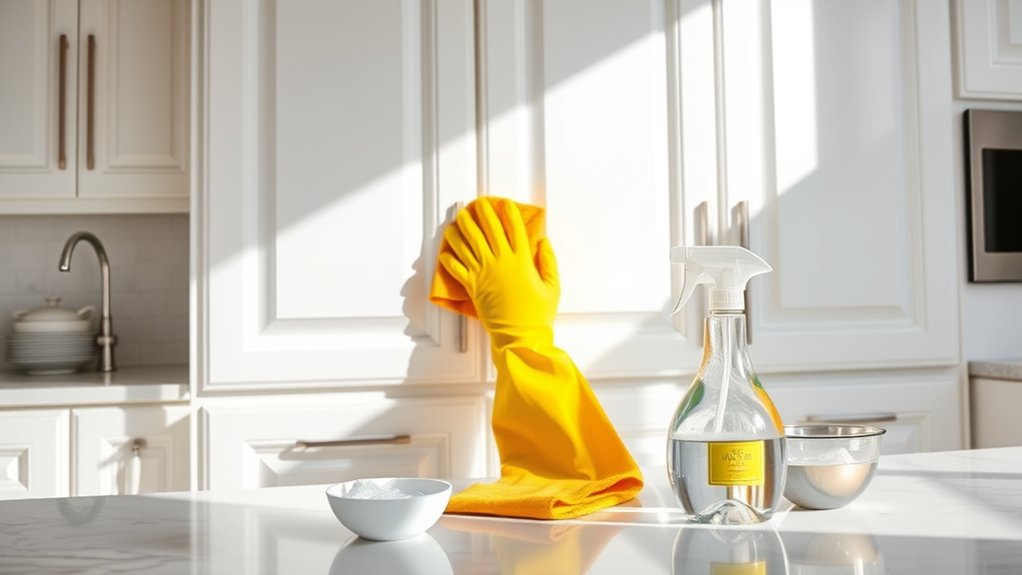
Start by gathering mild detergent, warm water, microfiber cloths, and a soft brush. Dust your white cabinets thoroughly, including corners and handles.
Mix dish soap with warm water, then gently scrub grease and stains, using baking soda paste for tough spots. Wipe down cabinets with a damp microfiber cloth to prevent streaks, drying them immediately.
Keep up with weekly spot cleaning near the stove and sink to maintain brightness. Uncover simple ways to make your cabinets look brand new.
Key Takeaways
- Remove knobs and handles, then dust cabinets using a microfiber cloth and soft brush to eliminate dirt and debris.
- Mix mild dish soap with warm water and gently scrub greasy and stained areas using a soft cloth or sponge.
- Use a baking soda paste for tough stains, applying it gently to avoid damaging the cabinet surface.
- Wipe cabinets with a damp, lint-free microfiber cloth and dry immediately to prevent streaks and residue.
- Maintain cleanliness by wiping cabinets weekly and promptly spot cleaning spills to preserve brightness and extend lifespan.
Gather Supplies for Cleaning White Kitchen Cabinets
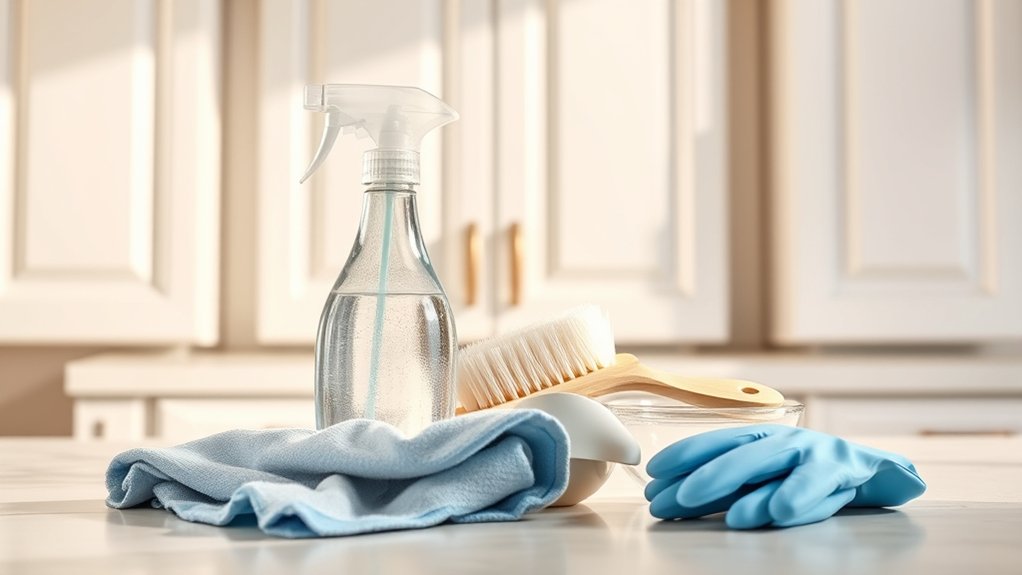
Before you start cleaning your white kitchen cabinets, gather all the necessary supplies to make the process smooth and efficient. You’ll need a mild detergent, warm water, microfiber cloths, a soft-bristle brush, and a sponge. Don’t forget to have a bucket for mixing your cleaning solution. If your cabinets have stubborn stains, consider a gentle all-purpose cleaner designed for painted surfaces.
Pay special attention to your cabinet hardware. Removing knobs and handles before cleaning helps you clean more thoroughly and prevents damage to metal finishes. Keep a safe place to store the hardware while you clean.
Establish a cleaning frequency that suits your kitchen’s use. For most households, wiping down cabinets biweekly prevents grime buildup without overdoing it. However, if you cook frequently, you might want to clean weekly. Having all supplies ready and knowing your cleaning frequency keeps your white cabinets looking fresh and bright with minimal effort.
Prepare White Cabinets by Dusting and Removing Dirt

Although it might seem simple, dusting and removing dirt from your white kitchen cabinets is a crucial first step to guarantee a spotless clean. Dust accumulation not only dulls the cabinet’s appearance but can also lead to cabinet discoloration over time.
Start by using a microfiber cloth or a soft duster to gently wipe all surfaces, including corners and edges where dust often hides.
Here’s a quick guide to prepping your cabinets:
| Task | Tool Needed | Why It Matters |
|---|---|---|
| Dust cabinet surfaces | Microfiber cloth | Removes dust accumulation |
| Clean corners & edges | Soft brush | Prevents cabinet discoloration |
| Wipe handles & knobs | Damp cloth | Removes dirt buildup |
Taking these steps ensures your cabinets are ready for the next phase of cleaning, making it easier to achieve that bright, fresh look you want.
Clean Grease and Stains With a Gentle Cleaner
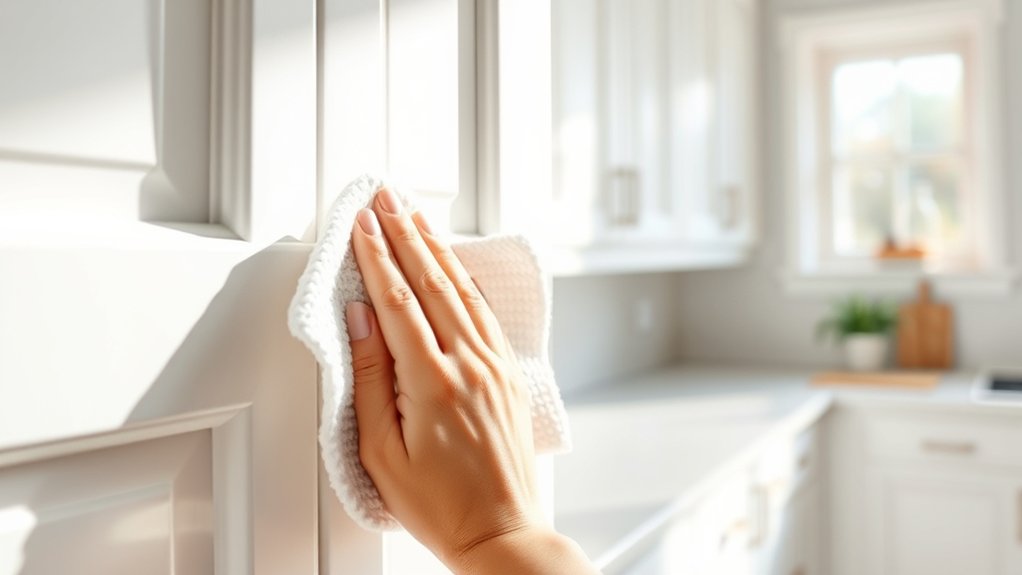
Since grease and stains can quickly ruin the bright look of your white kitchen cabinets, you’ll want to tackle them with a gentle cleaner that won’t damage the finish. Start by mixing a mild dish soap with warm water to create an effective yet soft cleaning solution.
Dip a soft cloth or sponge into the mixture and gently scrub the greasy areas. For stubborn stains, apply a bit more pressure but avoid harsh scrubbing that might harm the paint or laminate.
This approach guarantees efficient stain removal without compromising your cabinets’ surface. Remember, grease elimination requires patience. Don’t rush the process.
If needed, you can also use a baking soda paste for tougher spots by mixing baking soda with water and gently rubbing it onto the stain before wiping clean. By using these gentle methods, you maintain your cabinets’ pristine appearance while effectively removing grease and stains.
This keeps your kitchen looking fresh and inviting.
Wipe Cabinets to Avoid Streaks and Residue
When you finish cleaning your white kitchen cabinets, you’ll want to wipe them down carefully to prevent streaks and residue from dulling their shine. Use a soft, lint-free microfiber cloth dampened with clean water to gently wipe the surfaces.
Wipe white kitchen cabinets gently with a damp microfiber cloth to avoid streaks and maintain their shine.
Avoid harsh scrubbing, which can damage the finish and complicate cabinet refinishing if needed later. Make sure to dry the cabinets immediately with a dry cloth to eliminate any moisture that might leave streaks.
Pay attention to how the light hits your cabinets and check for any leftover streaks or spots. This step helps maintain the bright, clean look that complements your kitchen’s color coordination.
Wiping properly ensures your white cabinets stay pristine and reflective without a dull film. Taking this extra care keeps your cabinets looking fresh and reduces the frequency of deep cleaning or refinishing down the line.
Keep White Cabinets Bright With Easy Cleaning Habits
To keep your white cabinets looking bright, you’ll want to develop simple cleaning habits that prevent dirt and grime buildup. Start by wiping your cabinets regularly, ideally once a week, to maintain their appearance and boost cabinet durability.
Frequent cleaning stops stains and sticky residues from settling in, which can dull the finish over time. Use a soft cloth and mild cleaner to avoid damaging the surface.
Pay attention to areas near the stove and sink, where grease and moisture accumulate quickly. Spot clean spills immediately to prevent staining and discoloration.
Avoid harsh chemicals or abrasive tools that can wear down the cabinet’s protective layer, reducing its lifespan.
Frequently Asked Questions
Can I Use Bleach to Clean White Kitchen Cabinets?
You can use bleach to clean white kitchen cabinets, but be careful—it’s strong and can damage finishes if not diluted properly. Instead, consider bleach alternatives like vinegar and baking soda for safer cabinet cleaning tips. These alternatives effectively remove stains without harsh chemicals. Always test a small area first and wear gloves. Regular gentle cleaning keeps your cabinets bright without risking damage from bleach’s harshness.
How Often Should I Repaint White Kitchen Cabinets?
You should repaint white kitchen cabinets every 5 to 10 years, depending on wear and cleaning frequency. If you clean them often, especially with strong cleaners, the paint may fade or chip sooner.
Don’t forget to update or clean your cabinet hardware during repainting to keep everything looking fresh. Regular touch-ups can also help maintain their appearance without a full repaint, extending the life of your cabinets between paint jobs.
Are There Specific Cleaners to Avoid on Wood Cabinets?
You should avoid harsh cleaners on wood cabinets like you’d avoid sandpaper on a soft canvas—they can damage the finish. Stay away from ammonia-based or bleach cleaners because they might strip the wood or cause discoloration.
Instead, choose gentle, wood-safe products that help with stain removal without compromising surface protection. This way, you’ll keep your cabinets looking fresh while preserving their natural beauty and durability.
Can I Use a Pressure Washer on Kitchen Cabinets?
You shouldn’t use a pressure washer on kitchen cabinets because it can cause serious cabinet damage. The high water pressure can strip paint, warp wood, and force water into seams, leading to swelling or mold.
Instead, stick to gentle cleaning methods with soft cloths and mild cleaners. Protect your cabinets by avoiding harsh tools like pressure washers—they’re just too aggressive for delicate surfaces.
How Do I Fix Chipped Paint on White Cabinets?
When chipped paint on your white cabinets pops out like a sore thumb, don’t fret—you can fix it with some painting touch ups. First, sand the chipped area gently, then clean off dust. Next, apply primer if needed, and carefully paint with matching cabinet paint.
For a smoother finish, consider cabinet refinishing if chips are widespread. This way, your cabinets will look brand new without a full overhaul.
Conclusion
Now that you’ve learned how to clean your white kitchen cabinets in five easy steps, you might wonder if frequent cleaning really keeps them looking new. Surprisingly, regular gentle cleaning not only removes dirt but also prevents stains from setting in, proving that consistency truly matters.
By sticking to these simple habits, you’ll maintain that bright, fresh look effortlessly. So, don’t skip your routine. It’s the secret to keeping your white kitchen cabinets shining for longer!