
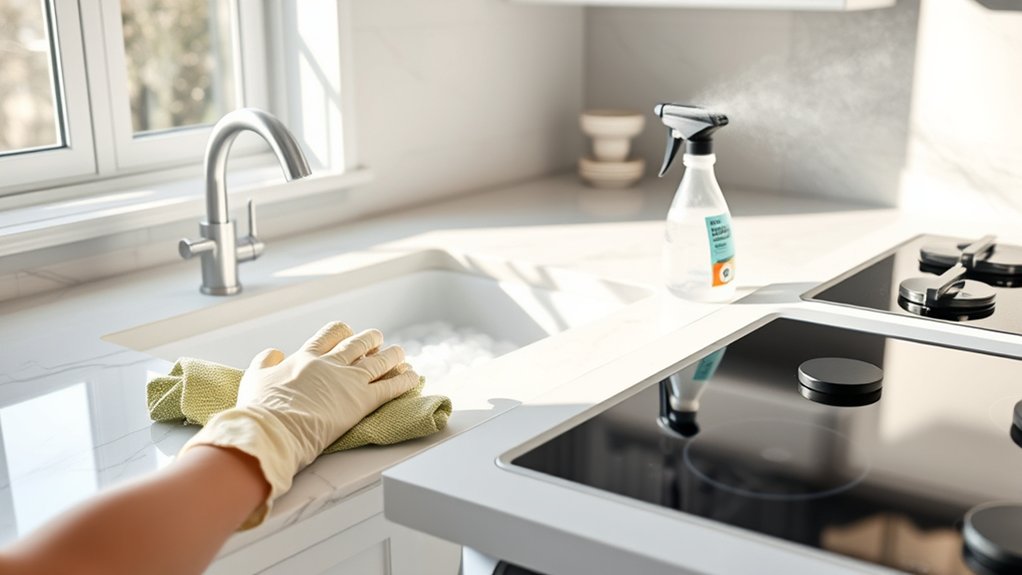
How to Clean a Kitchen in 3 Simple Steps
Keeping your kitchen clean can feel like a never-ending chore, especially when clutter and mess pile up. You’re not alone—many people struggle to keep this busy space tidy.
This guide to how to clean a kitchen in 3 simple steps will help you refresh your kitchen and keep it organized.
Start by clearing all clutter from your countertops and cabinets, organizing items and gathering cleaning supplies like an all-purpose cleaner and microfiber cloths.
Next, wipe down all surfaces and appliances, focusing on high-touch spots to keep everything spotless and functional.
Finally, sweep and mop the floors thoroughly, ensuring they dry completely.
These simple steps refresh your kitchen and keep it organized. You’ll find even more helpful tips to maintain a clean and inviting space.
Key Takeaways
- Clear countertops and cabinets to remove clutter and gather cleaning supplies before starting.
- Wipe down all surfaces and appliances, focusing on high-touch areas with a mild cleaner.
- Sweep and mop floors thoroughly, paying attention to corners and using a suitable floor cleaner.
- Organize and maintain storage solutions to keep the kitchen tidy and efficient.
- Regularly clean high-touch areas and schedule routine tasks to sustain cleanliness and order.
Clear Out Kitchen Clutter and Gather Supplies
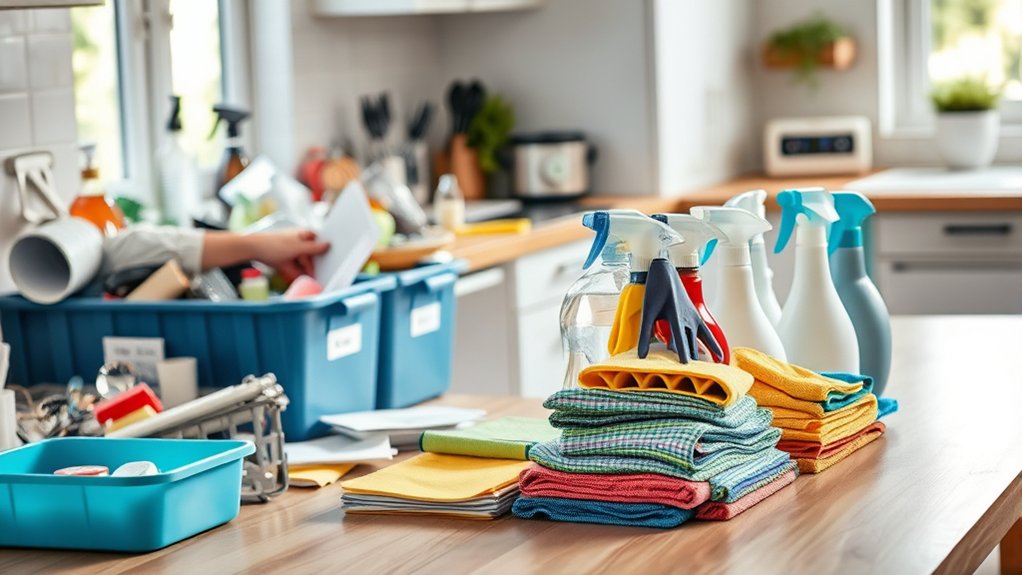
Before you plunge into scrubbing and wiping, clear out all the clutter from your kitchen surfaces and gather the cleaning supplies you’ll need. Start by removing everything from your countertops and cabinets. This makes it easier to see what you have and identify items you no longer use.
As you empty your cabinets, focus on organizing cabinets efficiently—group similar items together and use storage solutions to maximize space. Take this opportunity to donate unused items that are still in good condition. You’ll free up space and help others in need.
Once you’ve decluttered, gather essential cleaning supplies like all-purpose cleaner, sponges, microfiber cloths, and gloves. Having everything ready before you start ensures a smooth cleaning process.
Wipe Down Kitchen Surfaces and Appliances
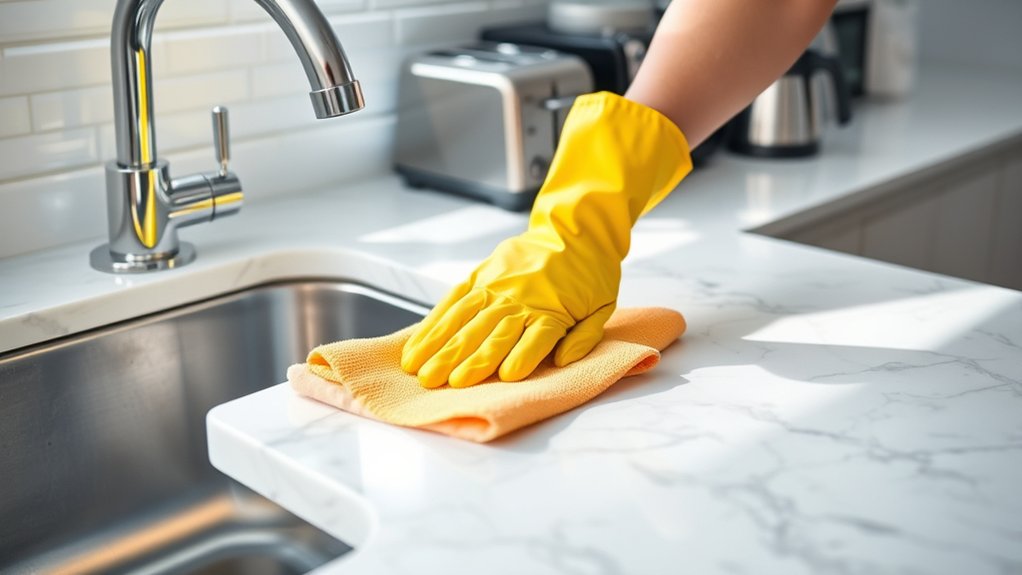
Once you’ve cleared your kitchen, start wiping down all surfaces and appliances to remove grime and spills. Use a damp microfiber cloth with a mild cleaner to avoid damage.
Pay special attention to high-touch areas like countertops, cabinet handles, and appliance buttons. Regular wiping supports kitchen organization by keeping surfaces clean and clutter-free. It also aids appliance maintenance by preventing buildup that can affect performance.
Here’s a quick wipe-down guide:
| Surface | Cleaner Type | Frequency |
|---|---|---|
| Countertops | All-purpose spray | Daily |
| Refrigerator | Mild detergent | Weekly |
| Stove & Oven | Degreaser | After cooking |
Sweep and Mop Kitchen Floors, Then Add Final Fresh Touches
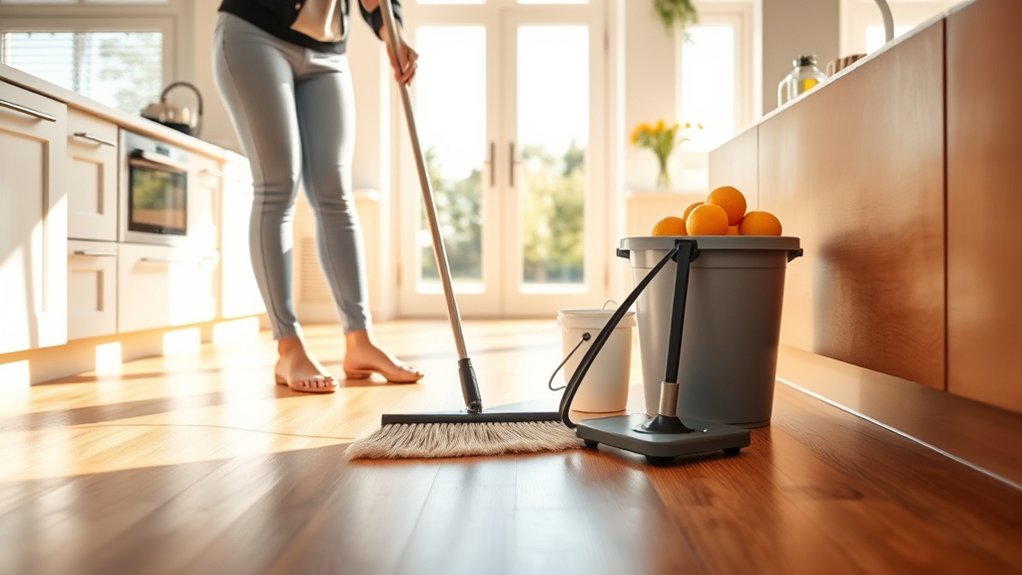
After wiping down all surfaces and appliances, give your kitchen floor some attention to complete the cleaning process. Start by sweeping thoroughly to remove crumbs and debris, focusing on corners and under cabinets.
Then, mop the floor using a gentle cleaner suitable for your flooring type. This step not only refreshes your kitchen but also prevents sticky residue that might attract pests.
Once the floor is dry, add final fresh touches to brighten the space. Consider placing a clean, decorative rug near your sink or stove to catch spills and add comfort.
Organize your countertops by utilizing smart storage solutions, like drawer dividers or wall-mounted racks, to keep cooking tools accessible yet tidy. These cooking tips help maintain cleanliness and efficiency, making meal prep smoother and more enjoyable.
With these simple steps, your kitchen will look spotless and feel welcoming every time you step in.
Frequently Asked Questions
How Often Should I Deep Clean My Kitchen?
You should deep clean your kitchen at least once a month to keep it hygienic and fresh. Following a kitchen cleaning schedule helps you stay on track without feeling overwhelmed.
Use a deep cleaning checklist to cover all areas like appliances, cabinets, and grout. Sticking to this routine guarantees your kitchen stays spotless and safe for food prep.
If you cook a lot, consider deep cleaning biweekly to maintain cleanliness.
What Natural Cleaners Are Safe for Kitchen Surfaces?
Who doesn’t want safe, effective cleaners without harsh chemicals? You can use eco friendly ingredients like vinegar, baking soda, and lemon juice to create homemade cleaning solutions.
These natural cleaners cut grease, disinfect, and leave your kitchen sparkling without toxic residues. Just mix vinegar and water for countertops, baking soda for scrubbing, and lemon juice to remove stains and odors.
You’ll protect your family and the environment while keeping your kitchen spotless.
How Do I Remove Stubborn Grease Stains?
To tackle stubborn grease stains, you’ll want to focus on effective grease removal. Start by sprinkling baking soda directly on the stain, then spray white vinegar over it. Let it fizz and sit for a few minutes to break down the grease.
Next, scrub gently with a sponge or brush for thorough stain elimination. Rinse with warm water and repeat if needed. This natural method makes grease removal easy and safe for most surfaces.
Can I Use Vinegar to Clean Kitchen Appliances?
You can use vinegar to clean kitchen appliances, but don’t mistake its power for a cure-all. While vinegar is great for cutting grease and disinfecting, its acidic nature means you shouldn’t use it on certain surfaces, like natural stone or some stainless steel finishes.
For appliance polishing, dilute vinegar with water to avoid damage, and always test a small spot first. This way, you get a sparkling clean without risking harm.
What’s the Best Way to Organize Kitchen Cabinets?
The best way to organize kitchen cabinets is by using smart cabinet accessories and storage solutions tailored to your needs. You can install pull-out shelves, lazy Susans, or tiered racks to maximize space and accessibility. Use clear bins or baskets to group similar items together, making everything easier to find. Don’t forget adjustable dividers for utensils or baking sheets. These tools help you keep your cabinets clutter-free and efficient.
Conclusion
Now that you’ve tackled clutter, wiped every surface, and cleaned the floors, you might think you’re done. But wait—there’s one final step that can transform your kitchen from clean to sparkling.
It’s the little extra touch most people overlook, and it makes all the difference. Ready to uncover it? Trust me, once you add this final flourish, your kitchen won’t just look clean—it’ll feel brand new.
Follow these three simple steps to clean a kitchen and make it feel brand new.