How to Measure Kitchen Cabinets in 3 Easy Steps
Measuring kitchen cabinets accurately can be tricky, especially when you’re planning an update or shopping for new cabinets. You’re not alone—many people struggle to account for countertops, hardware, and tight clearances.
This guide to how to measure kitchen cabinets in 3 easy steps will help you get started.
First, gather your tape measure, pencil, and notepad, then clear your kitchen workspace for easy access and good lighting.
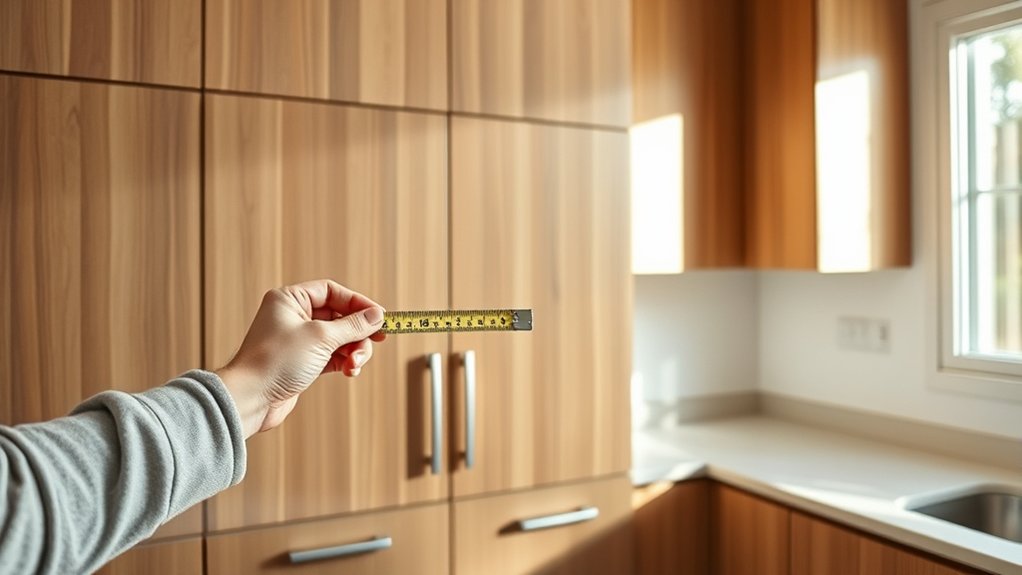
Next, measure each cabinet’s width from outer edge to edge, height from base to top including countertop thickness, and depth from front to back wall or backsplash, noting any obstructions.
Finally, write down all dimensions clearly and double-check for accuracy, considering hardware and clearance.
Keep going to uncover tips for flawless, precise measurement techniques.
Key Takeaways
- Clear the workspace and gather a tape measure, pencil, and notepad for organized and accurate measuring.
- Measure cabinet width from outer edge to outer edge, including trim, to ensure full dimension capture.
- Record height from the base to the top, accounting for countertop thickness and any irregularities.
- Measure depth from the front face to the back wall or backsplash, considering door clearance and hardware.
- Write down all dimensions clearly and double-check measurements for accuracy before finalizing.
Get Your Tools Ready and Clear Your Kitchen Space
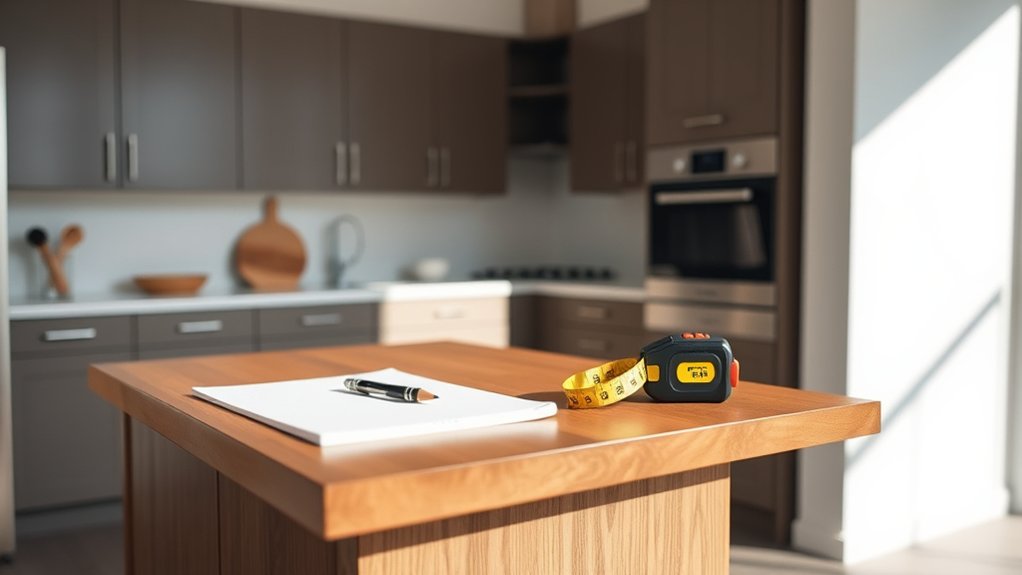
Before you begin measuring, make sure you have all the necessary tools on hand and clear your kitchen workspace. Grab a tape measure, a pencil, and a notepad to jot down your dimensions. You might also want a step stool if your cabinets are high up.
Gather your tools and clear your workspace for easy, accurate cabinet measurements every time.
Clearing your countertops and removing any clutter will give you better access to your cabinets and prevent distractions.
Good kitchen lighting is vital here. Turn on all the lights or bring in a portable lamp to guarantee you see edges and corners clearly. Proper lighting helps avoid mistakes, especially if you plan to repaint your cabinets.
Speaking of which, if you’re considering a fresh cabinet paint job, measuring accurately is indispensable to estimate how much paint you’ll need. A clean, well-lit space makes the process smoother and more efficient, setting you up for success before you even start measuring your kitchen cabinets.
Measure Kitchen Cabinet Width, Height, and Depth Precisely
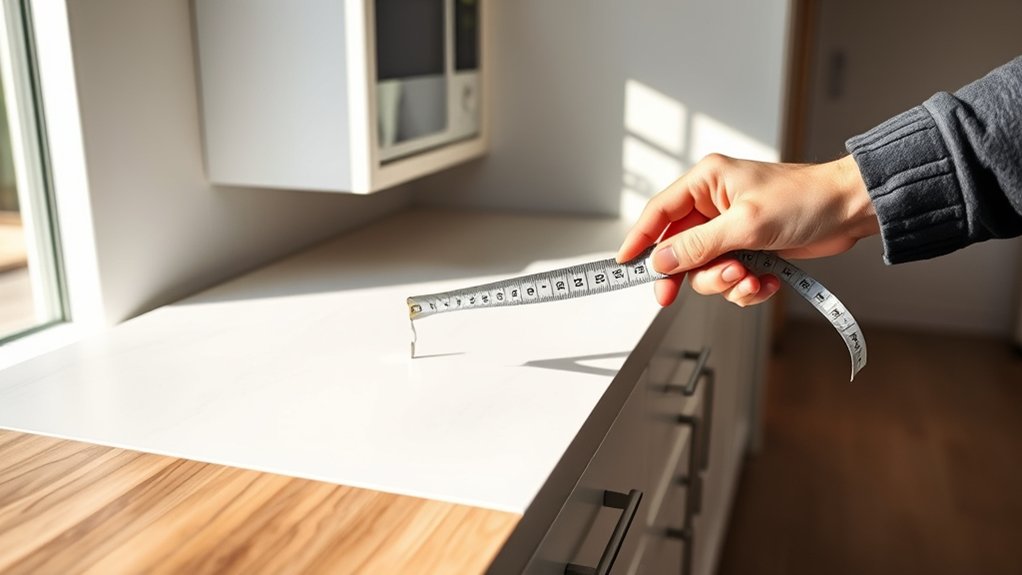
Once you have your tools ready and workspace clear, start by measuring the width, height, and depth of each kitchen cabinet carefully. Accurate measurements ensure your new cabinets fit perfectly and complement your kitchen layout. Different cabinet materials may affect how you measure, so keep that in mind for precise results.
Follow these tips:
- Measure cabinet width from outer edge to outer edge, including any trim.
- Record height from the base to the top, factoring in countertop thickness if attached.
- Measure depth from the front face to the back wall or backsplash.
- Note any irregularities caused by wall angles or obstructions.
- Consider installation tips like clearance for doors and hardware when measuring depth.
Taking these steps will help you avoid costly mistakes and ensure your kitchen cabinets fit flawlessly. Precision here simplifies installation and improves your overall kitchen renovation experience.
Write Down and Double-Check Your Kitchen Cabinet Measurements
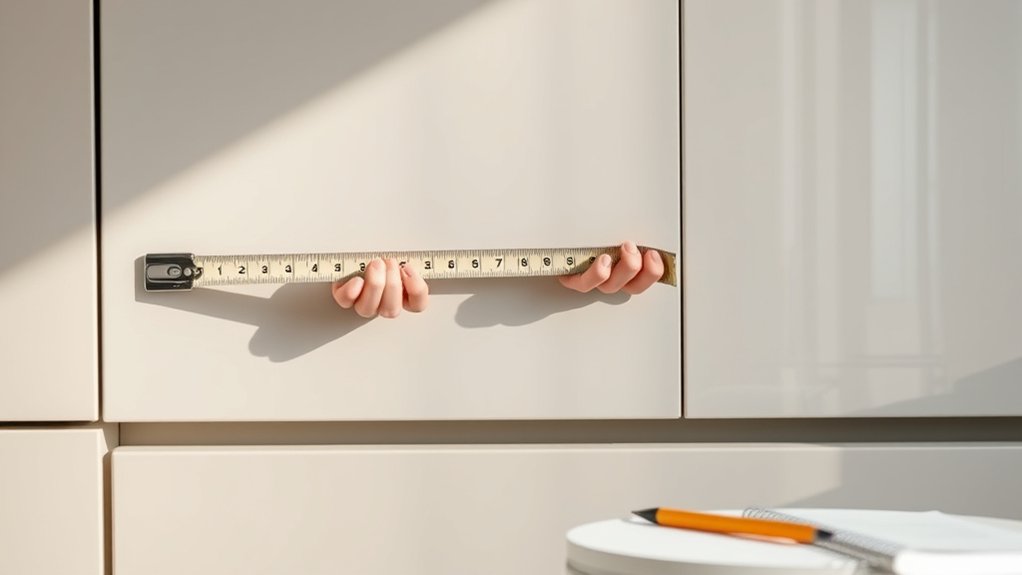
Although you’ve carefully measured each cabinet, writing down every dimension clearly is essential to avoid mistakes later. Grab a notebook or use a digital tool to record the width, height, and depth of each cabinet.
Note the cabinet material and cabinet style alongside these measurements, as they’ll be vital when ordering replacements or matching new pieces.
Once all measurements are written, double-check them. Re-measure any dimension that feels off or inconsistent. Cross-referencing your notes with the actual cabinets helps catch errors early.
Frequently Asked Questions
What Types of Cabinets Are Available for Kitchens?
You’ll find several types of kitchen cabinets, like base cabinets, wall cabinets, and tall pantry cabinets. Each type can be customized with cabinet hardware to match your style and improve functionality. You can also add cabinet lighting to brighten your workspace and highlight your design.
Whether you want glass-front cabinets for display or solid ones for storage, you’ve got plenty of options to fit your kitchen’s look and needs.
How Do I Choose the Right Cabinet Style for My Kitchen?
You choose the right cabinet style by considering your kitchen’s overall vibe and your personal taste. Look at cabinet color options that complement your walls and countertops.
Think about whether you want a classic white, bold color, or natural wood finish. Also, pick cabinet handle styles that match your style—sleek modern pulls or vintage knobs can make a big difference.
Don’t forget functionality and how often you’ll use the cabinets.
What Materials Are Best for Durable Kitchen Cabinets?
Think of durable kitchen cabinets like a knight’s armor—it needs tough materials to stand the test of time. You’ll want solid wood or plywood for strength, paired with quality cabinet finishing that resists moisture and scratches.
Don’t forget hardware options like stainless steel hinges and handles; they add durability and style. By choosing these materials and finishes, you’ll guarantee your cabinets stay sturdy and beautiful through countless meals and memories.
How Much Do Kitchen Cabinets Typically Cost?
Kitchen cabinets typically cost between $3,000 and $8,000, but custom cabinet options can push that price higher depending on materials and design. You can find more affordable choices or invest in high-end finishes.
If budget feels tight, consider cabinet financing to spread out payments comfortably. This way, you can get the style and quality you want without breaking the bank upfront. Always compare options and financing plans before deciding.
Can I Install Kitchen Cabinets Myself or Should I Hire a Pro?
You can definitely tackle DIY installation if you’re comfortable with tools and basic carpentry. It saves money and gives you control over the project.
However, if you’re unsure about precise measurements, leveling, or plumbing adjustments, hiring professionals is a safer bet. Pros guarantee a perfect fit and can handle unexpected issues efficiently.
Weigh your skills and time before deciding between DIY installation and hiring professionals for the best results.
Conclusion
So, measuring your kitchen cabinets isn’t rocket science. Just grab a tape measure, clear some space, and jot down those numbers. You might think it’s a simple task, but one wrong inch could turn your dream kitchen into a nightmare of awkward gaps and misfits.
Double-checking isn’t just for perfectionists; it’s your secret weapon against costly mistakes. Trust me, you’ll thank yourself later when everything fits like a glove. Accurate kitchen cabinet measurements make all the difference!