How to Kill Ants in the Kitchen Step by Step
Ants in the kitchen can turn a clean, comfortable space into a frustrating mess. If you’re struggling to keep them away, you’re not alone.
This roundup will help you explore practical ways to tackle the problem and protect your kitchen.
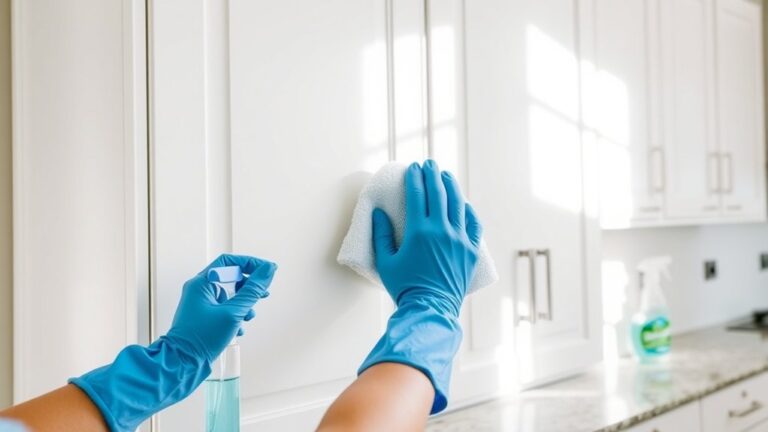
Start by wiping surfaces and entry points with soapy water or vinegar to break ant trails. Find where ants enter and use bait stations with sugar-borax mixtures to lure them in; worker ants will carry poison back to the nest.
Clean crumbs promptly, seal cracks with caulk, and store food tightly to prevent return visits.
For stubborn infestations, target nests directly or consider professional help.
Keep following for detailed steps and long-term kitchen protection tips.
Key Takeaways
- Identify ant entry points and clean surfaces with soapy water to disrupt their scent trails.
- Place ant bait stations near trails to lure worker ants that carry poison back to the colony.
- Locate and treat nests directly with appropriate ant killers or bait for root elimination.
- Remove food sources and seal cracks, gaps, and moisture leaks to prevent further infestations.
- Regularly clean and maintain kitchen hygiene to break scent trails and reduce ant activity.
How to Kill Ants in the Kitchen Quickly
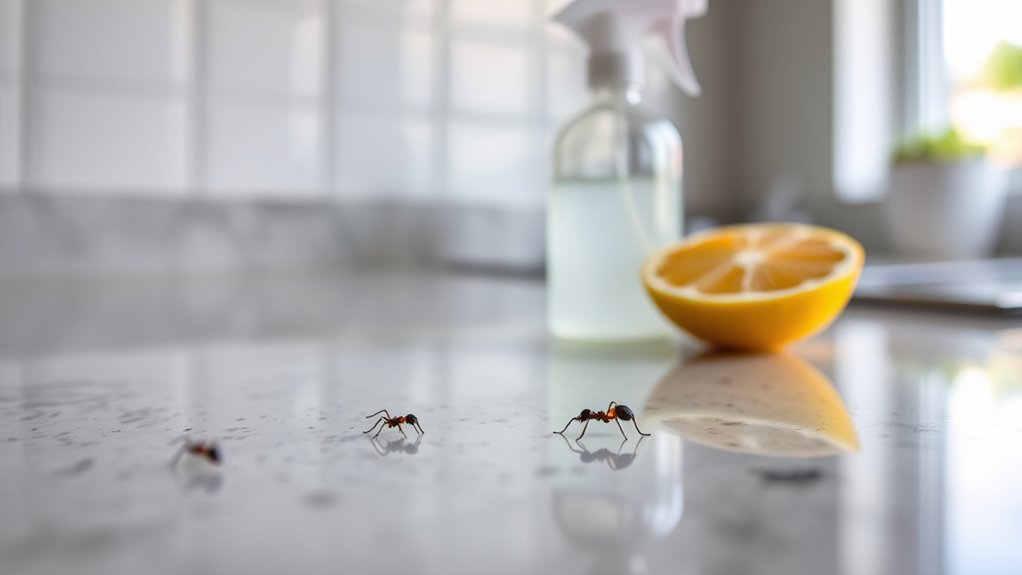
If you want to kill ants in the kitchen quickly, start by identifying their entry points and wiping down surfaces with soapy water to disrupt their scent trails. Ant behavior relies heavily on these trails to communicate and navigate between their ant habitat and food sources. By breaking this link, you confuse them and reduce their activity.
Next, locate the ant habitat; it could be inside walls, under appliances, or near moisture sources. Targeting the nest with a suitable ant killer or bait lets you attack the problem at its root. Use bait stations to lure worker ants, which then carry poison back to the colony, effectively eliminating it.
How to Clean and Prepare Your Kitchen to Stop Ants
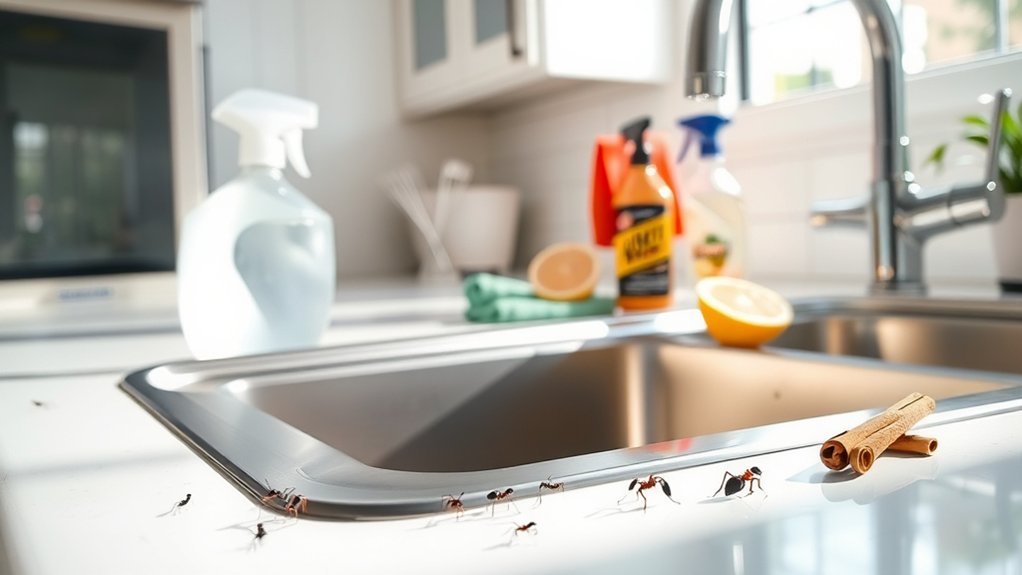
Taking swift action against ants means more than just targeting them directly; cleaning and preparing your kitchen plays a key role in stopping them from coming back. Start by clearing crumbs and spills immediately, paying close attention to countertops and floors. Wipe down surfaces regularly to remove scent trails ants use to navigate. When arranging your kitchen decor, minimize clutter that can harbor food particles or provide hiding spots. Keep food in sealed containers to deny ants easy access.
Don’t forget appliance maintenance—clean under and behind appliances like the fridge and toaster, where food debris can accumulate unnoticed. Regularly check and fix any leaks in your sink or dishwasher, as ants are attracted to moisture. Empty your trash frequently and sanitize bins to eliminate odor. By keeping your kitchen spotless and well-maintained, you remove the environment ants thrive in, making it far less likely they’ll return.
Why Ants Invade Kitchens and Where They Hide
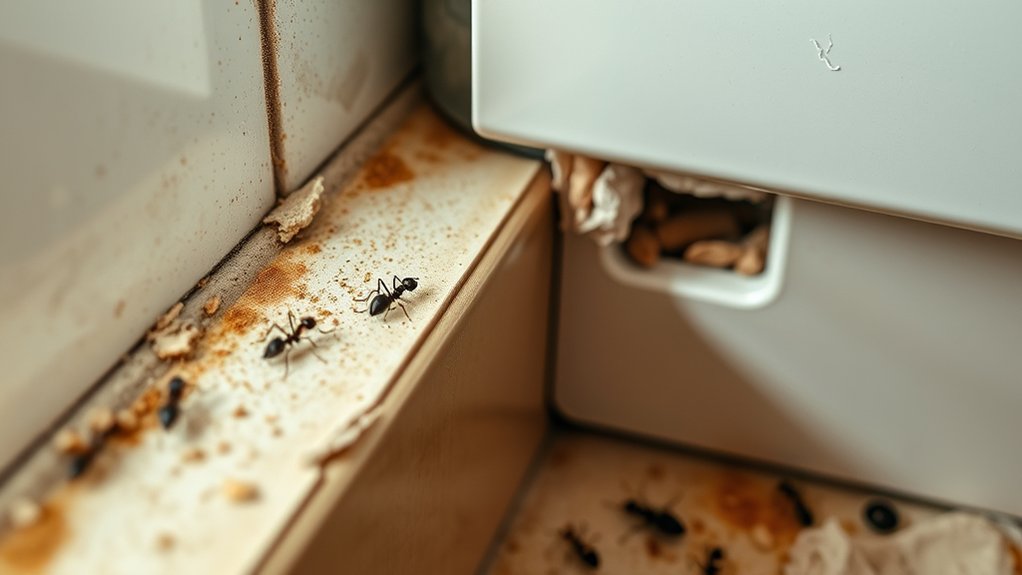
Because kitchens offer a steady supply of food and water, ants are naturally drawn to them. Understanding ant behavior helps you see why they invade your kitchen. Ants follow scent trails left by scouts to locate food sources quickly.
Once they find crumbs, spills, or sticky residues, they alert their colony to take advantage. Poor kitchen hygiene makes it easier for ants to thrive, so keeping surfaces clean disrupts their food supply and discourages them.
Ants don’t just wander openly. They hide in cracks, behind appliances, inside cabinets, or near water sources like sinks and leaky pipes. These hidden nests protect them and allow for easy access to your kitchen’s resources.
How to Use Natural Remedies to Kill Ants in the Kitchen
You can tackle ants without harsh chemicals by using natural ingredients such as vinegar, lemon juice, and cinnamon to discourage them. You can also make bait traps with sugar and borax to help control ant activity. Just be sure to keep borax away from children and pets, and follow the product label. Let’s look at how these remedies work and how to use them in your kitchen.
Natural Ant Repellent Ingredients
While chemical sprays can be effective, many prefer natural ant repellent ingredients to keep their kitchens safe and toxin-free. Understanding ant habitat and colony behavior helps you target them better.
Ants thrive in warm, moist places near food sources, so disrupting their trails with natural ingredients deters them from setting up shop. Ingredients like vinegar, lemon juice, and peppermint oil work by confusing ants’ scent trails, which are vital for their colony behavior and navigation.
You can spray these around entry points, countertops, and ant habitat zones to repel them naturally. Cinnamon and diatomaceous earth also create barriers ants avoid crossing.
Effective Homemade Ant Traps
Although natural repellents keep ants at bay, effective homemade ant traps can eliminate them by attracting and capturing the pests. Understanding ant behavior and their life cycle helps you design traps that disrupt their colony. Here’s how you can create your own:
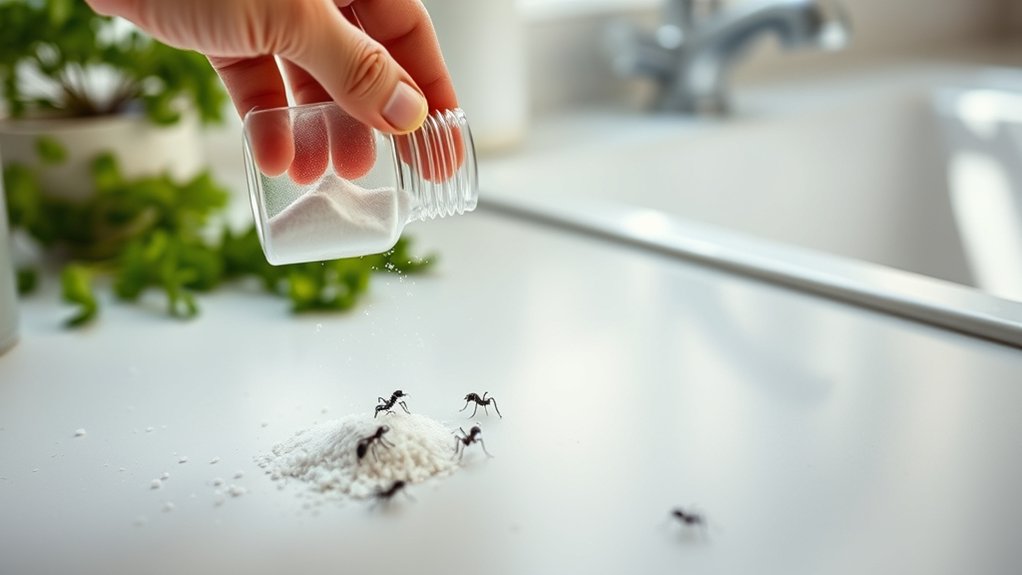
- Mix equal parts sugar and borax; the sugar lures ants while borax kills them.
- Soak cotton balls in the mixture and place them near ant trails.
- Use a shallow dish to hold the bait, preventing pets or kids from accessing it.
- Replace the bait every few days until you see no more ants.
How to Make Homemade Ant Baits That Kill Kitchen Ants
You can make effective homemade ant baits with a few simple ingredients from your kitchen. Here’s how to prepare them quickly and safely. Once they’re ready, place the baits where you see ants gathering to help tackle the problem at its source.
Essential Ingredients Overview
When creating homemade ant baits, selecting the right ingredients is essential to effectively attract and eliminate kitchen ants. You want components that lure ants from their ant habitats and deliver a fatal dose. Here are four key ingredients to evaluate:
- Sweeteners like sugar or honey to attract worker ants.
- Boric acid or baking soda as the toxic element to kill ants.
- Essential oils such as peppermint or tea tree to boost bait attractiveness and mask human scents.
- Water to dissolve and mix ingredients smoothly, ensuring easy ant consumption.
Step-by-Step Preparation Guide
Selecting the right ingredients sets the foundation for effective homemade ant baits. Understanding ant behavior helps you choose substances that attract ants and encourage them to carry the bait back to their colony. Maintaining kitchen hygiene guarantees the bait remains appealing and undisturbed. Here’s a step-by-step preparation guide:
| Step | Action |
|---|---|
| 1. Mix sugars | Combine 1 tbsp sugar with 1 tbsp water |
| 2. Add bait | Stir in 2 tbsp borax carefully |
| 3. Prepare traps | Soak cotton balls in mixture |
| 4. Place traps | Position traps near ant trails |
How to Use Store-Bought Ant Sprays Safely and Effectively
Although store-bought ant sprays offer a quick solution, using them safely and effectively requires careful attention to the instructions and precautions on the label. To maximize ant spray safety and spray effectiveness, follow these steps:
Store-bought ant sprays are quick solutions but must be used carefully by following label instructions for safety and effectiveness.
- Read the label thoroughly to understand the active ingredients and any necessary safety measures, like wearing gloves or keeping pets away.
- Target the ants directly and their trails, spraying in short bursts to avoid excessive chemical use.
- Ventilate the kitchen well during and after spraying to reduce inhalation risks.
- Store the spray securely out of reach of children and pets to prevent accidental exposure.
How to Seal Ant Entry Points to Prevent Return
To keep ants from coming back, you need to seal their entry points tightly. Start by inspecting common access spots like cracks near windows, doors, and where pipes enter walls. Use caulk or weather stripping to block these gaps.
Don’t forget areas around indoor plants. Ants often use damp soil as a bridge inside. Also, switch to pest proof containers for all food storage to reduce attractants.
Here’s a quick checklist to visualize your sealing process:
| Entry Point Location | Sealing Method |
|---|---|
| Cracks near windows | Use silicone caulk |
| Door frames | Apply weather stripping |
| Around indoor plants | Place barriers, check soil moisture |
Sealing these points stops ants cold and keeps your kitchen ant-free longer. Regularly check these spots, especially after cleaning or rearranging indoor plants, to maintain a tight seal against invaders.
How to Maintain a Kitchen That Repels Ants Long-Term
To keep ants away long-term, stick to a regular cleaning routine and wipe up crumbs and spills as soon as they happen. Also, seal any cracks or gaps where ants might get in. Together, these simple habits can make your kitchen much less inviting to ants.
Regular Cleaning Routine
Since ants are attracted to food residues and moisture, keeping your kitchen spotless is your first line of defense. A regular cleaning routine helps maintain kitchen organization and makes pest identification easier, so you can catch problems early. Follow these steps to stay ahead of ants:
- Wipe down countertops and dining areas daily to remove crumbs and spills.
- Sweep and mop floors regularly, focusing on corners and under appliances.
- Store food in sealed containers to reduce attractants.
- Empty trash bins frequently and clean them to prevent odors.
Sealing Entry Points
Where are ants sneaking into your kitchen? Trace the ant trail carefully to find their entry points. Common spots include cracks around windows, doors, and gaps in walls or baseboards.
Once you identify these access points, seal them with caulk or weatherstripping to block their path. This step is essential because even if you eliminate ants inside, new ones will keep coming from the colony location outside.
Don’t forget to check less obvious spots, like gaps around pipes or vents. Maintaining a sealed kitchen keeps ants out long-term by cutting off their routes.
How to Manage Severe Ant Infestations in Your Kitchen
When ants overwhelm your kitchen, simple sprays and baits won’t cut it anymore. Severe infestations demand a strategic approach that targets ant behavior while maintaining impeccable kitchen hygiene. First, understand that ants leave scent trails to lead others to food sources, so disrupting these trails is key.
Here’s how to manage severe infestations:
- Deep clean all surfaces daily, removing crumbs and spills to eliminate attraction.
- Use a vinegar or lemon solution to wipe entry points and trails, disrupting ant pheromones.
- Set multiple bait stations with slow-acting poison to allow ants to carry it back to the colony.
- Seal all cracks and crevices to block new ant routes.
When to Call Professional Pest Control for Kitchen Ants
If your efforts to control ants in the kitchen don’t reduce their numbers or the infestation worsens, it’s time to call professional pest control. Experts can perform precise ant species identification, which is vital to target the right treatment. They also help with ongoing kitchen pest prevention, guaranteeing ants don’t return.
Knowing when to call can save you time and frustration. Here’s a quick guide:
| Situation | Action Needed |
|---|---|
| Ant trails persist despite cleaning | Contact professionals |
| Multiple ant species present | Request species identification |
| Recurring infestations after treatment | Schedule regular prevention |
Calling pros early prevents damage and contamination. They understand ant behavior and use safe, effective treatments. Don’t wait until ants overrun your kitchen; professional help ensures thorough control and peace of mind.
Frequently Asked Questions
Are Ants Harmful to Humans or Pets?
Ants aren’t usually harmful to humans or pets, but their behavior can be a nuisance. Some species might bite or sting, causing mild irritation.
You’ll want to use effective pest control techniques to keep them from invading your space, as they can contaminate food and trigger allergies.
Paying attention to ant behavior helps you identify infestations early, so you can act quickly and protect your home and loved ones.
Can Ants Contaminate Food in My Kitchen?
Yes, ants can contaminate food in your kitchen by carrying bacteria and pathogens from dirty surfaces. To protect your food, you need proper pest identification to determine the ant species and target them effectively.
Ant prevention is essential—seal food containers, clean spills promptly, and eliminate entry points. By staying vigilant and addressing ant problems early, you’ll keep your kitchen clean and your food safe from contamination.
What Attracts Ants to Some Kitchens More Than Others?
Your kitchen can sometimes become an unwanted buffet for ants, especially when kitchen cleanliness isn’t excellent. Ants are naturally drawn to food residue left behind on countertops, floors, or in crumbs you might not notice.
If you don’t regularly wipe surfaces and clean up spills, you’re basically sending out invitations to these tiny guests. Keeping things spotless and sealing food properly can help you avoid turning your kitchen into their favorite dining spot.
Do Different Ant Species Require Different Treatment Methods?
Yes, different ant species do require different treatment methods. You’ll find that natural remedies work well on some types, like sugar ants, while tougher species might need stronger chemical treatments.
It’s important you identify the ant species first so you can choose the right approach. Mixing natural remedies with targeted chemical treatments often gives you the best results without overusing harsh chemicals in your kitchen.
How Long Does It Take for Ant Baits to Work?
Ant bait effectiveness is like a slow-burning candle; it doesn’t vanish instantly but works steadily. You’ll usually see results within 3 to 7 days, depending on the ant species and colony size.
Treatment timeframes vary, as the bait needs time to be carried back and shared inside the nest. So, don’t rush; patience is key. Keep the bait undisturbed, and soon enough, you’ll notice the ant problem fading away.
Conclusion
Dealing with ants in your kitchen is like facing a tiny, persistent army. You’ve got to outsmart them at every turn. By cleaning thoroughly, sealing entry points, and using natural remedies or baits, you can reclaim your space from these unwelcome invaders.
Remember, just as Rome wasn’t built in a day, keeping ants away requires ongoing effort. Stay vigilant, and follow these steps to kill ants in the kitchen and keep them from coming back.