How to Unclog a Kitchen Sink With Disposal in 3 Easy Steps
A clogged kitchen sink can bring cooking and cleanup to a halt—and if you have a garbage disposal, it can be hard to know where to start. You’re not alone; many people struggle with stubborn sink clogs.
This guide explains how to unclog a kitchen sink with disposal in three easy steps.
To unclog your kitchen sink with a disposal, first gather essential tools like a flashlight, hex wrench, and tongs for safety and ease.
Next, use the flashlight to spot and remove visible blockages, carefully turning the blades with a hex key if needed.
Finally, loosen deeper clogs by pouring hot water with detergent, using a plunger or drain snake, then flush thoroughly.
Keep following for tips to prevent future clogs and maintain smooth flow.
Key Takeaways
- Inspect the disposal with a flashlight and remove visible debris using tongs or pliers, avoiding hand insertion.
- Use a hex wrench to manually turn the disposal blades and dislodge jams if the unit is stuck.
- Pour hot water mixed with mild detergent down the drain to help break up clogs.
- Apply a plunger on the sink drain, sealing other drains if needed, to create suction and clear blockages.
- For persistent clogs, use a drain snake to remove obstructions, then flush thoroughly with hot water.
Gather Tools to Unclog Your Kitchen Sink Disposal
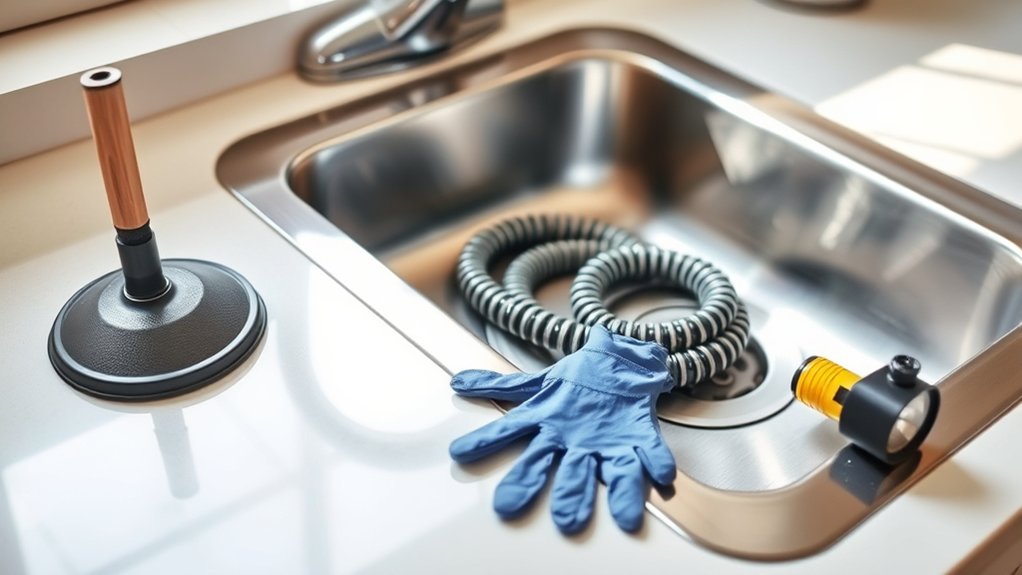
Before you begin, gather the essential tools to unclog your kitchen sink disposal. Having the right items on hand makes plumbing maintenance easier and helps you maintain disposal safety throughout the process.
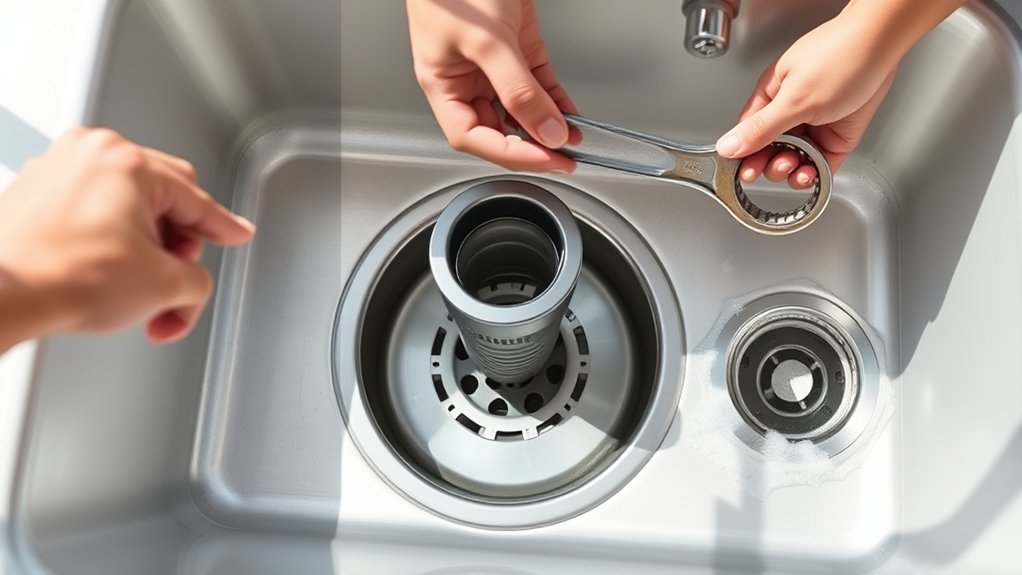
Start with a flashlight to inspect the disposal for any visible issues without risking injury. Next, grab a hex wrench or Allen key, which is often needed to manually turn the disposal’s motor from underneath the sink.
A pair of tongs or pliers will help you safely remove debris without putting your hands near the blades. Keep a bucket and towels nearby to catch any spills or leaks that might occur during the process.
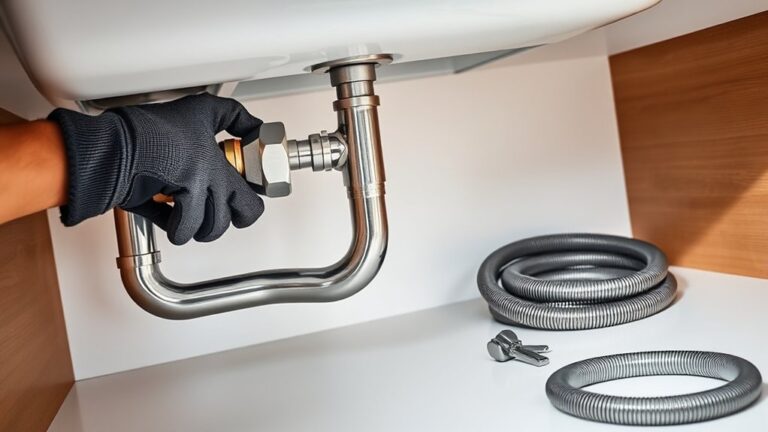
It’s also wise to have rubber gloves for protection and a wrench to disconnect plumbing connections if needed. Ensuring you have these tools ready not only speeds up the job but also keeps you safe, preventing accidents and further damage during plumbing maintenance.
Remove Visible Blockages From Your Kitchen Sink Disposal
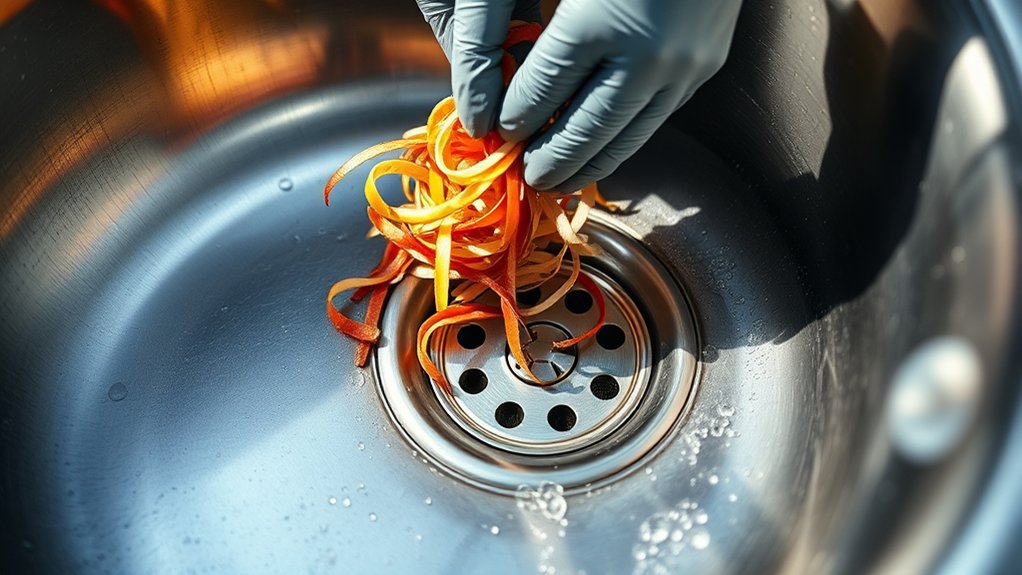
Once you’ve gathered your tools, carefully look inside the disposal to spot any obvious blockages. Use a flashlight if needed and never put your hand directly inside the disposal to avoid injury. Instead, use tongs or pliers to remove any visible debris like food scraps, bones, or utensils causing the jam.
If you don’t see anything obvious, try alternative methods like using a disposal wrench or a hex key to manually turn the blades and dislodge stuck material. Avoid pouring harsh chemicals, as they can damage your pipes.
After clearing blockages, follow preventive tips to keep your disposal running smoothly. Always run cold water during and after use, avoid fibrous or starchy foods, and grind small amounts at a time.
Regularly flushing with ice cubes and citrus peels helps clean blades and reduce buildup. These simple habits minimize future clogs and maintain your kitchen sink’s performance.
Loosen the Clog and Flush the Drain for Proper Flow
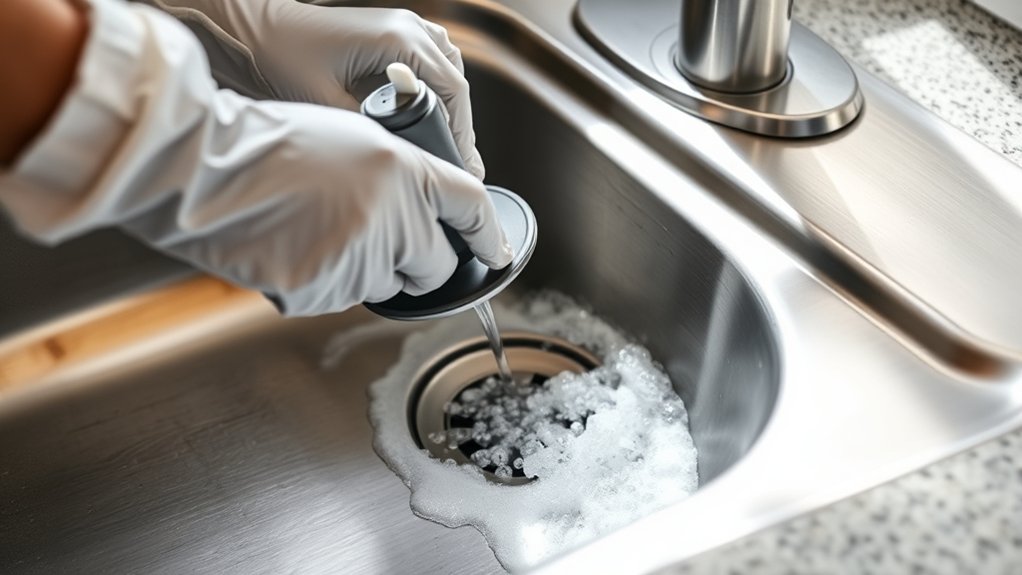
After clearing visible blockages from your disposal, the next step is to loosen any stubborn clogs deeper in the drain. Start by pouring a mixture of hot water and a mild detergent down the drain. This helps break down grease and loosen debris stuck further along the pipes.
Next, use a plunger to create pressure that can push the clog through. Make sure to seal the other sink drain if you have a double basin to maximize suction. If the clog persists, try a drain snake to physically dislodge the buildup.
These drain cleaning techniques are essential for effective plumbing maintenance and preventing future blockages. Once the clog loosens, flush the drain thoroughly with hot water to ensure proper flow and clear any residual debris.
Regularly applying these methods will keep your kitchen sink disposal running smoothly and reduce the need for professional repairs.
Frequently Asked Questions
Can Using Chemical Drain Cleaners Damage My Kitchen Sink Disposal?
Yes, using chemical drain cleaners can damage your kitchen sink disposal. These cleaners cause harsh chemical reactions that may corrode the disposal’s components and harm disposal safety. They can eat away at seals, pipes, and blades, leading to leaks or malfunction.
Instead, you should avoid harsh chemicals and opt for safer methods like manual removal or natural solutions to keep your disposal running smoothly without risking damage.
How Often Should I Clean My Kitchen Sink Disposal to Prevent Clogs?
You should clean your kitchen sink disposal at least once a week for effective disposal maintenance and clog prevention. Regularly grinding ice cubes and citrus peels helps keep blades sharp and eliminates odors.
Also, running cold water while using the disposal flushes debris, reducing buildup. Sticking to this routine keeps your disposal running smoothly, preventing clogs before they start and extending your unit’s lifespan. Don’t wait until problems arise!
What Foods Should I Avoid Putting in My Kitchen Sink Disposal?
Think of your disposal like a busy highway—food scraps like fibrous celery, potato peels, and egg shells are speed bumps that slow traffic. You should avoid putting these in because they cause clogs and damage.
Also, never pour grease buildup down the drain; it’s like pouring molasses into the engine, gumming everything up. Stick to soft, small scraps and plenty of water to keep your disposal running smoothly without jams or smells.
Is It Safe to Use a Plunger on a Kitchen Sink Disposal?
Yes, you can safely use a plunger on a kitchen sink disposal, but you need to follow plunger safety tips. First, make certain the sink has enough water to create a good seal. Cover the other drain if you have a double sink to avoid air escaping.
Use firm, controlled plunges to avoid damaging the disposal. Regular disposal maintenance, like running cold water and avoiding hard materials, helps prevent clogs and keeps your system working smoothly.
When Should I Call a Professional Plumber for Disposal Issues?
When your kitchen sink feels like a clogged river that won’t flow, it’s time to call a professional plumber. If repeated plunging or DIY fixes don’t clear the jam, or if foul odors and strange noises persist, schedule plumbing inspections.
These experts can spot hidden issues and recommend a disposal replacement if needed, saving you from future headaches. Don’t wait. Early intervention keeps your kitchen running smoothly.
Conclusion
Unclogging your kitchen sink disposal is like clearing a traffic jam on a busy road. Once the blockage is gone, everything flows smoothly again. Even a small blockage can slow things down and cause a chain reaction.
By following these simple steps, you can unclog a kitchen sink with disposal and restore the flow in no time. You’ve got this, and your kitchen will thank you!