How to Clean Wood Kitchen Cabinets in 5 Easy Steps
Greasy spots, fingerprints, and dull finishes can make wood kitchen cabinets look tired—and cleaning them without damaging the wood can feel tricky. You’re not alone; many people struggle to find the right products and approach.
These five easy steps for how to clean wood kitchen cabinets can help you tackle the mess while caring for your cabinets.
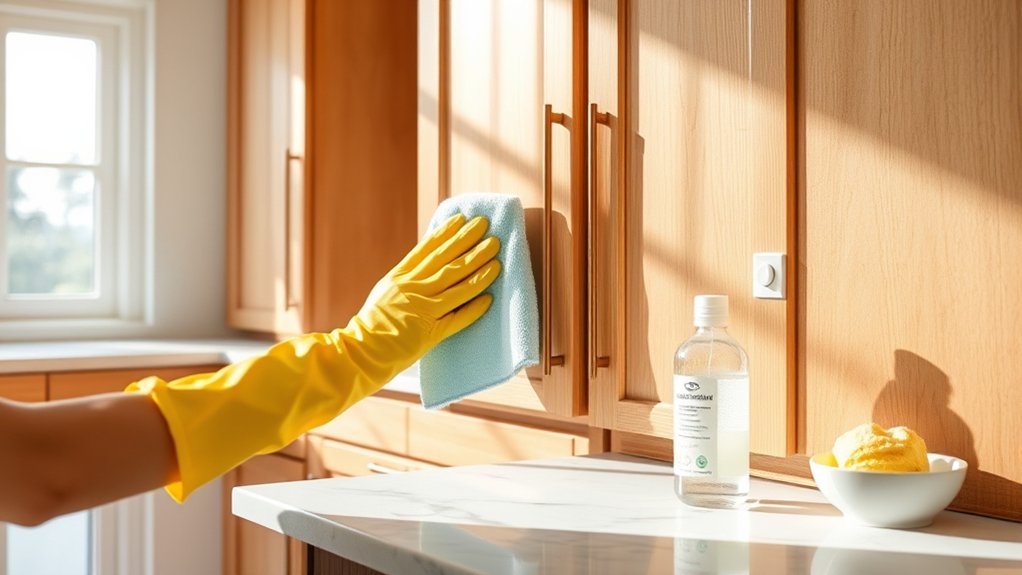
To clean wood kitchen cabinets in five easy steps, start by gathering supplies like a soft microfiber cloth, gentle wood cleaner, and a soft brush. Dust cabinets thoroughly, including corners and hardware.
Next, remove grease and stains with a mix of vinegar, warm water, and mild soap, wiping gently. Rinse with a damp cloth and dry immediately to avoid damage.
Finally, polish with a wood-specific product to restore shine. Follow these steps, and you’ll maintain your cabinets beautifully while protecting them long-term.
Key Takeaways
- Dust cabinets using a soft microfiber cloth or feather duster, including inside doors and hardware.
- Clean grease and stains with a vinegar, warm water, and mild dish soap solution applied gently.
- Rinse surfaces with a damp cloth, wiping in small sections and drying immediately to prevent moisture damage.
- Use a soft-bristled brush or vacuum attachment to clean tight corners and cabinet hardware.
- Polish cabinets with a wood-specific polish, buffing in circular motions to restore shine and protect wood.
Gather Your Cleaning Supplies for Wood Cabinets
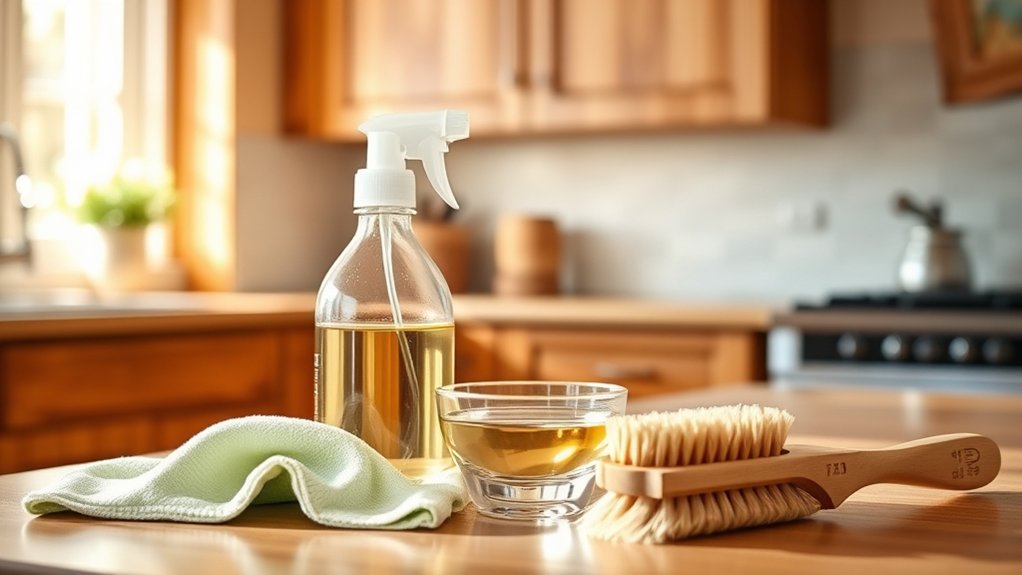
Before you begin cleaning your wood kitchen cabinets, gather all the necessary supplies to make the process efficient and effective. You’ll want a soft microfiber cloth to avoid scratching the wood grain patterns and a gentle cleaner suitable for wood surfaces.
Have a small bowl of warm water ready for diluting cleaning solutions or rinsing your cloth. Don’t forget a soft-bristled brush or an old toothbrush to clean around cabinet hardware without damaging it.
Keep a small bowl of warm water handy and use a soft-bristled brush to gently clean cabinet hardware.
Removing grime from hinges, knobs, and handles will keep your cabinets looking fresh. Avoid harsh chemicals that might strip the finish or dull the wood grain patterns.
A vacuum with a brush attachment can help if you need to clean tight corners before wiping. With all these supplies on hand, you’ll make quick work of your cabinets, preserving their natural beauty and protecting your cabinet hardware from wear and tear during cleaning.
Remove Dust and Loose Dirt Gently
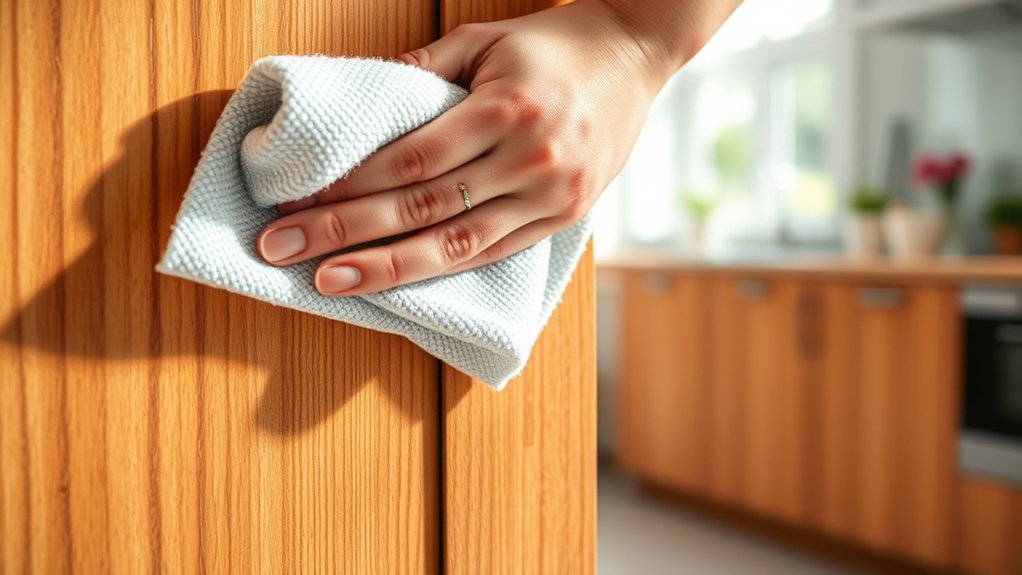
Since dust and loose dirt can scratch your wood cabinets if rubbed in, you’ll want to remove them gently before applying any cleaning solution. Start by using a soft microfiber cloth or a feather duster to sweep away dust from all surfaces, including cabinet hardware and interior shelving.
Be sure to open cabinet doors so you can dust inside thoroughly. For hard-to-reach spots, like the edges of cabinet hardware or corners of interior shelving, use a soft-bristled brush or a vacuum with a brush attachment.
Avoid using rough cloths or abrasive tools that can damage the wood finish. Taking the time to remove loose dirt carefully prevents buildup and keeps your cabinets looking fresh.
This gentle approach also protects delicate finishes and prevents scratches, ensuring your wood cabinets stay beautiful through regular cleanings.
Remove Grease and Stains With a Homemade Solution
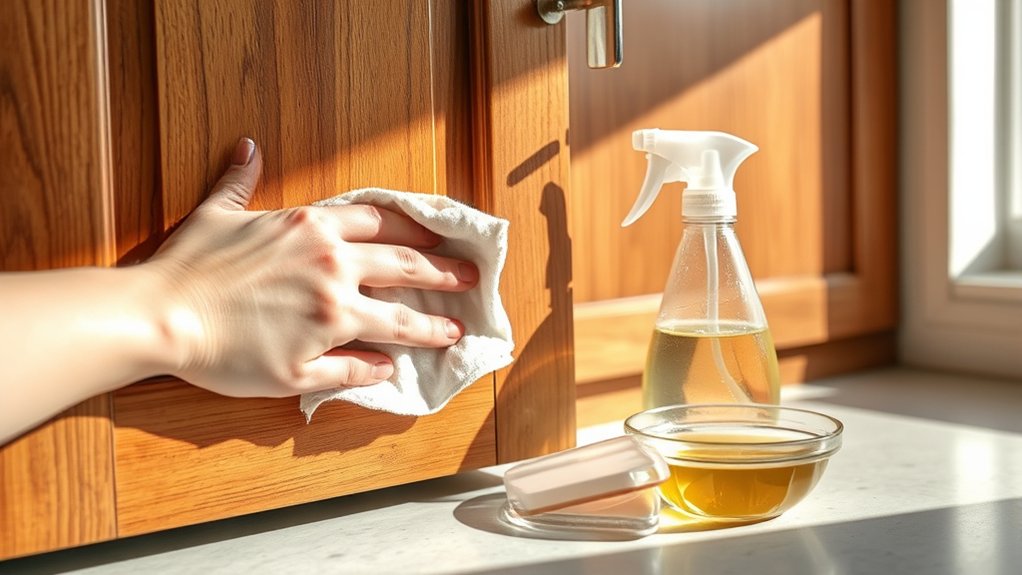
When grease and stains cling to your wood cabinets, a homemade solution can effectively break them down without harsh chemicals. Mix equal parts white vinegar and warm water in a spray bottle, then add a few drops of mild dish soap. This blend is an eco friendly solution that tackles grime gently while ensuring cleaning safety for your wood surfaces.
Spray the solution onto a soft cloth or directly on the stained areas, avoiding soaking the wood. Gently rub in circular motions to lift grease and stains without damaging the finish. Vinegar’s natural acidity cuts through buildup, while dish soap helps dissolve oily residue.
Always test this homemade cleaner on a small, hidden spot first to confirm it won’t harm your cabinet’s finish. Using this method keeps your kitchen environmentally friendly and protects your wood cabinets from harsh chemical wear, letting you maintain their beauty safely and effectively.
Rinse and Dry Wood Cabinets Carefully
Although rinsing might seem straightforward, you’ll want to be careful not to saturate the wood when removing the cleaning solution. Excess water can damage both the cabinet finish and the wood grain, causing warping or discoloration.
Avoid saturating wood when rinsing to prevent finish damage and warping.
To rinse and dry your wood cabinets properly, follow these steps:
- Use a damp, soft cloth rather than soaking the surface. Wring it out thoroughly before wiping to protect the cabinet finish.
- Rinse in small sections, immediately drying each area with a clean, dry microfiber cloth to prevent moisture absorption.
- Pay special attention to corners and the wood grain’s direction, as water can settle in grooves and cause damage over time.
Polish Wood Cabinets for a Lasting Shine
To keep your wood cabinets looking vibrant and protected, you’ll want to apply a polish that improves their natural shine while sealing the surface against moisture and wear. Start by choosing a high-quality cabinet polishing product formulated specifically for wood. Avoid anything too abrasive, as it can damage the finish.
Use a soft, lint-free cloth to apply the polish evenly, working in small sections to ensure full coverage. Gently buff the surface in circular motions to boost the wood’s luster and promote shine preservation.
Regular cabinet polishing not only improves appearance but also extends the life of your wood cabinets by creating a protective barrier. Aim to polish your cabinets every few months or whenever they begin to look dull.
This simple step makes a big difference, helping your kitchen maintain a warm, inviting look while safeguarding your investment from everyday wear.
Frequently Asked Questions
Can I Use a Pressure Washer on Wood Kitchen Cabinets?
You shouldn’t use a pressure washer on wood kitchen cabinets because it can cause serious wood damage. The high-pressure water can strip off the finish, warp the wood, and even force water into joints, leading to swelling or mold.
Instead, stick to gentle cleaning methods to protect your cabinets. Using a pressure washer might seem quick, but it’ll likely cause more harm than good to your wood surfaces.
How Often Should I Deep Clean Wood Kitchen Cabinets?
You should deep clean your wood kitchen cabinets about every three to six months. Think of your cabinet hardware as the jewelry that highlights the wood grain care beneath it—both need attention to stay radiant.
Regular deep cleaning removes grime that dulls their natural beauty and keeps the wood grain nourished and protected. Don’t wait for buildup to hide the subtle details; your cabinets deserve gentle, consistent care to shine like new.
Are Wood Cabinet Cleaners Safe for Painted Finishes?
Yes, many wood cabinet cleaners are safe for painted finishes, but you’ve got to check the label first. Some cleaning solvents can harm paint protection by stripping away the finish or causing discoloration.
To keep your cabinets looking great, choose cleaners specifically formulated for painted surfaces or use mild soap and water. Always test a small, hidden area before cleaning the entire cabinet to avoid damage.
Can Sunlight Damage Wood Kitchen Cabinets?
Think of sunlight as a silent artist, painting your wood kitchen cabinets with unintended colors. Yes, sunlight effects can cause UV damage, fading and drying the wood over time.
You’ll notice discoloration and warping if your cabinets face direct sunlight for long periods. To protect your investment, use window treatments or UV-protective films.
What Should I Do if My Cabinets Have Mold or Mildew?
If your cabinets have mold or mildew, start mold removal by mixing one cup of vinegar with two cups of water. Use a soft cloth to gently scrub the affected areas, then dry thoroughly.
To prevent mildew, keep your kitchen well-ventilated and wipe down cabinets regularly to reduce moisture. You can also apply a mildew-resistant spray to protect the wood.
Don’t wait—acting quickly helps keep your cabinets clean and safe.
Conclusion
You might think cleaning your wood kitchen cabinets is a challenging chore best left ignored, but it’s simpler than you imagine. With just a few household supplies and these five easy steps, you’ll transform your cabinets from dull to dazzling without breaking a sweat.
So, instead of avoiding the task, welcome it. You’ll be surprised how quickly your kitchen can feel fresh and inviting again. Who knew cleaning wood kitchen cabinets could actually be this satisfying?