How to Clean Kitchen Appliances in 10 Easy Steps
Cleaning kitchen appliances can feel like a never-ending chore, especially when grease, spills, and old food build up in hard-to-reach places. You’re not alone—many people struggle to keep appliances clean while protecting their finishes. These helpful picks can make cleaning kitchen appliances easier and help your kitchen run smoothly.
First, gather your cleaning supplies like microfiber cloths, mild detergent, and vinegar spray. Always unplug your appliances before cleaning to stay safe. Wipe the exteriors gently, then remove and soak detachable parts.
Clean inside your refrigerator by discarding expired food and wiping surfaces. Deep clean your coffee maker with vinegar, and degrease your oven and stovetop. Dry all parts completely before reassembling.
Keep up with daily upkeep to extend appliance life. There’s more to learn for a spotless kitchen that runs smoothly.
Key Takeaways
- Unplug appliances and gather cleaning supplies like microfiber cloths, mild detergent, and vinegar-water spray before starting.
- Remove and soak detachable parts in warm, soapy water, then rinse and dry thoroughly before reassembling.
- Clean exterior surfaces gently with eco-friendly cleaners and microfiber cloths, focusing on stains and drying completely.
- Sanitize microwave interiors using steam from a vinegar-water and lemon mixture heated for 5 minutes.
- Maintain appliances daily by wiping surfaces after use, emptying crumbs, and inspecting cords for safety.
Gather Essential Cleaning Supplies for Kitchen Appliances
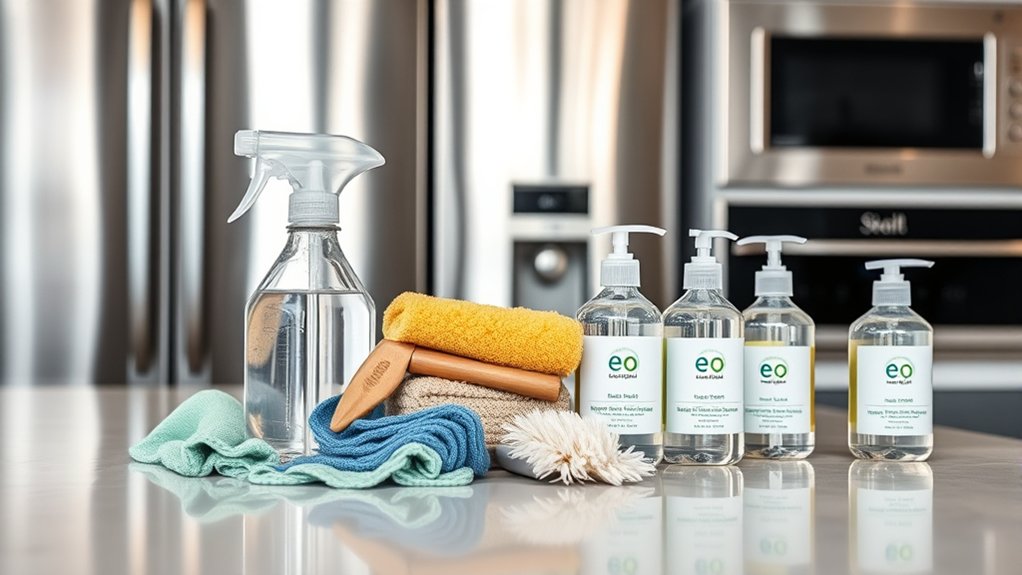
Before you start cleaning your kitchen appliances, gather all the essential supplies you’ll need. Having everything ready prevents time and keeps you focused on the task. You’ll want a soft cloth or microfiber towel, mild detergent, a small brush for crevices, and a spray bottle with a vinegar-water solution for a natural clean. Don’t forget gloves to protect your hands.
Proper appliance storage also matters; keeping cleaning supplies nearby but organized ensures you’re always prepared when it’s time to clean.
Consider the cleaning frequency for each appliance. For example, your coffee maker may need weekly attention, while your refrigerator requires monthly deep cleaning. Keeping track of this helps you maintain appliances efficiently and prevents grime buildup.
Unplug Your Appliances Before Cleaning
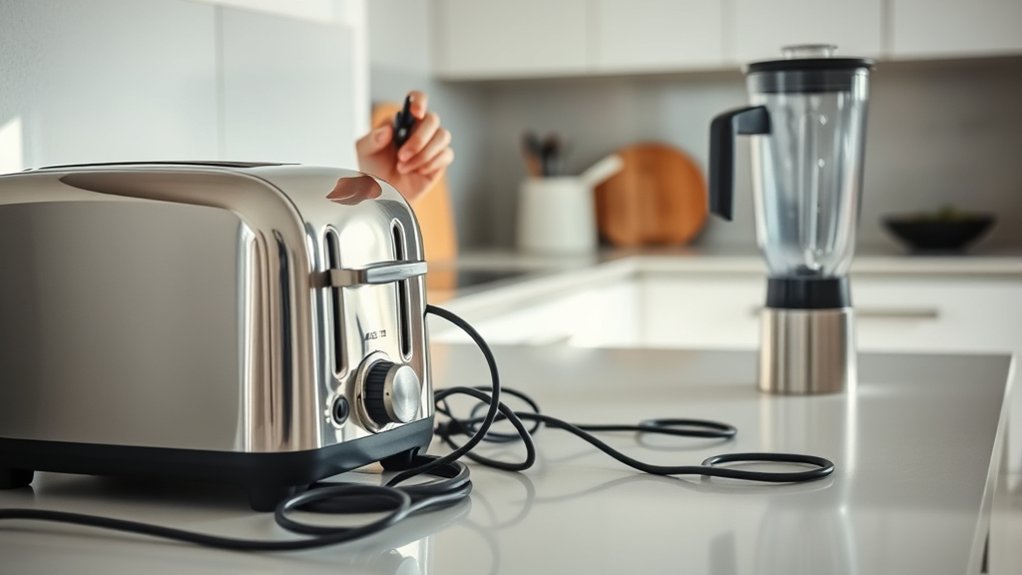
Before you start cleaning, unplug your appliances to help protect yourself from electric shocks. This can also prevent damage to their wiring or components. It’s a simple step that makes cleaning safer.
Ensure Safety First
Although it might seem like a small step, unplugging your kitchen appliances is essential for your safety and the longevity of your devices. Failing to disconnect them risks electrical shocks and short circuits during cleaning.
Prioritizing electrical safety protects you from accidents and helps maintain your appliances’ proper function. Furthermore, many appliance warranties require you to follow safety protocols like unplugging before maintenance.
Ignoring this can void your warranty, leaving you responsible for repair costs. Before you start wiping down any appliance, always double-check that it’s unplugged.
This simple action keeps you safe and ensures your appliances last longer, saving you money and hassle in the long run. So, make unplugging your first step every time you clean your kitchen gadgets.
Prevent Electrical Damage
To prevent electrical damage, always unplug your appliances before cleaning them. This simple step is crucial for appliance safety and helps avoid electric shocks or short circuits. Before you start, make sure you take the necessary electrical precautions to protect both yourself and your devices.
Keep these tips in mind:
- Unplug appliances from the wall socket completely, not just turning them off.
- Avoid cleaning near water sources unless unplugged.
- Never immerse electrical components in water.
- Use a dry or slightly damp cloth for cleaning surfaces.
Following these steps ensures you maintain your kitchen appliances safely and extend their lifespan. Prioritizing appliance safety through proper electrical precautions will keep your cleaning routine both effective and hazard-free.
Clean Kitchen Appliance Exterior Surfaces
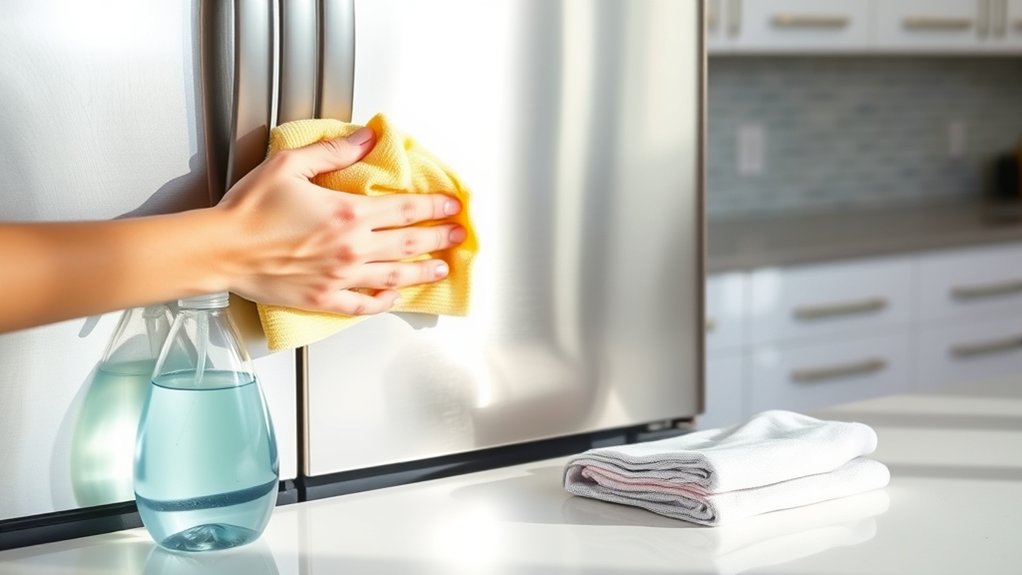
Choose cleaning products that are safe for your appliance’s finish to prevent damage. Wipe gently to remove dirt without scratching the surface. Regular cleaning also helps keep your appliance looking good and lasting longer.
Choosing Safe Cleaning Products
How do you assure the cleaning products you use won’t damage your kitchen appliances? Start by choosing items designed specifically for appliance surfaces, which respect chemical safety standards. You want to avoid harsh chemicals that can corrode finishes or leave harmful residues.
Consider these tips when selecting your cleaning products:
- Opt for eco friendly options that are gentle yet effective.
- Check labels for non-abrasive formulas to protect surfaces.
- Avoid bleach or ammonia, which can damage appliance exteriors.
- Choose products free from harsh solvents to ensure longevity.
Wiping Techniques For Surfaces
Although cleaning products play a crucial role, the way you wipe your kitchen appliance surfaces can make all the difference in preventing streaks and buildup. Start with a soft microfiber cloth, moving in gentle circular motions for effective surface polishing.
For stubborn stains, apply a bit of cleaner and let it sit before wiping to boost stain removal. Always follow with a dry cloth to avoid water marks.
| Technique | Emotion Evoked | Result Achieved |
|---|---|---|
| Circular wiping | Calm satisfaction | Smooth, shiny finish |
| Spot cleaning | Relief | Stain-free surface |
| Dry wiping | Confidence | No streak buildup |
| Gentle pressure | Care | Preserved appliance |
This method guarantees your appliances look their best without damage.
Maintaining Appliance Finish
Wiping your appliances carefully sets a strong foundation, but maintaining their finish requires consistent attention to protect their appearance over time. To keep your kitchen appliances looking new, focus on these key steps of finish preservation.
First, use a soft microfiber cloth for appliance polishing to avoid scratches. Second, apply a gentle, non-abrasive cleaner designed for your appliance’s surface. Third, dry the surface thoroughly after cleaning to prevent water spots or streaks.
Finally, schedule regular maintenance by wiping down exteriors weekly and polishing monthly to improve durability and shine. By following these simple practices, you’ll preserve the finish and extend the life of your kitchen appliances, keeping them looking sleek and spotless.
Remove and Soak Removable Appliance Parts Safely
Before you start soaking removable parts, make sure to unplug the appliance and carefully detach each component according to the manufacturer’s instructions. Proper appliance part removal prevents damage and ensures safety. Handle each piece gently, especially fragile components like glass or plastic trays. Once detached, inspect the parts for any stuck-on debris.
Next, use effective soaking techniques to loosen grime. Fill a basin with warm water and add a mild dish soap or a recommended cleaning solution. Submerge the parts fully, allowing them to soak for 15 to 30 minutes depending on the level of dirt. Avoid using harsh chemicals or abrasive scrubbers that might damage the surface.
After soaking, rinse each part thoroughly with clean water and dry them completely before reassembling. Following these steps helps maintain your appliance’s functionality and prolongs its lifespan while keeping it hygienic and ready for use.
Wipe Down Refrigerator Interiors
Start by removing any expired food to make room and prevent odors. Then, use a gentle cleaner to wipe down the interior surfaces without damaging them. This quick step helps keep your fridge fresh and hygienic.
Remove Expired Food
To keep your refrigerator fresh and organized, you should first remove all expired and spoiled food items. Expired food removal is essential to prevent bad odors and bacterial growth. Start by checking expiration dates on all packages and tossing anything past its prime. Don’t forget to inspect spoiled leftovers that may no longer be safe to consume.
Here’s a quick checklist to help you:
- Remove expired condiments, sauces, and dairy products
- Discard moldy fruits, vegetables, and leftovers
- Check opened items for signs of spoilage
- Clear out forgotten items from drawers and shelves
Use Gentle Cleaners
Although removing expired food clears out the fridge, you’ll still need to wipe down the interior with gentle cleaners to keep surfaces spotless and odor-free. You don’t have to buy harsh chemicals; eco friendly solutions like a mix of water and white vinegar work wonders without damaging surfaces.
Simply dampen a soft cloth or sponge with this solution and wipe down shelves, drawers, and walls carefully. This method is not only safe but also a great budget cleaning tip, saving you money while protecting your appliance.
Avoid abrasive scrubbers that can scratch surfaces. Regularly using gentle cleaners helps maintain freshness and prevents lingering odors, making your fridge a healthier place for your food storage.
Sanitize Your Microwave Quickly and Effectively
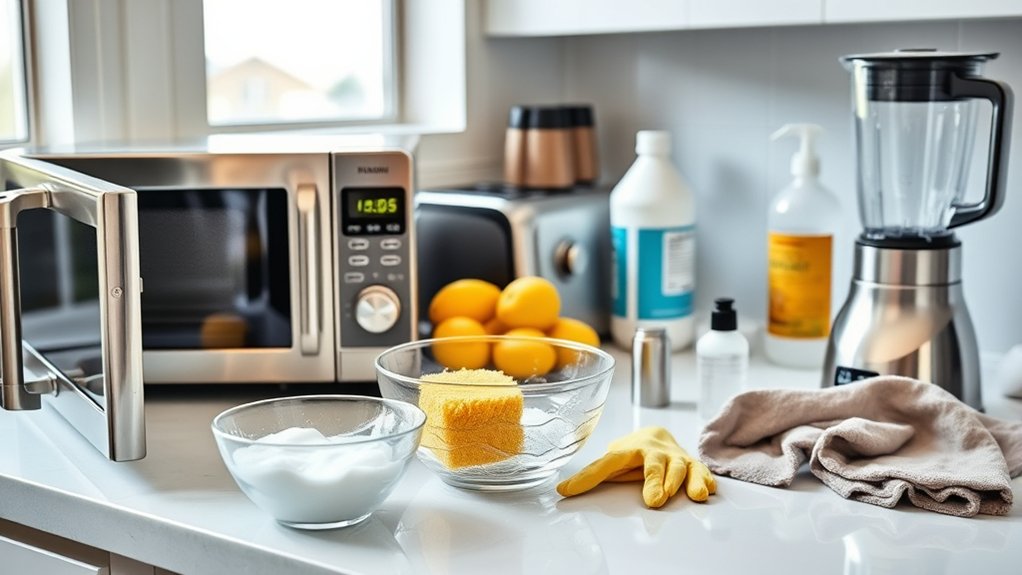
When you want to sanitize your microwave quickly and effectively, a simple steam-cleaning method works wonders. Microwave sterilization through steam cleaning not only removes grime but also kills bacteria without harsh chemicals. Here’s how to do it efficiently:
Sanitize your microwave quickly and naturally with steam cleaning that removes grime and kills bacteria without chemicals.
- Fill a microwave-safe bowl with equal parts water and white vinegar.
- Place a few lemon slices in the bowl for a fresh scent and added cleaning power.
- Heat the bowl in the microwave on high for 5 minutes, allowing steam to build up inside.
- Carefully remove the bowl and wipe down the interior with a clean cloth or sponge.
This technique softens dried food and disinfects surfaces, making cleanup effortless. Steam cleaning is a quick, eco-friendly way to keep your microwave hygienic and odor-free. Using microwave sterilization regularly helps maintain a safe kitchen environment without extra scrubbing.
Deep Clean Your Coffee Maker Safely
Since your coffee maker brews your daily pick-me-up, keeping it clean guarantees every cup tastes fresh and your machine lasts longer. Start with coffee maker maintenance by unplugging the device and emptying leftover grounds and water.
Use a mixture of equal parts white vinegar and water to fill the reservoir, then run a brewing cycle. This solution breaks down mineral buildup and removes oils that affect brewing efficiency. After the cycle, run two or three more cycles with fresh water to rinse out any vinegar residue.
Don’t forget to clean removable parts like the filter basket and carafe with warm, soapy water. Wipe down the exterior with a damp cloth to remove any spills.
Regular deep cleaning every one to three months prevents clogs and guarantees your coffee maker runs smoothly, delivering the best flavor every time. Following these steps supports your machine’s longevity and keeps your morning brew delicious.
Degrease Your Kitchen Oven and Stovetop
Because grease buildup can affect your oven and stovetop’s performance, you need to tackle it regularly to keep them working efficiently. Oven grease and stovetop grime not only create unpleasant odors but can also cause smoke or uneven heating. Start by removing any loose debris and crumbs.
To degrease effectively, follow these steps:
- Apply a degreasing spray or a mixture of baking soda and vinegar to the greasy areas.
- Let the solution sit for 10-15 minutes to break down the oven grease and stovetop grime.
- Use a non-abrasive scrubber or sponge to gently scrub away the residue.
- Wipe down with a damp cloth and dry thoroughly to prevent streaks.
Dry and Reassemble Appliances Correctly
After thoroughly degreasing your oven and stovetop, make sure every component is completely dry before reassembling. Moisture left on parts can cause rust, electrical issues, or unpleasant odors. Use a clean, dry cloth or let the pieces air dry in a well-ventilated area. Double-check knobs, trays, and racks to ensure no water remains.
When putting everything back, follow the manufacturer’s instructions to avoid damaging your appliances. Proper reassembly ensures they function efficiently and safely. Once reassembled, store any removable parts properly to prevent damage during appliance storage.
To keep your appliances in top shape, stick to a regular cleaning schedule. This prevents buildup that makes drying and reassembling more challenging. By drying parts fully and reassembling carefully, you extend your appliance’s lifespan and maintain a safer kitchen environment.
Maintain Clean Kitchen Appliances With Simple Daily Habits
Incorporating just a few simple daily habits can make a big difference in keeping your kitchen appliances clean and well-maintained. By integrating these practices into your routine, you’ll improve kitchen organization and reduce the likelihood of appliance troubleshooting later on.
Try these easy habits:
- Wipe down appliance surfaces after each use to prevent buildup.
- Empty crumbs and residue from toasters and coffee makers daily.
- Check cords and plugs regularly for damage to spot issues early.
- Store appliance accessories neatly to avoid clutter and improve organization.
Following these small steps helps maintain your appliances’ efficiency and extends their lifespan. When you stay consistent, you’ll find cleaning sessions become quicker and less intimidating.
Plus, a tidy kitchen setup supports smoother appliance use and troubleshooting, saving you time and frustration. With these habits, your kitchen appliances will stay in top shape, making your daily cooking experience more pleasant.
Frequently Asked Questions
Can I Use Vinegar to Clean All Kitchen Appliances Safely?
You can use vinegar safely on many kitchen appliances, but you need to check appliance compatibility first. Vinegar safety matters because its acidity can damage certain surfaces like natural stone, cast iron, or some electronic parts.
Always avoid using vinegar on appliances with aluminum, rubber seals, or sensitive finishes. Test a small area before fully cleaning, and dilute vinegar with water to prevent damage.
That way, you’ll clean effectively without harming your appliances.
How Often Should I Deep Clean My Dishwasher?
You’ll want to give your dishwasher a thorough spa day about once a month. Keeping up with this appliance maintenance guarantees it runs smoothly and avoids any unwanted surprises.
Sticking to a regular cleaning schedule helps prevent buildup and keeps your dishes sparkling. If you use your dishwasher heavily, you might want to deep clean it a bit more often.
Consistency here really pays off in long-term performance.
Are There Eco-Friendly Cleaning Products Suitable for Kitchen Appliances?
Yes, you can definitely use eco-friendly cleaning products for your kitchen appliances. Look for biodegradable solutions that break down naturally without harming the environment.
You’ll find natural cleaning methods using ingredients like vinegar, baking soda, and lemon juice work wonders. These options not only keep your appliances sparkling but also reduce chemical exposure in your home.
What Should I Do if My Appliance Has a Persistent Odor?
If you want odor elimination, if you want freshness restored, if you want your appliance smelling clean, start with baking soda solutions. Sprinkle baking soda inside, let it sit overnight, then wipe it out thoroughly. You can also mix baking soda with water to form a paste and scrub stubborn smells away. Repeat as needed, and always keep your appliance dry and ventilated to prevent odors from coming back.
Can I Use a Steam Cleaner on Kitchen Appliances?
Yes, you can use steam cleaning on kitchen appliances, but you need to prioritize appliance safety. Steam cleaning effectively loosens grime and kills bacteria without harsh chemicals.
However, avoid direct steam contact with electrical components or sensitive surfaces to prevent damage. Always check your appliance’s manual for specific steam cleaning guidelines.
Using steam carefully keeps your appliances clean and safe, making maintenance easier while protecting their functionality.
Conclusion
By following these simple steps, you’ll breathe new life into your kitchen appliances, turning them from tired tools into sparkling stars. Like a fresh breeze clearing away dust, your clean appliances will brighten your space and make cooking a joy.
Keep this routine close, and your kitchen will hum with effortless shine, making every meal feel like a celebration. Remember, a little care today keeps your kitchen appliances glowing tomorrow.