7 Steps to Organize Kitchen Cabinets Efficiently
Kitchen cabinets can quickly become cluttered, making it hard to find what you need or keep everyday essentials within reach. If organizing your kitchen feels overwhelming, you’re not alone. The right storage products and a few simple strategies can make kitchen cabinets easier to use and maintain.
To organize your kitchen cabinets efficiently, start by emptying and decluttering, tossing expired or broken items. Next, group items by category and frequency of use, keeping daily essentials within easy reach. Use storage tools like pull-out shelves and drawer dividers to maximize space and add clear labels for easy identification.
Arrange items ergonomically and create designated zones. Finally, establish simple routines to maintain order. Keep going to find practical tips for sustaining a clutter-free kitchen.
Key Takeaways
- Remove all items from cabinets and discard expired or broken products to start with a clean slate.
- Group items by frequency of use and category, placing daily essentials within easy reach.
- Use storage tools like pull-out shelves, drawer dividers, and clear containers to maximize space and visibility.
- Label shelves and containers clearly to maintain organization and simplify item identification.
- Establish daily and weekly routines to return items, clean shelves, and reassess organization regularly.
Why Organize Your Kitchen Cabinets?
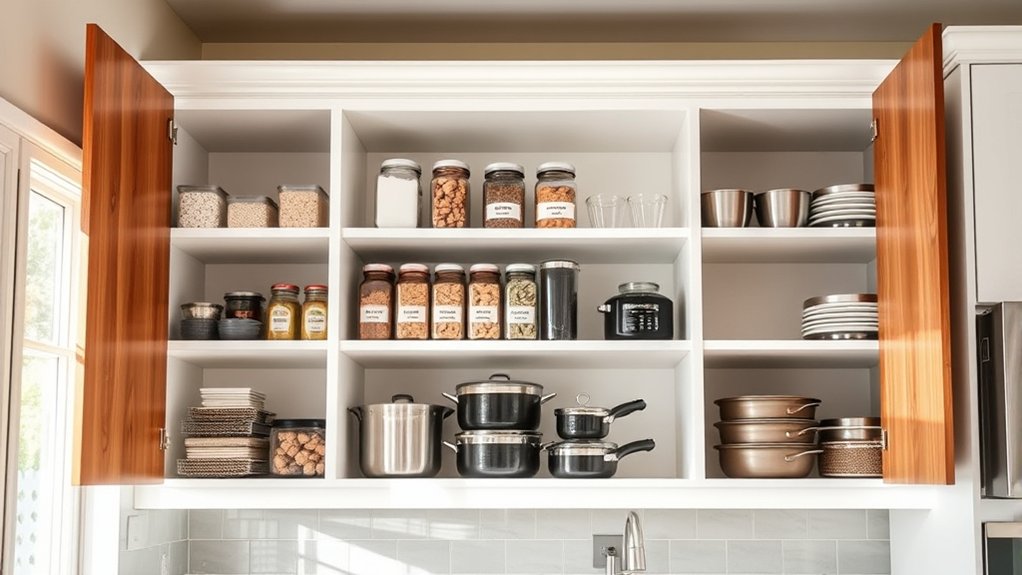
Although organizing your kitchen cabinets might seem like a small task, it can make a big difference in your daily routine. When your cabinets are tidy, you’ll find it easier to locate dishes, cookware, and ingredients, saving you time and frustration.
Plus, a well-organized space improves your kitchen décor by creating a clean, streamlined look that complements your style.
Sticking to a regular cleaning schedule becomes simpler too, as organized cabinets help you spot expired items and prevent clutter buildup. You’ll also reduce the risk of accidents by keeping heavy or fragile items stored safely.
Sort and Declutter Your Kitchen Cabinets
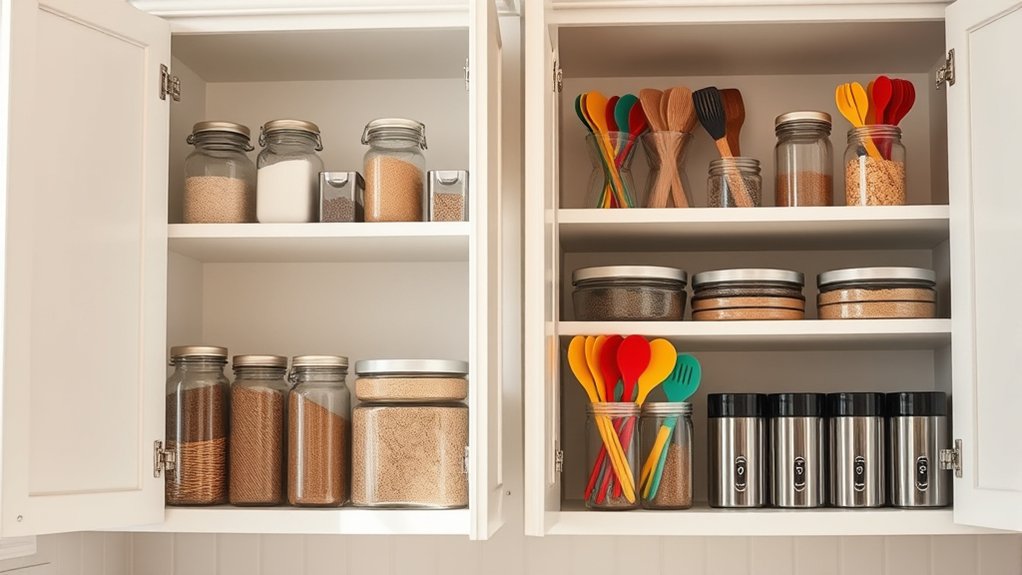
Start by taking everything out of your cabinets. Set aside anything you no longer need or use.
Then, group the items you’re keeping by how often you use them. Put everyday essentials within easy reach, so your cabinets stay organized and work better for you.
Identify Unnecessary Items
How do you know which items in your kitchen cabinets are truly necessary? Start by pulling everything out and inspecting each item closely. Toss expired products immediately—they not only take up space but can be unsafe to use. Check for broken utensils, too; if they’re damaged beyond repair, get rid of them.
Be honest about what you actually use versus what’s just taking up room. Ask yourself if each item serves a purpose or if it’s been forgotten. Removing unnecessary clutter makes organizing easier and your cabinets more functional.
This step sets a solid foundation for a streamlined kitchen, so don’t rush it. Focus on keeping only what’s useful, safe, and in good condition to maximize your space efficiently.
Categorize by Usage Frequency
Once you’ve cleared out unnecessary items, group the remaining ones based on how often you use them. Keep daily essentials like spices, oils, and frequently used cookware within easy reach to streamline meal prep. Items used less often, such as specialty baking tools or seasonal dishes, can go on higher or lower shelves.
This approach not only speeds up cooking but also improves pantry organization by preventing clutter. By categorizing your kitchen cabinets this way, you’ll find everything faster and maintain order effortlessly. Make sure to label shelves or containers if needed, so you always know where things belong.
Sticking to this system saves time and reduces stress during busy meal prep sessions, making your kitchen a more efficient and pleasant space to work in.
Group Kitchen Cabinet Items by Category
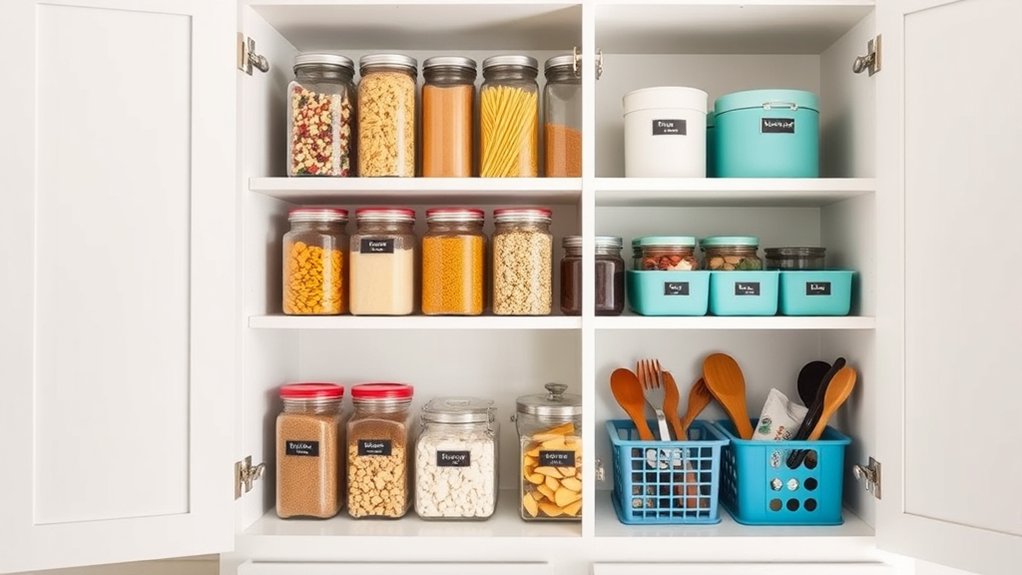
Although organizing your kitchen cabinets can feel overwhelming, grouping items by category simplifies the process and makes everything easier to find. Start by sorting your pantry organization into zones like baking supplies, canned goods, and snacks.
Likewise, utensil grouping helps by keeping similar tools together—cutlery, cooking utensils, and specialty gadgets. This way, you create logical sections that reduce search time and maintain order.
Here’s a simple table to help visualize common categories:
| Category | Examples | Storage Tip |
|---|---|---|
| Pantry Items | Flour, sugar, canned beans | Use clear containers |
| Utensils | Spoons, spatulas, peelers | Separate by function |
| Cookware | Pots, pans, lids | Stack by size |
| Plates & Bowls | Dinner plates, salad bowls | Designate lower shelves |
Use Smart Storage Tools to Maximize Space
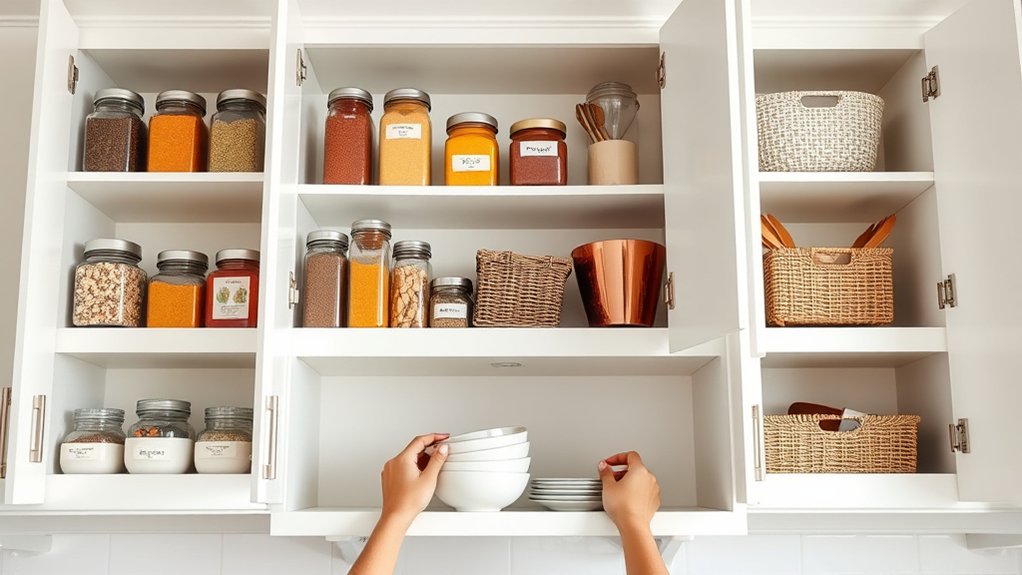
Grouping your kitchen items by category sets a solid foundation, but smart storage tools take your organization a step further by maximizing every inch of cabinet space. You can use innovative storage options like pull-out shelves, tiered racks, and lazy Susans to make the most of deep or awkward cabinets. These space saving solutions allow you to access items easily without creating clutter.
Consider adding drawer dividers or adjustable shelf inserts to customize your storage based on your needs. Over-the-door organizers and magnetic strips also help utilize unused vertical space efficiently. By investing in these smart tools, you’ll reduce wasted space and keep your kitchen essentials neatly arranged. This way, you won’t just store items—you’ll create a streamlined kitchen that works for you every day.
Arrange Everyday Kitchen Items at Eye Level
Keep your kitchen efficient by placing the items you use most often at eye level. Adjust your shelves so these essentials are easy to reach without bending or stretching. That way, you can grab what you need and get back to cooking faster.
Identify Frequently Used Items
When you arrange your everyday kitchen items at eye level, you make cooking and meal prep more efficient by keeping frequently used tools within easy reach. Start by identifying your cooking essentials—items you grab daily like knives, cutting boards, and measuring cups.
Next, evaluate your appliance placement; keep small appliances like toasters and blenders accessible but not cluttering your workspace. Finally, consider your most-used spices and oils—store them where you can quickly grab them during cooking.
Here’s a quick way to identify frequently used items:
- List the tools and ingredients you use every day.
- Group items by function (e.g., baking, cooking, prepping).
- Prioritize placement based on frequency and accessibility.
This simple approach guarantees your kitchen runs smoothly and saves time during meal prep.
Optimize Shelf Height
Although you might overlook it, optimizing shelf height can transform how efficiently you work in the kitchen. To make the most of your space, modify shelf height so everyday items sit at eye level, where you can easily spot and grab them.
Use adjustable shelving to customize your cabinets based on what you store. This flexibility ensures tall or short items fit comfortably without wasted space. Here’s a quick guide:
| Item Type | Shelf Height Recommendation | Reason |
|---|---|---|
| Everyday Items | Eye Level | Quick access |
| Tall Items | Top or Bottom Shelf | Maximize vertical space |
| Small Containers | Middle or Lower Shelf | Easy to see and reach |
| Heavy Items | Lower Shelf | Safe lifting |
| Rarely Used Items | Highest Shelf | Out of the way |
Adjust shelf height smartly to keep your kitchen efficient and clutter-free.
Prioritize Accessibility
How often do you find yourself digging through cabinets to grab everyday kitchen items? Prioritizing accessibility by arranging frequently used items at eye level saves time and effort. Use ergonomic design principles to improve your kitchen’s functionality.
Follow these steps for ergonomic placement:
- Place daily essentials like plates, cups, and cooking utensils within easy reach at eye level.
- Store heavier items lower to prevent strain, while lighter, less-used items can go higher.
- Group similar items together to streamline your cooking process and reduce unnecessary movement.
Label Kitchen Cabinet Shelves and Containers
Labeling kitchen cabinet shelves and containers helps you quickly find what you need and maintain order. Start by choosing clear labeling techniques that suit your style—whether it’s chalkboard labels, printed stickers, or handwritten tags. These methods make it easy to update or change labels as your storage needs evolve.
Label kitchen shelves and containers with clear, adaptable labels to easily find items and keep your space organized.
Consider the container materials when selecting labels; adhesive labels work well on glass and plastic, while tags tied with twine suit woven baskets or fabric bins. Make sure the labels are durable and easy to read to avoid confusion.
Group similar items together and label the shelves accordingly, so you can instantly spot where everything belongs. This simple step cuts down on time spent searching and keeps your kitchen neat.
When you label both shelves and containers, you create a visual system that supports efficient organization and encourages everyone in your household to put things back in their rightful place.
Set Up a Simple Routine to Keep Cabinets Tidy
Once you establish a simple routine, keeping your kitchen cabinets tidy becomes much easier. Start by integrating cabinet organization into your daily habits, so clutter doesn’t pile up. A solid routine saves time during meal prep and keeps your kitchen efficient.
Here’s a quick 3-step routine to maintain order:
- Daily Check: After meal prep, spend 5 minutes returning items to their designated spots.
- Weekly Wipe-Down: Set a cleaning schedule to wipe down shelves and containers once a week.
- Monthly Review: Assess your cabinet contents monthly to discard expired items and reorganize as needed.
Frequently Asked Questions
What Are the Best Materials for Kitchen Cabinet Shelves?
The best shelf materials for your kitchen cabinets are plywood, MDF, and solid wood because they combine strength with durability. Plywood resists warping and handles weight well, making it ideal for heavy cookware.
MDF offers a smooth surface perfect for painting and fits various storage solutions. Solid wood adds a classic look and great support. Choose materials that suit your storage needs and style while ensuring your shelves stay sturdy and functional.
How Often Should I Deep Clean My Kitchen Cabinets?
Just like a well-tended garden needs seasonal care, you should deep clean your kitchen cabinets every three to six months. Sticking to this cleaning schedule helps prevent grime buildup and keeps your space fresh.
Use maintenance tips like wiping spills immediately and checking for pests regularly. This way, you’ll preserve both the beauty and function of your cabinets, making your kitchen a welcoming place that’s easy to maintain.
Can Organizing Cabinets Improve Kitchen Safety?
Yes, organizing cabinets can definitely improve kitchen safety. When you keep items neatly arranged, you reduce fire hazards by preventing clutter near heat sources. You’ll also strengthen child safety by storing sharp objects and cleaning supplies out of reach.
Plus, having everything in its place helps you spot spills or leaks quickly, avoiding slips or accidents. So, by organizing your cabinets, you’re creating a safer cooking environment for everyone.
What Is the Average Cost of Kitchen Cabinet Organizers?
When it comes to kitchen cabinet organizers, the average cost usually falls between $20 and $150, depending on what you pick. For example, cabinet drawer dividers might cost around $15 to $40, while pull out shelf systems can range from $50 up to $150 or more. You’ll find options to fit every budget, so you don’t have to break the bank to get your cabinets in shipshape condition.
Are There Eco-Friendly Options for Kitchen Cabinet Storage?
Yes, you can definitely find eco friendly containers and sustainable shelving for your kitchen cabinet storage. Look for containers made from bamboo, glass, or recycled materials—they’re durable and reduce plastic waste.
Sustainable shelving options often use reclaimed wood or metal, which lowers environmental impact. Choosing these options not only helps the planet but also gives your kitchen a stylish, natural vibe. You’ll feel good about organizing while being eco conscious.
Conclusion
Just like a well-conducted orchestra turns chaos into harmony, organizing your kitchen cabinets brings calm to your cooking space. By sorting, grouping, and labeling, you create a rhythm that makes finding what you need effortless.
With smart storage and a simple routine, your cabinets stay as neat as a pin. Follow these steps to organize kitchen cabinets efficiently, and let your kitchen sing with efficiency every day. Your future self will thank you!