
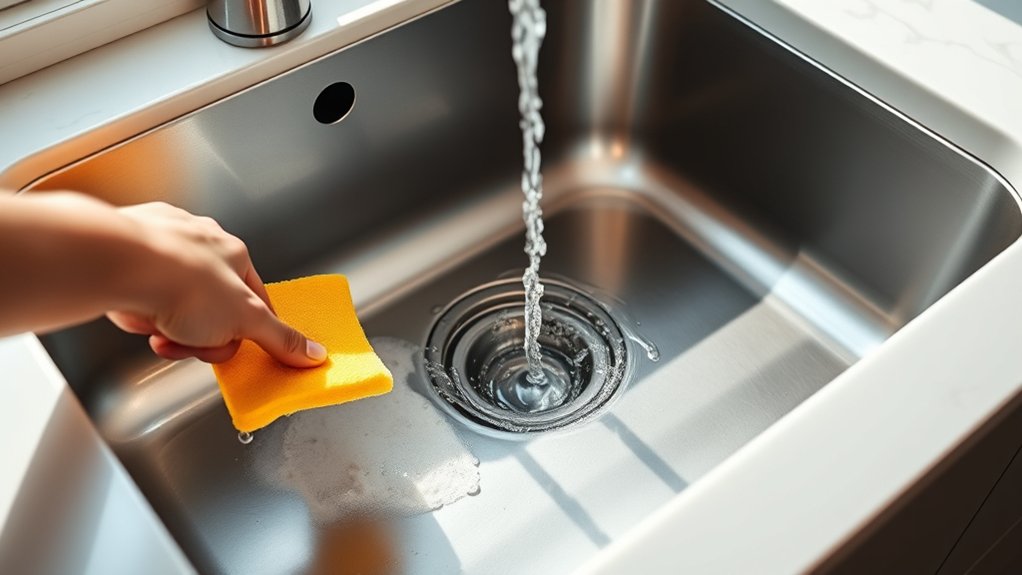
How to Clean Kitchen Sink in 3 Easy Steps
A dull, stained kitchen sink can make the whole kitchen feel less clean, even when you’ve just tidied up. You’re not alone—many people struggle to keep their sink sparkling, so finding the right products can make kitchen sink cleaning much easier.
Start by gathering your cleaning essentials: sponges, microfiber cloths, an all-purpose cleaner, and gloves for protection.
Next, tackle stains by making a baking soda paste, applying it to the sink, and scrubbing gently. Add vinegar for tough grime to fizz away.
Finally, rinse thoroughly with warm water, disinfect with a safe cleaner for your sink’s material, and clean the faucet and drain.
Keep at it regularly, and you’ll find even easier ways to maintain your kitchen sink’s shine.
Key Takeaways
- Gather all cleaning supplies like sponges, mild cleaner, gloves, and prepare a spray bottle with cleaning solution.
- Remove stains by applying a baking soda paste, scrubbing gently, then adding vinegar for tough grime.
- Rinse the sink thoroughly with warm water to remove all residue and baking soda paste.
- Disinfect the sink using a suitable disinfectant, let it sit, then rinse well, including faucet and drain areas.
- Maintain cleanliness by regularly rinsing, disinfecting weekly, and organizing supplies for easy ongoing cleaning.
Gather Cleaning Supplies for Your Kitchen Sink

Before you start cleaning, gather all the necessary supplies to make the process efficient. You’ll want a variety of cleaning tools like sponges, scrub brushes, and microfiber cloths to tackle different surfaces.
Having the right cleaning agents is just as important; a good all-purpose cleaner, a mild abrasive for scrubbing, and perhaps a disinfectant will cover most needs. Don’t forget gloves to protect your hands and a spray bottle if you prefer to mix your own solutions.
Organizing everything beforehand saves time and keeps you focused on the task. With your cleaning tools and agents ready, you can easily switch between wiping, scrubbing, and rinsing without interruption.
This preparation guarantees you won’t have to pause mid-cleaning to find what you need, making the process smoother and more effective. Taking this simple step sets you up for a spotless, fresh kitchen sink in no time.
Remove Stubborn Kitchen Sink Stains and Grime
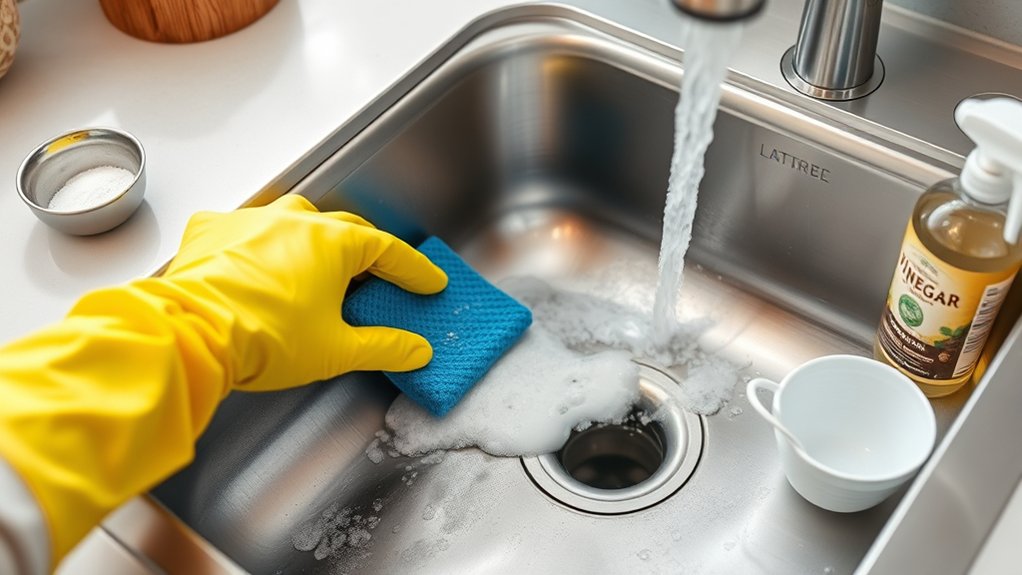
Though regular cleaning keeps your sink looking good, stubborn stains and grime can still build up over time. To tackle these tough spots, start with an eco friendly cleaning approach. Mix baking soda and water into a paste—this natural stain removal method is gentle yet effective.
Apply the paste to the stained areas and let it sit for 10-15 minutes.
Next, scrub the stains gently with a soft sponge or brush, focusing on grime in corners and around the drain. For extra tough stains, add a splash of white vinegar to the baking soda paste, which creates a fizzing action that helps lift grime without harsh chemicals. Rinse thoroughly with warm water afterward.
Using these natural ingredients not only removes stubborn stains but also keeps your kitchen sink safe for your family and the environment. This simple, eco friendly cleaning method guarantees your sink stays spotless without relying on strong, toxic cleaners.
Rinse and Disinfect Your Kitchen Sink

Once you’ve removed stubborn stains and grime, it’s time to rinse away residue and disinfect your kitchen sink. Start by thoroughly rinsing the sink with warm water to wash off any leftover cleaning agents.
Depending on your sink material—whether stainless steel, porcelain, or granite composite—choose a disinfectant that’s safe to use. For example, a diluted bleach solution works well for stainless steel, while vinegar or baking soda suits more delicate surfaces.
Select disinfectants based on your sink type—bleach for stainless steel, vinegar or baking soda for delicate surfaces.
Apply the disinfectant evenly, let it sit for a few minutes, then rinse thoroughly with clean water. Make sure to clean the faucet and drain area too, as germs tend to accumulate there.
To maintain a hygienic sink, adjust your cleaning frequency based on use; daily rinsing and weekly disinfecting usually suffice for most households. Following these steps will keep your sink spotless and germ-free without damaging its surface, ensuring it stays fresh and safe for food prep every day.
Frequently Asked Questions
Can I Use Bleach to Clean My Kitchen Sink?
Yes, you can use bleach to clean your kitchen sink, but you need to follow bleach safety guidelines carefully. Always dilute bleach with water and never mix it with other cleaners, especially ammonia.
Use gloves and guarantee good ventilation to protect yourself. If you prefer a gentler approach, try natural cleaning alternatives like vinegar and baking soda. They’re effective and safer for both you and the environment while keeping your sink fresh and clean.
How Often Should I Deep Clean My Kitchen Sink?
You should deep clean your kitchen sink at least once a week to keep it fresh and hygienic. Sticking to a regular cleaning schedule helps with sink maintenance, preventing buildup of grime and bacteria. If you use your sink heavily, consider deep cleaning it twice a week. Consistent care not only keeps your sink looking great but also extends its lifespan and keeps your kitchen environment safe and pleasant.
What Is the Best Natural Cleaner for Kitchen Sinks?
The best natural cleaner for kitchen sinks is an eco friendly solution using baking soda and vinegar. Baking soda benefits include gently scrubbing away grime without scratching surfaces, while vinegar cuts through grease and disinfects.
You’ll just sprinkle baking soda over the sink, spray vinegar, let it fizz, then scrub and rinse. This combo is safe, effective, and environmentally friendly, so you can keep your sink clean without harsh chemicals.
How Do I Prevent Sink Drain Odors?
To prevent sink drain odors, you need regular drain maintenance. Flush your drain with hot water and a mixture of baking soda and vinegar weekly to break down buildup.
Avoid letting food scraps or grease go down the drain, as they cause odors. You can also use a drain strainer to catch debris.
Keeping your drain clean and clear helps with odor prevention, ensuring your kitchen stays fresh and smelling great.
Can I Clean a Stainless Steel Sink With Vinegar?
Yes, you can clean a stainless steel sink with vinegar, and it’s quite effective—studies show vinegar removes up to 90% of bacteria on surfaces. Just spray and wipe, then buff with stainless steel polish for a shiny finish.
If vinegar’s too harsh or leaves a smell, try vinegar alternatives like lemon juice or baking soda. These options also tackle grime without damaging your sink’s surface.
Conclusion
Just like a fresh start at dawn, a clean kitchen sink symbolizes renewal and care in your home. By gathering your supplies, tackling stubborn stains, and rinsing thoroughly, you restore not only sparkle but also harmony to your space.
Remember, a spotless sink isn’t just about cleanliness. It’s a small act of love that keeps your kitchen ready for every meal and memory. Follow these simple steps to clean your kitchen sink and let it shine bright.