
7 Easy Steps to Unclog a Kitchen Drain
A clogged kitchen drain can bring meal prep and cleanup to a frustrating halt. If you’ve tried running the tap only to watch water pool in the sink, you’re not alone—many people struggle with stubborn kitchen clogs. These 7 easy steps to unclog a kitchen drain can help you tackle the blockage and keep your sink flowing smoothly.
First, gather safety gear and tools like gloves, a plunger, and a drain snake. Clear any visible debris around the drain.
Use the plunger with plenty of water to dislodge clogs, then pour boiling water to melt grease.
Next, flush the drain with baking soda and vinegar to break down buildup.
For stubborn blockages, a drain snake can help.
Finish by practicing simple maintenance to prevent future clogs. Keep going to uncover more helpful tips.
Key Takeaways
- Remove visible debris and food scraps from the drain area before starting unclogging.
- Use a plunger with sufficient water and a sealed cup to dislodge common blockages.
- Pour boiling water slowly to melt grease and loosen minor clogs safely.
- Flush the drain with baking soda followed by vinegar to naturally clear buildup and odors.
- Maintain regular cleaning by avoiding grease disposal and using drain screens to prevent future clogs.
Gather Tools and Safety Gear

Before you begin unclogging your kitchen drain, make sure you gather all the necessary tools and safety gear. You’ll want to put on personal protective equipment like gloves and safety goggles to protect yourself from harmful bacteria and splashes. Having the right gear keeps you safe and confident during the process.
Next, focus on tool organization. Collect essential items such as a plunger, drain snake, bucket, and adjustable wrench, then arrange them neatly within reach. Keeping tools organized helps you work efficiently without scrambling to find what you need. It also prevents accidents caused by clutter.
Clear Visible Debris From Your Kitchen Drain

Once you’ve gathered your tools and safety gear, start by removing any visible debris from your kitchen drain. Check the area around the drain for food scraps, grease buildup, or other blockages.
Use gloves to protect your hands as you clear out stuck particles. If your kitchen sink accessories include a strainer or stopper, take them out and clean these parts thoroughly before reinstalling.
This step helps prevent future clogs by stopping debris from entering the drain. Avoid using drain cleaning chemicals at this point since they work best on internal clogs rather than surface debris.
Instead, focus on physically removing what you can see. Clearing visible debris first improves the effectiveness of any further cleaning methods.
After this, you’ll be ready to tackle deeper clogs with the right tools or chemicals, ensuring your kitchen drain flows smoothly again.
Use a Plunger to Unclog Your Kitchen Drain
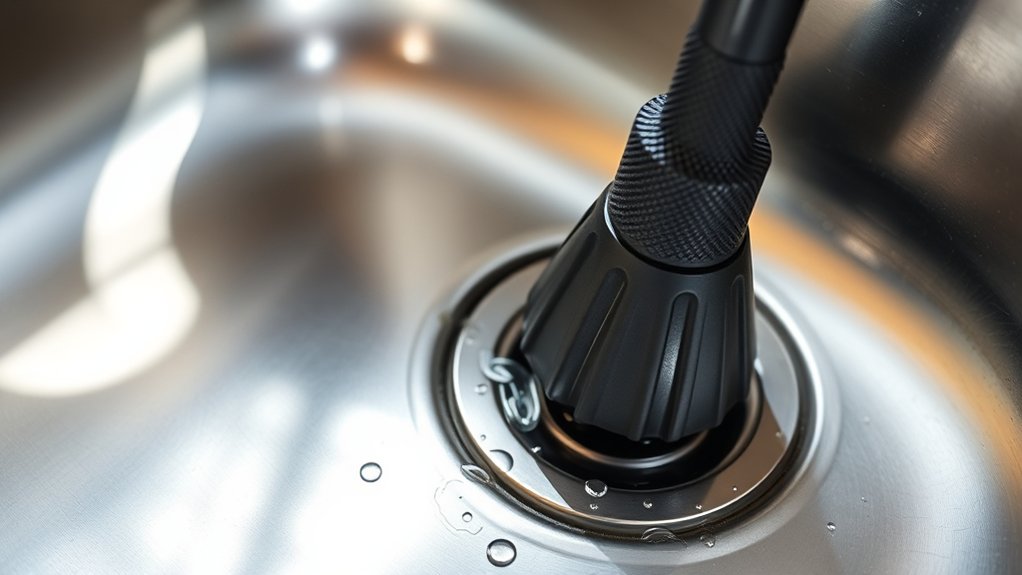
If your kitchen drain is still clogged after clearing visible debris, you’ll want to try using a plunger next. First, perform a quick drain inspection to ensure there’s enough water in the sink to cover the plunger’s cup. This creates a tight seal, which is essential for effective plunging.
Make sure to block any overflow openings or secondary drains with a wet cloth to maintain pressure.
Use proper plunger techniques by placing the cup squarely over the drain and pushing down firmly, then pulling up sharply without breaking the seal. Repeat this motion several times, maintaining steady pressure. The suction and pressure can help dislodge the clog trapped deeper in the pipes.
After plunging, check if the water drains freely. If not, repeat the process a few more times.
A well-executed plunger technique combined with careful drain inspection often clears common clogs quickly, saving you time and preventing the need for harsh chemicals.
Loosen Grease With Boiling Water
Pouring boiling water down the drain can help loosen grease and clear minor clogs without harsh chemicals. Pour it slowly and carefully to avoid splashes and burns. It’s a simple way to help keep your pipes flowing smoothly.
Benefits Of Boiling Water
Boiling water can quickly break down the grease that clogs kitchen drains, making it one of the simplest and most effective remedies you can try. When water reaches its boiling temperature of 212°F (100°C), it becomes powerful enough to melt and loosen hardened grease, allowing it to flush away easily.
Besides being affordable and eco-friendly, boiling water requires no special tools, making it accessible for anyone dealing with minor clogs. However, always keep boiling water safety in mind to avoid burns or damage to your pipes.
Using boiling water regularly helps prevent buildup, reducing the chances of future blockages. By understanding these benefits, you can confidently use boiling water as a go-to solution for maintaining a clear and odor-free kitchen drain.
How To Safely Pour
Knowing the benefits of using boiling water is just the start; pouring it safely guarantees you get the best results without risking injury or damage. When loosening grease with boiling water, mastering pouring techniques and following safety precautions is essential. Here’s how to do it right:
- Use a heat-resistant container with a handle for controlled pouring to avoid spills.
- Slowly pour boiling water directly into the drain in small amounts to prevent splashing and sudden temperature changes that could damage pipes.
- Wear protective gloves and keep your face away from the drain to shield yourself from steam burns.
Flush Your Kitchen Drain Naturally With Baking Soda and Vinegar
You can tackle minor clogs with baking soda and vinegar. Baking soda may help loosen debris, and vinegar can help lift grime. When you combine them, they fizz—but that reaction doesn’t necessarily clear a stubborn clog or kill bacteria. For a slow drain, try flushing it with hot water, and avoid mixing this method with chemical drain cleaners.
Benefits of Baking Soda
Three simple ingredients—baking soda, vinegar, and hot water—can work wonders to clear your kitchen drain naturally. Baking soda plays a vital role thanks to its versatility and safety. Here’s why you should rely on baking soda uses for your drain cleaning:
- Effective Deodorizer: Baking soda neutralizes odors, leaving your drain smelling fresh without harsh chemicals.
- Gentle Abrasive: It scrubs away grime and buildup without damaging pipes, ensuring baking soda safety for your plumbing.
- Eco-Friendly Cleaner: Unlike commercial cleaners, baking soda is non-toxic and safe for the environment.
Using baking soda not only unclogs drains but also keeps your kitchen healthier. Remember, baking soda safety means using it properly in combination with other natural ingredients for the best results.
Vinegar’s Cleaning Power
How does vinegar boost your kitchen drain cleaning routine? Vinegar’s acidity helps break down grime and buildup, making it easier to clear clogs. Acting as a natural disinfectant, vinegar eliminates bacteria and odors without harsh chemicals. When combined with baking soda, it creates a fizzing reaction that loosens debris stuck in your drain.
Here’s a quick look at why vinegar works so well:
| Feature | Benefit | How It Helps Drain Cleaning |
|---|---|---|
| Vinegar’s Acidity | Breaks down buildup | Dissolves grease and residue |
| Natural Disinfectant | Kills germs | Removes odors and bacteria |
| Fizzing Reaction | Loosens debris | Clears clogs with bubbling action |
| Non-toxic | Safe for pipes and environment | Prevents damage and pollution |
| Easy to Find | Affordable and accessible | Convenient for regular maintenance |
Remove Stubborn Blockages Using a Drain Snake
Although plungers work well for minor clogs, stubborn blockages often require a drain snake to clear. This tool lets you reach deep into your pipes, breaking up debris that a plunger can’t tackle. Before you start, consider a professional plumbing drain inspection if the clog persists or worsens.
Here’s how to use a drain snake effectively:
- Insert the snake’s tip into the drain slowly until you feel resistance.
- Rotate the handle clockwise to break up or hook the blockage.
- Pull the snake out carefully, removing debris stuck on the coil.
Prevent Kitchen Drain Clogs With Easy Maintenance
Why wait for a clog to disrupt your kitchen routine when you can prevent it with simple maintenance? Regular kitchen maintenance is key to drain prevention and keeps water flowing smoothly.
Start by avoiding pouring grease, coffee grounds, or large food scraps down the drain, as these quickly build up and cause blockages. Use a drain strainer to catch debris before it slips through.
Flush your drain weekly with hot water to dissolve minor buildup before it hardens. You can also pour a mixture of baking soda and vinegar down the drain monthly—this natural method breaks down residues and keeps odors at bay.
Finally, clean your sink and faucet aerators regularly to prevent grime accumulation. By integrating these easy steps into your routine, you’ll reduce the risk of clogs and save time and money on costly repairs.
Stay proactive with kitchen maintenance, and your drains will thank you.
Frequently Asked Questions
Can Chemical Drain Cleaners Damage My Pipes?
Yes, chemical drain cleaners can damage your pipes. They carry chemical risks that might cause pipe corrosion over time, especially in older or metal plumbing. Using them frequently can weaken your pipes, leading to leaks or costly repairs.
Instead, you’d be better off trying safer alternatives or mechanical methods like plungers or drain snakes. If you do use chemical cleaners, follow the instructions carefully and avoid overuse to protect your plumbing.
How Often Should I Inspect My Kitchen Drain Professionally?
You should schedule a professional drain inspection at least once a year to keep your kitchen drain in top shape. Regular professional maintenance helps catch small issues before they turn into costly repairs or blockages.
If you notice slow drainage or foul odors, don’t wait—call for an inspection sooner. Staying proactive with drain inspection guarantees your plumbing runs smoothly and prevents unexpected emergencies in your kitchen.
What Causes Recurring Kitchen Drain Clogs?
You might think food scraps are harmless, but they’re a major culprit behind recurring kitchen drain clogs. Common clog causes include kitchen grease buildup that solidifies inside pipes, trapping debris and slowing water flow.
Unlike occasional blockages, these persistent clogs happen because grease coats the pipes continuously. To prevent this, avoid pouring fats down the drain, use strainers, and clean regularly, so you won’t face the frustration of repeated plumbing problems.
Are There Any Safe Alternatives to a Drain Snake?
Yes, you can try natural remedies like baking soda and vinegar to clear minor clogs safely. Pour baking soda down the drain, followed by vinegar, then flush with hot water after 15 minutes.
You might also use manual tools such as a plunger or a drain wrench, which are gentle alternatives to a drain snake. These methods help you avoid harsh chemicals and keep your pipes in good shape.
Can Tree Roots Affect My Kitchen Drain System?
Yes, tree roots can definitely affect your kitchen drain system. They grow toward moisture and can invade your pipes through small cracks, causing blockages and damage. This soil intrusion leads to clogs and slow drainage, making your kitchen sink back up. You’ll want to monitor your plumbing and consider professional inspection if you suspect root invasion. Addressing tree root issues early can save you from costly repairs down the line.
Conclusion
Just like a well-tuned orchestra keeps every note in harmony, your kitchen drain needs the right care to flow smoothly. By following these seven easy steps, you’ll clear blockages and keep your sink singing without a hitch.
Remember, a little effort today prevents a symphony of problems tomorrow. So, roll up your sleeves and follow these steps to unclog a kitchen drain and keep it flowing effortlessly.