How to Sharpen Kitchen Shears in 3 Simple Steps
Struggling with dull kitchen shears that snag instead of making a clean cut? You’re not alone—many people find it tricky to keep their shears sharp and working well. If you’re looking for the best kitchen shears, knowing how to sharpen and maintain them can help you get more from your choice.
First, gather your kitchen shears and clean the blades thoroughly, removing any debris and drying them to prevent rust.
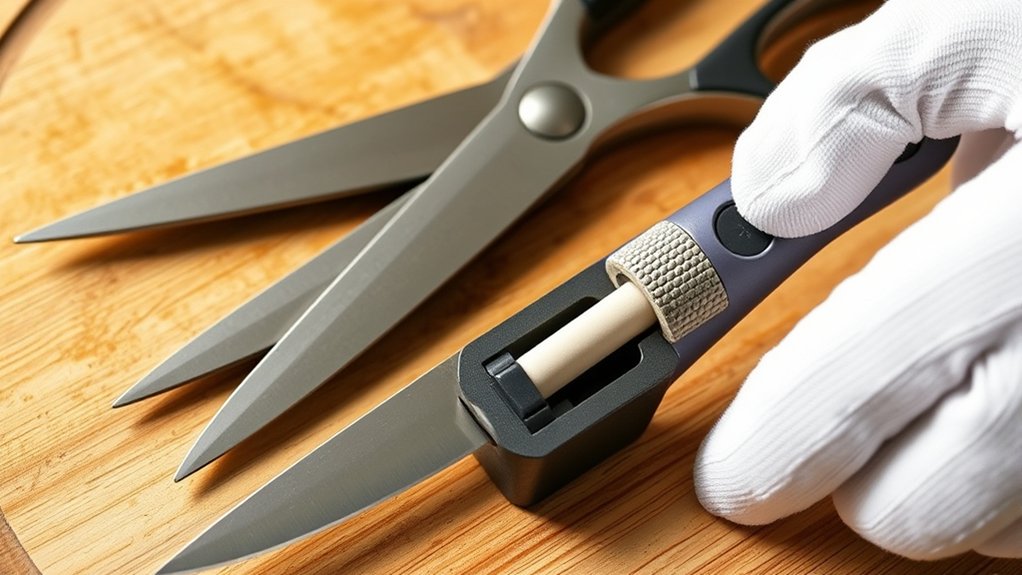
Next, unscrew the pivot bolt to separate the blades and sharpen each one by sliding them smoothly across a sharpening stone at about a 20° angle.
Finally, reassemble the shears, check their alignment, and test sharpness by cutting paper or fabric.
With proper maintenance, your shears will stay effective longer—there’s more to learn about keeping them in top shape.
Key Takeaways
- Clean and dry kitchen shears, ensuring blades are free of debris and the pivot moves smoothly before sharpening.
- Unscrew the pivot bolt to separate the blades, then hold the sharpening stone at a 20° angle.
- Sharpen each blade with smooth, even strokes, focusing on the beveled edges for an even, sharp edge.
- Reassemble the shears, tighten the pivot, and check blade alignment for smooth cutting performance.
- Test sharpness by cutting paper or fabric, then clean and oil the blades to maintain sharpness and prevent rust.
Gather and Prepare Your Kitchen Shears for Sharpening
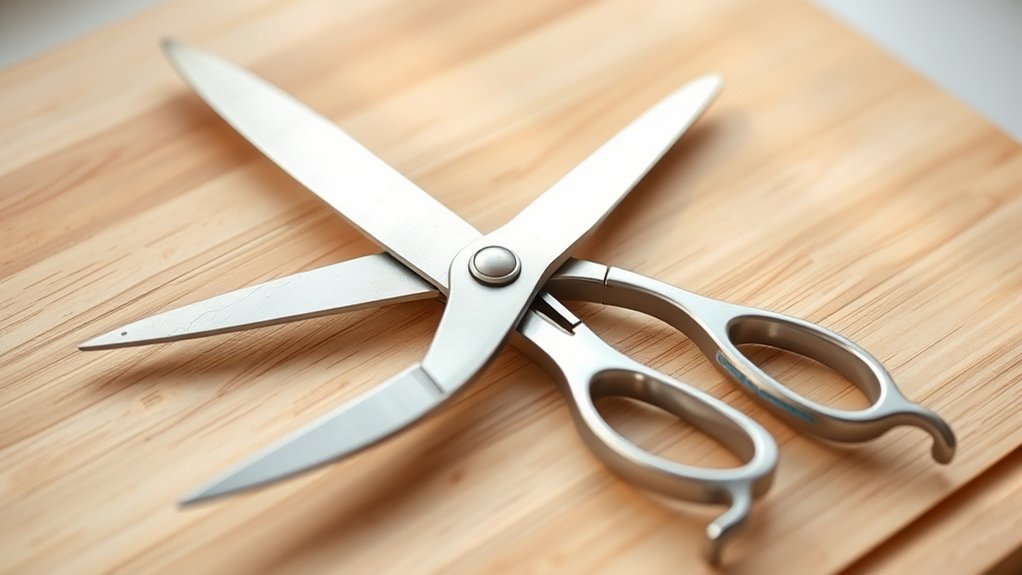
Before you begin sharpening, make sure you have all the necessary tools and that your kitchen shears are clean and dry. Start by carefully cleaning debris from the blades and pivot area.
Food particles and grease can affect the sharpening process, so wipe the shears with a damp cloth and dry them thoroughly. Next, take a close look at the blades.
Inspecting the blades helps you identify any nicks, rust spots, or dull edges that need extra attention. Open and close the shears slowly to check for smooth movement and verify the pivot isn’t loose or stiff.
If you notice any visible damage or misalignment, address those issues before sharpening. Gathering all your tools and preparing the shears properly sets you up for a more effective sharpening process, guaranteeing your kitchen shears perform efficiently and last longer.
Sharpen Kitchen Shears With a Sharpening Stone
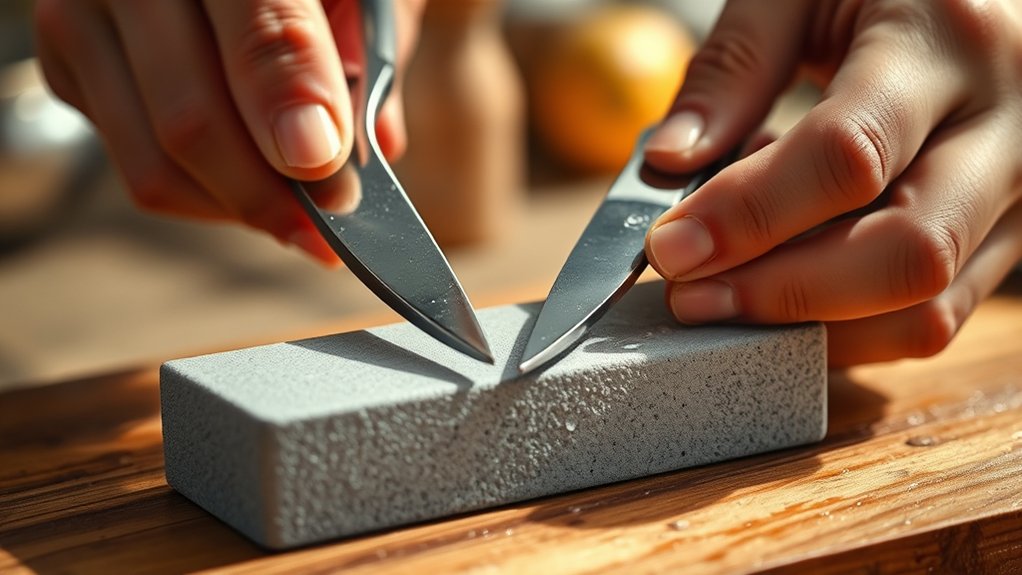
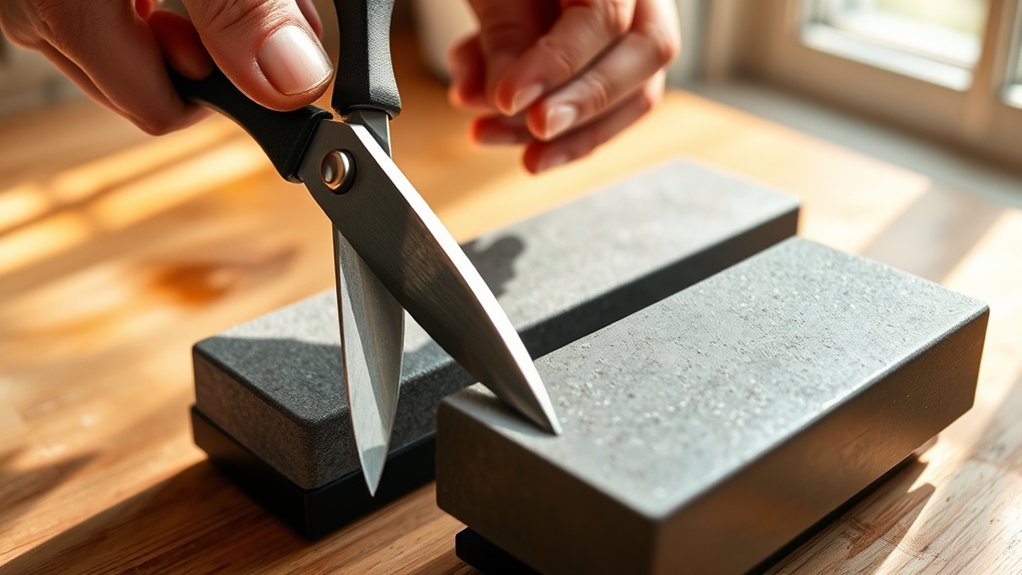
Once you’ve prepared your kitchen shears, you can sharpen them effectively using a sharpening stone. First, separate the blades by unscrewing the pivot bolt to access each blade individually.
Hold the sharpening stone at a consistent angle—usually around 20 degrees—and slide the blade across the stone in smooth, even strokes. Focus on maintaining proper blade alignment to guarantee an even edge and avoid uneven sharpening. Repeat this process for both blades, paying attention to the beveled edge.
When reassembling your shears, check that the blades align perfectly to avoid any cutting issues. Also, test the handle comfort by holding the shears firmly. Sharp blades paired with a comfortable handle will make your cutting tasks much easier and safer.
Using a sharpening stone gives you control and precision, helping your kitchen shears perform like new without compromising handle comfort or blade alignment.
Test and Maintain Shear Sharpness for Longer Use
Although sharpening your kitchen shears restores their edge, testing and maintaining sharpness regularly helps them stay effective longer. After each sharpening session, check the blades by cutting through a sheet of paper or thin fabric. If the cut is clean and smooth, your shears are sharp enough.
To maintain blade sharpness and prevent corrosion, dry your shears thoroughly after washing and occasionally apply a light coat of mineral oil. Also, check the handle comfort. If the grips feel loose or uncomfortable, tighten the screws or replace the grips to avoid hand strain.
Follow these tips to keep your kitchen shears in top shape:
- Test cutting performance on various materials regularly
- Clean and dry blades immediately after use
- Apply oil to prevent blade corrosion
- Check and adjust handle comfort for safe use
Frequently Asked Questions
Can I Sharpen Kitchen Shears With a Regular Knife Sharpener?
You can sharpen kitchen shears with a regular knife sharpener, but you need to be careful. Make sure the blade alignment stays precise during sharpening, or the shears won’t cut properly. Also, watch out for handle durability; some sharpeners might cause stress on the pivot area. It’s best to use a sharpener designed for scissors to maintain both blade sharpness and handle strength, so your kitchen shears last longer and work efficiently.
How Often Should I Sharpen My Kitchen Shears?
You should sharpen your kitchen shears every few months, depending on how often you use them. Regular blade maintenance helps them cut smoothly and safely.
If you notice the blades struggling or tearing food instead of slicing cleanly, it’s time to sharpen. For heavy use, sharpening frequency might be monthly, while occasional use allows for longer intervals.
Keeping up with blade maintenance extends your shears’ life and performance.
Are Electric Sharpeners Safe for Kitchen Shears?
Yes, electric sharpener safety for kitchen shears depends on the model you use. Some electric sharpeners aren’t designed for shears, so they can damage the blades or cause accidents.
To stay safe, pick an electric sharpener made for shear sharpening techniques and follow the instructions carefully. You’ll get sharp, clean cuts without risking your shears or fingers.
Always wear protective gloves and keep your hands steady while sharpening.
Can Sharpening Damage the Shears’ Handles or Springs?
No, sharpening won’t damage your shears’ handles or springs if you’re careful. Handle durability depends on using gentle pressure and avoiding harsh tools that could crack or weaken the material.
Spring integrity stays intact as long as you don’t bend or overstress it during sharpening. Focus only on the blades, keep the shears steady, and use proper techniques to maintain both handle durability and spring integrity while sharpening.
What Materials Are Best to Cut With Sharpened Kitchen Shears?
You’ll want to use sharpened kitchen shears on everything that doesn’t require a chainsaw: herbs, poultry, veggies, and even some tough packaging. Trying to cut a steel beam? Yeah, don’t.
Prioritize cooking safety by keeping your shears sharp and well-maintained. Dull blades mean more effort and a higher chance of slips. Regular shear maintenance keeps your kitchen efficient and accident-free, so you’re slicing, not risking, every time you cook.
Conclusion
By sharpening your kitchen shears, you’re not just restoring blades—you’re rekindling a trusted partner in your culinary journey. Like a gardener tending to their favorite tools, you breathe new life into something that helps create and nurture.
Each precise cut becomes a reminder of care and skill, turning everyday tasks into moments of pride. Keep your kitchen shears sharp, and you’ll keep the heart of your kitchen beating strong and steady.