How to Snake a Kitchen Drain in 3 Easy Steps
A clogged kitchen drain can turn a simple cleanup into a frustrating chore, and you’re not alone—many people struggle with stubborn blockages. The right drain snake can make clearing a clog easier, so here’s how to snake a kitchen drain in three easy steps.
First, gather a drain snake, gloves, and towels, then clear the space under your sink and remove the drain stopper if you can.
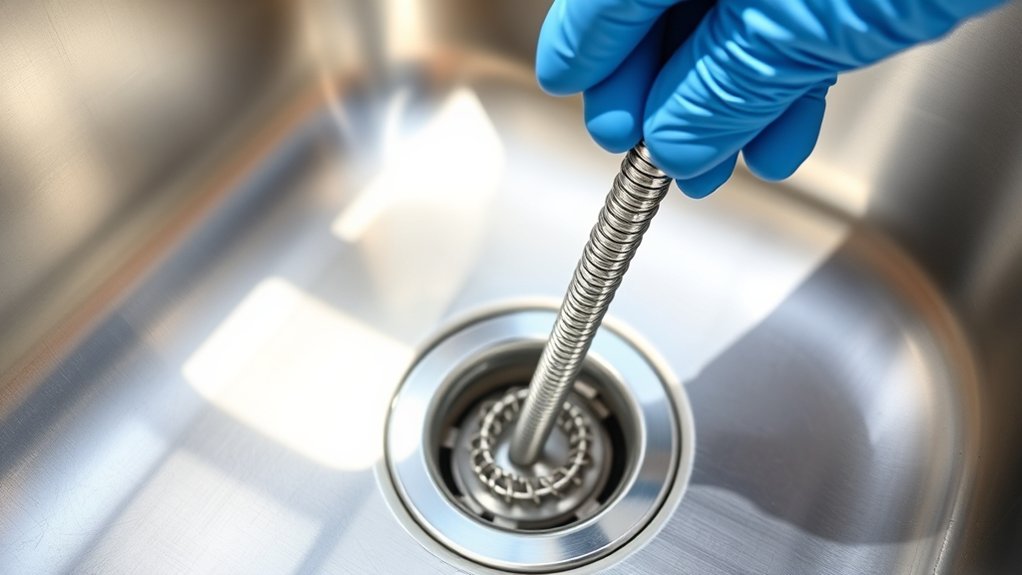
Next, feed the snake into the drain while turning it clockwise, applying steady pressure to break up or catch debris, then pull it out carefully.
Finally, run water to check flow and flush the drain with hot water.
If you want tips on cleanup and ongoing drain care, keep exploring this guide.
Key Takeaways
- Gather a drain snake, gloves, bucket, and towels, and clear the area under the sink for easy access.
- Remove the drain stopper to allow smooth insertion of the snake into the drain opening.
- Insert the snake tip into the drain and turn the handle clockwise while applying steady pressure.
- Rotate the snake upon resistance to break or latch onto debris, then carefully pull it out.
- Run water to check drain flow and repeat snaking if necessary until the clog clears fully.
Gather Tools and Prepare Your Kitchen Drain for Snaking
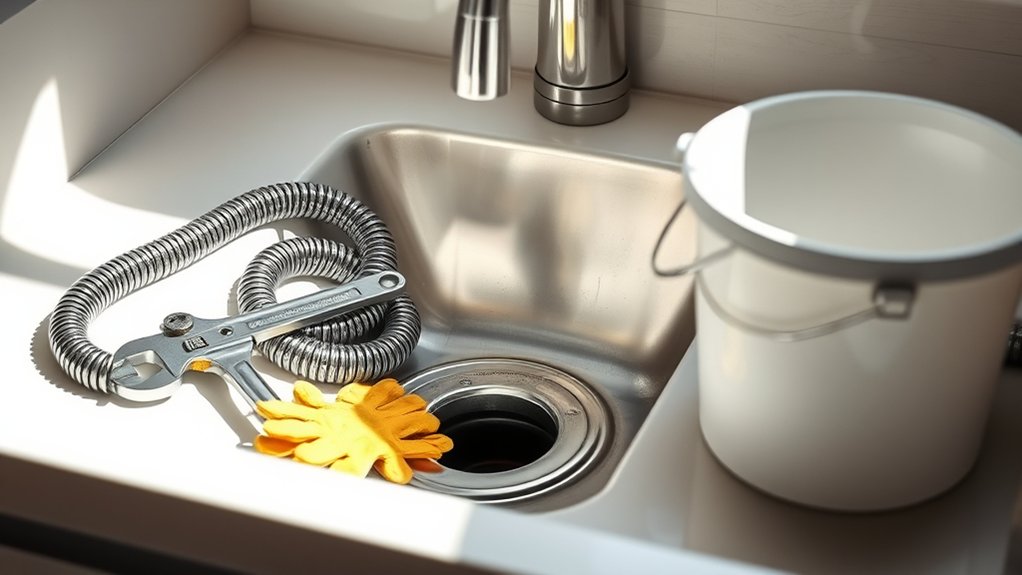
Before you begin snaking your kitchen drain, gather the necessary tools to make the job easier and more efficient. You’ll need a drain snake (also called a plumber’s auger), gloves, a bucket, and some old towels.
Make sure to wear gloves for plumbing safety, protecting your hands from dirty water and sharp debris. Lay old towels around the sink area to catch any spills or splashes during the process.
Next, clear the area under the sink to give yourself room to work comfortably. Remove the drain stopper if possible, so the snake can easily enter the pipe.
This preparation helps prevent damage and guarantees you follow proper drain maintenance practices. Taking these steps not only makes snaking smoother but also reduces risks associated with plumbing tasks.
How to Use the Snake to Clear the Kitchen Drain Clog
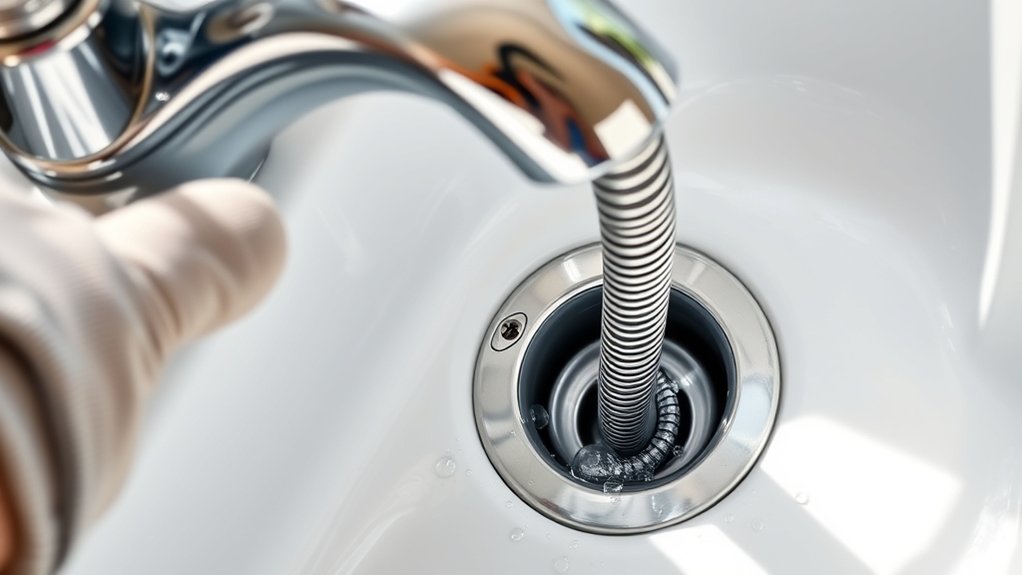
Once you’ve prepared your workspace and gathered your tools, insert the snake’s tip into the drain opening, feeding it gently while turning the handle clockwise. This motion helps the snake navigate bends and reach the clog.
Apply steady pressure but avoid forcing it, guaranteeing plumbing safety and preventing damage. Once you feel resistance, rotate the snake to break up or latch onto debris blocking the drain.
Pull the snake out carefully, bringing debris with it. Repeat as needed until the resistance eases, signaling the clog is cleared. Regular drain maintenance like this keeps your kitchen flowing smoothly and avoids costly plumbing issues.
| Feeling Frustrated? | Relief is Near! |
|---|---|
| Clog stuck tight? | Snake twists it away. |
| Messy drain? | Clean flow returns fast. |
Using the snake properly ensures safe, effective drain maintenance without risking pipe damage or personal injury.
Test the Kitchen Drain Flow and Clean Up Afterwards
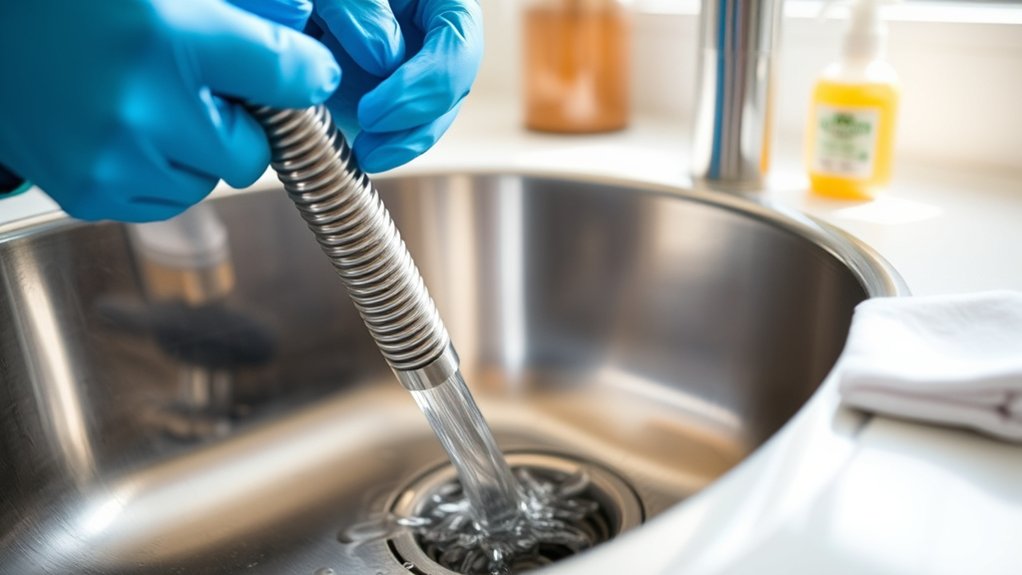
After clearing the clog with the snake, check how well the water flows down the drain. Run the faucet and observe the water’s speed and smoothness as it drains. If it flows freely without pooling, you’ve successfully completed this step of drain cleaning. If the water drains slowly or backs up, you might need to snake the drain again or try another method.
Once you confirm the drain is clear, clean the area around the sink and your tools. Wipe down the snake to remove any debris and flush the drain with hot water to clear out residual buildup. Proper clean-up prevents odors and keeps your kitchen hygienic.
Regular plumbing maintenance, including occasional drain cleaning, helps avoid stubborn clogs and costly repairs. By testing the flow and tidying up, you ensure your kitchen drain works smoothly and lasts longer.
Frequently Asked Questions
What Types of Snakes Are Best for Kitchen Drains?
For kitchen drains, you’ll want a small, flexible hand auger or a drum auger designed for drain cleaning. These snakes are perfect for maneuvering narrow pipes without causing damage, making pipe maintenance easier.
Avoid heavy-duty or long snakes meant for main sewer lines—they’re too big for kitchen drains. Using the right type helps you clear clogs efficiently and keeps your pipes in good shape, preventing future blockages.
How Often Should I Snake My Kitchen Drain?
You don’t need to snake your kitchen drain too often if you practice regular drain maintenance. Snaking every 6 to 12 months is usually enough to keep household plumbing clear and prevent buildup.
Over-snaking might damage pipes, so only do it when you notice slow drainage or minor clogs. Instead, focus on avoiding grease and food scraps down the drain to reduce the need for frequent snaking and keep your plumbing running smoothly.
Can I Use Chemical Drain Cleaners Instead of Snaking?
You can use chemical alternatives like drain cleaning chemicals instead of snaking, but be cautious. These chemicals might clear minor clogs quickly, but they can damage your pipes over time and aren’t always effective for tough blockages.
If your drain is severely clogged, snaking is usually safer and more reliable. Always follow instructions carefully with any chemical alternatives, and consider snaking first to avoid potential harm to your plumbing system.
What Causes Frequent Clogs in Kitchen Drains?
You might expect frequent clogs to come from big debris, but it’s actually grease buildup and food scraps that cause most blockages. Without proper drain maintenance, these sticky residues accumulate, restricting water flow.
Using plumbing tools like a drain snake regularly helps prevent this. If you ignore small issues, minor clogs turn into serious problems, forcing you to spend more time and money fixing your kitchen drain than if you’d stayed on top of maintenance.
When Should I Call a Professional Plumber?
You should call a professional plumber when your plumbing maintenance efforts don’t fix the problem or if clogs keep coming back despite using drain cleaning tools. Also, if you encounter persistent slow drainage, foul odors, or water backup, it’s time to get expert help. Professionals can diagnose deeper issues, like pipe damage or serious blockages, ensuring your kitchen drain stays clear and functional without causing more damage.
Conclusion
Now that you know how to snake a kitchen drain in just three easy steps, you’re well-equipped to tackle pesky clogs yourself. Did you know that nearly 60% of household drain problems are caused by grease and food buildup?
By keeping your tools handy and acting quickly, you’ll save time and avoid costly plumber visits. So, roll up your sleeves and take control of your kitchen drain’s flow with confidence!