How to Measure a Kitchen Sink in 3 Easy Steps
Choosing a new kitchen sink can be tricky when you’re unsure whether it will fit your countertop or work with your faucet. You’re not alone—many people struggle to get the measurements right. Learning how to measure a kitchen sink in 3 easy steps can help you find the right fit and avoid installation surprises.
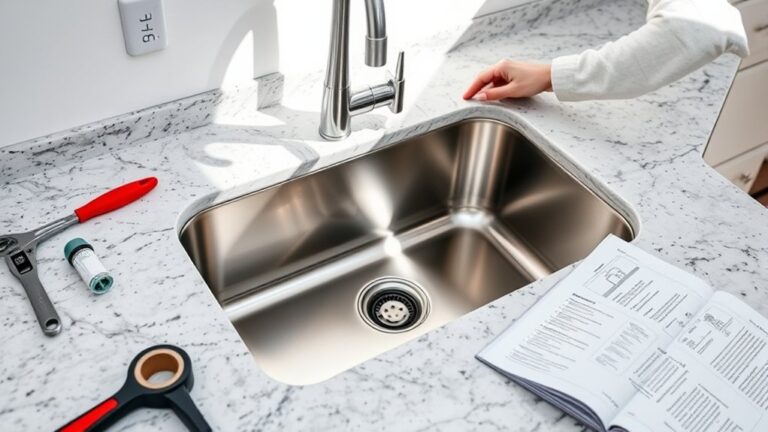
To measure your kitchen sink in 3 easy steps, first gather essential tools like a tape measure, notepad, and flashlight to guarantee accuracy.
Next, measure the sink’s length, width, and depth, including any lip or flange and accounting for the basin’s slope.
Finally, measure the sink cutout and faucet hole dimensions, noting the number and placement of holes for perfect compatibility.
Keep these steps in mind, and you’ll be set for a seamless installation, with more tips to follow.
Key Takeaways
- Measure the sink’s length and width from outer edges, including any lip or flange.
- Measure the sink’s depth from the top rim to the basin bottom, accounting for slope.
- Measure the cutout’s length and width, noting any irregular shapes for accurate fitting.
- Count and measure the diameter of all faucet holes to ensure compatibility with new fixtures.
- Double-check all measurements against new sink specifications and existing countertop dimensions.
Gather Tools for Measuring Your Kitchen Sink
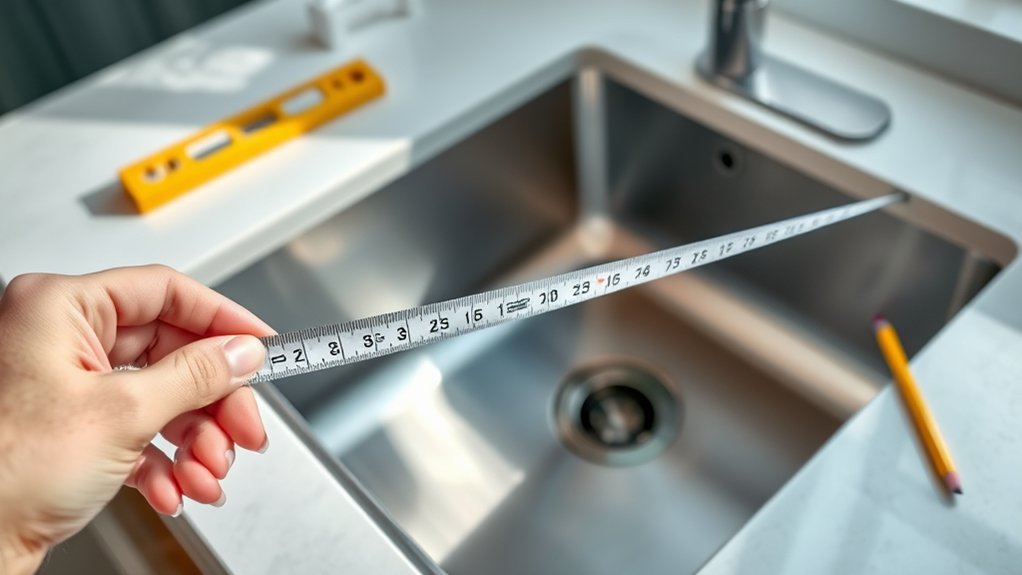
Before you begin measuring your kitchen sink, make certain you have all the necessary tools on hand. Grab a tape measure, a notepad, and a pencil to jot down your measurements. Having a flashlight can help you see into tight spaces, and a level guarantees your sink will be properly aligned during installation. These installation tips will save you time and prevent mistakes later on.
Don’t forget gloves if you plan to inspect the sink closely for cleaning and maintenance needs while measuring. Checking for any cracks or buildup can give you a heads-up on potential issues before you replace or reinstall your sink.
Measure Your Kitchen Sink’s Length, Width, and Depth
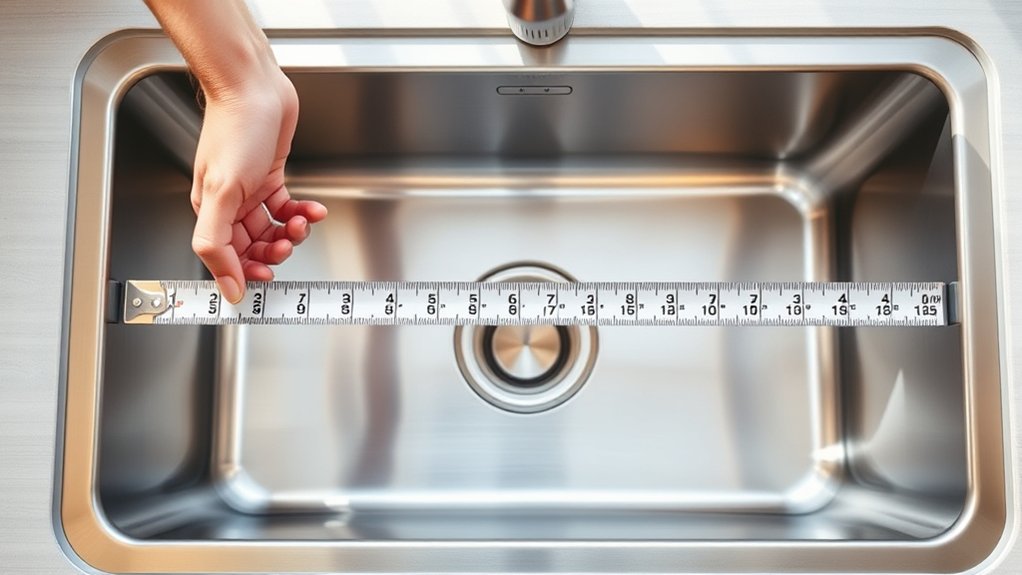
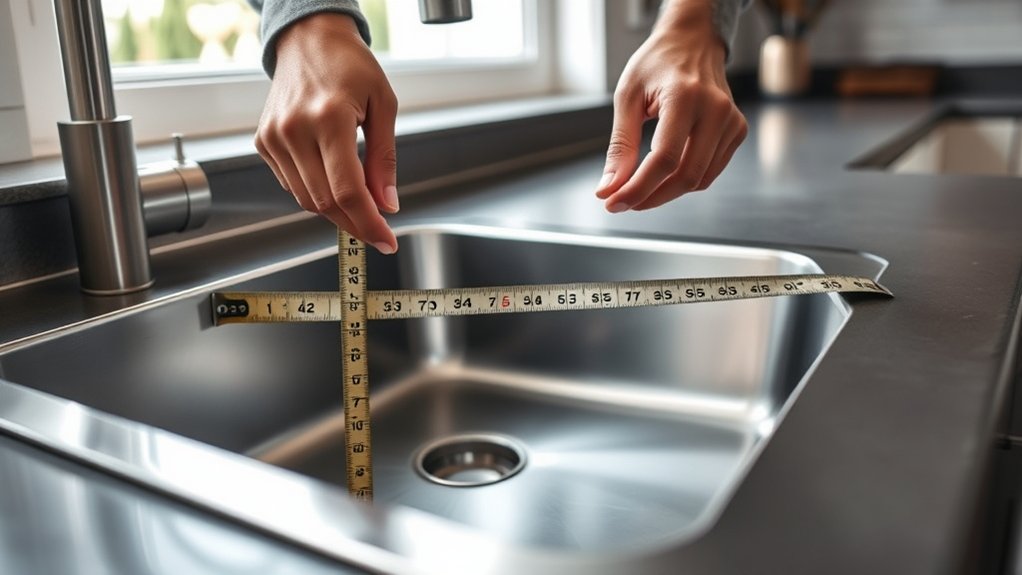
While measuring your kitchen sink, focus on its three main dimensions: length, width, and depth. These measurements are essential for ensuring proper countertop installation and plumbing compatibility. Start by measuring the length from one outer edge to the other, then the width across the widest point. For depth, measure from the top rim down to the bottom of the basin. Accurate numbers help avoid costly mistakes when fitting your new sink.
Measure length, width, and depth carefully to ensure your kitchen sink fits perfectly and avoids costly errors.
Here’s how to measure effectively:
- Length: Measure the sink’s longest side, ensuring you include any lip or flange.
- Width: Take the measurement across the widest part of the sink to cover all edges.
- Depth: Measure inside from the rim to the basin’s bottom, considering the bowl’s slope if any.
These dimensions guarantee your sink fits perfectly, aligns with existing plumbing, and allows for smooth countertop installation. Don’t skip this step—it’s key to a hassle-free upgrade.
Measure Kitchen Sink Cutout and Faucet Hole Dimensions to Ensure Proper Fit
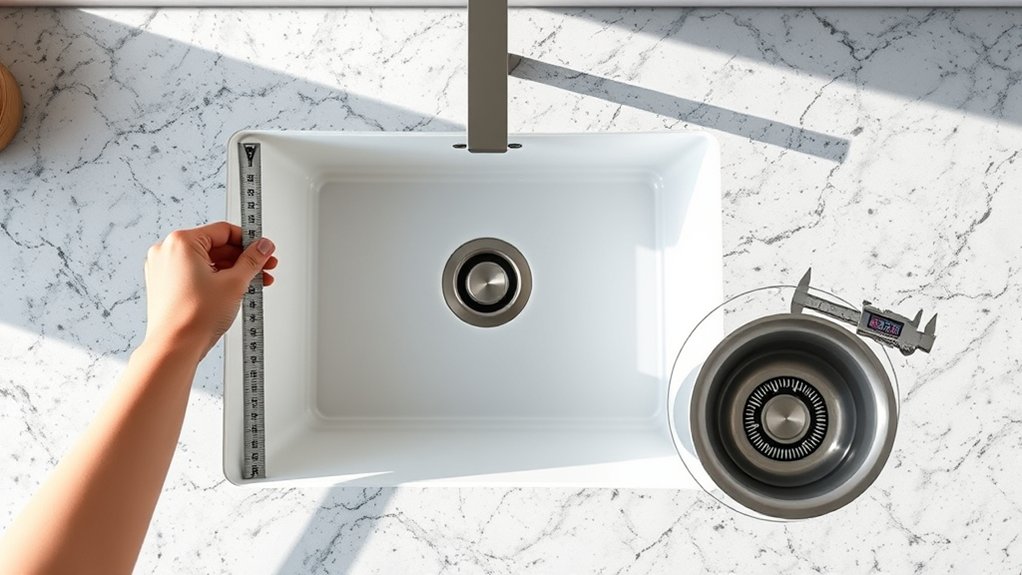
Once you’ve nailed down your sink’s length, width, and depth, the next step is to measure the cutout on your countertop and the faucet hole dimensions. Start by carefully measuring the existing cutout’s length and width, making certain you note any irregular shapes or rounded corners.
This helps avoid installation issues and guarantees your new sink fits perfectly. Next, measure the diameter of the faucet holes and count how many there are in total.
Keep in mind installation considerations such as the position of soap dispensers or sprayers, which may require additional holes. Also, consider material compatibility between your sink, countertop, and faucet to avoid damage or poor sealing.
Accurate measurements here prevent costly adjustments later and assure a smooth installation. By double-checking these dimensions, you guarantee your kitchen sink fits seamlessly, functions well, and complements your countertop’s material, making your kitchen both practical and stylish.
Frequently Asked Questions
What Materials Are Kitchen Sinks Commonly Made From?
Kitchen sinks are commonly made from stainless steel, cast iron, granite composite, and fireclay. When you choose a material, consider durability since it affects installation tips and sink longevity.
Stainless steel is lightweight and rust-resistant, while cast iron offers strength but needs sturdy support. Granite composite looks stylish and resists scratches. Fireclay is durable but heavier.
Knowing material durability helps you plan installation, ensuring your sink stays secure and lasts long.
How Do I Choose the Right Sink Style for My Kitchen?
You’ll find the right sink style by matching it to your kitchen’s vibe and function. If you love sleek countertops, an undermount installation fits perfectly and hides the edges.
Consider decorative faucet options that complement your sink’s finish to tie the look together. Also, think about your daily tasks: single or double basin? Your choice should balance style and practicality, ensuring your kitchen feels both beautiful and efficient.
Can I Measure the Sink Without Removing It From the Countertop?
Yes, you can measure the sink without removing it from the countertop. Use a tape measure or ruler to get accurate dimensions.
Start by measuring the width and length across the top edges of the sink. Don’t forget to measure the countertop thickness around the sink’s edges to make certain of proper fitting.
Taking these measurements carefully helps you get precise data without the hassle of removing the sink.
What Is the Average Lifespan of a Kitchen Sink?
You can expect your kitchen sink to last around 15 to 30 years, depending on sink durability and material quality. Stainless steel sinks tend to be more durable, while ceramic ones might chip over time.
To maximize its lifespan, follow installation tips like ensuring proper sealing and avoiding harsh cleaners. Taking care during installation and daily use will help your sink stay functional and looking great for many years.
How Do I Maintain and Clean Different Types of Kitchen Sinks?
You’ll want to tailor cleaning tips and maintenance routines to your sink’s material. For stainless steel, use mild soap and a soft sponge to avoid scratches. Granite sinks benefit from gentle cleaners and regular sealing. Porcelain sinks require non-abrasive cleaners to prevent chipping. Always rinse well and dry after cleaning to avoid water spots or stains. Regular maintenance keeps your sink looking great and prolongs its lifespan.
Conclusion
Now that you’ve learned how to measure a kitchen sink in just three easy steps, you’re ready to find the perfect fit. Remember, measure twice, cut once. This old saying holds true for a reason.
Taking accurate measurements helps ensure your new sink fits seamlessly and functions well. With the right tools and a bit of patience, you can avoid costly mistakes and enjoy a kitchen upgrade that looks great and works perfectly. Happy measuring!