
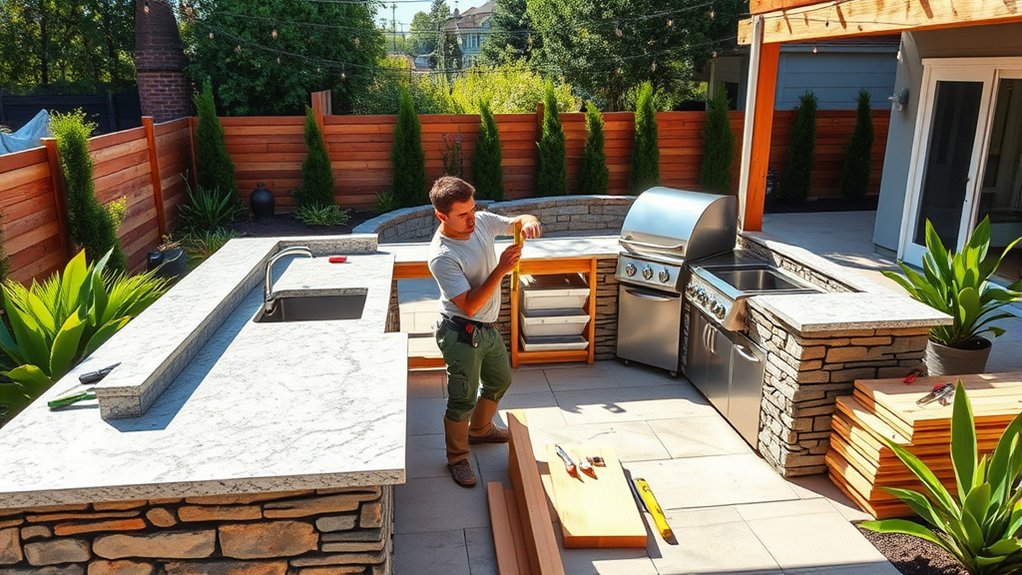
How to Build an Outdoor Kitchen in 7 Simple Steps
Planning an outdoor kitchen can feel overwhelming when you’re trying to balance space, style, and practical features. You’re not alone—many people struggle to know where to start. These seven simple steps can help you build an outdoor kitchen that suits your cooking style and makes your backyard more inviting.
To build an outdoor kitchen in seven simple steps, start by planning your layout and choosing a convenient location with enough space for cooking and socializing.
Select durable, weather-resistant materials for countertops, cabinetry, and appliances that match your cooking style.
Safely install plumbing and electrical systems with professional help.
Build functional countertops and storage, add outdoor lighting, and include weather protection like pergolas or awnings.
Finally, personalize with stylish decor and seating. Keep exploring to uncover more tips for creating your perfect outdoor cooking space.
Key Takeaways
- Assess backyard space, sunlight, wind, and privacy to design a functional and comfortable outdoor kitchen layout.
- Select durable, weather-resistant materials and appliances suited for your cooking style and storage needs.
- Obtain permits, follow safety regulations, and hire licensed professionals for gas, electrical, and plumbing installations.
- Install weather protection features like pergolas or retractable canopies, and add adequate lighting for usability.
- Maintain regularly by cleaning surfaces, sealing materials, pest control, and covering appliances to extend lifespan.
Plan Your Outdoor Kitchen Layout and Location
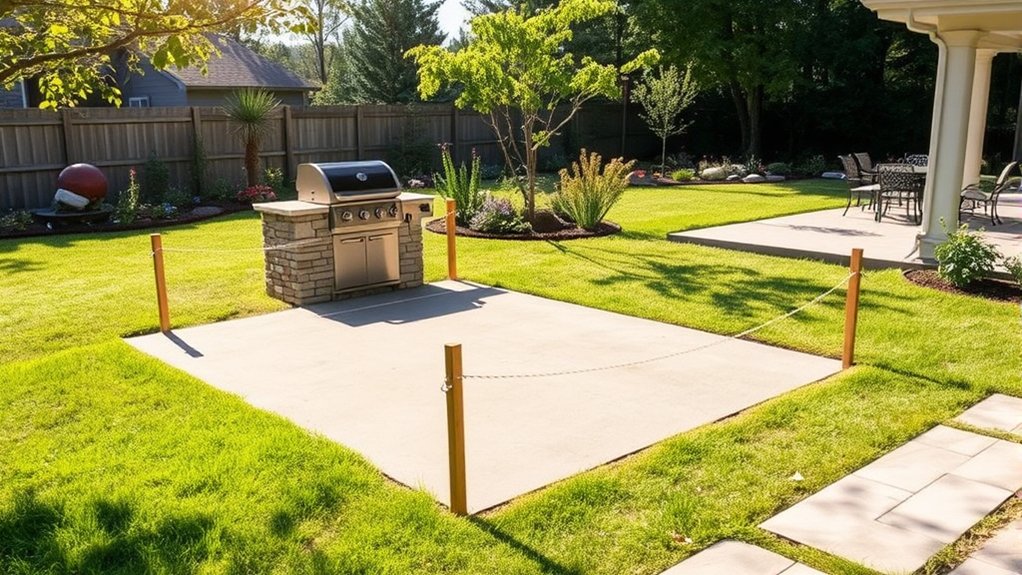
Before you start building, you need to carefully plan your outdoor kitchen’s layout and location. Begin with garden planning by evaluating your backyard space and deciding where the kitchen will fit best.
Consider proximity to your indoor kitchen for convenience, and make sure there’s enough room for cooking, dining, and socializing. Next, perform a sunlight analysis to find out how much sun your chosen spot receives throughout the day.
You’ll want to avoid placing your kitchen in areas with excessive direct sunlight during peak hours, which can make cooking uncomfortable. Also, think about natural shade from trees or structures.
Take note of wind direction and privacy too, as these affect comfort and usability. By planning your layout with these factors in mind, you’ll create a functional, enjoyable outdoor kitchen that improves your garden’s flow and suits your lifestyle perfectly.
Careful planning now saves you hassle later.
Choose Durable Materials for Your Outdoor Kitchen
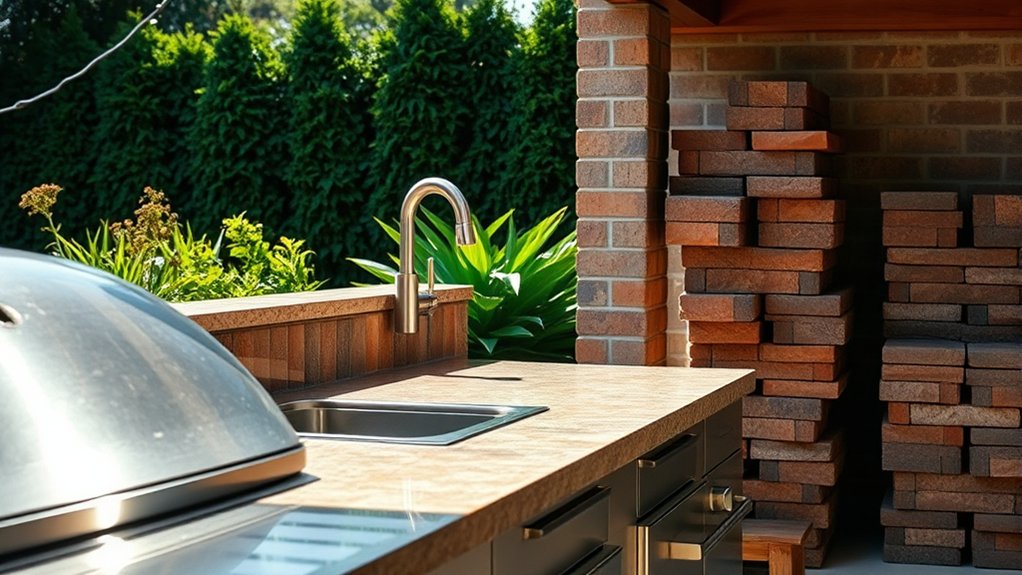
Choose materials that can handle rain, sun, and temperature changes without wearing down. Also, consider how much upkeep each option requires and how long it’s likely to last. That way, you can balance cost and durability to create an outdoor kitchen that stands the test of time.
Weather-Resistant Material Options
Since your outdoor kitchen will face sun, rain, wind, and temperature changes, selecting weather-resistant materials is essential to guarantee durability and low maintenance. Start with rust resistant metals like stainless steel or aluminum for appliances and fixtures. They won’t corrode easily and handle moisture well.
Incorporate weatherproof coatings on wood or concrete surfaces to protect against water damage and UV rays, extending their lifespan. For countertops, consider materials like granite or concrete treated with sealants to repel stains and moisture.
Even cabinetry should be made of materials designed to withstand outdoor conditions, such as marine-grade polymer or treated wood. By choosing these weather-resistant options, you’ll build an outdoor kitchen that stands strong through all seasons without frequent repairs or replacements.
Maintenance and Longevity Tips
Although choosing durable materials sets a solid foundation, regular maintenance is key to keeping your outdoor kitchen in top shape for years. You’ll want to protect your investment with UV protection and effective pest control. Here are essential tips to extend your kitchen’s lifespan:
- Clean surfaces regularly to prevent buildup and damage.
- Apply UV-resistant sealants to shield countertops and cabinets.
- Inspect and repair any cracks or chips promptly to avoid further wear.
- Use pest control methods to keep insects and rodents from nesting.
- Cover appliances and furniture when not in use to minimize exposure.
Cost vs. Durability Comparison
Maintaining your outdoor kitchen effectively means investing in materials that stand the test of time without constant repairs. When choosing materials, you should conduct a cost analysis to balance upfront expenses with long-term durability.
For example, stainless steel might have a higher initial cost, but its resistance to rust and weather means fewer replacements. Durability factors like exposure to sun, rain, and temperature changes play a vital role in material selection.
Concrete countertops offer excellent durability but may require sealing, while natural stone looks great but can be pricier. By weighing cost against how well materials endure outdoor conditions, you can select options that save money and effort over time.
This thoughtful approach guarantees your outdoor kitchen remains functional and attractive for years.
Select Appliances That Fit Your Cooking Style
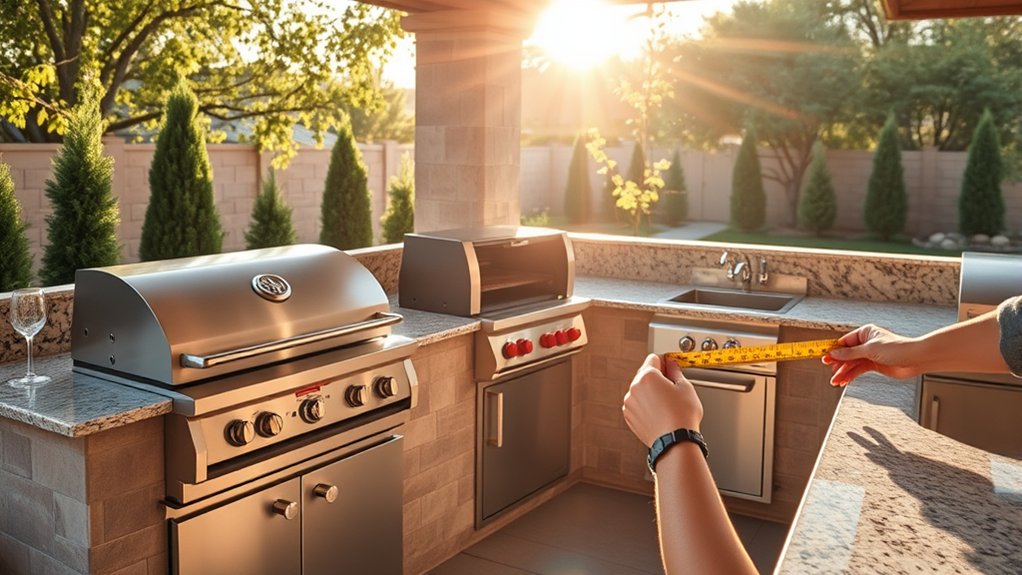
Choose appliances that fit the way you like to cook, whether you enjoy grilling, smoking, or baking. Start with the essentials that suit your needs and help your outdoor kitchen run smoothly. And whenever you can, opt for energy-efficient models to save power and keep your setup eco-friendly.
Essential Cooking Appliances
When planning your outdoor kitchen, choosing appliances that match your cooking style makes all the difference. You want tools that support your favorite cooking techniques and are easy to maintain. Consider appliances that offer versatility without demanding excessive appliance maintenance.
Here are five essential cooking appliances to consider:
- Gas or charcoal grill for traditional grilling
- Side burners for sauces and quick sautéing
- Pizza oven for wood-fired cooking
- Smoker for slow-cooked, smoky flavors
- Refrigeration unit to keep ingredients fresh
Selecting appliances aligned with your cooking style ensures you enjoy preparing meals outdoors efficiently. Prioritize durability and ease of cleaning to keep your outdoor kitchen functioning smoothly over time. This way, you’ll enhance both your cooking experience and appliance longevity.
Matching Appliances To Needs
How do you choose appliances that truly fit your outdoor cooking style? Start by evaluating your needs, such as the types of meals you enjoy and how often you cook outside. Appliance compatibility is key: your selected appliances should work well together and fit your space seamlessly.
Here’s a quick guide to help you match appliances to your cooking style:
| Cooking Style | Recommended Appliance |
|---|---|
| Grilling | Gas or charcoal grill |
| Slow cooking | Smoker or slow cooker |
| Quick meals | Side burner or griddle |
| Entertaining | Outdoor refrigerator |
| Baking | Pizza oven or outdoor oven |
Energy Efficiency Considerations
Why prioritize energy efficiency in your outdoor kitchen appliances? Choosing energy efficient appliances not only reduces your utility bills but also supports a greener lifestyle. When building your outdoor kitchen, consider how solar integration can power your setup sustainably. Select appliances that align with your cooking style and minimize energy waste.
Keep these tips in mind:
- Opt for energy efficient grills and refrigerators
- Choose LED lighting for your kitchen area
- Incorporate solar panels to supplement power needs
- Use induction cooktops for faster, cleaner cooking
- Select appliances with Energy Star ratings
Install Plumbing and Electrical Systems Safely
Although installing plumbing and electrical systems may seem intimidating, you can guarantee safety and functionality by following proper guidelines and local codes. Start by reviewing your area’s safety regulations to understand necessary permits and inspection requirements. This assures your outdoor kitchen complies with legal standards and avoids costly fines.
While some tasks might be DIY-friendly, it’s wise to opt for professional installation, especially for gas lines and electrical wiring. Licensed plumbers and electricians have the expertise to handle complex connections safely, reducing risks of leaks, shorts, or fire hazards.
Always use weather-resistant materials and waterproof enclosures designed for outdoor use. Before finalizing, double-check all connections and test systems thoroughly. By prioritizing safety regulations and relying on professionals when needed, you’ll create a reliable plumbing and electrical setup that supports your outdoor kitchen’s performance without compromising safety.
Build Countertops and Storage for Your Outdoor Kitchen
Once you’ve secured your plumbing and electrical systems, focus on building durable countertops and ample storage to make your outdoor kitchen both functional and inviting. Choosing the right countertop materials is essential—they need to withstand weather and heavy use. Popular options include granite, concrete, and stainless steel, each offering durability and style.
For storage solutions, think about weatherproof cabinets and drawers to keep utensils and supplies organized and protected.
Here’s what to take into account when building countertops and storage:
- Select weather-resistant countertop materials that fit your style and budget
- Incorporate waterproof sealants to extend countertop life
- Use corrosion-resistant hardware for cabinets and drawers
- Include deep drawers or shelves for pots, pans, and grilling tools
- Plan for trash and recycling bins within storage units for convenience
Add Outdoor Lighting and Weather Protection Features
As you finalize your outdoor kitchen, adding proper lighting and weather protection will greatly improve its usability and comfort. Start by installing ambient lighting to create a warm, inviting atmosphere while guaranteeing you can cook and entertain safely after sunset. String lights, LED strips under countertops, or recessed fixtures work well without overpowering the space.
Next, focus on rain protection to keep your kitchen functional and durable. Consider a sturdy pergola with a retractable canopy or waterproof awnings that shield your cooking area from unexpected showers. You might also add weather-resistant covers for appliances and storage to prevent damage.
These features not only extend your kitchen’s lifespan but also let you enjoy it regardless of the weather. By thoughtfully integrating ambient lighting and rain protection, you’ll assure your outdoor kitchen remains a practical, enjoyable space day and night.
Add Stylish Details and Outdoor Decor to Complete Your Kitchen
With lighting and weather protection in place, you can focus on adding stylish details and outdoor decor to make your kitchen truly inviting. Decorative accents bring personality and charm, while plant arrangements add freshness and life to your space. To complete your outdoor kitchen, consider these finishing touches:
- Use colorful cushions and outdoor rugs to add comfort and style.
- Hang weather-resistant artwork or metal wall decor for visual interest.
- Integrate lanterns or string lights for warm ambiance during evening gatherings.
- Place potted herbs or flower pots strategically for both utility and beauty.
- Add a stylish centerpiece on your countertop or dining table to tie everything together.
These elements help create a welcoming atmosphere that reflects your taste and makes outdoor cooking more enjoyable. By thoughtfully combining decorative accents with lush plant arrangements, you’ll transform your outdoor kitchen into a cozy, functional retreat perfect for entertaining or relaxing.
Frequently Asked Questions
How Do I Maintain My Outdoor Kitchen During Winter?
To maintain your outdoor kitchen during winter, start by following winterizing tips like cleaning all surfaces and draining water lines to prevent freezing. Use storage solutions such as weatherproof covers for appliances and storing utensils indoors.
Remove propane tanks and store them safely. These steps protect your kitchen from harsh weather, ensuring everything stays in good shape and is ready to use when warmer months return. Don’t forget to check for any needed repairs before winter hits.
What Are the Best Plants to Complement My Outdoor Kitchen?
Plants are the jewelry that makes your outdoor kitchen sparkle. For the best herb selection, choose basil, rosemary, and thyme—they’re fragrant and useful for cooking.
Place plants thoughtfully; put taller herbs like rosemary at the back and smaller ones like thyme upfront for easy access. Mix in colorful flowers or small shrubs to add life and vibrancy.
With smart plant placement, your kitchen will feel like a garden oasis you’ll love to cook in.
Can I Convert My Outdoor Kitchen Into a Pizza Oven?
Yes, you can definitely do a pizza oven conversion as an outdoor kitchen upgrade. You just need to create a safe, heat-resistant area within your current setup using firebricks or refractory materials.
Adding a proper chimney and insulation helps retain heat. This upgrade expands your cooking options and boosts your outdoor kitchen’s functionality and appeal.
With careful planning, your space will be ready for delicious homemade pizzas in no time.
How Do I Keep Insects Away While Cooking Outside?
To keep insects away while cooking outside, use insect deterrents like citronella candles or essential oil sprays around your outdoor kitchen. Set up fans to create airflow, which helps keep bugs at bay. Keep your cooking area clean and cover food to avoid attracting pests. You can also install screens or use natural pest control methods like planting herbs such as basil and mint nearby. These steps make your outdoor cooking more enjoyable and pest-free.
What Are Eco-Friendly Options for Outdoor Kitchen Cleaning?
You might think eco-friendly cleaners aren’t powerful enough, but they work great for your outdoor kitchen. Use natural, non-toxic sprays made from vinegar or baking soda to keep surfaces spotless without harsh chemicals.
Don’t forget compostable utensils—they’re perfect for reducing waste while cooking outside. These options protect the environment and keep your space fresh. You’ll enjoy a cleaner kitchen that’s safe for you and the planet without sacrificing effectiveness.
Conclusion
Now that you’ve got the steps down, imagine hosting a summer BBQ where your friends admire your sleek countertops and easy-to-use grill. Building an outdoor kitchen lets you enjoy cooking and entertaining without the hassle.
By planning smart, choosing durable materials, and adding personal touches, you’ll create a space that’s both functional and inviting. Immerse yourself, and soon you’ll have your own backyard oasis ready for memorable gatherings!


